Introduction: A Silent Alarm in the High North
For decades, climatologists have treated the concept of a "tipping point" in the Arctic as a distant, theoretical danger—a threshold to be monitored but not expected for several generations. However, a groundbreaking new study, drawing on decades of satellite observation and field data, suggests that this narrative may be fundamentally flawed. Recent research indicates that the Arctic climate system is not merely warming; it is showing distinct, empirical signs that the mechanisms keeping it in a stable state are beginning to fail.
The implications of this discovery are seismic. If the Arctic, which acts as the "refrigerator" of the Northern Hemisphere, transitions into a new, warmer regime, the global climate will be irrevocably altered. From accelerating sea-level rise to the destabilization of jet streams, the evidence suggests we are no longer looking at a future threat, but a contemporary crisis.
Main Facts: What the Research Reveals
The latest scientific findings highlight a shift in three critical areas: sea ice thickness, permafrost stability, and the frequency of "extreme winter" events.
- The Albedo Effect: As sea ice retreats, the ocean absorbs more heat rather than reflecting it. The data shows that this cycle is self-reinforcing. We are seeing a decline in multi-year ice that is faster than even the most pessimistic climate models of the early 2000s predicted.
- Permafrost Methane Release: Large tracts of the Siberian and Canadian Arctic are no longer just "thawing"—they are collapsing. This thermokarst activity is releasing sequestered carbon and methane at a rate that scientists describe as "alarming," creating a positive feedback loop that accelerates regional warming.
- The Atmospheric Connection: The Arctic is warming nearly four times faster than the rest of the planet. This disparity in temperature is disrupting the polar vortex, leading to volatile weather patterns across Europe and North America.
Chronology: A History of Accelerating Decay
To understand why the current findings are so alarming, one must look at the timeline of Arctic degradation over the last fifty years.
1970–1990: The Period of Observational Divergence
During these decades, the Arctic remained relatively stable. While researchers noted a slight thinning of ice, it was largely dismissed as cyclical variability. The consensus was that the Arctic was robust enough to absorb minor temperature fluctuations.
1990–2010: The Emergence of the "New Normal"
This era marked the first major divergence from historical climate patterns. Satellite data began showing consistent, year-over-year decreases in the minimum summer sea-ice extent. The scientific community began to move away from the term "natural variability" and toward "anthropogenic influence."
2010–2020: The Decade of Extremes
During this period, we witnessed the first "blue ocean" events in localized sectors of the Arctic. Record-breaking heatwaves in the high Arctic became commonplace, and the frequency of "rain-on-snow" events—which can starve animal populations—spiked significantly.
2020–Present: The Tipping Point Threshold
The current research suggests that we have entered a phase of non-linear change. The system is no longer responding proportionally to carbon emissions; instead, it has begun to trigger its own internal warming mechanisms, independent of immediate atmospheric changes.
Supporting Data: By the Numbers
The statistical weight behind the current findings is difficult to ignore. According to data consolidated from the International Arctic Research Center (IARC):
- Sea Ice Extent: The September minimum ice extent has decreased by approximately 13% per decade since 1979.
- Surface Air Temperature: Since 2000, the Arctic has warmed by more than 3°C, compared to the global average of approximately 1.1°C.
- Greenhouse Gas Flux: Estimates suggest that thawing permafrost could release between 30 and 150 billion tons of carbon into the atmosphere by 2100, effectively doubling the difficulty of meeting Paris Agreement targets.
- Ocean Acidification: The Arctic Ocean is acidifying at a rate faster than the global average due to the uptake of CO2 in cold, ice-free waters, which is decimating local marine food webs.
Official Responses and Scientific Skepticism
The scientific community is currently divided not on the reality of the warming, but on the irreversibility of these tipping points.
The Intergovernmental Panel on Climate Change (IPCC) has issued cautious statements, noting that while the data points toward a transition, "mitigation remains mathematically possible." However, many lead researchers who contributed to the recent study argue that the IPCC models have consistently underestimated the speed of ice-sheet collapse.
"We are dealing with a ‘lag effect,’" says Dr. Elena Volkov, a lead climatologist in the region. "Even if we stopped all global emissions tomorrow, the thermal inertia in the Arctic would likely keep the current degradation trend in motion for another two decades. Our response must shift from purely preventative to adaptive and radical."
Governments in the Arctic Council (the U.S., Canada, Russia, Norway, Denmark, Sweden, Finland, and Iceland) have acknowledged the findings. However, geopolitical tensions have hampered a unified response. While the Nordic countries have pushed for immediate emissions caps, other nations remain preoccupied with the potential economic benefits of newly opened shipping lanes and oil extraction opportunities in the now-accessible northern waters.
Implications: The Global Consequences
The failure of the Arctic system is not a regional problem; it is a global catastrophe.
1. Sea-Level Rise
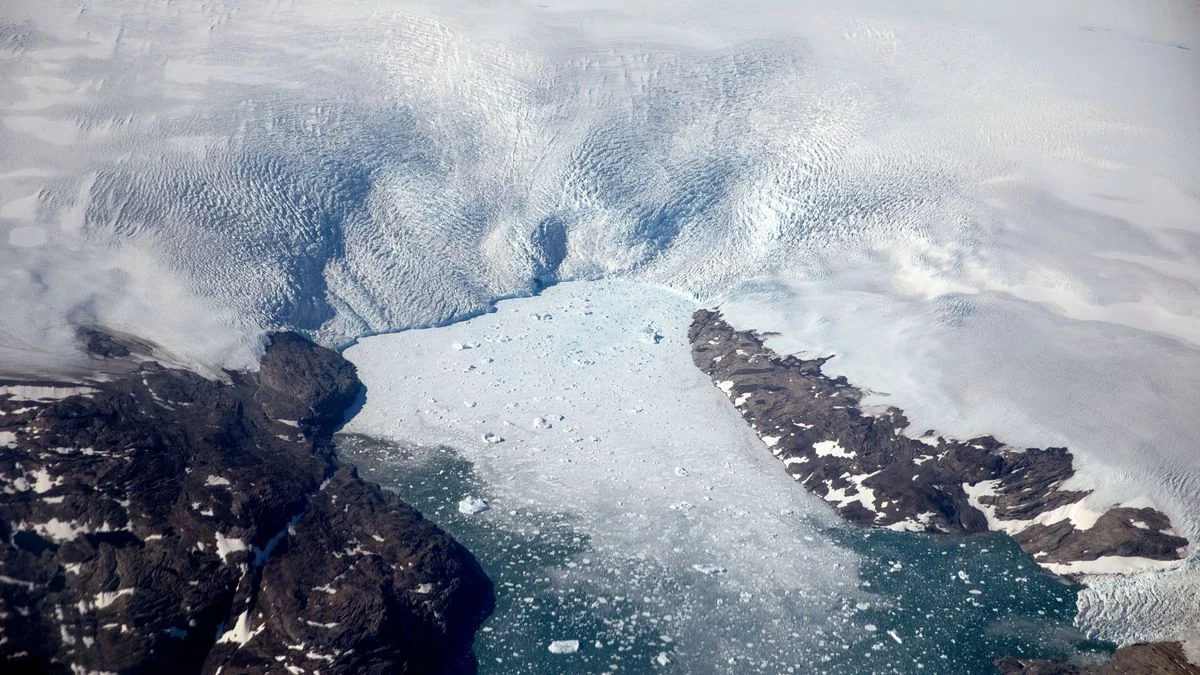
The melting of the Greenland Ice Sheet is currently the single largest contributor to global sea-level rise. If the "tipping point" is crossed, the mass loss from Greenland will likely transition from a gradual process to an accelerated collapse, threatening major coastal cities from Jakarta to New York.
2. The Jet Stream and Global Weather
The weakening of the temperature gradient between the Arctic and the mid-latitudes is causing the jet stream to become "wavy." This phenomenon traps weather systems in place, leading to prolonged droughts, devastating floods, and heat domes in temperate regions. The extreme weather events of the past five years are, in many ways, the direct result of a dying Arctic.
3. Economic and Geopolitical Instability
As the Arctic becomes more accessible, competition for resources—rare earth minerals, oil, gas, and fishing grounds—is intensifying. This creates a "security dilemma." Nations are increasing their military presence in the High North to protect their interests, raising the risk of conflict in a region that was once defined by scientific cooperation.
4. Ecological Collapse
The loss of habitat for Arctic species—polar bears, walruses, and endemic seals—is a precursor to a wider biological collapse. The disruption of the Arctic marine food web threatens to collapse commercial fisheries that millions of people depend on for their protein and livelihoods.
Conclusion: The Final Window
The research is clear: the Arctic is not just changing; it is transforming into a different type of environment. We are currently witnessing the end of the Arctic as we have known it for the last 10,000 years.
While the term "tipping point" often implies a sudden, irreversible snap, it is better understood as a "threshold of no return." We have the data, we have the models, and we have the empirical evidence of the system’s decay. What remains to be seen is whether the international community has the political will to pivot from exploitation to preservation.
The Arctic is not just sending a warning; it is providing a blueprint of the future of our planet. If we fail to heed the signals emerging from the high north, the consequences will not be confined to the ice—they will be felt in every corner of the globe, in every city, and in every season for centuries to come. The window to act is rapidly narrowing, and the ice is not waiting for our consensus.