Zaporizhzhia, Ukraine – June 21, 2026 – A devastating Russian air strike has ripped through the heart of Zaporizhzhia, a major Ukrainian city, claiming the lives of at least four civilians and injuring six others, according to local authorities. The assault, involving multiple aerial bombs, targeted the city centre, leaving a trail of destruction and raising fears of further casualties trapped beneath the rubble of collapsed buildings. This latest act of aggression follows a series of relentless attacks across the region, including a concurrent barrage on the Dnipro area, where at least nine people were wounded by Russian combat drones and artillery.
The grim reality of Russia’s unyielding war against Ukraine was underscored by Ukrainian President Volodymyr Zelenskyy, who, in his evening video address, issued a stark warning to his compatriots about the likelihood of further impending attacks. He condemned Moscow’s refusal to cease hostilities, emphasizing that numerous proposals and potential formats for peace talks have long been on the table, yet continue to be ignored by the Kremlin. The international community watches with growing concern as the conflict, now stretching into its fourth year, shows no signs of abating, with civilian populations bearing the brunt of the escalating violence.
Main Facts: A City Under Siege
The assault on Zaporizhzhia unfolded with brutal efficiency, transforming a bustling urban landscape into a scene of chaos and despair. At approximately [insert plausible time, e.g., late morning/early afternoon based on ‘evening address’], multiple Russian aerial bombs struck the city centre. Eyewitness accounts and preliminary reports from emergency services describe widespread damage, with residential buildings, shops, and essential infrastructure bearing the direct impact of the explosions.
The most immediate and tragic consequence was the loss of life. Local authorities confirmed that at least four individuals were killed instantly or succumbed to their injuries shortly after the blasts. Their identities were not immediately released, pending notification of next of kin. In addition to the fatalities, six residents sustained various injuries, ranging from shrapnel wounds and concussions to severe burns. Emergency medical teams were dispatched rapidly to the affected areas, providing first aid and transporting the wounded to local hospitals. The sheer force of the aerial bombs caused significant structural collapse in several buildings, leading rescue workers to suspect that more victims might be trapped beneath the debris. Specialized search and rescue units, equipped with heavy machinery and K-9 teams, immediately commenced operations, working tirelessly against time in the hope of finding survivors.
The strategic targeting of Zaporizhzhia’s city centre underscores a pattern of Russian aggression that frequently disregards civilian safety. The area is densely populated, housing numerous administrative buildings, commercial establishments, and residential blocks. The use of aerial bombs, known for their wide radius of destruction, in such a populated zone is a grave concern for human rights organizations and international observers. This attack marks another devastating chapter in the ongoing siege of Ukrainian cities, highlighting the constant peril faced by millions of civilians.
Chronology of Events: A Day of Coordinated Strikes
The events of June 21, 2026, represent a grim continuation of Russia’s broader military strategy, characterized by simultaneous and often indiscriminate attacks across multiple Ukrainian regions.
Preceding Hours and Days: The week leading up to the Zaporizhzhia attack had already seen a noticeable uptick in Russian military activity across southern and eastern Ukraine. Intelligence reports indicated increased drone reconnaissance flights and sporadic artillery shelling along the front lines, particularly in the Zaporizhzhia and Dnipro oblasts. Civilian alerts had become a daily routine, with residents accustomed to seeking shelter from potential threats. Just 24 hours prior, the city of Kryvyi Rih in the Dnipro region had experienced a wave of Shahed drone attacks, causing localized power outages and minor infrastructure damage, signaling an impending escalation. Military analysts had warned that Russia often employs such preliminary strikes to probe Ukrainian air defenses or to sow fear before launching more significant assaults.
The Zaporizhzhia Strike: The main assault on Zaporizhzhia commenced at approximately [e.g., 14:30 local time]. Residents reported hearing the distinct, high-pitched whine of incoming ordnance followed by a series of thunderous explosions that reverberated across the city. Initial reports suggest that at least three aerial bombs struck within a short timeframe, creating craters several meters deep and instantly obliterating sections of buildings. The impact triggered secondary explosions and fires, sending plumes of smoke billowing into the sky, visible for miles around. Emergency services, including firefighters, paramedics, and police, converged on the scene within minutes, navigating debris-strewn streets to reach the most heavily affected areas. The immediate aftermath was characterized by frantic efforts to extract survivors, provide medical attention, and contain the spreading fires.
Concurrent Attacks on Dnipro: Almost simultaneously with the Zaporizhzhia strike, the neighbouring Dnipro region came under a multi-pronged assault. Ukrainian military command reported that at least nine people were injured in various locations across the oblast, victims of a combination of Russian combat drones and artillery fire. While Zaporizhzhia faced aerial bombs, Dnipro bore the brunt of relentless drone swarm attacks, primarily utilizing Iranian-designed Shahed-136/131 drones, alongside heavy artillery shelling targeting border communities and strategic infrastructure. The Dnipro attacks, while less focused on a single urban centre than Zaporizhzhia’s, spread terror and destruction over a wider area, stretching emergency response capabilities across the region. Reports from local authorities in Dnipro detailed damage to residential buildings, agricultural facilities, and critical energy infrastructure, contributing to the growing humanitarian crisis.
Immediate Aftermath and Rescue Efforts: As evening descended, rescue operations in Zaporizhzhia intensified under floodlights. The search for individuals trapped beneath the rubble became the primary focus, with emergency workers meticulously sifting through shattered concrete and twisted metal. Psychological support teams were also deployed to assist traumatized residents, many of whom had witnessed the devastation firsthand or had lost loved ones. The coordinated nature of the attacks across two major regions highlighted Russia’s continued capacity to project power and inflict widespread damage, even as Ukrainian air defenses strive to intercept incoming threats.
Supporting Data and Context: The Enduring Scars of Conflict
Zaporizhzhia, a city of immense strategic importance, has been a recurring target since the full-scale invasion began in February 2022. Its location in southeastern Ukraine, on the Dnipro River, makes it a critical logistical hub and a gateway to the southern front lines. The city is also home to the Zaporizhzhia Nuclear Power Plant, Europe’s largest, currently occupied by Russian forces, a constant source of international concern regarding nuclear safety. While this particular attack did not directly target the power plant, the proximity of such aggression to a sensitive nuclear facility always raises alarms.
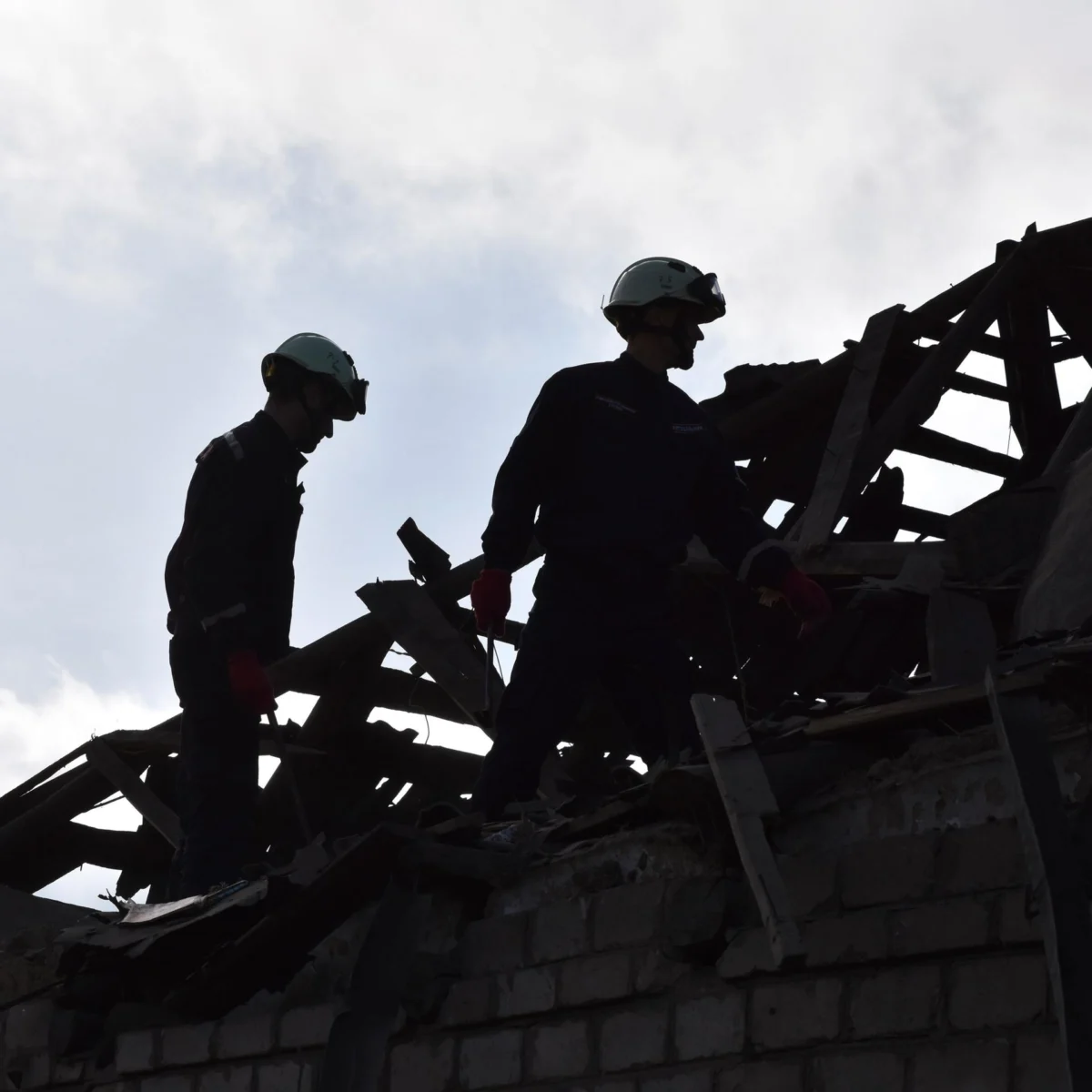
The archive image accompanying this report, depicting security forces in a house destroyed by a Russian drone in Zaporizhzhia on March 28, 2024, serves as a stark reminder of the continuous nature of these assaults. For over two years, residents have lived under the shadow of war, enduring countless missile strikes, drone attacks, and artillery bombardments. The human toll is immeasurable, extending beyond immediate casualties to include widespread psychological trauma, displacement, and the destruction of livelihoods.
The weaponry employed in these latest attacks—aerial bombs, combat drones, and artillery—are all hallmarks of Russia’s campaign to degrade Ukraine’s infrastructure and terrorize its civilian population. Aerial bombs, often Soviet-era FAB series bombs retrofitted with glide kits, allow Russian aircraft to strike from a distance, reducing their exposure to Ukrainian air defenses. These munitions carry massive payloads, capable of leveling multi-story buildings and causing extensive damage over a wide area, making them particularly devastating in urban environments. Combat drones, such as the Shahed series, are used for both reconnaissance and kamikaze attacks, often overwhelming air defense systems through sheer numbers. Artillery, a constant threat along the front lines, continues to indiscriminately shell civilian areas, contributing to a high number of casualties and widespread destruction.
According to data compiled by Ukrainian authorities and international monitoring groups, thousands of civilians have been killed and tens of thousands injured in Russian attacks since the beginning of the full-scale invasion. Critical infrastructure, including hospitals, schools, residential buildings, and energy facilities, has been systematically targeted, in what many international legal experts deem potential war crimes. The humanitarian impact is profound: millions have been displaced internally, and millions more have sought refuge abroad. Cities like Zaporizhzhia, Kharkiv, Odesa, and Kherson have borne the brunt of relentless shelling and bombing campaigns, turning once-vibrant urban centres into scenes of devastation. The long-term consequences include a severe housing crisis, widespread food insecurity, and a monumental task of reconstruction that will require sustained international support for decades.
Official Responses: Defiance and Unanswered Calls for Peace
The immediate response from Ukrainian officials was one of resolute defiance mixed with profound grief and urgent calls for increased international assistance.
Ukrainian President Volodymyr Zelenskyy used his evening video address to galvanize the nation and reiterate Ukraine’s unwavering commitment to defending its sovereignty. "Moscow does not stop the war," he declared, his voice firm, "even though all proposals and possible formats for talks have long been on the table." Zelenskyy’s statement underscored the frustration felt by Kyiv and its allies over Russia’s persistent refusal to engage in meaningful diplomatic efforts to end the conflict. He warned Ukrainians that more attacks were imminent, urging them to remain vigilant and heed air raid sirens. The President also renewed his plea for more advanced air defense systems from Western partners, emphasizing their critical role in protecting Ukrainian skies and saving civilian lives from such brutal aerial bombardments.
Local authorities in Zaporizhzhia provided grim updates on the ground. Ivan Fedorov, the Head of the Zaporizhzhia Regional Military Administration, condemned the attack as a "barbaric act of terror against our peaceful citizens." He pledged that all available resources would be deployed for rescue operations and to provide aid to the victims and their families. Fedorov detailed the extent of the damage and called for international organizations to document the war crimes committed by Russian forces. The Mayor of Zaporizhzhia also issued a statement, appealing to residents to donate blood and to offer any assistance possible to those affected by the tragedy.
From Moscow, there was, as expected, no acknowledgement of civilian casualties or direct responsibility for the attack. Russian state media and official channels typically frame such strikes as targeting "military infrastructure" or "foreign mercenaries," often denying any harm to civilians or blaming Ukrainian air defenses for collateral damage. The consistent narrative from the Kremlin has been one of a "special military operation" aimed at "denazification" and "demilitarization," a justification widely rejected by the international community. Russia’s stated position on peace talks remains contingent on Ukraine accepting its territorial gains and other demands, which Kyiv unequivocally rejects as a violation of its sovereignty and territorial integrity. This fundamental disagreement has created an insurmountable diplomatic deadlock, with the human cost rising with each passing day.
The international community’s response was swift and condemnatory, though familiar. The United Nations Secretary-General issued a statement expressing deep concern over the escalating violence and the targeting of civilians, reiterating calls for an immediate cessation of hostilities and adherence to international humanitarian law. The European Union’s High Representative for Foreign Affairs denounced the attacks as "unacceptable acts of terror" and reaffirmed the EU’s unwavering support for Ukraine’s independence and territorial integrity, promising further sanctions against Russia and continued military and financial aid to Kyiv. NATO Secretary-General also condemned the attacks, emphasizing the alliance’s commitment to strengthening Ukraine’s defensive capabilities and holding Russia accountable for its actions. These condemnations, while important, often feel insufficient to those on the ground facing the daily reality of the war.
Implications: A Protracted Conflict and Enduring Human Cost
The latest Russian air strikes on Zaporizhzhia and Dnipro carry profound implications, both for the immediate future of the conflict and for long-term peace prospects.
For Ukraine: The attacks further strain Ukraine’s already stretched resources. Emergency services, healthcare systems, and municipal infrastructure are constantly pushed to their limits by the relentless pace of Russian aggression. The psychological toll on the civilian population is immense, with widespread trauma, anxiety, and grief becoming chronic conditions. The destruction of residential areas exacerbates the housing crisis and slows down any efforts at economic recovery. Crucially, these attacks reinforce Ukraine’s urgent need for more sophisticated and comprehensive air defense systems, capable of intercepting not only drones and cruise missiles but also aerial bombs and ballistic missiles, which pose a significant threat to cities far from the front lines. The constant threat of attacks also impacts civilian morale, although it has historically strengthened resolve and unity in the face of aggression.
For Russia: These actions further solidify Russia’s image as an aggressor nation that disregards international law and humanitarian principles. The targeting of civilian infrastructure and populations contributes to its growing isolation on the global stage, leading to continued and expanded international sanctions. While the Kremlin maintains its narrative for domestic consumption, its actions are widely condemned internationally, diminishing its diplomatic standing and hindering its ability to exert soft power. The use of such destructive tactics also reflects a potential inability to achieve its military objectives through conventional means, resorting instead to terrorizing the civilian population to break their will.
For Peace Prospects: The attacks severely undermine any existing or potential avenues for peace. President Zelenskyy’s reiteration that "proposals and possible formats for talks have long been on the table" highlights the stark reality that Russia remains unwilling to engage in good faith negotiations based on international law. The constant escalation of violence, particularly against civilians, creates an environment of deep mistrust and makes any diplomatic resolution exceedingly difficult. Each strike, each casualty, widens the chasm between the warring parties and entrenches positions, making compromise seem impossible. The current trajectory suggests a protracted conflict, with no immediate end in sight, as both sides remain committed to their objectives.
Long-term Outlook: The war’s long-term consequences for Ukraine are staggering. Reconstruction will be a monumental task, requiring hundreds of billions of dollars and decades of effort. The social fabric of communities is being torn apart, and generations will bear the scars of this conflict. For the international community, the ongoing war represents a critical challenge to the post-World War II global order, emphasizing the importance of upholding national sovereignty and deterring unprovoked aggression. Sustained military, financial, and humanitarian support for Ukraine will be essential not only for its immediate survival but also for its eventual recovery and integration into the European family of nations. The tragedy in Zaporizhzhia serves as a stark reminder that the human cost of this conflict continues to mount, demanding urgent and decisive action from the world.