Main Facts
The relentless march of the Oak Processionary Moth (OPM), Thaumetopoea processionea, continues to plague Germany, with its voracious caterpillars stripping the iconic German oak trees bare and posing significant public health risks. What began as an isolated nuisance has escalated into an annual crisis, forcing authorities to close public spaces and grapple with the ecological and societal fallout. The infestation, likened by some to a persistent economic erosion, highlights a growing challenge exacerbated by changing climatic conditions.
Across Germany, particularly in urban centres like Berlin, the tell-tale signs of an OPM outbreak are becoming increasingly common: defoliated oak trees, visible silken nests clinging to branches, and the distinctive red-and-white warning tapes cordoning off affected areas. Sports facilities, parks, and playgrounds are being shuttered en masse, as the microscopic, highly irritating hairs shed by the caterpillars present a clear and present danger to human health. The reappearance of the OPM underscores not only a significant ecological shift but also a recurring administrative challenge for local governments struggling to mount an effective and timely response.
Chronology of an Infestation: From Egg to Moth
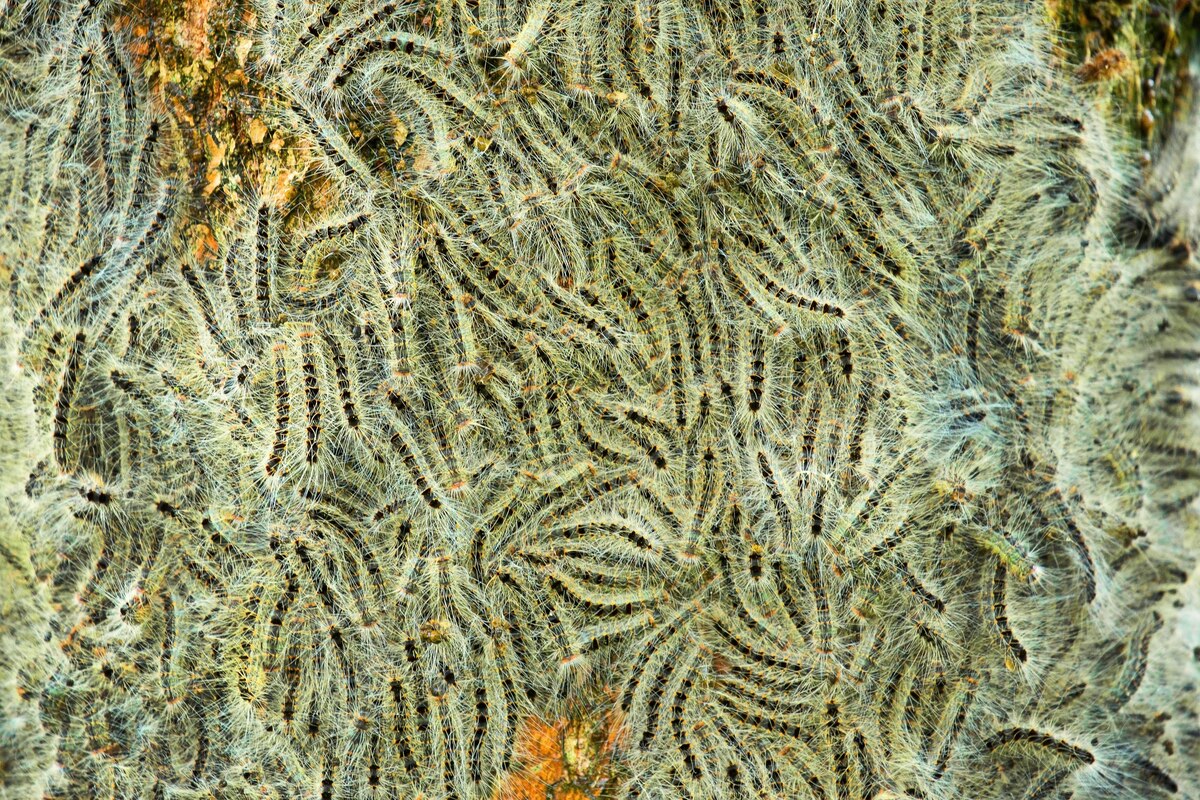
The life cycle of the Oak Processionary Moth is a precisely timed biological process that, under current environmental conditions, has become a formidable threat.
-
Late Summer/Early Autumn (July – September): The adult OPM, a nondescript grey-brown moth with a wingspan of three to four centimetres, emerges from its pupal stage. These nocturnal insects live only for a few days, dedicating this brief period solely to reproduction. The female moths deposit their clutches of approximately 100-200 eggs, typically in small, flat clusters, on the upper branches and twigs of oak trees, often camouflaged beneath lichen or bark flakes. These eggs are remarkably resilient, capable of overwintering even through moderate frost periods.
-
Spring (April – Early May): With the arrival of warmer temperatures, usually coinciding with the budding of oak leaves, the tiny caterpillars hatch. Initially, these first-instar larvae are largely inconspicuous, residing high in the tree canopy and feeding on the tender young leaves. They are not yet hazardous to humans at this stage.
-
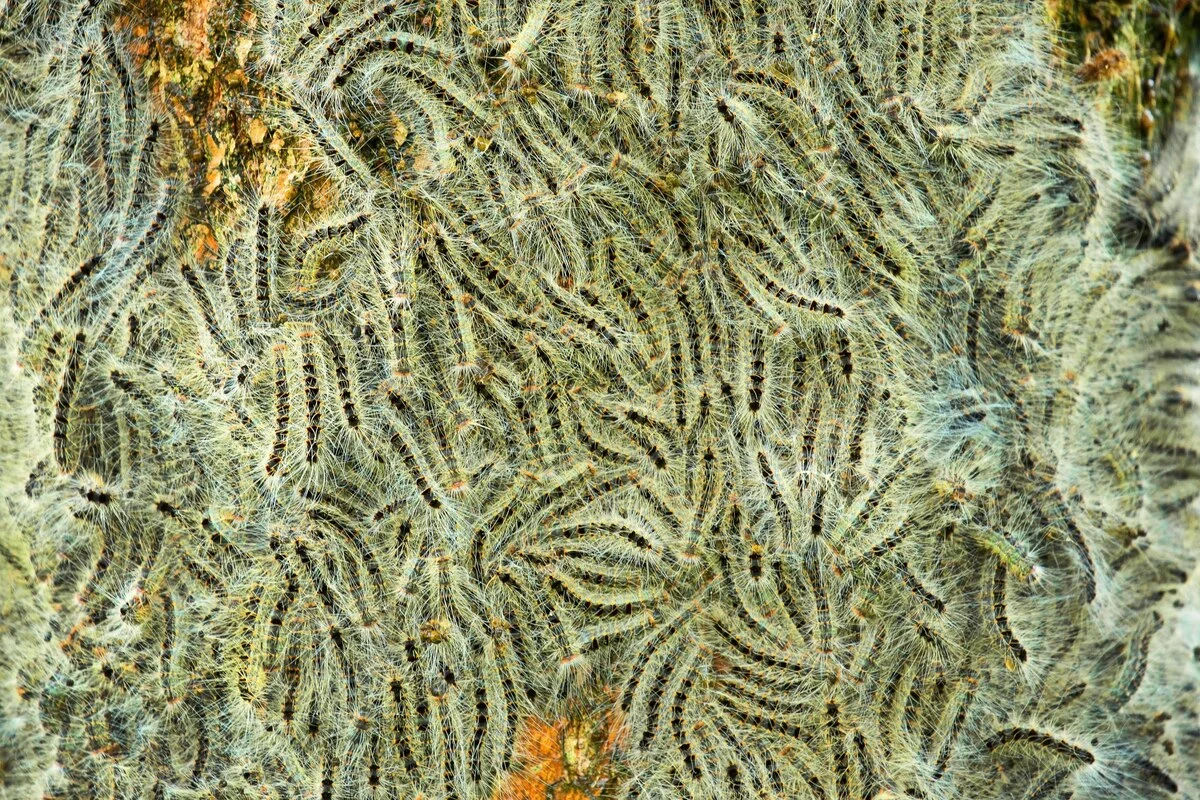
Late Spring/Early Summer (Late April – June): As the caterpillars grow through successive instars (larval stages), they undergo a critical transformation. From the third larval stage onwards (typically late April to early May), they begin to develop thousands of microscopic, barbed urticating hairs, known as setae. These hairs, barely visible to the naked eye, contain a potent allergenic protein called thaumetopoein. It is during this period that the caterpillars also exhibit their characteristic "processionary" behaviour, moving in head-to-tail lines, often numbering hundreds, as they forage for food at night. By day, they retreat into communal silken nests spun against the tree trunk or larger branches. These nests, which can grow to the size of a football or larger, are accumulations of larval skins, faeces, and shed urticating hairs, forming a dense, protective, and highly hazardous chemical barrier.

-
Mid-Summer (Late June – July): Having completed their feeding and growth, the caterpillars pupate within their communal nests. This is another critical period for public health, as the nests, now abandoned by the adult moths, remain a significant source of shed urticating hairs, which can be dislodged by wind or disturbance and dispersed into the environment for several years.
-
Late Summer (July – September): The cycle completes as the adult moths emerge from the pupae, mate, and lay eggs, perpetuating the infestation for the following year.
The timing of these stages is crucial for understanding and managing the OPM threat. The period from late April to July is when the caterpillars are most active and their urticating hairs are most prevalent and hazardous, necessitating immediate preventative and control measures.
Supporting Data: Climate Change, Health Risks, and Ecological Impact

The proliferation of the Oak Processionary Moth in Germany is not merely a cyclical occurrence but a stark indicator of broader ecological shifts driven by climate change.
-
Climate Change as a Catalyst: While the OPM is indigenous to Central and Southern Europe, its increasing frequency and northward expansion in Germany are directly linked to altered climatic patterns. The original article subtly hints at this, describing the OPM as a "left-green spinner" from an AfD perspective, warning of climate change. This satirical framing underscores a serious scientific reality: warmer, drier springs and summers create ideal conditions for the moth. Elevated temperatures accelerate larval development, leading to larger populations and more generations in some regions. Milder winters mean higher survival rates for overwintering eggs, as the frequency and intensity of harsh frost periods that would naturally decimate egg masses are diminishing. This human-induced "site advantage" significantly tips the ecological balance in favour of the OPM.
-
Profound Health Risks: The primary concern with OPM is the severe health reactions triggered by contact with its urticating hairs. These hairs are not merely an irritant; they are a sophisticated defence mechanism. Each hair is barbed and contains thaumetopoein, a protein that acts as a potent allergen and irritant. Exposure can occur through direct contact with caterpillars or nests, or indirectly, as the hairs become airborne and can travel several metres (and even further in windy conditions), settling on clothing, skin, and even entering ventilation systems.
- Dermatitis: The most common reaction is an intensely itchy skin rash (dermatitis), characterised by red, inflamed bumps or blisters. The itching can be severe and prolonged, often lasting for days or weeks.
- Respiratory Issues: Inhalation of hairs can cause irritation of the mucous membranes, leading to coughing, sore throat, bronchial spasms, and asthma-like symptoms. Individuals with pre-existing respiratory conditions are particularly vulnerable.
- Ocular Inflammation: Hairs entering the eyes can cause conjunctivitis, resulting in redness, swelling, itching, and irritation.
- Allergic Reactions: While less common, severe allergic reactions, including anaphylaxis, can occur in highly sensitised individuals. Symptoms may include swelling of the face and throat, difficulty breathing, dizziness, and a drop in blood pressure, requiring immediate medical attention.
- Animal Impact: Pets, particularly dogs, are also susceptible to OPM hairs, experiencing similar skin, eye, and respiratory irritations.
-
Ecological Impact on Oaks: The caterpillars are primarily defoliators of oak trees. While healthy, mature oaks can generally withstand a single season of defoliation, particularly as they often produce a second flush of leaves in late June after the caterpillars have pupated, repeated severe defoliation can weaken trees. This weakening makes them more susceptible to other stressors, such as drought, secondary pest infestations (e.g., bark beetles), and fungal diseases, potentially leading to long-term decline or even death. Younger trees, or those already stressed by urban conditions or previous environmental damage, are particularly vulnerable. The loss of leaves also reduces the tree’s ability to photosynthesise, impacting its growth and overall vitality. While the article notes that the damage to healthy trees is "manageable," the cumulative effect of annual infestations, coupled with other climate-related stresses, could have significant long-term implications for oak populations, a keystone species in many European ecosystems.

Official Responses and Control Measures
The annual recurrence of OPM infestations has consistently highlighted a critical gap in preparedness and coordination across many German municipalities, with Berlin frequently cited as an example of a city struggling to manage the crisis effectively.
-
Berlin’s Recurring Challenge: The original article points out that Berlin is "once again unprepared" for this "natural event," leading to "hectic activity." This unpreparedness manifests in several ways:
- Lack of Proactive Strategy: Instead of implementing long-term preventative measures, responses often remain reactive, focusing on containment after an infestation has become widespread.
- Inter-Agency Blame Game: There is a common issue of authorities declaring themselves "not responsible," indicating a lack of clear jurisdictional mandates and coordinated action between different departments (e.g., parks, public health, forestry).
- Resource Deficiencies: Insufficient funding and a shortage of trained personnel are consistently cited as major impediments to effective control. This echoes other urban management failures, such as dealing with black ice in winter, as noted in the article.
- Delayed Action: The critical window for effective intervention is often missed due to bureaucratic delays, meaning that by the time measures are implemented, the caterpillars have already developed their most hazardous hairs, or nests have become widespread.
-
Common Control Measures: A range of strategies is employed to combat OPM, each with its own advantages and limitations:

- Mechanical Removal: This is often considered the safest and most environmentally friendly method, particularly for public spaces. Specialized vacuum cleaners with filters are used to carefully suck up caterpillars and nests. This work must be performed by trained professionals wearing full protective gear to prevent exposure to hairs. Burning of nests in situ or after removal is also mentioned, but carries risks and is less common in populated areas.
- Biological Control: The application of biological insecticides, specifically formulations containing Bacillus thuringiensis (Bt), is a common approach. Bt is a naturally occurring bacterium that produces toxins harmful only to specific insect larvae, including caterpillars, when ingested. It is considered environmentally friendly as it does not harm other insects, birds, or mammals. However, it must be applied during the early larval stages (before urticating hairs are fully developed) for maximum effectiveness.
- Chemical Control: In severe cases or areas with high public exposure, chemical insecticides may be used. These are generally synthetic compounds that target the caterpillars directly. However, chemical control raises environmental concerns regarding potential non-target impacts on other insects, pollinators, and the wider ecosystem, and is therefore often a last resort, applied by specialized contractors.
- Pheromone Traps: These traps can be used to monitor adult moth populations and help determine the timing of egg laying and potential future infestations, aiding in early warning systems. They are not a primary control method but are valuable for surveillance.
- Public Awareness Campaigns: Educating the public about the dangers of OPM, how to identify nests, and the importance of avoiding contact is crucial. Signage in affected areas, public service announcements, and informational websites play a vital role in minimising public health risks.
Effective OPM management requires a multi-pronged approach combining proactive monitoring, early intervention, public education, and sufficient allocation of resources and trained personnel. The recurring challenges faced by cities like Berlin underscore the need for more robust, integrated, and forward-looking strategies rather than reactive, ad-hoc responses.
Implications: A Woven Tapestry of Challenges
The persistent presence and increasing spread of the Oak Processionary Moth weave a complex tapestry of implications, touching public health, environmental sustainability, urban planning, and economic stability.
-
Public Health Crisis: The most immediate and tangible implication is the public health risk. The closure of parks and recreational areas directly impacts quality of life, restricting access to green spaces essential for physical and mental well-being, especially in densely populated urban environments. Healthcare systems face increased pressure from individuals seeking treatment for severe dermatitis, respiratory issues, and allergic reactions. Public health agencies must invest in extensive awareness campaigns and robust monitoring systems to mitigate exposure, placing additional strain on already stretched resources. The psychological impact of fear of outdoor activities in affected areas should also not be underestimated.

-
Environmental Degradation and Biodiversity Loss: While healthy oaks are resilient, chronic defoliation by OPM, particularly when combined with other climate-induced stressors like drought, can lead to widespread tree weakening and mortality. This has profound implications for urban tree canopies, which provide essential ecosystem services: cooling cities, improving air quality, supporting biodiversity, and enhancing aesthetic value. The loss of oak trees can trigger cascading effects through the ecosystem, impacting other species that rely on oaks for food, shelter, or habitat. While OPM is native, its unchecked proliferation, driven by anthropogenic climate change, disrupts natural balances and signals a broader vulnerability in our ecosystems. The emphasis on monocultures of oaks in some areas also creates a fertile ground for the moth’s spread, suggesting a need for greater biodiversity in urban tree planting.
-
Economic Burden: Managing OPM infestations is a costly endeavour. The expenses include:
- Control Measures: Hiring specialised contractors for mechanical removal, purchasing biological or chemical insecticides, and deploying personnel.
- Public Safety Measures: The cost of erecting warning signs, temporary fencing, and patrolling affected areas.
- Healthcare Costs: Treating individuals affected by OPM-related health issues.
- Loss of Revenue/Productivity: Reduced tourism in affected parks, cancellation of outdoor events, and potential loss of productivity due to illness.
- Long-term Tree Care: Costs associated with replanting, treating weakened trees, and ongoing monitoring.
The economic impact can be substantial for municipalities, diverting funds from other essential public services.
-
Challenges in Urban Planning and Green Space Management: The OPM phenomenon forces urban planners and green space managers to rethink their strategies. There is a clear need for:
- Integrated Pest Management (IPM): Moving beyond reactive measures to implement comprehensive IPM strategies that combine biological, cultural, mechanical, and chemical tactics in a sustainable manner.
- Diversification of Tree Species: Reducing reliance on monocultures of oak trees in new plantings to build more resilient urban forests that are less susceptible to specific pest outbreaks.
- Proactive Monitoring and Early Warning Systems: Implementing systematic surveillance programs to detect OPM egg masses and early larval stages, allowing for timely and more effective intervention.
- Resource Allocation: Ensuring adequate funding and training for arborists, park rangers, and public health officials involved in OPM management.
- Inter-agency Coordination: Establishing clear lines of responsibility and communication between different governmental departments to avoid the "not responsible" syndrome and ensure a unified response.
-
Future Outlook: Given the projections for continued climate change, with warmer temperatures and more frequent dry spells, the OPM is likely to remain a significant and perhaps growing challenge. Its geographical range may continue to expand, and infestations could become even more intense and widespread. This necessitates a shift towards long-term adaptation strategies, viewing the OPM not as an isolated problem but as a persistent symptom of a changing climate that demands sustained attention and investment in ecological resilience and public health infrastructure. The philosophical closing thought of the original article – "What does an oak care if a spinner scratches it?" – might ring true for a single, healthy tree, but the cumulative impact on entire ecosystems and human communities is far from negligible. It serves as a potent reminder that even small creatures can exert immense influence in a world undergoing profound environmental transformation.