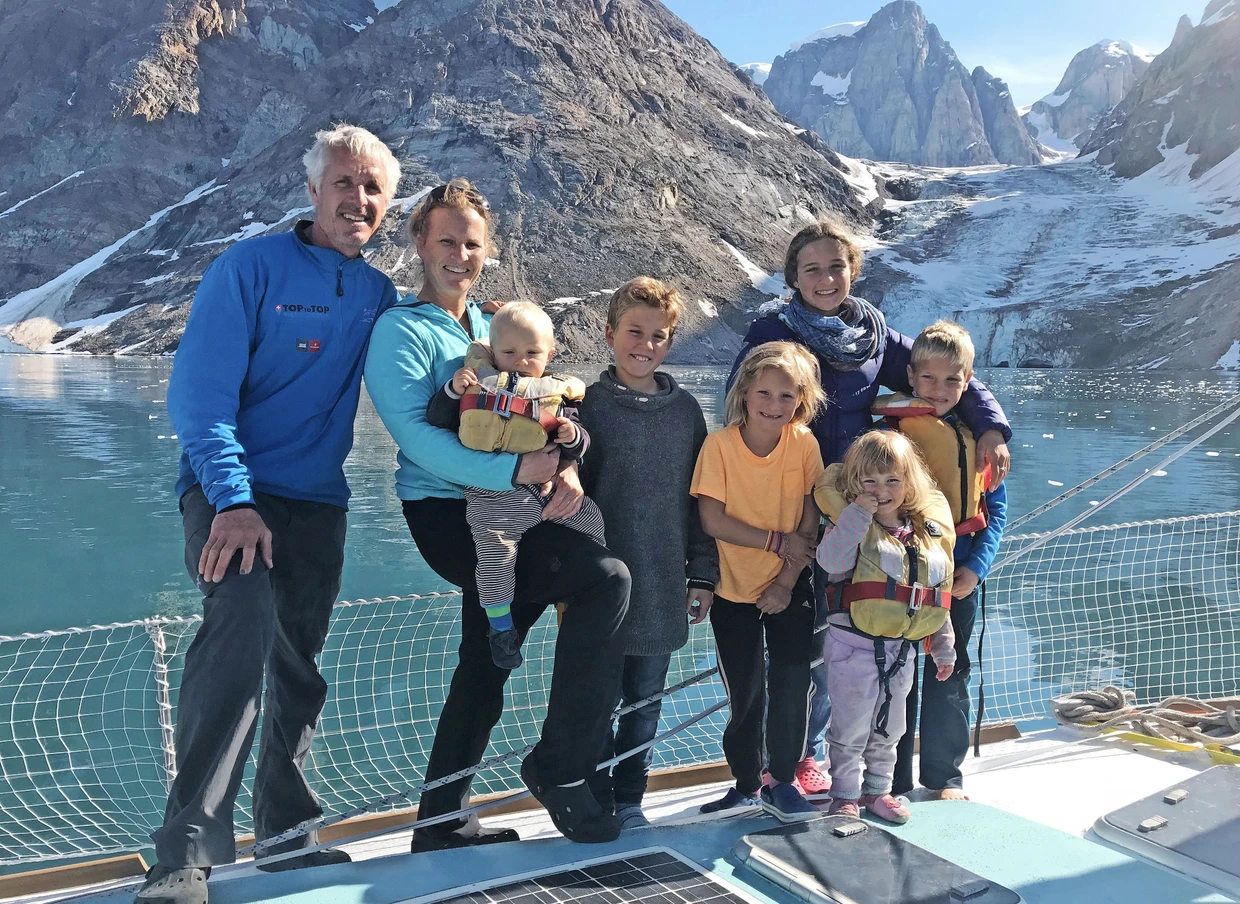
In July 2000, a young Swiss couple set sail from the French Mediterranean coast with a modest, if ambitious, plan: to circumnavigate the globe, traverse every major climate zone, and summit the highest mountain on each of the seven continents. They estimated the project would take four years. Today, more than 25 years later, Dario and Sabine Schwörer remain at sea. Their 15-meter aluminum yacht, Pachamama, has become more than a vessel—it is a home, a mobile research laboratory, and the birthplace of a new way of living. Having logged over 140,000 nautical miles (260,000 kilometers) and visited 100 countries, the Schwörers have redefined the boundaries of adventure, family, and environmental stewardship.
Main Facts: A Life Defined by the Horizon
The Schwörer family’s journey is defined by its radical commitment to sustainability and education. What began as a mountaineering project—dubbed "Top to Top"—evolved into the "Top to Top Global Climate Expedition." Dario, a trained mountain guide and climatologist, realized early on that their voyage offered a unique platform to witness and document the accelerating climate crisis.
Their mission has been strictly CO2-neutral, relying exclusively on wind, solar, and human power. Over the past two decades, the Pachamama has functioned as a floating science hub, collecting data on microplastics, algae, and water toxicity in some of the world’s most remote waters. Beyond the data, the family has become a roving educational force, visiting schools worldwide to inspire over 200,000 students to engage with the natural world.
Chronology of an Unlikely Expedition
The trajectory of the Schwörer voyage was never linear. Initially, the project stalled in the Mediterranean due to financial constraints, delaying their Atlantic crossing until 2002. In 2004, while navigating the Pacific toward Antarctica, disaster struck: the Pachamama collided with a shipping container. The vessel was severely damaged, and in the remote reaches of Patagonia, the family faced a critical juncture. With Sabine pregnant with their first child, the temptation to return to the stability of Switzerland was immense.
"When we said we were going to continue, people called us completely crazy," Dario recalls. Yet, they persevered. They had the hull repaired by local fishermen and committed to a life of movement.
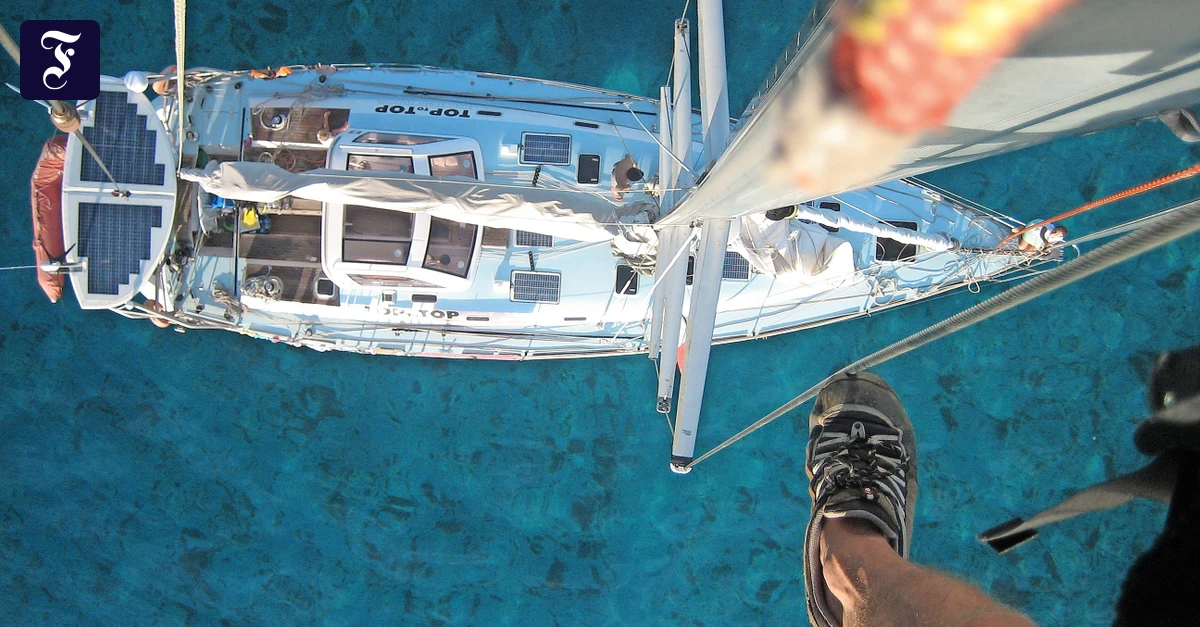
The subsequent years saw the family grow. Their six children—born in Chile, Patagonia, Australia, Singapore, Iceland, and Switzerland—have been raised within the 20-square-meter confines of the Pachamama. The logistics of raising six children on a boat are staggering; during particularly busy periods, the family has lived with up to 16 people on board, sleeping in shifts and adhering to a strict philosophy of "less is more."
Supporting Data: Scientific and Human Impact
The transformation of the Pachamama into a research vessel was catalyzed by the advent of satellite communication. In the mid-2000s, utilizing early Skype connections, the Schwörers began cold-calling universities. Their unorthodox approach—calling from the middle of the Pacific or the remote corners of South America—often resulted in direct connections with professors intrigued by their dedication.
This led to formal partnerships with institutions like the ETH Zurich, as well as universities in Singapore, Norway, and Canada. The family’s scientific output includes:
- Technological Testing: Using the yacht as a testbed for solar cells, advanced LEDs, and lithium battery efficiency.
- Environmental Sampling: Systematic collection of microplastic and cesium levels across the Atlantic and beyond.
- Collaborative Research: Hosting scientists and volunteers from 74 different nations to assist in various climate-related studies.
However, the most significant "data" collected is the anecdotal evidence of environmental change. Dario, who observed receding glaciers and melting permafrost in the Swiss Alps early in his career, has spent 25 years witnessing these phenomena on a global scale.
Official Responses and Philosophical Implications
The story of the Schwörer family invites a profound questioning of modern societal norms. When asked about their "end date," Dario responds with a perspective that challenges the Western obsession with linear time. "You wouldn’t ask a carpenter when they plan to finish being a carpenter," he notes. To him, the expedition is not a task to be completed, but a mode of existence.
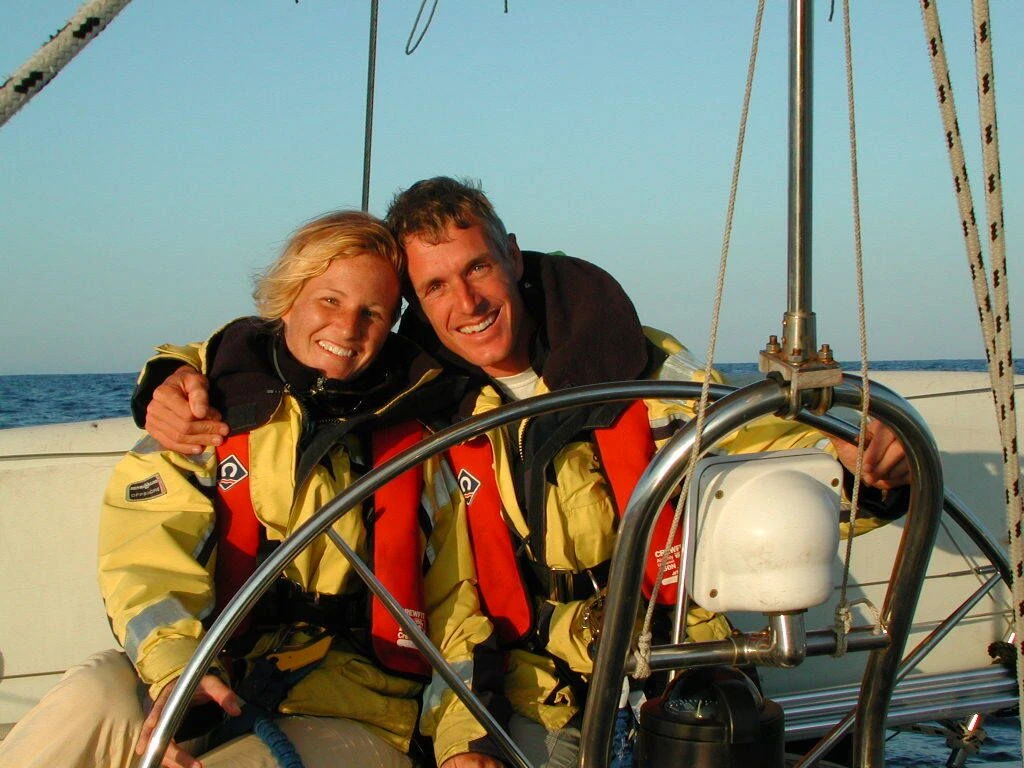
Dario’s critique of modern consumerism is sharp yet optimistic. He recounts conversations with friends back home who are tethered to material possessions—multiple cars, insurance policies, and maintenance schedules—that prevent them from experiencing the world. "The best medicine to save the world," he says, "is to go into nature. Then you fall in love with the environment and understand what it is all about. If you don’t do that, it’s like never hugging your partner."
The family’s resilience has been tested by two major interruptions: a foot injury that required Dario to seek medical care in Switzerland in 2015, and a catastrophic storm in 2018 that nearly destroyed the Pachamama off the coast of Iceland. Their brief return to land—living in a house in Graubünden—was arguably more difficult than their time at sea, as the constraints of sedentary life and the isolation of a standard home proved stifling compared to the community-driven life on the water.
The Legacy of the Ocean
As the family approaches their 25th wedding anniversary and the children move into adulthood, the legacy of the voyage is beginning to take root in the next generation. Their son, Noé, has already purchased his own boat, the Naomi, and is continuing the family’s mission, proving that this way of life has become an inheritance rather than a temporary phase.
The Schwörers maintain a grounded, if unconventional, outlook. They do not seek to be martyrs or figures of pity; they are, by their own admission, people who have chosen to prioritize experience over accumulation. Their story, documented in the film Home Is The Ocean and various literary projects, serves as a poignant reminder of the fragility of the planet and the human capacity for adaptation.
Looking forward, the roadmap remains open-ended. Greenland and Senegal are on the horizon, as is the eventual, long-delayed goal of reaching the Mount Vinson summit in Antarctica. For the Schwörers, the "Seven Summits" is no longer a checklist for ego-driven achievement; it is a backdrop for a life spent in constant, respectful dialogue with the elements.
In an age where the climate crisis often breeds apathy and "climate anxiety," the Schwörers offer a radical alternative: active, joyful engagement. They argue that by experiencing the world directly—by seeing the whales, feeling the winds, and witnessing the glaciers—one develops a visceral understanding of the earth that no classroom can provide.
"Time is relative," Dario concludes. While many hurry through life, fearing they are losing time by not moving fast enough, the Schwörers have found that by moving slowly, they have gained a lifetime of substance. Their odyssey continues, not because they are fleeing their responsibilities, but because they have found a deeper, more profound responsibility toward the planet and the next generation. The Pachamama continues to sail, a small, white speck against the vast, blue uncertainty of the future, driven by the wind and the unwavering conviction of a family that chose the horizon over the hearth.