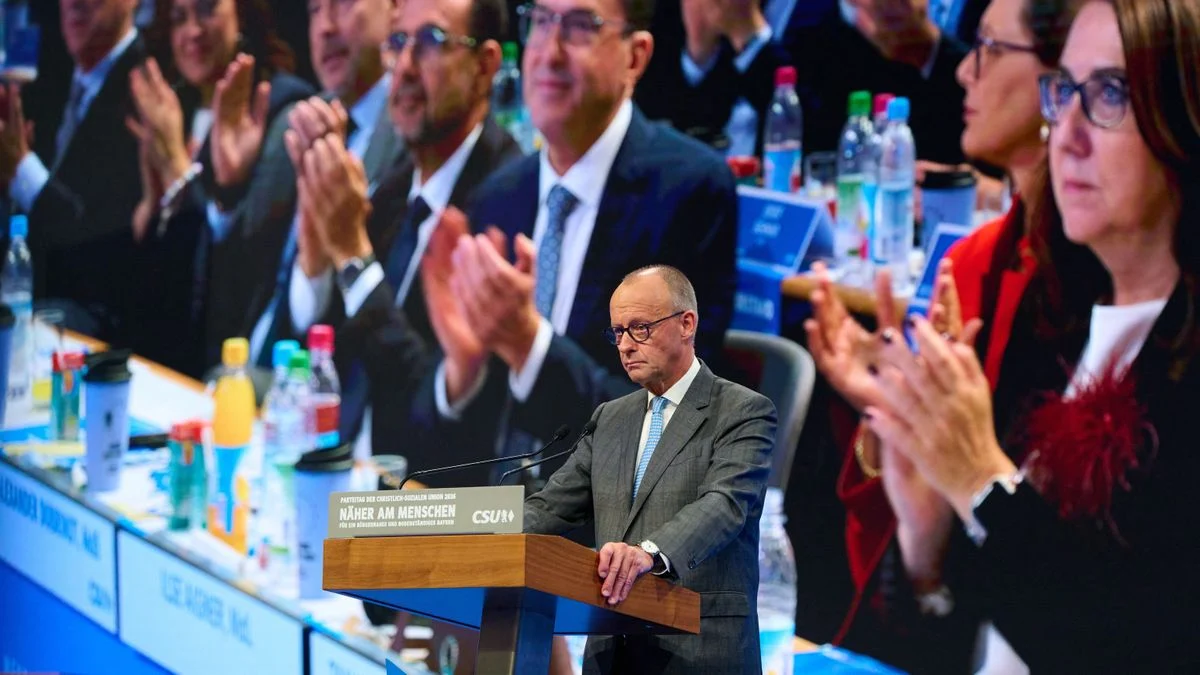
Munich, Germany – October 24, 2026 – In a highly anticipated appearance at the Christian Social Union (CSU) party conference in Munich, German Chancellor Friedrich Merz delivered a passionate address, imploring the sister parties of the Union – the Christian Democratic Union (CDU) and CSU – to stand united and swiftly implement critical reforms to navigate Germany’s challenging economic and social landscape. While receiving a minutes-long standing ovation, Merz conspicuously sidestepped a contentious proposal from the CSU regarding the next federal president, signaling underlying tensions within the conservative alliance.
The atmosphere in the Munich exhibition hall was charged as Merz, accompanied by CSU leader and Bavarian Minister-President Markus Söder, made his entrance to the iconic strains of "Eye of the Tiger," performed live by a Bavarian brass band. The symbolic choice of music, a nod to resilience and fighting spirit, underscored the chancellor’s message: the Union must fight to maintain its position as the strongest political force in Germany and confront the multifaceted challenges facing the nation.
Main Facts: A Call to Arms and Strategic Silence
Chancellor Friedrich Merz’s speech at the CSU party conference on October 24, 2026, served as a potent rallying cry for conservative unity and decisive action. His central message revolved around the imperative for the CDU and CSU to present a united front, not merely to secure electoral dominance but to effectively govern and safeguard Germany against extremist forces. Merz articulated a clear roadmap for the immediate future, emphasizing the urgent need to implement a comprehensive reform package initiated in July, address escalating living costs, stabilize social security systems, and bolster the nation’s economic competitiveness.
A cornerstone of his economic agenda was the pledge to reduce electricity taxes in the coming year, a measure aimed at directly alleviating financial burdens on consumers and businesses. This commitment reflects a recognition of widespread public discontent over high energy prices and their impact on household budgets and industrial viability.
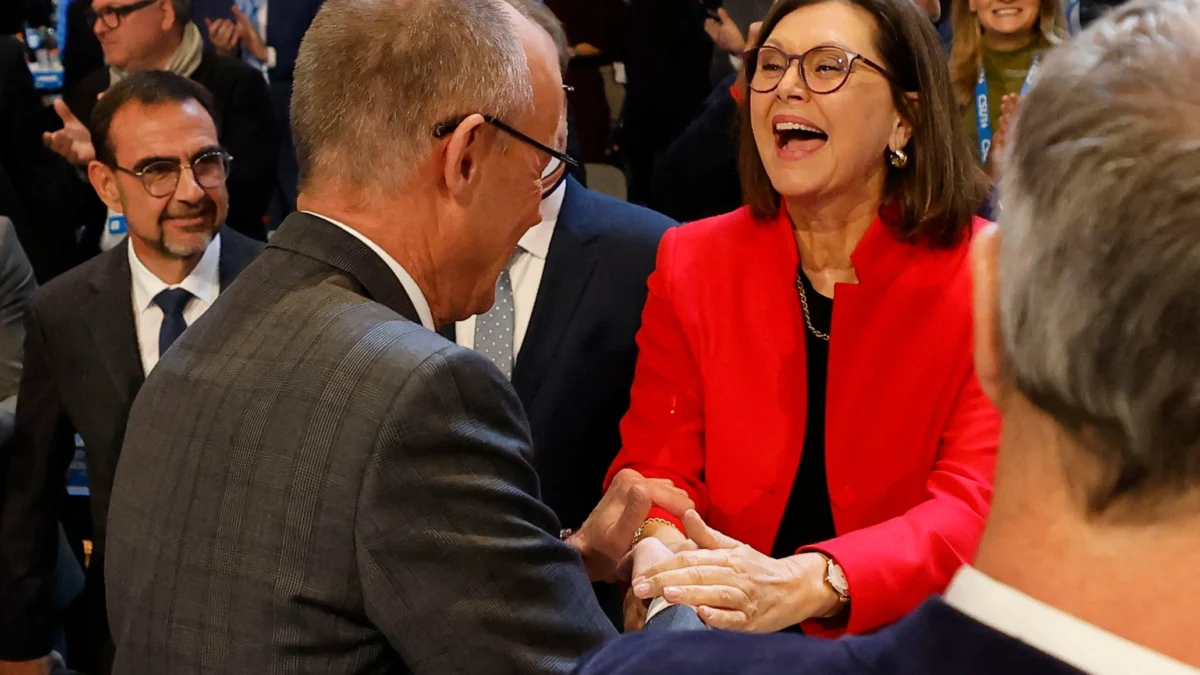
However, a notable omission from Merz’s nearly hour-long address was any comment on the CSU’s recent proposal to nominate Bavarian State Parliament President Ilse Aigner for the federal presidency. Despite the warm reception, including a double-cheek kiss greeting for Aigner upon his arrival and her prominent mention after Söder in his opening remarks, Merz maintained a strategic silence on the issue. This silence highlighted a brewing internal dispute, as the CDU leadership had previously indicated its intent to nominate a candidate from its own ranks.
The chancellor’s forceful condemnation of extremism, both left and right, and his unequivocal rejection of any cooperation with the Alternative for Germany (AfD), resonated strongly with the delegates. He declared that those who contemplate aligning with the AfD have no place within the Union, drawing a clear ideological line in the sand.
Merz’s speech, marked by its directness and call for collective resolve, culminated in nearly four minutes of standing applause from the approximately 700 delegates, matching the enthusiastic reception afforded to CSU leader Söder the previous day. This demonstrated the CSU base’s willingness to embrace the CDU leader, despite the unspoken differences.
Chronology of Events: A Partnership Forged in Challenges
The relationship between the CDU and CSU, often described as a "union of sisters," is characterized by a delicate balance of shared conservative principles and distinct regional interests. Historically, this partnership has been the bedrock of center-right politics in Germany, enduring periods of close collaboration as well as internal friction. The current political climate of 2026 adds another layer of complexity, with the Union facing significant pressures both internally and from a fragmented political landscape.
Historical Context of CDU/CSU Relations:
For decades, the CDU, operating in 15 of Germany’s 16 states, and the CSU, exclusively in Bavaria, have formed a single parliamentary group in the Bundestag. This unique arrangement reflects their shared ideological foundation but also acknowledges Bavaria’s distinct cultural and political identity. While generally harmonious, moments of tension have arisen, particularly concerning leadership, federal policies, and strategic direction. The "Strauss-Schmidt years" of the 1970s and the "Stoiber-Merkel rivalry" in the early 2000s are just two examples of high-profile disagreements that tested the unity of the "Union." Despite these episodes, the parties have consistently reaffirmed their commitment to mutual support, recognizing that their combined strength is greater than the sum of their individual parts.
Current Political Landscape (2026):
By 2026, Germany finds itself grappling with a series of profound challenges. The economic recovery post-pandemic has proven fragile, exacerbated by geopolitical uncertainties, supply chain disruptions, and inflationary pressures. Merz’s chancellorship, presumably leading a CDU-led coalition (with the SPD as indicated by his later remarks), faces the daunting task of steering the nation through these turbulent waters. Social security systems – pensions, healthcare, and long-term care – are under immense strain due to demographic shifts and rising costs. Furthermore, the political spectrum has become increasingly polarized, with both far-left and far-right parties gaining traction, threatening the traditional consensus politics that have long characterized Germany. The AfD, in particular, has continued to challenge the established parties, making the Union’s stance against extremism more critical than ever.

Pre-Conference Presidential Nomination Discussions:
The issue of the federal presidency emerged as a subtle but significant point of contention ahead of the CSU party conference. The current Federal President’s term is nearing its end, prompting discussions about potential successors. Bavarian Minister-President Markus Söder, a figure known for his strategic acumen and political ambition, had previously and publicly championed Ilse Aigner, the respected President of the Bavarian State Parliament, as a suitable candidate for the nation’s highest ceremonial office. Söder’s endorsement was a clear signal of the CSU’s aspiration to elevate one of its own to a prominent federal position, potentially increasing Bavaria’s influence on the national stage. However, this move was met with a lukewarm, if not subtly resistant, response from the CDU leadership. Reports from CDU party circles indicated a strong desire for the larger sister party to nominate a candidate from its own ranks, asserting its prerogative in such a crucial federal appointment. This pre-conference jostling underscored the inherent power dynamics and occasional rivalry within the Union.
Merz’s Arrival and Speech:
The day of Merz’s address was orchestrated to project unity and strength. His entrance alongside Söder, accompanied by the rousing "Eye of the Tiger" performed by a local brass band, was a masterclass in political symbolism, aiming to evoke a sense of fighting spirit and shared purpose. Merz wasted no time in extending gratitude for the "heartfelt welcome," acknowledging the unique character of CSU party conferences. His speech itself was carefully structured. He immediately recognized Söder, then notably Ilse Aigner, eliciting a "storm of jubilation" from the delegates – a clear indicator of the CSU’s enthusiasm for their proposed candidate, and perhaps a subtle challenge to Merz’s non-committal stance.
Merz’s speech then pivoted to the core themes of unity and reform. He frankly admitted the Union was in a "difficult situation," conceding that there was "no exclusive claim to the chancellorship." This humility served to underscore his argument that CDU and CSU "must stand closer together than ever before" to prevent Germany from falling into the hands of "extremist forces." His robust condemnation of both left and right-wing extremism, coupled with his unequivocal rejection of any collaboration with the AfD, was a powerful declaration of democratic values and a clear boundary for conservative politics.
Post-Speech Reception:
The conclusion of Merz’s address was met with an enthusiastic display of support. Nearly four minutes of standing applause from the delegates signaled a strong endorsement of his leadership and his vision for the Union. The duration of the applause, nearly matching that received by Söder the day prior, was a significant political gesture, demonstrating that Merz had successfully connected with the CSU base despite his tactical silence on Aigner’s presidential bid. The sustained ovation underscored the delegates’ appreciation for his clear messaging on economic reforms, national unity, and the firm stand against extremism, suggesting a widespread desire within the CSU for strong, unified leadership in challenging times.
Supporting Data and Context: Germany at a Crossroads
Merz’s speech was not merely rhetorical; it was rooted in the tangible socio-economic realities confronting Germany in 2026. The chancellor’s emphasis on rapid reform and economic revitalization reflects a deep concern about the nation’s trajectory.
The State of the German Economy (2026):
By 2026, Germany’s economy, traditionally robust, is depicted as being "under pressure." This likely signifies a period of slower growth, possibly even a technical recession, combined with persistent inflationary trends that have eroded purchasing power. Key indicators would include declining industrial output, a slump in investment, and a cautious consumer climate. The "high prices" mentioned by Merz are not just an inconvenience but a significant burden for households, affecting everything from basic necessities to energy costs. The social security systems – pensions, health insurance, and long-term care – are facing an unprecedented demographic crunch. An aging population means fewer contributors supporting more beneficiaries, threatening the long-term solvency of these foundational pillars of the German welfare state. Merz’s call for reforms in "Rente, Gesundheit, und Pflege" (pensions, health, and care) points to the urgent need for structural adjustments to ensure these systems remain viable for future generations. His repeated assertion that "Germany must remain an industrial nation" underscores the existential threat perceived by the government regarding deindustrialization, driven by high energy costs, bureaucratic hurdles, and global competition. The reforms Merz advocates are likely to include measures to cut red tape, incentivize private investment, foster innovation, and streamline regulatory processes to enhance Germany’s competitive edge.
Energy Policy and Electricity Tax:
The commitment to reduce electricity tax is a direct response to the energy crisis that has gripped Europe in recent years. While the immediate shock of 2022-2023 might have subsided, the underlying structural issues – high wholesale prices, geopolitical dependencies, and the costly transition to renewable energies – continue to impact consumers and businesses. High electricity costs are a significant factor in the perceived threat to Germany’s industrial base. A reduction in electricity tax would offer immediate relief, boosting consumer spending and reducing operational costs for energy-intensive industries. This measure is seen as crucial not just for individual households but also for maintaining Germany’s status as an attractive location for manufacturing and innovation.
The Threat of Extremism (AfD):
Merz’s strong stance against extremism reflects a growing national concern about political polarization. The AfD, a right-wing populist party, has continued to gain ground, capitalizing on anxieties related to immigration, economic hardship, and distrust in established institutions. By 2026, its electoral successes might have prompted Merz to issue an unequivocal rejection of any cooperation. His declaration that "those who believe they can lend their voice to these people have no place in our Union" is a powerful ideological statement, aimed at reinforcing the Union’s commitment to democratic values and preventing any normalization of extremist narratives within mainstream conservative politics. This also applies to "left-wing extremism," indicating a broader concern about radicalization across the political spectrum.
The Federal Presidency Debate:
The Federal President in Germany holds a largely ceremonial but symbolically significant role. As head of state, the president represents Germany internationally, embodies national unity, and plays an important role in constitutional checks and balances. The election of the president by the Federal Convention (Bundesversammlung), comprising Bundestag members and state parliament representatives, makes it a highly political process, requiring broad consensus.
The CSU’s proposal of Ilse Aigner is significant for several reasons. Firstly, it would mark a high-profile national role for a Bavarian politician, a source of pride and influence for the CSU. Secondly, Aigner, a seasoned politician with a reputation for moderation and consensus-building, would be a strong candidate. Merz’s silence, however, highlights the internal power struggle. The CDU, as the larger party, typically expects to have a dominant say in such nominations. Its desire to put forward its own candidate underscores the ongoing internal dynamics and the potential for friction if the two sister parties cannot agree on a joint nominee. This episode tests the limits of their professed unity and collaborative spirit.
CDU/CSU Dynamics: The "Particular Kind of Doppelganger":
Merz’s characterization of the CSU as a "particular kind of doppelganger" for the CDU is a nuanced acknowledgement of their unique relationship. It signifies that while they are separate entities with distinct regional identities and political bases, they are fundamentally mirror images of each other in terms of core values, ideological orientation, and political objectives. The phrase "we have something that holds us together… above all, the awareness that together we are stronger than alone" perfectly encapsulates the pragmatic and ideological glue binding them. This recognition of interdependence is crucial for their continued electoral success and their ability to wield significant influence in federal politics.

Official Responses and Reactions: Navigating Internal and Coalition Pressures
The reception of Merz’s speech, coupled with his specific pronouncements, provides insight into the complex web of political relationships he must navigate – within the Union and with his coalition partners.
Merz’s Rhetoric and Strategic Ambiguity:
Chancellor Merz’s speech was a carefully crafted blend of strong leadership and strategic ambiguity. His powerful call for unity and urgent reforms was delivered with conviction, signaling a chancellor determined to address the nation’s challenges head-on. By praising CSU figures like Markus Söder for his "clear language" and fighting spirit, and individually acknowledging CSU federal ministers (Alexander Dobrindt for Interior, Dorothee Bär for Research, and Alois Rainer for Agriculture), Merz skillfully affirmed the CSU’s contributions to the government. This public commendation was a gesture of respect and an attempt to foster goodwill, particularly important given the presidential nomination dispute.
His silence on Ilse Aigner’s potential presidency, however, was a calculated move. It allowed him to avoid an open confrontation with the CSU while simultaneously not undermining the CDU’s own aspirations. This strategic non-committal stance reflected a nuanced approach to internal party management, acknowledging the CSU’s proposal without endorsing it, thereby keeping all options open for the CDU.
Söder’s Support and Aigner’s Enthusiastic Reception:
Markus Söder’s role as host and staunch advocate for Ilse Aigner was equally significant. His escort of Merz into the hall and his enthusiastic endorsement of Aigner for the federal presidency ("that would be a great thing") demonstrated his commitment to promoting Bavarian interests and elevating a CSU figure to national prominence. The "storm of jubilation" from the delegates when Aigner was mentioned, and her subsequent need to stand and wave, underscored the strong support for her within the CSU ranks. This public display of affection for Aigner put subtle pressure on Merz and the CDU, highlighting the CSU’s serious intent behind their proposal. Söder’s statement that the decision would be made "elsewhere" was a pragmatic acknowledgment of the broader political process, yet his persistent advocacy left no doubt about the CSU’s preference.
Delegates’ Reception: A United Front?
The "almost four minutes of standing applause" for Merz was a powerful indicator of the CSU delegates’ readiness to embrace the CDU leader. This enthusiastic reception suggests that despite the underlying tensions regarding the presidential nomination, the CSU base largely supports Merz’s leadership and his agenda for Germany. The shared concerns over economic stability, rising prices, and the threat of extremism likely resonated deeply with the delegates, creating a common ground that transcended immediate party differences. The equal length of applause for Merz and Söder further symbolizes a perceived parity in their leadership and a desire for a strong, unified Union.
Implications for the Coalition Partner (SPD):
Merz’s direct address to the coalition partner, the SPD, was a clear signal of the pressures within the government. His statement, "What we have agreed upon together, stands. And what we have agreed upon together, should now be implemented quickly," hints at potential delays or disagreements within the coalition regarding the pace and scope of the reform package. This public call for swift action suggests that Merz is eager to demonstrate the government’s capacity for effective governance and may be using the CSU platform to exert pressure on the SPD to accelerate legislative processes. The reforms, particularly those concerning economic growth and social security, are complex and often contentious, requiring delicate negotiations and compromise within the coalition. Merz’s message underscores the urgency he attaches to these issues and his expectation that the SPD will honor their joint commitments without undue delay.
Implications and Future Outlook: A Precarious Path Ahead
The CSU party conference, with Chancellor Merz’s pivotal address, has set the stage for a period of critical decision-making and delicate political maneuvering for the Union and the German government.
For the Union (CDU/CSU):
The primary implication for the CDU and CSU is the imperative to maintain unity in the face of internal and external pressures. While Merz’s speech showcased a strong desire for cohesion, the unresolved issue of the federal presidency remains a potential flashpoint. The ability of the two sister parties to agree on a joint candidate, or at least manage their disagreement without public acrimony, will be a significant test of their partnership. A failure to present a united front could weaken their electoral prospects, particularly as Germany heads towards the next federal elections. Conversely, successful navigation of these internal dynamics could reinforce their position as a stable and credible political force, capable of attracting broad support across the country. The unequivocal rejection of the AfD is a crucial strategic decision, aiming to draw a clear line against radicalization and consolidate the centrist conservative vote.
For the German Government (Merz’s Chancellorship):
Chancellor Merz’s chancellorship faces formidable challenges in the coming months. The rapid implementation of the reform package is paramount for economic stability and regaining public confidence. The specific reforms in pensions, healthcare, and long-term care will require difficult political choices and potentially unpopular measures. Success in these areas will be crucial for the government’s legitimacy and Merz’s political standing. Failure could lead to increased public dissatisfaction and further erode trust in political institutions. The commitment to reduce electricity tax is a popular measure, but its implementation will depend on fiscal realities and the broader energy market. The government’s ability to "bring our economy back on a growth path" and ensure Germany "remains an industrial nation" will define Merz’s economic legacy. This involves fostering a pro-business environment, investing in future technologies, and ensuring energy security at competitive prices.
For the Broader Political Landscape:
The ongoing struggle against extremism, both left and right, will continue to shape Germany’s political discourse. The Union’s firm stance against the AfD is a bulwark against the erosion of democratic norms and values. However, addressing the root causes of extremist appeal – economic insecurity, social discontent, and distrust in institutions – will require more than just rhetorical condemnation. It demands effective governance, tangible improvements in living standards, and a renewed sense of hope for the future. The debate over the federal presidency will also highlight the consensus-building capacity of Germany’s political system. The outcome will be watched closely as a barometer of the willingness of established parties to compromise and find common ground for the nation’s highest office.
Conclusion:
Friedrich Merz’s address at the CSU party conference was a powerful affirmation of the Union’s commitment to unity, economic prosperity, and democratic resilience. His call for urgent reforms and his firm stance against extremism resonated strongly, earning him significant applause. However, the strategic silence on the federal presidency revealed a latent tension that will require careful management. As Germany faces a complex array of economic, social, and political challenges in 2026, the ability of the CDU and CSU to translate their professed unity into decisive action and navigate their internal differences will be crucial for the stability of Merz’s chancellorship and the future direction of the nation. The "Eye of the Tiger" might have set the tone for a fight, but the real battle for Germany’s future will be won or lost in the delicate dance of policy implementation and political consensus.