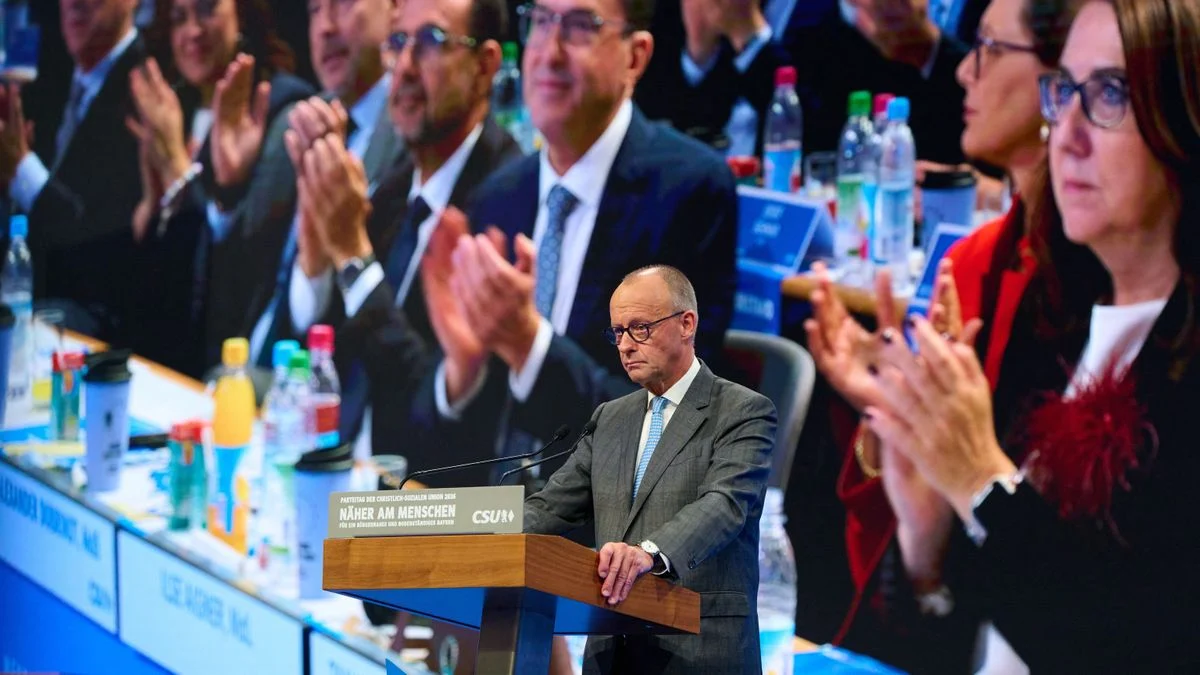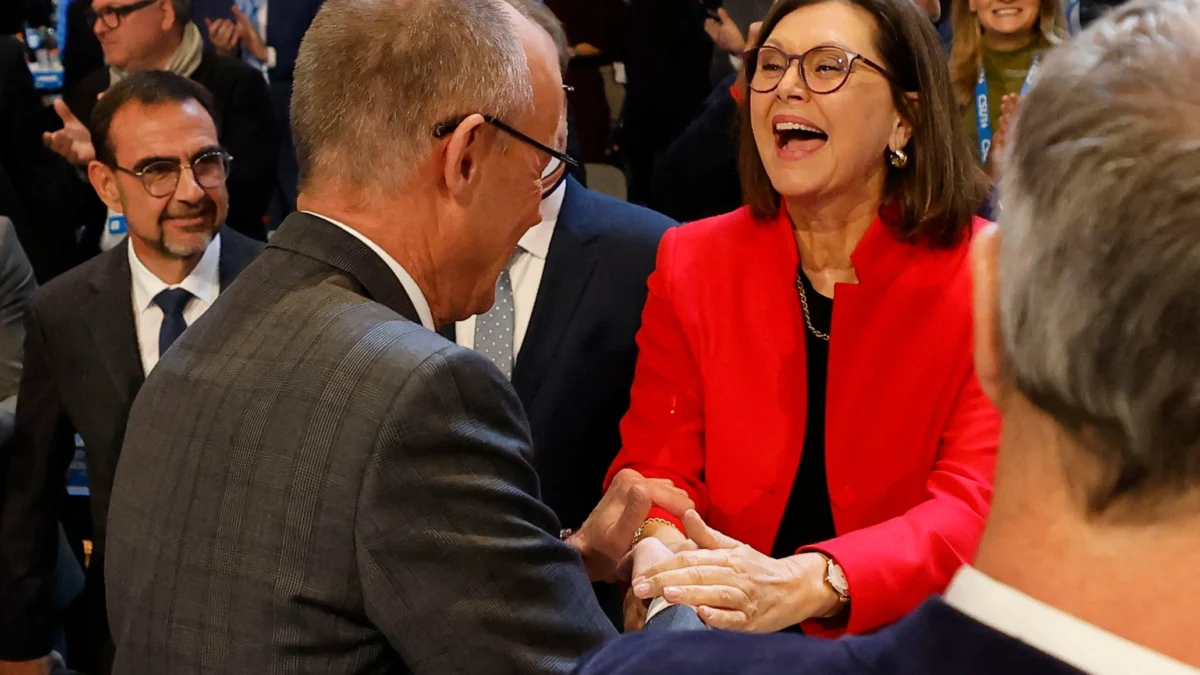
Munich, Germany – A seemingly simple gesture at the Christian Social Union (CSU) party congress in Munich has ignited a fervent debate within Germany’s conservative political landscape, putting immense pressure on the leadership of the CDU/CSU Union to clarify its stance on the next Federal President. During his keynote address, Friedrich Merz, leader of the Christian Democratic Union (CDU) and the current head of the opposition, delivered a warm, personal greeting to Bavarian State Parliament President Ilse Aigner (CSU), triggering an immediate and enthusiastic ovation from the assembled delegates. This "Aigner moment," as it quickly became known, has intensified calls from within the CSU for Aigner to be nominated for the nation’s highest ceremonial office, highlighting the intricate power dynamics and strategic calculations at play between the sister parties.
The incident, which saw delegates rise in a spontaneous show of support for Aigner, underscores the growing momentum behind her potential candidacy, while simultaneously exposing the unresolved tensions between the CDU and CSU regarding the presidential nomination. Merz’s careful yet impactful acknowledgement of Aigner, positioned prominently after CSU Chairman Markus Söder and before European People’s Party leader Manfred Weber in his opening remarks, was widely interpreted as a significant, albeit indirect, signal from the CDU leadership.
Main Facts: An Unmistakable Endorsement
The core of the unfolding political drama lies in the sequence of events at the CSU party congress. As Friedrich Merz, leader of the CDU and a pivotal figure in the German opposition, took to the podium in Munich, his initial greetings set an unexpected tone. Following the traditional acknowledgement of CSU Chairman Markus Söder, Merz pointedly named Ilse Aigner, the President of the Bavarian State Parliament. This seemingly innocuous act was met with an immediate explosion of applause and cheers from the assembled CSU delegates, many of whom rose to their feet in a powerful display of support. Aigner, seated in the front row, reciprocated by standing and waving to the jubilant crowd.

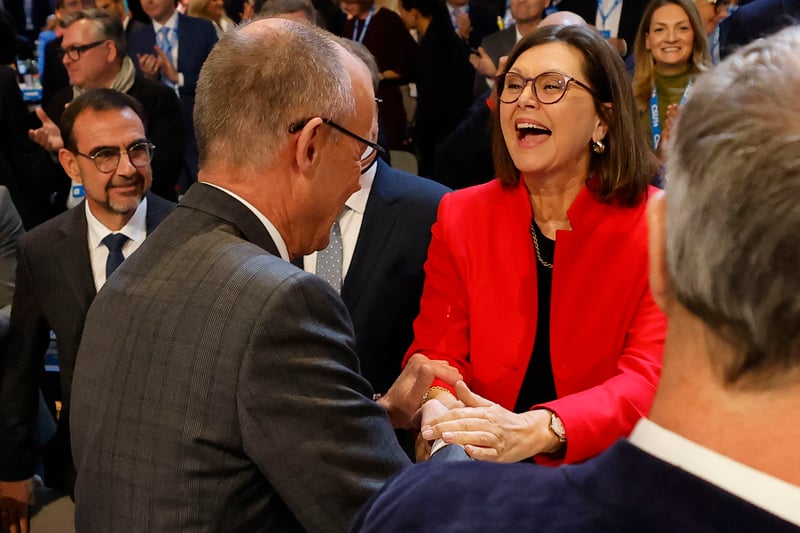
The warmth of Merz’s greeting extended beyond the public address; sources noted that upon entering the hall, he had greeted Aigner, along with other prominent figures like Federal Research Minister Dorothee Bär, with familiar cheek kisses. This personal touch, coupled with the strategic placement of her name in his opening remarks, elevated the moment beyond mere protocol. It became an unmistakable, if unofficial, endorsement from a key figure in the CDU, signalling a potential shift in the Union’s approach to the upcoming Federal Presidential election. The spontaneous jubilation underscored the CSU’s strong desire to see Aigner ascend to the presidency, amplifying the pressure on both parties to resolve the delicate question of their joint candidate.
Chronology of a Budding Candidacy
The ground for Ilse Aigner’s potential presidential candidacy has been carefully prepared over several months, culminating in the symbolic events at the CSU party congress.
- Late April (Year unspecified but implied prior to congress): CSU Chairman and Bavarian Minister-President Markus Söder first publicly floated Ilse Aigner’s name as a potential candidate for the Federal Presidency. This initial mention marked the formal entry of Aigner into the national political discourse regarding the highest office, signaling a clear ambition from the CSU.
- Subsequent Months: Following Söder’s initial endorsement, Aigner’s name began to be consistently discussed within CSU circles as a highly viable and popular choice. The party steadily built a narrative around her suitability for the role, emphasizing her experience, unifying persona, and strong public appeal within Bavaria and beyond.
- Friday (Prior to Merz’s Speech) at the CSU Party Congress: Markus Söder, in his own keynote address to the party delegates, reiterated his strong advocacy for Aigner. He openly stated that while the final decision on the presidential candidate would be made "elsewhere" – referring to the Federal Convention, the body responsible for electing the president – he firmly believed that Aigner’s presidency "would be a great thing." This direct appeal from the party leader solidified the CSU’s collective aspiration and amplified the internal pressure within the Union.
- Shortly Before Merz’s Speech: As Friedrich Merz made his entrance into the convention hall, he engaged in personal greetings with several prominent figures. Notably, he shared "kisses on the left and right" with both Ilse Aigner and Federal Research Minister Dorothee Bär, among others. This seemingly informal interaction added a layer of personal warmth and respect to his later public acknowledgement.
- Merz’s Keynote Address: The pivotal moment occurred at the outset of Merz’s speech. Directly after acknowledging CSU leader Markus Söder, Merz explicitly named Ilse Aigner. The ensuing spontaneous eruption of applause and standing ovation from the CSU delegates underscored the deep desire within the party for her candidacy. Aigner’s own reaction – standing and waving with both hands – further solidified the emotional resonance of the moment. Merz’s decision to single out Aigner, especially given the ongoing speculation and the CDU’s previously reserved stance, was a calculated political move that simultaneously acknowledged CSU sentiment and kept the Union’s options strategically open.
This carefully orchestrated and emotionally charged chronology illustrates the CSU’s concerted effort to promote Aigner, and Merz’s delicate balancing act between acknowledging an ally’s aspirations and preserving his own party’s strategic flexibility.
Supporting Data: The Landscape of German Presidential Politics
To fully appreciate the significance of Merz’s gesture and the CSU’s advocacy for Ilse Aigner, it is crucial to understand the context of the German Federal Presidency and the inter-party dynamics of the CDU/CSU Union.
The Role of the Federal President:
Germany’s Federal President (Bundespräsident) holds a largely ceremonial but profoundly important position. Unlike the executive power vested in the Chancellor, the President acts as the head of state, symbolizing the unity and moral authority of the Federal Republic. Their duties include:
- Representing Germany domestically and internationally.
- Signing laws into effect.
- Nominating the Chancellor (though usually following parliamentary outcomes).
- Dissolving parliament under specific constitutional conditions.
- Exercising a moral and integrating function, often serving as a non-partisan voice above day-to-day political disputes.
The office requires a figure of broad public appeal, integrity, and the ability to unite diverse segments of society.
The Election Process:
The Federal President is not directly elected by the populace but by the Federal Convention (Bundesversammlung). This body comprises all members of the Bundestag (the federal parliament) and an equal number of delegates elected by the state parliaments. This structure ensures broad representation and typically requires cross-party consensus or at least significant negotiation to secure a majority. The selection process is often a barometer of inter-party relations and an opportunity for parties to demonstrate their influence and unity.
Ilse Aigner’s Profile:
Ilse Aigner is a highly respected and experienced politician within the CSU. Her career highlights include:
- Bavarian State Parliament President (Landtagspräsidentin): A powerful and visible role in Bavaria, demonstrating her leadership and ability to navigate parliamentary procedures.
- Former Federal Minister: She served as Federal Minister of Food, Agriculture and Consumer Protection from 2008 to 2013 under Chancellor Angela Merkel. This federal experience gives her national recognition and a proven track record in a demanding cabinet position.
- Former Bavarian State Minister: Prior to her federal role, and again after, she held various ministerial portfolios in Bavaria, including Economic Affairs, Media, Energy and Technology, and Building and Transport.
- Public Appeal: Aigner is widely seen as a pragmatic, down-to-earth politician with a strong connection to the people of Bavaria. Her approachable demeanor and extensive experience across federal and state levels make her an attractive candidate who could appeal to a broad electorate within the Federal Convention. Her status as a woman in a high office also adds a contemporary dimension to her candidacy, resonating with calls for greater gender representation in top political roles.
The CDU/CSU Union Dynamics:
The CDU and CSU operate as sister parties, forming a single parliamentary group in the Bundestag. While united at the federal level, they maintain distinct organizational structures and often exhibit regional differences in policy and priorities. The selection of a joint presidential candidate is always a delicate negotiation:
- Historical Precedent: Historically, the Union has often presented a joint candidate, frequently a CDU politician, reflecting the CDU’s larger national footprint. However, there have been instances where CSU figures were considered or put forward.
- Power Balance: The CSU, though smaller, wields significant influence as the dominant party in Bavaria. Securing the presidency for a CSU member would be a significant symbolic and political victory, reinforcing its standing within the Union and nationally.
- Internal Tensions: Despite their alliance, strategic disagreements and rivalries are common. The CDU’s assertion that it has "not given up its claim to nominate a candidate from its own ranks" directly reflects this underlying tension. The CDU, as the larger party, naturally seeks to fill prominent national offices with its own members to project strength and leadership.
Friedrich Merz’s Position:
As the leader of the CDU and the opposition, Merz faces a complex task. He must:

- Maintain Union Unity: A public dispute over the presidential candidate would be detrimental to the Union’s image, especially as it seeks to present a united front against the current government.
- Assert CDU’s Prerogative: He needs to ensure the CDU’s influence is acknowledged, particularly in selecting a national figure like the President.
- Gauge Public/Party Sentiment: Merz must balance the aspirations of the CSU with the expectations of his own party and the broader political climate. His warm greeting to Aigner can be seen as a strategic move to acknowledge her popularity and the CSU’s wishes without making a binding commitment, thereby maintaining a degree of flexibility for the CDU.
The current political climate, characterized by a complex three-party ruling coalition, makes the upcoming presidential election even more strategically important. A strong, unifying candidate from the opposition could consolidate support and provide a rallying point for conservative voters, while a divisive internal struggle could undermine the Union’s broader political ambitions.
Official Responses: Calculated Ambiguity and Clear Aspirations
The public discourse surrounding Ilse Aigner’s potential candidacy for the Federal Presidency has been marked by a blend of direct endorsements and carefully worded reservations, reflecting the delicate power balance within the CDU/CSU Union.
Markus Söder’s Unwavering Advocacy:
CSU Chairman Markus Söder has been the most vocal proponent of Aigner’s candidacy. In his Friday address at the party congress, he left no room for doubt regarding his preference: "While the decision will be made elsewhere," Söder stated, acknowledging the role of the Federal Convention, "that would be a great thing." This direct, enthusiastic endorsement from the leader of the CSU underscores the party’s strong and united desire to see Aigner in the Schloss Bellevue. Söder’s consistent championing of Aigner, starting months prior, has solidified her position as the CSU’s preferred choice and signaled a clear intention to push for her nomination within the Union.

CDU’s Reserved Stance:
In stark contrast to the CSU’s open enthusiasm, the CDU leadership has maintained a more guarded and strategic position. Shortly before the CSU party congress, statements from "party circles" within the CDU made it unequivocally clear that the question of the presidential candidate remained "open." Crucially, these sources emphasized: "The CDU has not given up its claim to nominate a candidate from its own ranks." This statement serves as a direct counterpoint to the CSU’s push for Aigner, asserting the larger sister party’s prerogative and signaling that a joint nomination is not a foregone conclusion. The CDU’s position reflects a desire to avoid being railroaded into supporting a CSU candidate without first exploring its own options and ensuring its influence in the selection process.
Friedrich Merz’s Ambiguous Signal:
CDU leader Friedrich Merz, while under considerable scrutiny, had deliberately refrained from publicly commenting on the question of the presidential candidacy prior to his appearance at the CSU congress. This silence heightened expectations for his speech, with many anticipating how he would navigate the delicate issue. His decision to greet Ilse Aigner by name, placing her in a prominent position in his initial acknowledgements, and the personal warmth of his pre-speech greetings, can be interpreted as a calculated and multi-layered "official response":
- Acknowledgement of CSU Sentiment: The gesture unmistakably acknowledged the CSU’s strong desire for Aigner and her popularity within the party. It demonstrated respect for the sister party’s aspirations.
- Maintaining Union Harmony: By offering a warm, albeit indirect, signal, Merz managed to appease the CSU delegates and prevent an immediate open confrontation on the issue, thus contributing to the optics of Union unity.
- Strategic Ambiguity: Crucially, Merz did not explicitly endorse Aigner for the presidency. His greeting was personal and honorary, not a declaration of candidacy support. This allowed him to avoid preempting the CDU’s own internal discussions and potential nominations, aligning with the earlier statement from CDU party circles.
In essence, the official responses highlight a classic inter-party negotiation: the CSU publicly pushes its preferred candidate with clear enthusiasm, while the CDU counters with a statement of its own entitlement, and its leader employs a deft, non-committal gesture to maintain goodwill without sacrificing strategic flexibility. The "pressure on the Chancellor" mentioned in the original article, though misattributing Merz’s role, accurately reflects the intense internal pressure on the Union’s top leadership to forge a unified path forward.

Implications: A Test of Union Unity and Strategic Foresight
The unfolding narrative surrounding Ilse Aigner’s potential candidacy and Friedrich Merz’s nuanced reaction carries significant implications for the future of the CDU/CSU Union and the broader German political landscape.
For the CDU/CSU Union:
The most immediate implication is a test of the Union’s unity and its ability to present a cohesive front. A joint candidate, agreed upon by both sister parties, would signal strength and strategic alignment, especially as the Union currently forms the main opposition to the governing coalition. Such a candidate, particularly one with broad appeal like Aigner, could rally conservative voters and project an image of stability and competence.
Conversely, a protracted dispute over the nomination could expose internal divisions, undermining the Union’s credibility and its effectiveness as an opposition force. It could also fuel perceptions of disarray, making it harder to challenge the incumbent government effectively. Merz’s careful approach suggests an awareness of this delicate balance; he must satisfy CSU aspirations without alienating his own party’s powerful factions that might prefer a CDU candidate. The choice of presidential candidate will be a significant indicator of who holds the greater sway within the Union’s leadership structure.

For Ilse Aigner’s Political Future:
The "Aigner moment" at the CSU congress significantly boosts her profile on the national stage. Even if she does not ultimately secure the presidential nomination, the strong and public endorsement from her party, coupled with Merz’s respectful acknowledgement, solidifies her standing as a prominent and highly regarded figure. This could open doors for other high-level political appointments or reinforce her influence within Bavarian and federal politics. Her name has now been firmly etched into the national conversation about top leadership roles.
For Friedrich Merz and the CDU:
Merz’s indirect signal to Aigner demonstrates a pragmatic and strategic approach. By acknowledging Aigner’s popularity and the CSU’s wishes, he buys goodwill and avoids an immediate conflict. However, the CDU’s official stance that it has not given up its claim to nominate a candidate from its own ranks indicates that the final decision is far from settled. Merz faces the challenge of navigating these competing interests while maintaining his authority as CDU leader. A successful resolution, leading to a mutually agreeable candidate, would strengthen his position within the Union. A failure to do so could lead to renewed internal friction, potentially complicating his broader ambitions for the CDU.
For the German Political Landscape:
The selection of the Federal President is not merely an internal party matter. It has broader implications for German politics:

- Balance of Power: The identity of the next President could subtly shift the symbolic balance of power. A figure from the opposition could provide a moral counterweight to the government, while a consensus candidate might foster greater political harmony.
- Future Elections: The process of selecting the presidential candidate often serves as a precursor to future electoral alliances and strategies. The degree of cooperation or contention between the CDU and CSU now could influence their collaboration in upcoming federal and state elections.
- Public Perception: The President, as a unifying figure, plays a crucial role in public confidence. A candidate who can transcend party lines and inspire broad trust is vital for the stability of the democratic system. The current political climate, marked by various societal challenges, makes the need for a strong, unifying head of state particularly acute.
In conclusion, the seemingly simple act of a greeting at a party congress has unveiled a complex tapestry of political ambition, strategic maneuvering, and the perennial dance of power between Germany’s leading conservative parties. The path to the Federal Presidency remains open, but Merz’s "Aigner moment" has undeniably injected a new dynamic into the race, making the eventual decision a critical indicator of the Union’s future trajectory and its vision for national leadership.