Berlin/Paris/Belgrade – As the political landscape across Europe continues to shift, leaders face a confluence of domestic challenges and geopolitical pressures. From the intricate power dynamics within Germany’s conservative alliance to the simmering social unrest in France and the pivotal electoral battles in the Western Balkans, the continent is navigating a period of profound uncertainty and transformation. This report delves into the key political developments, examining the underlying tensions and potential implications for regional stability and the future of the European project.
I. Main Facts: A Fractured Union, a Divided Republic, and a Balkan Battleground
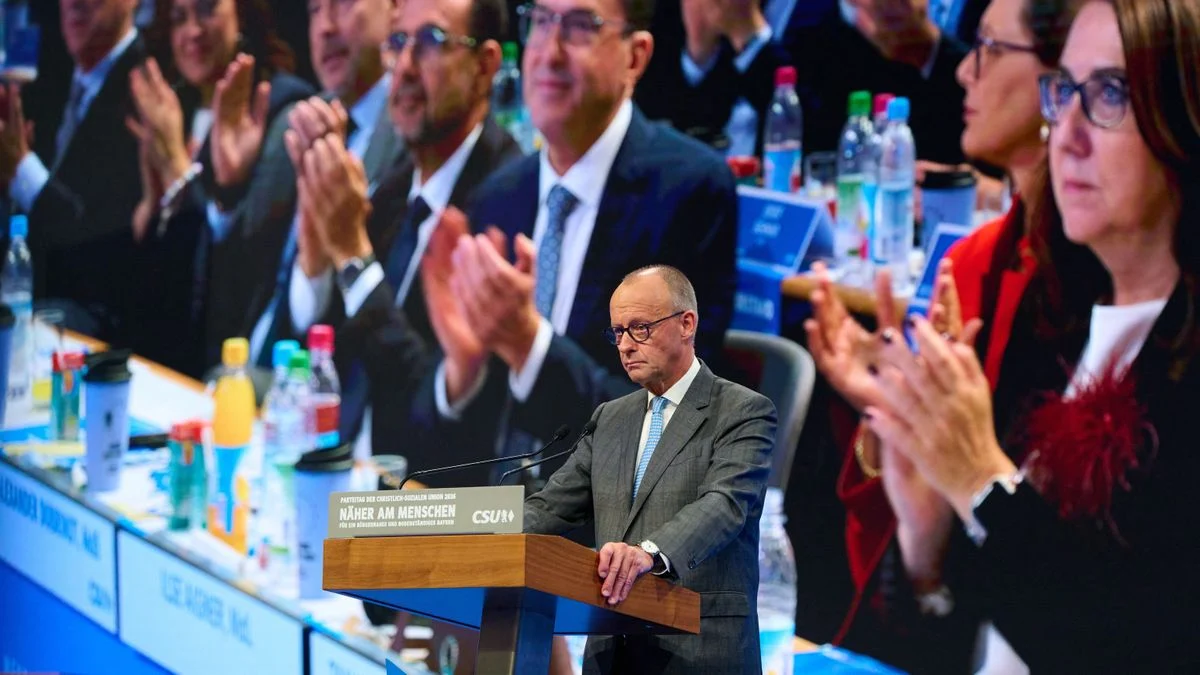
The political week in Europe is marked by high-stakes confrontations and crucial electoral moments. In Germany, the internal dynamics of the CDU/CSU alliance are under scrutiny as CDU leader Friedrich Merz attends the CSU party conference, following a provocative speech by Bavarian Minister-President Markus Söder. Söder’s address, laden with veiled criticisms of Berlin, underscored a growing assertiveness from the CSU and hinted at a deepening rift within the conservative bloc.
Meanwhile, France braces for another wave of protests, a recurring symptom of the deep societal and political divisions that have gripped the nation. With a presidential election looming, President Emmanuel Macron’s government has vowed to crack down on any "excesses," highlighting the escalating tensions between the populace and the state. The situation is further complicated by a major rally of Marine Le Pen’s far-right party, attracting both supporters and vehement counter-demonstrators.
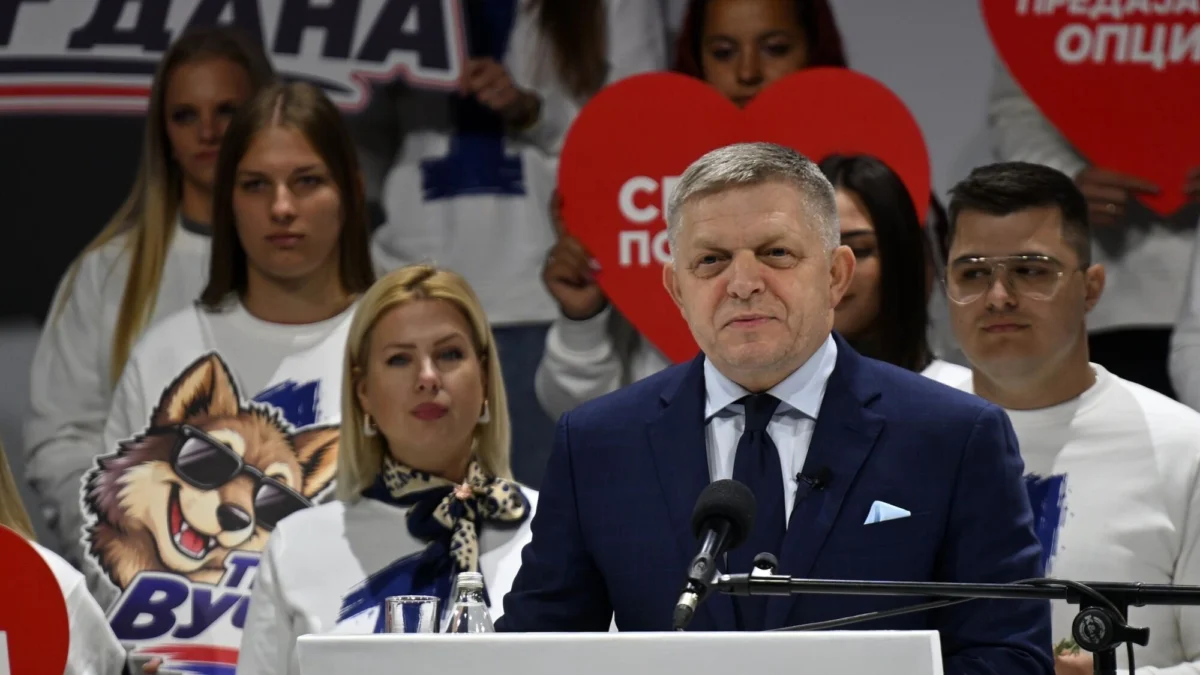
Further south, Serbia stands at a critical juncture, with parliamentary elections scheduled for this Sunday. The outcome could signal the end of a long and controversial era dominated by President Aleksandar Vučić, whose tenure has been characterized by concerns over corruption and democratic backsliding. These elections hold significant weight for Europe, particularly as the continent grapples with an increasingly unreliable United States as an ally and a more threatening Russia.
II. German Politics: Söder’s Gauntlet and Merz’s Dilemma
A. The Bavarian Challenge: Söder’s Assertive Stance
The annual CSU party conference is traditionally an occasion to reaffirm the "sister party" relationship between the Christian Democratic Union (CDU) and the Christian Social Union (CSU). However, this year’s gathering was overshadowed by the preceding speech from CSU leader and Bavarian Minister-President Markus Söder, a discourse that sent clear signals of discontent towards the federal political establishment in Berlin and, by extension, the CDU leadership.
Söder’s address was characterized by a series of pointed remarks and thinly veiled critiques. He meticulously highlighted the CSU’s significantly higher approval ratings in Bavaria compared to the federal Union’s standing nationwide. "Perhaps we truly are the strongest part of the Union," he declared, a statement designed to assert the CSU’s distinct identity and electoral strength, particularly in its home state. This was not merely a boast but a strategic move to position the CSU as the more successful and thus, arguably, the more legitimate voice of conservatism in Germany.

His criticism extended to the federal government’s policies, encompassing "tax increases, debt, disputes – all of this doesn’t sit well with him concerning the federal government." Söder’s demands for "pulling together, getting work done, and achieving success" were a clear indictment of what he perceives as a lack of cohesive and effective governance at the national level. These comments resonate with a segment of the electorate that feels alienated by current policies and yearns for stronger, more decisive leadership.
The most provocative moment of Söder’s speech came with his demonstrative endorsement of his party colleague Ilse Aigner for Federal President. This move directly challenged the prevailing sentiment within CDU circles, which had reportedly expressed an ambition to present their own candidate for the largely ceremonial but symbolically important office. "Do that again tomorrow with Friedrich Merz," Söder recommended to the applauding Christian Socials, openly daring the CDU leader to acknowledge or confront this proposition.
B. Chronology of Conservative Tensions
The relationship between the CDU and CSU has a long history of both cooperation and friction. While they form a single parliamentary group in the Bundestag, their distinct regional focuses and occasional leadership ambitions often lead to internal skirmishes. Söder’s recent comments can be seen as a continuation of this dynamic, particularly amplified by the Union’s recent electoral setbacks and the search for a clear direction.
The context of Merz’s visit is crucial. As the newly elected CDU leader, Merz is tasked with revitalizing the party and re-establishing its dominance after a period of electoral decline. His appearance at the CSU conference is a traditional gesture of unity, yet Söder’s speech clearly aimed to dictate the terms of this unity, putting Merz on the defensive even before he took the stage. The endorsement of Aigner, a senior CSU figure and current President of the Bavarian State Parliament, is a significant opening salvo in what could become a prolonged negotiation over future leadership roles and policy priorities within the Union.
C. Supporting Data: The Polling Divide
The disparity in approval ratings cited by Söder forms the core of his argument for CSU’s strength. While specific numbers are not provided in the original text, the general trend often shows the CSU performing significantly better in Bavaria, its traditional stronghold, than the CDU performs in other federal states, and certainly better than the combined Union’s federal average, especially after challenging election cycles. This electoral success in Bavaria gives the CSU a powerful mandate to project its influence onto the federal stage and to challenge the CDU’s leadership, particularly when the CDU itself is navigating a period of introspection and rebuilding.
The criticisms regarding "tax increases, debt, and disputes" reflect broader public anxieties about economic stability and governmental effectiveness. These are common themes that opposition parties, and indeed the CSU in its role as a regional power with federal aspirations, leverage to gain political traction.

D. Official Responses and Strategic Implications
Söder’s direct challenge to Merz regarding Aigner’s potential candidacy puts the CDU leader in a delicate position. According to Maria Fiedler from the SPIEGEL’s capital office, a shrewd move for Merz would be to "refrain from dwelling on Aigner in his speech or seeking a confrontation on the open stage." This advice underscores the strategic tightrope Merz must walk: acknowledge the CSU’s concerns without appearing weak, and assert CDU leadership without alienating a crucial alliance partner.
The implications of these tensions are significant for the future of Germany’s conservative movement. A sustained period of internal bickering could further erode public trust and hinder the Union’s ability to present a united front against the current federal government. It also raises questions about the Union’s chancellor candidate for the next federal election. Söder, a powerful and ambitious figure, has historically not shied away from national political aspirations. His current assertiveness could be interpreted as laying the groundwork for a future leadership bid or at least ensuring the CSU has a disproportionate say in the Union’s strategic direction. The Federal Presidency endorsement for Aigner also signals a desire for the CSU to place its own figures in high-profile national roles, challenging the CDU’s traditional prerogative in such matters. The delicate balance between the two parties will dictate much of Germany’s conservative politics in the coming years.
III. French Politics: A Nation on the Brink
A. Persistent Protests and Government Resolve
France is once again gripped by a wave of social unrest, with widespread protests expected to cascade across the nation. This recurring cycle of demonstrations highlights deep-seated grievances and a profound sense of disillusionment among significant segments of the French population. President Emmanuel Macron’s government, determined to maintain order, has already signaled its intention to intervene decisively against any "excesses," a stance that often exacerbates tensions rather than defuses them.
The current autumn is witnessing an accumulation of conflicts, creating a volatile political atmosphere. Leo Klimm, SPIEGEL’s France correspondent, starkly describes the situation: "Half a year before the presidential election, France is socially and politically torn like perhaps never before since the ’68 revolution." This comparison to the revolutionary period of 1968 underscores the perceived depth of the current societal fragmentation and the potential for widespread disruption.
B. Chronology of Escalating Tensions
The current unrest is not an isolated event but rather the latest manifestation of a series of conflicts that have characterized Macron’s presidency. From the "Gilets Jaunes" movement to disputes over pension reforms and environmental policies, France has experienced a near-constant state of social friction. The upcoming presidential election, now just months away, acts as a powerful amplifier for these underlying tensions, as various political factions vie for influence and seek to capitalize on public discontent.
A particularly significant event this weekend is a party conference in the provincial city of Orléans, where 10,000 supporters of far-right politician Marine Le Pen are set to gather. This demonstration of strength by the Rassemblement National (National Rally) is a clear signal of their growing momentum ahead of the election. However, the event is also expected to draw "tens of thousands" of counter-demonstrators, ensuring a direct confrontation between opposing ideologies and further polarizing the political discourse. The symbolism of Orléans, historically significant as the city of Joan of Arc, further deepens the narrative.

C. Supporting Data: The Symbolic Battleground of Orléans
The sheer numbers – 10,000 Le Pen supporters facing tens of thousands of counter-protesters – illustrate the scale of the ideological chasm in France. These are not merely political rallies; they are manifestations of deeply held beliefs and profound disagreements over the nation’s identity, future, and place in the world.
The choice of Orléans as the venue for Le Pen’s rally is particularly poignant. Orléans is indelibly linked to Joan of Arc, the French national heroine who, in 1429, led French forces to victory against the English, a historical moment symbolizing national unity against an external foe. As the article notes, "Back then, it was a fight from within outwards, French against English. Today, France mainly fights itself." This historical parallel highlights the tragic irony of the current situation, where internal divisions threaten to tear the social fabric apart. Le Pen’s party, which often invokes nationalist symbols and historical figures, likely chose Orléans to align itself with this narrative of national defense, albeit now framed against perceived internal threats or globalist influences.
D. Official Responses and Societal Implications
President Macron’s government’s tough stance against "excesses" reflects its commitment to maintaining order and preventing the protests from spiraling out of control. However, such measures can also be perceived as an authoritarian response, further alienating segments of the population and fueling resentment. The challenge for Macron is to address the root causes of discontent while upholding public safety, a task made immensely difficult by the deep polarization.
The implications of this pervasive social and political fragmentation are dire. For Macron, the looming presidential election presents a formidable challenge. His centrist, pro-European platform faces strong headwinds from both the far-right, personified by Le Pen, and potentially resurgent left-wing movements. The ongoing protests and the visible divisions risk creating an environment of instability that could deter investment, damage France’s international standing, and make effective governance increasingly difficult. The rise of the far-right, demonstrated by the significant turnout at Le Pen’s rally, indicates a shift in political gravity that could have profound consequences for France’s future policies, its relationship with the European Union, and its societal values. The nation’s ability to reconcile its internal conflicts will be crucial in determining its trajectory in the years to come.
IV. Serbian Politics: An End to a Dark Era?
A. Crucial Elections and European Geopolitics
As Europe looks ahead to a series of significant electoral events, the parliamentary elections in Serbia this Sunday stand out as particularly important. These elections are not merely a domestic affair; their outcome carries substantial geopolitical weight for the broader European continent. The article underscores this by noting that "for Germany, it is becoming almost daily more important how Europe stands," especially in light of the "increasingly unreliable" United States as an ally and the "increasingly threatening" presence of Russia. This context elevates the Serbian elections beyond local concerns, placing them firmly within the larger narrative of European stability and security.
Serbia’s path towards European Union accession has been protracted and fraught with challenges. The country has "developed worse than Brussels had expected at the beginning of the process," reflecting systemic issues that have hindered its progress. A stark indicator of these problems is Serbia’s standing on Transparency International’s Corruption Perception Index. In a recent report covering the year 2021/2022 (the original text mentions "2025," which likely refers to a future projection of continued decline or a typo), Serbia ranked 116th out of 182 countries. Within Europe, only Russia, Belarus, and Turkey fared worse, highlighting the pervasive nature of corruption and its detrimental impact on governance and public trust.

B. Chronology of Vučić’s Dominance and Rising Opposition
The architect of much of Serbia’s recent political trajectory is Aleksandar Vučić, a long-serving and highly influential figure. Vučić has wielded significant power, having served as State President for two consecutive terms. Due to constitutional limits preventing him from seeking a third presidential term, he has orchestrated a strategic "office swap." Should his right-populist Serbian Progressive Party (SNS) secure a victory in the parliamentary elections, Vučić intends to become the new Prime Minister, thereby maintaining his grip on power through a different executive role. This maneuver underscores his determination to remain at the helm of Serbian politics, despite the formal constraints.
However, Vučić’s dominance has not gone unchallenged. For "almost two years," a significant and growing resistance movement has been forming against him and his party. This burgeoning opposition signals a collective fatigue with the current political establishment and a demand for change. SPIEGEL correspondent Jörg Schindler, who recently reported from Serbia, notes that "this time, the regime has found an opponent who has learned from the mistakes of earlier protest movements." This observation is crucial, suggesting a more organized, resilient, and strategically adept opposition than previous efforts, potentially posing a genuine threat to Vučić’s long-standing rule.
C. Supporting Data: The Corruption Index and EU Stagnation
The Transparency International ranking is a critical piece of data illustrating the governance challenges in Serbia. A low ranking on the Corruption Perception Index directly impacts foreign investment, economic development, and public confidence in state institutions. It also highlights a key impediment to Serbia’s EU accession, as Brussels places significant emphasis on rule of law, good governance, and the fight against corruption as fundamental criteria for membership. The stagnation in the EU accession process is not merely bureaucratic; it reflects a genuine concern within the EU about Serbia’s commitment to democratic values and reforms.
Vučić’s proposed office swap, while legally permissible, raises questions about the spirit of democratic accountability and the consolidation of power. Critics argue that it undermines the democratic principle of checks and balances, allowing a single individual to circumvent term limits and continue to exert undue influence over the state apparatus.
D. Implications: A Crossroads for Democracy and European Alignment
The upcoming elections in Serbia represent a critical juncture for the country’s democratic future and its geopolitical orientation. A victory for the opposition could usher in a new era of reforms, potentially revitalizing the EU accession process and strengthening democratic institutions. It would also send a powerful message that long-standing authoritarian-leaning rule can be challenged and overcome.
Conversely, a continued dominance by Vučić, even in a different role, would likely perpetuate the existing challenges. The EU’s engagement with the Western Balkans is a complex and often frustrating endeavor. The region is seen as strategically vital, but persistent issues of corruption, democratic backsliding, and external influences (particularly from Russia and China) complicate its integration. For Germany and the wider EU, a democratic and stable Serbia is crucial for regional security and for counteracting the growing influence of actors less aligned with European values. The outcome of these elections will therefore not only determine Serbia’s domestic trajectory but also significantly impact the broader stability and geopolitical balance of the Western Balkans and Europe as a whole. The potential for an end to a "dark era" in Serbian politics offers a glimmer of hope for a more democratic and transparent future.

V. Cultural Highlight: Stevie Wonder’s Triumph of the Human
Beyond the political machinations, moments of cultural significance offer a counterpoint to the daily headlines. American music icon Stevie Wonder is set to perform his first of two German concerts in Hannover, celebrating the 50th anniversary of his seminal album "Songs in the Key of Life." Wonder will perform all the songs from the legendary double album, which includes timeless classics such as "Love’s in Need of Love Today" and "Isn’t She Lovely."
This musical event serves as a poignant reminder of human creativity and expression. Reflecting on Wonder’s unique voice, the author muses on the capabilities of artificial intelligence, noting that AI would likely never "invent a voice like Wonder’s on its own." While perhaps not "beautiful in the strictest sense," his voice is described as "so friendly, so unique, so far removed from virtual imitations, that today it sounds like a triumph of the human." In an age increasingly dominated by algorithms and synthesized experiences, Wonder’s enduring artistry stands as a testament to the irreplaceable power and soul of human talent.
VI. Other News and Offerings
- Daily Quiz: Test your knowledge with our current daily quiz.
- SPIEGEL Games: Explore more puzzles like "Viererkette," "Wordle," and "Paarsuche" at SPIEGEL Games.
- Latest Night Reports: Catch up on the most recent news from overnight.
- SPIEGEL Extra: Travel Tips for Friends: Planning a trip with friends? Our special feature, "With these 23 tips, your vacation with friends will be beautiful, not terrible," offers essential advice on navigating the joys and pitfalls of group travel, including how to handle "the group jerk."
I wish you a good start to the day.
Your Susanne Beyer, Author for the Editorial Board