At first glance, the Burren appears as an unforgiving, lunar landscape—a vast expanse of grey limestone that seems to have been plucked from the moon and dropped onto the lush, emerald tapestry of County Clare. Yet, to those who know how to look, this "stone place" (from the Irish An Bhoireann) is one of Europe’s most vibrant botanical cathedrals. It is a land where the Arctic meets the Mediterranean, where history is etched into every crevice, and where the echoes of ancient civilizations linger in the shadows of monolithic tombs.
Main Facts: A Convergence of Worlds
The Burren is a unique karst landscape covering approximately 1,800 hectares of protected National Park territory. Its defining characteristic is the "clint and grike" pavement—a natural mosaic of flat limestone slabs (clints) separated by deep, vertical fissures (grikes).
What makes this region a global curiosity is its botanical diversity. Within a single square meter, one might find the Spring Gentian, the white-flowered Mountain Avens (Iceland’s national flower), and rare Mediterranean orchids. The region hosts over 20 species of orchids and a variety of wildflowers that bloom in a sequence unique to this microclimate.
"It is a bizarre mixture and a diversity unique in Europe," explains Tony Kirby, a veteran nature guide who has spent decades traversing these limestone ridges. "The stone acts as a thermal battery, absorbing solar heat during the day and radiating it into the fissures at night, protecting the delicate plants from the harsh Atlantic winds."
Chronological Evolution: From Tropical Seas to Glacial Sculpting
The geological story of the Burren spans hundreds of millions of years.
- 350 Million Years Ago: The region was submerged under a shallow, tropical sea. During this period, layers of calcium carbonate accumulated, forming the massive limestone beds we see today. The remains of ancient corals, crinoids, and ammonites can still be seen fossilized in the rock face.
- The Ice Age: Glaciers carved the landscape into the distinctive, whale-back ridges that define the Burren today. The ice stripped away the topsoil, leaving the bedrock exposed and creating the deep fissures that now serve as sheltered nurseries for flora.
- 5,000 Years Ago (Neolithic Period): The Burren was significantly more forested and populated. Evidence of this era remains in the form of over 2,000 prehistoric monuments, most notably the Poulnabrone Dolmen—a massive portal tomb that has stood for millennia, a silent sentinel on the limestone plateau.
- 1195 AD: The Cistercian monks arrived, establishing Corcomroe Abbey. They dedicated their life of labor to Sancta Maria de Petra Fertilis—the Virgin of the Fertile Stone—attempting to farm the harsh terrain with limited success, leaving behind ruins that now serve as a melancholic reminder of human perseverance.
- 1651 AD: Oliver Cromwell’s soldiers marched through the region. Their assessment of the landscape was famously bleak: "No water to drown a man, no tree to hang a man, no soil to bury a man."
Supporting Data: The Symbiosis of Man and Nature
The Burren’s survival as a biodiversity hotspot is not an accident of nature alone; it is a testament to a traditional, sustainable agricultural practice known as "winterage."

Unlike typical European farming, where cattle are moved to mountains in summer, Burren farmers move their livestock up into the karst mountains during the autumn and winter. As the lowland valleys of County Clare become waterlogged and muddy due to the heavy Irish rainfall, the limestone highlands offer a dry, nutrient-rich environment for the cattle.
The cattle graze on the encroaching hazel scrub, preventing the landscape from becoming overgrown and dense. Their presence maintains the open mosaic of the limestone, while their manure provides the necessary nutrients for the wildflowers to bloom in the spring. This practice has ensured that the region remains free from the heavy machinery and synthetic fertilizers that have decimated biodiversity elsewhere in Europe.
Official Responses and Conservation Efforts
The Irish government officially designated the Burren as a National Park in 1991. However, conservationists and local guides like Kirby warn that the delicate balance of this ecosystem is under constant pressure from increasing tourism.
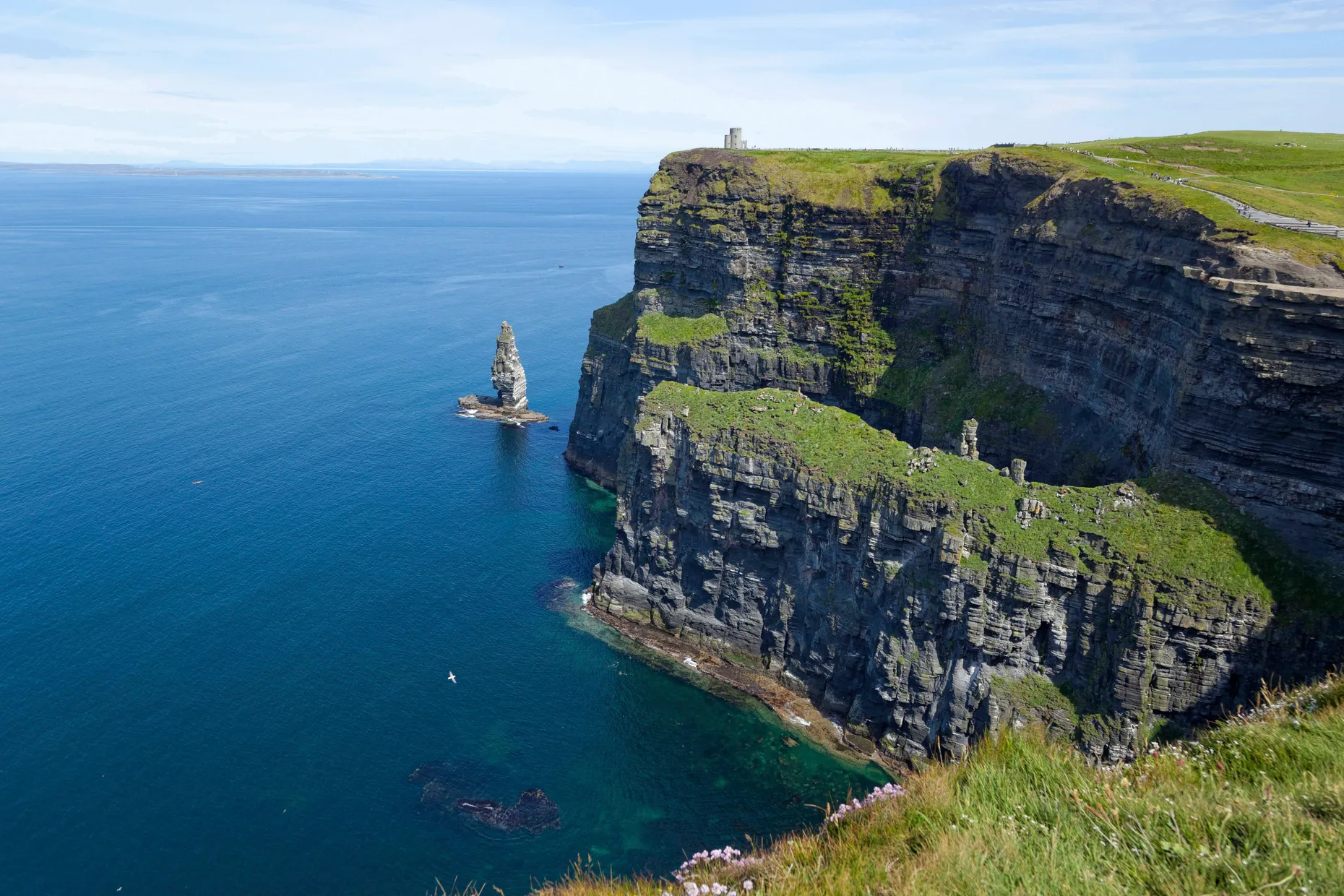
The state-run National Parks and Wildlife Service (NPWS) has focused on managing the flow of visitors, particularly at the famous Cliffs of Moher, which serve as the southwestern boundary of the Burren’s geological formation. While the Cliffs—rising 230 meters above the Atlantic—attract hundreds of thousands of visitors annually, the NPWS encourages tourists to venture deeper into the interior of the Burren to prevent overcrowding at the coastal hotspots.
"The challenge is to educate the visitor," says a spokesperson for the local tourism board. "People come for the spectacle of the cliffs, but they leave with a deeper respect for the ecology once they walk the inland trails."
Implications: The Burren as a Mirror for the Future
The Burren stands as a paradox in the modern world. It is a landscape that was historically dismissed as barren and hostile—"a stone desert"—yet it is now recognized as one of the most resilient and diverse ecosystems in the Atlantic archipelago.

1. The Lesson of Sustainable Agriculture
The success of the winterage system suggests that traditional, low-intensity farming methods can be more beneficial for biodiversity than modern, high-input industrial agriculture. The Burren serves as a model for "High Nature Value" (HNV) farming, which could be replicated in other fragile European landscapes to combat habitat loss.
2. Climate Resilience
As the climate shifts, the Burren’s unique thermal properties—the ability of the rock to regulate temperature—offer scientists a case study in how specific geological formations can buffer plant life against extreme temperature fluctuations.
3. Cultural Preservation
The Burren is not merely a collection of rocks and flowers; it is a repository of human history. The persistence of the Cistercian ruins and the prehistoric dolmens creates a dialogue between the past and the present. It reminds us that human societies have been adapting to this "stone place" for thousands of years.
4. Tourism and Sustainability
The reliance on the Cliffs of Moher as a "tourist magnet" presents a double-edged sword. While it brings vital revenue to County Clare, it also threatens the very tranquility that defines the Burren. The future of the region depends on dispersing the "tourist gaze"—encouraging visitors to appreciate the subtleties of the limestone flora and the quiet grandeur of the interior, rather than just the dramatic, erosive power of the Atlantic coastline.
In conclusion, the Burren demands a slower pace. It asks the traveler to look down at the tiny Gentian clinging to the stone, rather than just out at the crashing waves of the Atlantic. It is a place where the landscape speaks, if one is willing to listen to the history etched in stone and the life thriving in the cracks. Whether through the lens of a poet like Michael Longley or the eyes of a local farmer, the Burren proves that even in the most inhospitable corners of the world, life finds a way to flourish, provided it is left to its own, ancient devices.