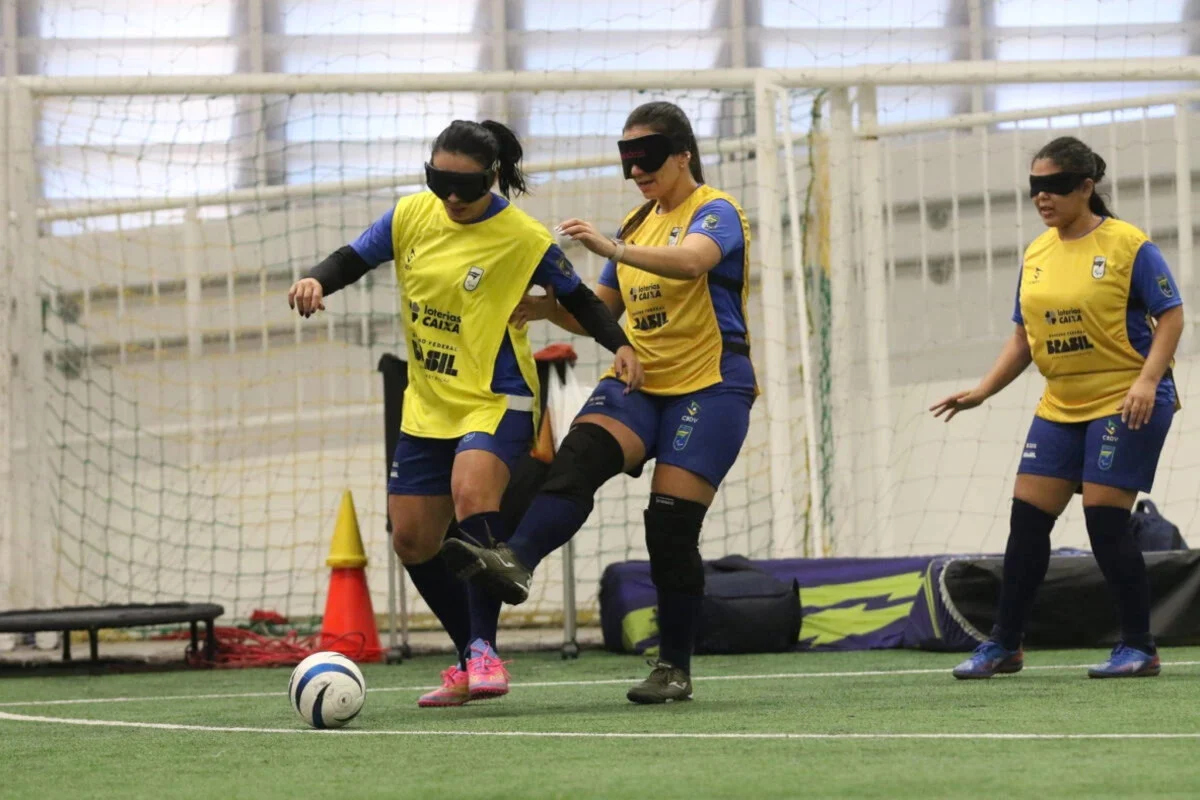
For 38-year-old Brazilian national player Geisa Farini, a single childhood memory serves as a stark reminder of the long, arduous road to equality in sport. As a young girl with visual impairments, she once joined a group of boys and girls on a schoolyard, using a plastic-bag-wrapped ball to track its movement by sound. The joy of the game was abruptly cut short when parents on the sidelines complained to the school director, claiming the girls looked like "boys" or "lesbians." The school responded by banning the girls from playing football entirely—even during breaks.
What sounds like a relic of a distant, repressive past is, in fact, the lived reality of many women in Brazil today. Despite her early exclusion, Farini did not abandon her passion. She has since emerged as a pioneer in a sport that spent nearly four decades under a state-sanctioned ban. Today, she is a national icon, a social media influencer with over 200,000 followers, and a driving force in the professionalization of blind football for women.
The Long Shadow of the Ban: Historical Context
In Brazil, the land of football legends like Pelé and Marta, the relationship between gender and the pitch has been fraught with systemic obstruction. While men’s football has been a source of national identity for decades, women—and particularly women with disabilities—have faced persistent institutional barriers.

The most significant historical blow came in the form of a nationwide ban on women’s football that lasted from 1941 to 1979. During this period, the state systematically dismantled the thriving women’s football culture that had begun to emerge in the early 20th century. While the ban was eventually lifted, the patriarchal structures governing the sport remained deeply embedded.
Blind football, which originated in Brazil in the 1950s, became a male-dominated bastion. While men were eventually able to turn professional, women were largely ignored by sports federations for decades. It was not until 2009 that the first organized project for women’s blind football was attempted, only to collapse due to a lack of funding and ingrained sexism. It took until 2022 for the sport to gain meaningful momentum for women in the country.
Chronology of a Movement: From Exclusion to the World Cup
The path to the 2025 Women’s Blind Football World Cup in India was paved by the activism of women like Farini.

- 1941–1979: The era of the "Football Ban." During these four decades, women’s participation in football was legally prohibited, setting the development of women’s sports in Brazil back by generations.
- 2009: First attempt at a formalized blind football project for women. It failed due to economic neglect and social stigma.
- 2022: A turning point. A new wave of interest and grassroots organization began to gain traction, with Geisa Farini stepping into the spotlight as both a player and an advocate.
- 2025: A historic milestone. The formation of the first Brazilian women’s national blind football team. The squad participated in the World Cup in India, successfully reaching the semi-finals—a testament to the latent talent that had been stifled for so long.
Supporting Data: The Digital Advocacy of Geisa Farini
Geisa Farini’s influence extends far beyond the pitch. Her presence on Instagram is not just about celebrity; it is a calculated effort to normalize the lives of people with disabilities. She uses her platform to share practical life skills—such as how a blind person shops, navigates public transportation, or utilizes computer software.
"I use my own life to teach people to understand people with disabilities," Farini stated in a 2024 interview with anthropologist Wagner Xavier de Camargo. Her digital activism serves as a vital bridge, dismantling the myths of helplessness that often surround women with visual impairments.
The resistance she faces, however, is not just from "the patriarchy" in a general sense, but from within marginalized communities themselves. Farini notes that structural "machismo" is pervasive. "Even within the Black community, the LGBT community, or among people with disabilities, machismo is deeply rooted," she explains. This intersectional discrimination makes the progress of the national team even more remarkable.

Official Responses and the "Over-Protection" Trap
One of the most persistent hurdles identified by Farini and other advocates is the concept of "over-protection." While men with disabilities are often encouraged to take risks and pursue competitive sports, women are frequently steered toward sedentary roles by families who fear for their safety.
"The families are afraid that something might happen to them during sports," says Farini. "I see this far less with men." This protective instinct, while often well-intentioned, functions as a form of social control that prevents women from developing the independence and professional status that sports provide.
The lack of a formal, domestic league remains the most significant administrative challenge. While the national team has proven its caliber on the international stage, the domestic structure is still embryonic. Without a professional league, players lack the consistent income, training facilities, and long-term career pathways available to their male counterparts.

Implications: A Future Beyond the Pitch
The implications of the progress made by Farini and her teammates are profound. Professional sport for women with disabilities is not merely a game; it is a vehicle for financial independence and social mobility. By competing at a high level, these women gain access to travel, education, and public visibility—resources that were historically denied to them.
Farini’s philosophy on the transformative power of sport is clear: "If you grow up in a family that clips your wings, sport can help you unfold those wings again."
The establishment of the national team and their success in India represents a major victory, but it is also a starting line. The demand for a domestic league, the need for increased funding, and the ongoing fight against the societal perception that "blindness" and "femininity" are mutually exclusive with "athleticism" remain the primary tasks ahead.

Conclusion: The Voice for the Next Generation
Geisa Farini has transformed from a girl forbidden to play in a schoolyard to the voice of a national movement. Her mission is simple yet expansive: "I want to be the voice that these girls need."
As Brazil continues to grapple with its complex history of gender and sport, the success of the women’s blind football team acts as a mirror to the country’s progress. The "wings" that were once clipped are now finding the air to soar. Whether this momentum will lead to a fully funded, professionalized, and equitable landscape for the next generation remains the central question for Brazilian sports policy. For now, however, the players have already done the hardest part: they have claimed their space on the field, and they are refusing to leave.