The streets of France have become a stage for a profound socio-political drama. While the headlines often focus on the spectacle of burning trash cans and the visceral imagery of police clashes, a deeper, more systemic grievance is fueling the flames. At the heart of this unrest is a generation of students from the banlieues—the marginalized suburban areas—who are standing up against an educational system they describe as discriminatory, underfunded, and fundamentally unequal.
Through conversations with Sofia, a 15-year-old high school student, and Coline, a 23-year-old university student, a picture emerges of a youth movement that feels abandoned by the Republic and its promises of "Liberté, Égalité, Fraternité."
The Reality of the "Left Behind": A High Schooler’s Perspective
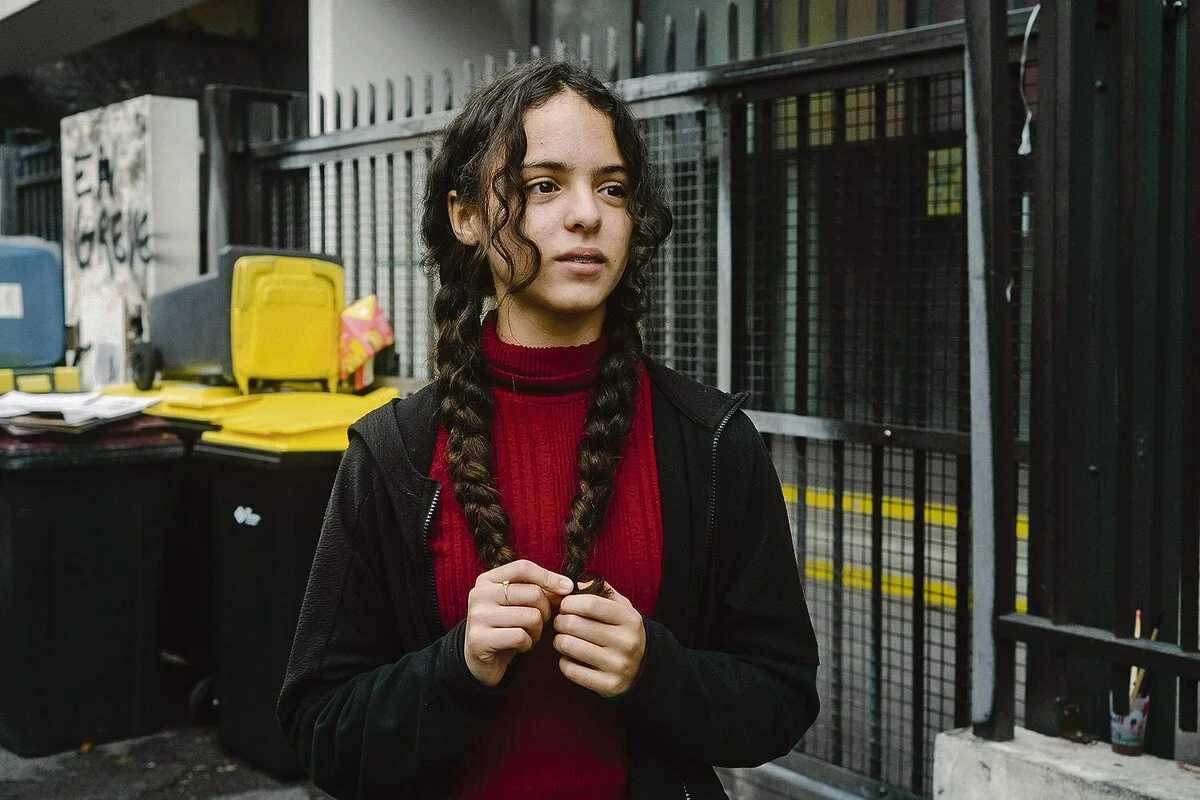
Sofia, a 15-year-old student at the Lycée Eugène Hénaff in Bagnolet, a suburb of Paris, describes her daily reality in stark terms. For Sofia, the protests are not merely an act of rebellion; they are a desperate call for basic human dignity in the classroom.

"Our gym is literally covered in mold," Sofia says, explaining that the facilities have become unusable. "Teachers are missing across the board. In some subjects, I haven’t even seen a teacher since the start of the school year."
Growing up in Seine-Saint-Denis—statistically the poorest department in France—Sofia is acutely aware of the disparity between her neighborhood and the glittering center of Paris. While she values her community, she is infuriated by the systemic neglect. She points specifically to Parcoursup, the centralized platform used for university admissions in France. For students from the suburbs, the platform acts as a digital gatekeeper, systematically filtering out those from "lesser-reputed" schools, regardless of their individual academic potential.
"The government isn’t investing in the public sector," Sofia argues. "My friends are fleeing to Paris to find better schools, but the system is designed to keep people like me out."

The Academic Filter: Higher Education’s "Social Segregation"
The frustration is not limited to high schools. Coline, a 23-year-old student at the University of Paris 8, has witnessed the same structural rot at the university level. For her, the mobilization was triggered by the government’s heavy-handed response to student protesters who were merely asking for the resources required to learn in a safe, functional environment.
"We saw the police using extreme violence against students who were just demanding the right to education," Coline says. "We couldn’t just sit by."
Coline notes that the university application process—spanning both high school and master’s programs—functions as a mechanism of social and racial stratification. "If you attended a prestigious high school, you get your top picks. If you come from an ‘unknown’ school, your grades almost don’t matter. There is no true equality of opportunity in France."

The lack of infrastructure at her university is profound: students are frequently forced to sit on the floor during lectures because of massive overcrowding, and budget cuts have led to the cancellation of courses because the university could not afford to pay the lecturers.
Chronology of the Escalation
The current cycle of protest did not materialize overnight. It is the culmination of decades of perceived neglect and the recent deterioration of living standards in France.
- Systemic Stagnation: For years, students in the banlieues have complained of crumbling infrastructure and teacher shortages. These complaints were largely ignored by successive administrations.
- The Digital Barrier: The implementation of Parcoursup and Mon Master centralized the sense of exclusion, as students felt they were being judged by the reputation of their zip code rather than their merit.
- The Trigger: The escalation began when student protests in Créteil and Saint-Denis were met with heavy-handed police tactics. The use of tear gas and armored vehicles against students galvanized university students to join the movement.
- The Occupation: In response to the university administration closing down facilities to prevent protests, students at Paris 8 began a full-scale occupation, declaring their campus a "free space" for students, workers, and the community.
- The "Saturday of Rage": Recent large-scale demonstrations, intended to highlight economic instability, saw significant clashes between protesters and law enforcement, leaving many students injured and fueling a cycle of fear and defiance.
Supporting Data: The Economic Context
The students’ grievances are occurring against a backdrop of wider national economic distress. The current wave of unrest is inseparable from the broader "cost-of-living crisis" affecting the French population:

- Inflation: The price of fuel, food, and basic necessities has surged, with gasoline prices often exceeding 2 euros per liter.
- Wage Stagnation: While costs have risen, real wages have remained flat, leaving the working class and the youth with a feeling of having "nothing left to lose."
- Resource Allocation: The protesters frequently contrast the government’s willingness to increase military spending with its continued austerity measures regarding public education and social services.
The Official Response and the Climate of Repression
The French government’s response has been largely defensive, focusing on the maintenance of public order rather than addressing the root causes of the protests. Sofia notes that the government seems to be waiting for the school holidays to "extinguish the fire," hoping that the movement will naturally dissolve once students are out of the classroom.
The police response has been a focal point of the students’ anger. The use of tear gas, kettling tactics, and, according to protesters, "war-grade" weapons, has left a deep scar on the student population. Coline notes that students have begun wearing swimming goggles and masks as a matter of routine, normalizing a state of constant, low-level conflict.
"The violence is systemic," Coline argues. "It comes from the state’s decision to meet a social crisis with armed police rather than dialogue."

Implications: A Converging Struggle
The implications of this movement are significant. What began as a school-level dispute over infrastructure has evolved into a broader call for "convergence of struggles." Students are now actively attempting to link their demands with those of trade unions and workers facing similar economic pressures.
The demand is clear: a concrete, time-bound plan for the renovation of educational buildings, a complete overhaul of the Parcoursup admission criteria, and an immediate cessation of the aggressive police tactics currently being deployed against minors.
As France looks toward future elections, the youth are pinning their hopes on the political left—specifically the La France Insoumise movement—as the only potential catalyst for the radical change they feel the country desperately needs.

Conclusion: A Republic at a Crossroads
The students of Bagnolet and the activists at Paris 8 are not just demanding better chairs or more teachers; they are demanding a re-evaluation of the French social contract. When the youth of a country feel that their government is more comfortable suppressing them than educating them, the stability of the Republic is inevitably compromised.
"We are constantly caricatured as dangerous or violent," says Sofia. "But we are just young people who want the education we were promised. We want equality. Isn’t that supposed to be a French value?"
For now, the protesters remain in the streets and in the occupied lecture halls. They represent a generation that has grown tired of being told that change is coming, choosing instead to force the conversation by occupying the space that has so long been denied to them. Whether the state chooses to listen or to continue its path of repression will likely define the political landscape of France for the coming decade.