

Moscow, Russia – October 6, 2026 – In a dramatic escalation of its defensive campaign, Ukraine has reportedly launched an unprecedented, large-scale drone attack targeting the Russian capital, Moscow, and its surrounding region. Russian authorities claim to have intercepted approximately 650 unmanned aerial vehicles (UAVs) in what marks one of the most significant and geographically ambitious strikes since the onset of the full-scale invasion. The assault, which caused casualties and damage, appears to underscore Kyiv’s strategic pivot towards disrupting Russia’s vital energy infrastructure deep within its territory.
Moscow Mayor Sergey Sobyanin reported that while the majority of the incoming drones were neutralized by air defenses at considerable distances, 105 UAVs were ultimately destroyed as they approached the capital. The governor of the Moscow region further confirmed that the attack resulted in the deaths of two individuals and left nine others injured. These figures, if independently verified, would point to a massive and coordinated Ukrainian operation, signaling a new phase in the protracted conflict.
Unprecedented Assault on the Russian Capital
The early morning hours of October 6, 2026, brought a new level of alarm to Moscow. Residents reported hearing explosions and the distinct whirring of drones as the city’s sophisticated air defense systems engaged a massive incoming swarm. The sheer volume of the attack, with official Russian sources citing an astonishing 650 drones, suggests a meticulously planned operation aimed at saturating and potentially overwhelming defensive capabilities.
The Attack Unfolds: Early Morning Chaos
The assault began under the cloak of darkness, with initial reports emerging in the pre-dawn hours. Eyewitnesses across the Moscow region described a flurry of activity, including bright flashes in the sky and loud bangs, indicating successful interceptions by Russian anti-aircraft units. Mayor Sobyanin quickly took to social media, informing the public of the ongoing attack and the efforts of emergency services. He lauded the swift response of the air defense forces, crediting them with preventing more extensive damage and casualties.
The drones approached Moscow from multiple directions, a tactic designed to stretch and challenge the integrated air defense network. While the specifics of the interception methods remain classified, it is understood that a combination of anti-aircraft missile systems, such as the S-400 Triumf and Pantsir-S1, alongside electronic warfare countermeasures, were deployed. Despite these efforts, a significant number of drones managed to penetrate closer to urban areas before being brought down.
Initial Assessments and Casualties
The immediate aftermath of the attack saw emergency services deployed across the affected areas. The governor of the Moscow region confirmed the tragic loss of two lives and injuries to nine other individuals. These casualties were likely the result of falling debris from intercepted drones or direct impacts from those that managed to evade defenses. While Russian officials maintained that the overall damage was limited, the psychological impact on the capital’s residents was palpable. For a city that had largely remained insulated from the direct horrors of the conflict for much of its duration, this large-scale assault served as a stark reminder of the war’s increasingly far-reaching consequences.
Preliminary investigations by Russian authorities are underway to determine the types of drones used, their flight paths, and points of origin. However, the sheer scale of the attack suggests a significant logistical and technical undertaking by Ukraine.
Kyiv’s Evolving Drone Strategy: Hitting Russia’s Economic Lifeline
This latest drone attack on Moscow is not an isolated incident but rather a dramatic escalation in Ukraine’s evolving strategy to counter Russia’s aggression. Unable to match Russia’s numerical superiority in conventional weaponry, Kyiv has increasingly turned to asymmetric warfare, particularly the development and deployment of long-range drones, to strike at targets deep within Russian territory.
A Shift in Tactics: From Defense to Deep Strikes
For much of the conflict, Ukraine’s military efforts were primarily focused on defending its sovereign territory and pushing back Russian occupation forces. However, as the war has ground on, Ukraine has systematically developed capabilities to project power beyond its borders. This shift is driven by a desire to disrupt Russia’s war machine, both militarily and economically, and to bring the reality of the conflict closer to the Russian populace. Strikes on military installations, logistics hubs, and now, critically, energy infrastructure, are designed to impose a cost on the aggressor and diminish its capacity to wage war.
The An-196 Ljutyj and Indigenous Capabilities
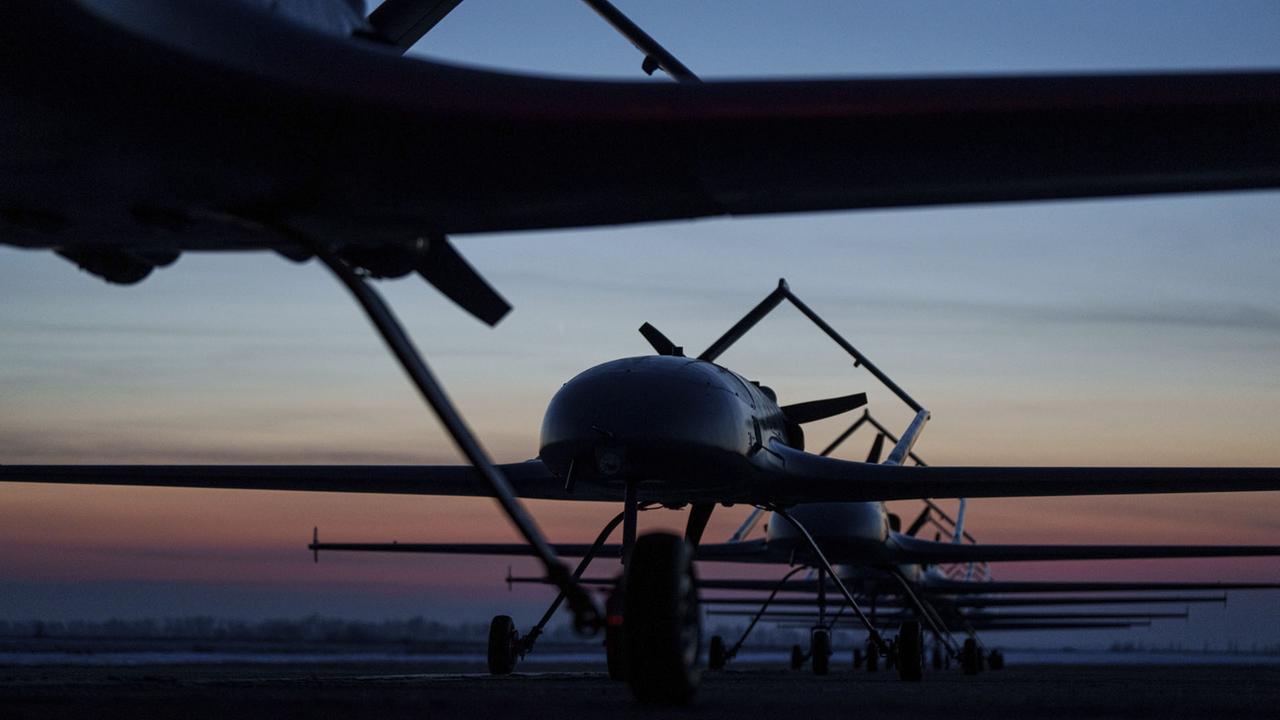
While details on specific drone types used in the Moscow attack are scarce, the image accompanying initial reports depicted long-range drones of the "An-196 Ljutyj" type lined up before launch. This detail is highly significant, pointing to Ukraine’s growing indigenous defense industry and its ability to produce advanced, long-range unmanned aerial vehicles. The "Ljutyj" (meaning "fierce" or "furious" in Ukrainian) likely represents a new generation of Ukrainian-designed and manufactured drones, capable of traveling hundreds, if not thousands, of kilometers.
The development of such sophisticated weaponry is a testament to Ukraine’s ingenuity and its determination to reduce reliance on foreign military aid for certain offensive capabilities. These drones are not merely repurposed commercial drones but purpose-built platforms, often equipped with advanced navigation systems, electronic countermeasures, and precision targeting capabilities, making them formidable assets in Kyiv’s arsenal. Their increasing range and payload capacity allow Ukraine to reach targets previously thought to be out of reach, forcing Russia to divert significant resources to air defense far from the front lines.
The Strategic Imperative: Targeting Oil Infrastructure
The Kyiv Independent, citing eyewitnesses, reported that a specific oil production facility approximately 40 kilometers from Moscow was among the targets. This aligns with Ukraine’s broader strategy of systematically targeting Russia’s oil and gas industry. Russia’s energy exports are the lifeblood of its economy, providing the vast majority of the revenue that funds its military operations. By striking refineries, storage depots, and production facilities, Ukraine aims to:
- Reduce Russia’s Export Capacity: Damaging processing and storage infrastructure directly impedes Russia’s ability to refine crude oil into lucrative export products like gasoline and diesel, thus reducing the volume and value of its energy sales.
- Increase Domestic Fuel Prices and Shortages: Disruptions to refineries can lead to fuel shortages within Russia, driving up domestic prices and potentially fostering public discontent.
- Create Logistical Headaches: Attacks on energy infrastructure force Russia to divert resources, personnel, and equipment for repairs, straining its logistical capabilities already stretched by the war.
- Impose Economic Costs: The financial burden of repairs, insurance premium increases, and lost revenue directly impacts Russia’s war chest, making it harder to sustain its military campaigns.
Previous attacks on Russian oil facilities, though often smaller in scale, have demonstrated this strategy’s potential effectiveness, causing temporary shutdowns and affecting market sentiment. This latest assault, given its magnitude and proximity to the capital, represents a significant escalation of this economic warfare.
Economic Repercussions and Global Markets
The large-scale attack on Russian territory, particularly targeting an oil facility near Moscow, sent ripples through global energy markets. While the immediate impact on global oil prices remained to be fully assessed, the prospect of sustained disruptions to Russian energy production and export capabilities typically leads to upward pressure on crude oil futures. Analysts are closely watching how this attack might influence Russia’s long-term export volumes and its ability to maintain its energy dominance, particularly in the context of Western sanctions. The cost of insuring shipments from Russian ports could also rise, adding another layer of financial pressure on Moscow.
Russia’s Air Defense: Overwhelmed by Scale?
Despite Russia’s considerable investment in air defense systems, the sheer scale of the October 6 drone attack raises serious questions about the efficacy and preparedness of its layered defenses, particularly against large, coordinated drone swarms. While Russian authorities claimed a high interception rate, the fact that over a hundred drones reportedly reached the vicinity of the capital, and that casualties and damage occurred, suggests that even advanced systems can be challenged by overwhelming numbers.
Challenges of a Vast Territory
Russia’s vast geographic expanse presents an inherent challenge for comprehensive air defense coverage. While critical military installations and major urban centers like Moscow are heavily protected, maintaining an impenetrable dome over thousands of kilometers of territory is virtually impossible. Ukraine has exploited these geographical vulnerabilities, targeting facilities that are often hundreds of kilometers from the front lines, forcing Russia to disperse its valuable air defense assets. This dispersion weakens the concentration of defenses around key strategic targets.
The ‘Swarm’ Tactic and its Efficacy
The use of a massive drone swarm – reportedly 650 UAVs – is a tactical innovation designed to overwhelm even sophisticated air defense systems. Individual drones are relatively small, low-cost, and have a low radar signature, making them difficult to detect and track. When deployed in such large numbers, they can saturate radar screens, confuse target acquisition systems, and exhaust missile interceptor supplies. Even if a high percentage are shot down, the sheer volume ensures that some will inevitably break through. This ‘attrition by saturation’ strategy forces the defender to expend costly interceptors against inexpensive drones, creating an unfavorable economic exchange ratio for Russia.
The October 6 attack suggests that Ukraine has not only mastered the production of long-range drones but also the coordination required for such a large-scale, multi-vector assault. This evolving threat necessitates a re-evaluation of Russian air defense strategies and could lead to further strain on its military resources.
Official Responses and International Reactions
The large-scale drone attack provoked immediate and strong reactions from both warring parties, while the international community expressed growing concern over the potential for further escalation.
Moscow’s Denials and Condemnations
Predictably, Moscow vehemently condemned the attack, labeling it a "terrorist act" aimed at civilian infrastructure and the civilian population. Russian President Vladimir Putin’s office, through its spokespeople, vowed "inevitable retaliation" for what it described as a barbaric act of aggression. Official statements emphasized the high rate of interception, seeking to project an image of robust defense and control, while downplaying the extent of any damage or the psychological impact on the capital. The narrative consistently portrayed Ukraine as a terrorist state, a common refrain used to justify Russia’s own aggressive actions. State media channels quickly amplified these messages, aiming to rally domestic support and condemn Kyiv’s actions on the international stage.
Ukraine’s Calculated Ambiguity
In line with its established policy, Ukrainian officials maintained a stance of strategic ambiguity regarding responsibility for the drone attack. While not directly claiming credit, statements from Kyiv often hinted at Russia reaping the consequences of its aggression. An advisor to President Zelenskyy, for instance, might issue a cryptic remark about "justice finding its way to the aggressor’s home," or emphasize that "every action has an equal and opposite reaction." This approach allows Ukraine to demonstrate its capabilities and project resolve without formally admitting to operations that could be seen as escalating the conflict in the eyes of some international partners. The Kyiv Independent’s report, citing eyewitnesses, served as an unofficial confirmation of the targeting of the oil facility, aligning with Ukraine’s strategic objectives.
Global Concerns Over Escalation
The international community reacted with a mixture of condemnation for the violence and calls for de-escalation. The United Nations Secretary-General issued a statement expressing deep concern over the increasing attacks on civilian areas and critical infrastructure, urging all parties to adhere to international humanitarian law. European Union leaders reiterated their condemnation of Russia’s aggression but also expressed apprehension about the conflict spilling further beyond Ukraine’s borders. The United States, while reaffirming its unwavering support for Ukraine’s right to self-defense, subtly underscored the need to avoid actions that could lead to uncontrolled escalation, a common balancing act in its diplomatic messaging. NATO officials closely monitored the situation, with some analysts noting that such attacks could potentially alter the dynamics of Western military aid and the parameters for its use.
Broader Implications: A New Phase of the Conflict
The October 6 drone attack on Moscow is more than just another incident in a long war; it represents a significant marker, potentially signaling a new, more dangerous phase of the conflict with profound geopolitical, military, and humanitarian implications.
The Spillover Effect: War Beyond Borders
The attack unequivocally demonstrates that the war is no longer confined to Ukrainian territory. While there have been previous cross-border incidents, an assault of this magnitude on the Russian capital signifies a direct and undeniable spillover. This escalation raises the specter of a wider regional conflict, with neighboring countries nervously watching the tit-for-tat exchanges. It fundamentally alters the perception of security within Russia, eroding the sense of invulnerability that many citizens in the heartland once held.
Psychological Warfare and Public Morale
Beyond the physical damage, the attack carries immense psychological weight. For Ukraine, it is a powerful message of defiance and capability, boosting domestic morale and signaling to Russia that its aggression will not go unpunished, even in its own capital. For Russia, it is a blow to national pride and a challenge to the government’s narrative of total control and military prowess. While state media will attempt to spin the narrative, the reality of widespread drone activity and casualties near Moscow will inevitably penetrate, potentially fueling public unease and questioning the government’s ability to protect its citizens. This could subtly erode support for the war effort, or conversely, galvanize calls for harsher retaliation.
The Future of Drone Warfare
This event will undoubtedly be studied by military strategists worldwide as a case study in modern drone warfare. The "swarm attack" tactic, combined with long-range indigenous capabilities, highlights the evolving nature of combat. It demonstrates how a less technologically advanced (but highly innovative) force can use asymmetric means to challenge a larger, more conventional adversary. This will likely accelerate investment in drone technology, counter-drone systems, and defensive strategies for urban environments globally. The October 6 attack has solidified the drone as a central, transformative element of 21st-century conflict.
The Cycle of Retaliation
A key implication of such an attack is the almost certain Russian retaliation. Moscow has consistently responded to Ukrainian strikes on its territory with intensified missile and drone attacks on Ukrainian cities and critical infrastructure. This tit-for-tat cycle risks further civilian casualties and destruction, deepening the humanitarian crisis in Ukraine. The nature and scale of Russia’s response will be closely watched, potentially involving more sophisticated weaponry or a wider array of targets, further escalating the destructive feedback loop of the conflict.
Western Aid and Strategic Considerations
The attack could have complex implications for Western support for Ukraine. On one hand, it might reinforce the argument among some Western leaders that Ukraine needs more advanced, long-range capabilities to defend itself and put pressure on Russia. On the other hand, it could heighten concerns among those wary of escalation, leading to renewed debates about the types of weapons supplied and any restrictions on their use. The incident will undoubtedly feature prominently in discussions within NATO and EU capitals regarding the future trajectory of military and financial aid to Kyiv, as well as the broader strategy for de-escalating or managing the conflict.
Conclusion
The unprecedented drone attack on Moscow on October 6, 2026, marks a pivotal moment in the ongoing conflict. It underscores Ukraine’s growing capacity for long-range strikes and its strategic determination to target Russia’s economic lifelines. While Russian authorities maintain a high interception rate, the sheer scale of the assault and the resulting casualties and damage near the capital send a clear message: the war is increasingly spilling beyond Ukraine’s borders, challenging Russia’s sense of security and potentially reshaping the dynamics of the conflict. As both sides brace for inevitable retaliation, the international community watches with growing apprehension, recognizing that this event could usher in a more volatile and unpredictable phase of the devastating war. The skies over Moscow, once considered impenetrable, have become a new front line, signaling a profound shift in the nature and geography of the conflict.