

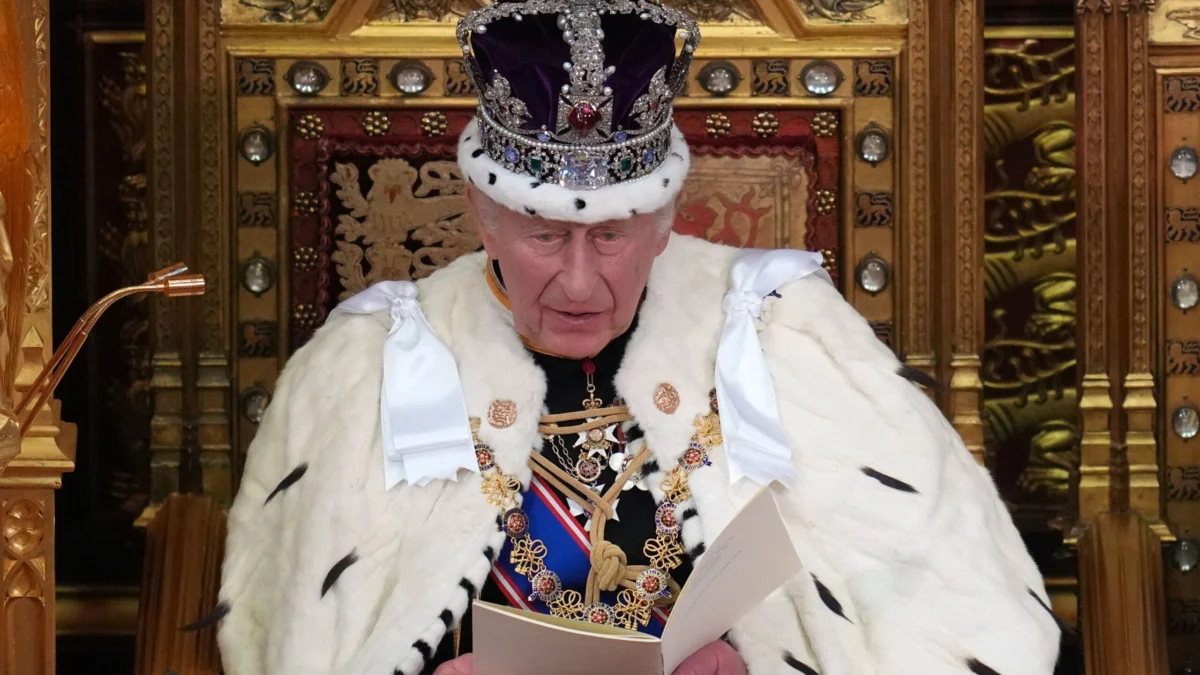
London, 13 May 2026 – 16:03 BST – A profound government crisis has cast a long, tumultuous shadow over one of Britain’s most enduring constitutional ceremonies: the State Opening of Parliament, traditionally marked by the King’s Speech. As King Charles III delivered his government’s legislative agenda from the gilded throne in the House of Lords, the air in Westminster was thick not with ceremonial pomp, but with the palpable tension of a Labour Party tearing itself apart. Prime Minister Keir Starmer, already beleaguered, now faces an imminent and open challenge to his leadership from within his own cabinet, with Health Minister Wes Streeting reportedly poised to launch a bid for the premiership as early as Thursday. The dramatic internal strife threatens to plunge the ruling Labour Party into further disarray, undermining its mandate and potentially reshaping the future of British politics.
The Shadow Over the Throne: A King’s Speech Drowned by Political Turmoil
The annual King’s Speech, a cornerstone of the British parliamentary calendar, is meant to be a moment of national unity and governmental clarity. It sets out the legislative priorities for the coming year, a blueprint for the country’s direction. Yet, this year, the solemn pronouncements from King Charles III were largely overshadowed by the raw, visceral drama unfolding just beyond the royal procession route. The very government whose programme the monarch was articulating seemed on the brink of implosion.
For a nation accustomed to political theatre, the events of Wednesday reached a new level of surrealism. The Prime Minister, Keir Starmer, a figure whose leadership has been increasingly questioned, met his chief internal rival, Health Minister Wes Streeting, for a "coffee" at 10 Downing Street. This seemingly innocuous encounter, widely touted by the British press as a "showdown," lasted a mere seventeen minutes. The brevity of the meeting spoke volumes, signalling not a resolution, but a deepening of the internecine conflict that has gripped the Labour Party. Analysts quickly interpreted the short duration as a stark indicator that Streeting was not deterred, but rather emboldened, in his rumoured ambition to challenge Starmer for the party leadership.
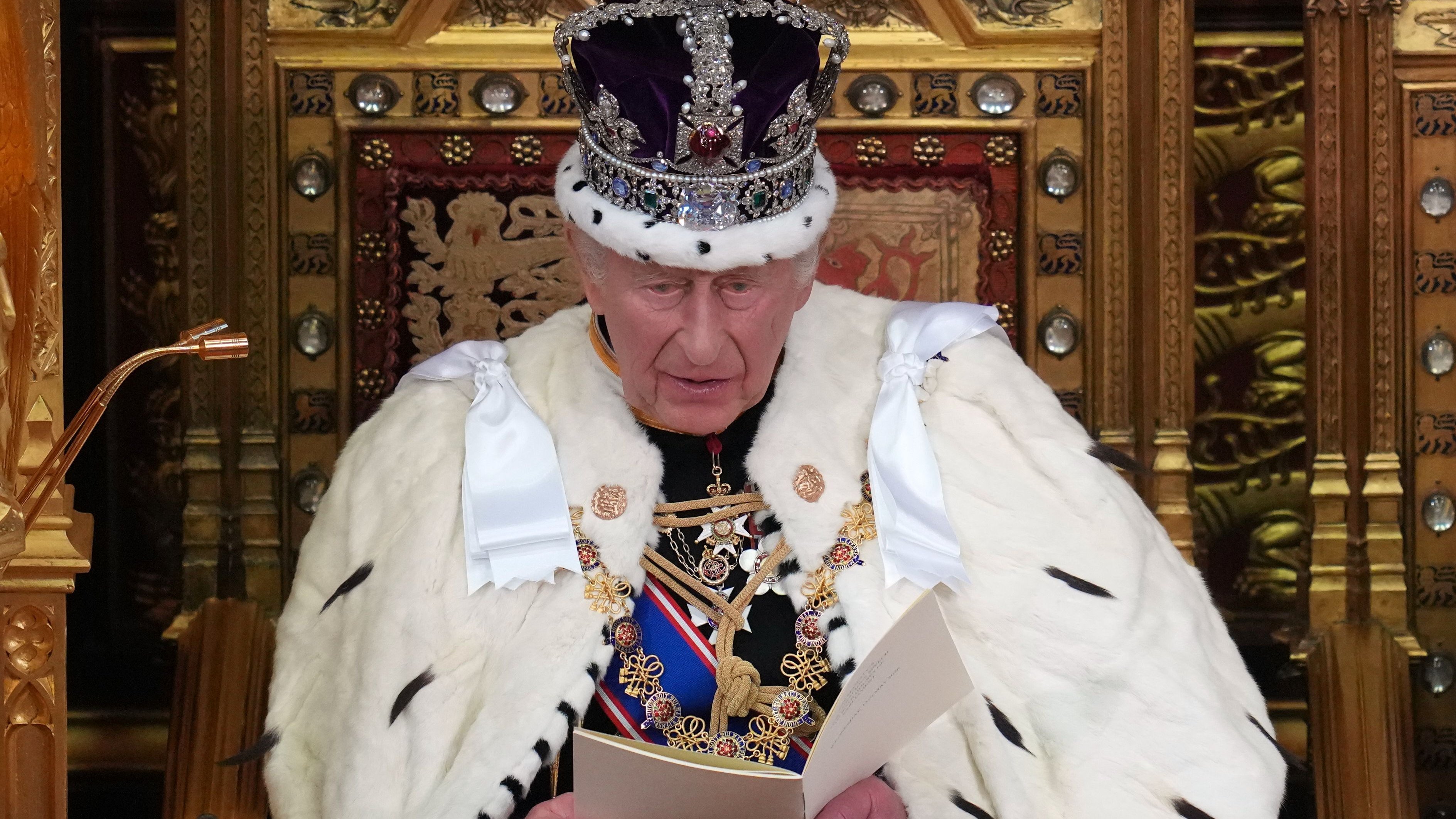
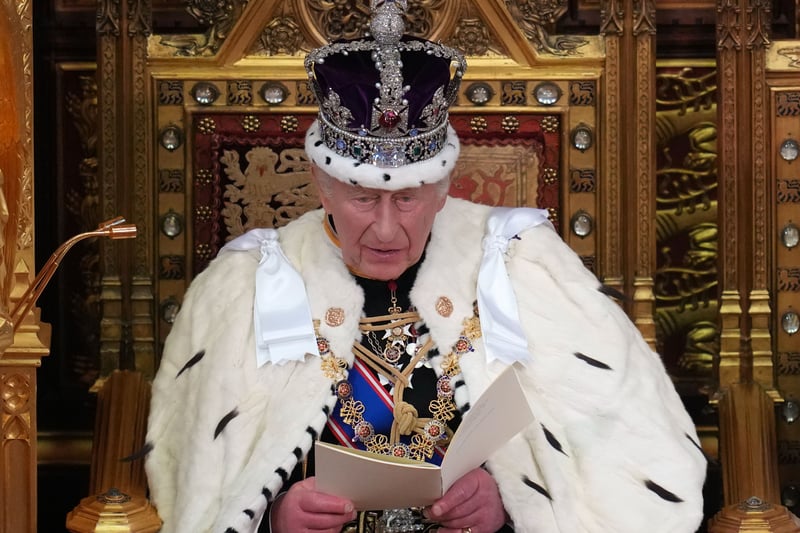
The crisis highlights the fragile nature of political power, even within a governing party. The King’s Speech, a moment designed to project stability and purpose, instead served as a stark backdrop to the unfolding instability, a poignant symbol of a government distracted by internal warfare rather than focused on national priorities.
A Party Fractured: The Brewing Leadership Battle
The core of the current crisis lies in the deeply fractured state of the Labour Party. What began as simmering discontent has now erupted into an open challenge, epitomised by the looming threat from Wes Streeting.
The 17-Minute Confrontation: Starmer vs. Streeting
The "coffee" meeting between Starmer and Streeting on Wednesday morning was less a diplomatic tête-à-tête and more a tense exchange between rivals. While the exact details remain guarded, sources close to Downing Street described the atmosphere as "charged." Streeting, a prominent figure known for his media savvy and articulate, often centrist, political positions, has long been seen as a potential successor to Starmer. His alleged plan to resign from the cabinet on Thursday and openly contest the party leadership marks a decisive escalation. Such a move would force a formal leadership election, a process that would inevitably consume the party and government, diverting attention and resources at a critical juncture for the nation.
Streeting’s motivations are reportedly rooted in a belief that Starmer lacks the necessary electoral appeal and decisive leadership to secure Labour’s long-term future. He is understood to advocate for a more robust, perhaps even more radical, vision for the party, believing Starmer’s cautious approach has failed to energise the electorate or consolidate public trust. His challenge represents a direct confrontation with the incumbent Prime Minister, a rare but not unprecedented event in British political history.
The Roots of Discontent: Why Starmer is Under Pressure
Keir Starmer’s tenure as Prime Minister, while initially marked by a period of relative stability after the turbulent years preceding his election, has become increasingly fraught. His political capital has been eroded by a confluence of factors. Economic headwinds, including persistent inflation and a cost-of-living crisis, have tested his government’s ability to deliver tangible improvements for ordinary Britons. Critics from both the left and right of the party argue that Starmer’s policy platform lacks a clear, inspiring narrative, often appearing reactive rather than visionary.
Furthermore, his leadership style has been a point of contention. Some within the party describe it as overly cautious and bureaucratic, lacking the charisma and dynamism required to galvanise public support. A series of minor policy U-turns and perceived indecisiveness on key issues have chipped away at his authority. The public, too, has shown signs of wavering confidence, with recent opinion polls indicating a dip in Labour’s lead over the opposition Conservatives, and Starmer’s personal approval ratings stagnating or even declining. The backdrop of these internal pressures and public dissatisfaction has created fertile ground for a leadership challenge, making Starmer appear vulnerable to those within his own ranks who believe they can offer a more compelling alternative.
Chronology of a Crisis: From Uneasy Truce to Open Rebellion
The current political maelstrom in Westminster did not erupt overnight but has been building over several months, a testament to the simmering tensions within the Labour Party and the broader challenges facing the government.
- Autumn 2025: Early signs of discontent begin to surface following a series of disappointing local election results, where Labour failed to make expected gains in key marginal constituencies. Anonymous briefings to the press hint at growing frustration with Starmer’s strategy.
- Winter 2025-2026: Economic indicators worsen, with GDP growth slowing and unemployment showing an unexpected uptick. The government’s proposed legislative agenda, aimed at addressing these issues, faces criticism for lacking ambition and urgency. Health Minister Wes Streeting, increasingly vocal in public debates, gains a higher profile, often seen as offering a more direct and energetic approach than the Prime Minister.
- March 2026: A highly anticipated by-election in a traditionally Labour-held seat sees a significantly reduced majority, sparking alarm among backbench MPs. Whispers of a potential leadership challenge intensify, though no formal declaration is made.
- Early May 2026: The annual conference of several major trade unions passes motions expressing "grave concern" over the government’s economic policies and its perceived lack of engagement with organised labour. This marks a significant shift, as unions are traditionally a bedrock of Labour support.
- Monday, 11 May 2026: Reports begin to circulate in the national media, citing "senior Labour sources," that Wes Streeting is actively considering a leadership bid. These reports suggest he is gauging support among MPs and party members.
- Tuesday, 12 May 2026: The King’s Speech is formally announced for Wednesday, setting the stage for the government’s legislative programme. However, media attention is almost entirely dominated by speculation about Streeting’s intentions and the brewing internal conflict. Four political undersecretaries resign from their government posts, citing a loss of confidence in the Prime Minister’s direction.
- Wednesday, 13 May 2026: The King delivers his speech. Simultaneously, the brief, 17-minute "coffee" meeting between Starmer and Streeting takes place at 10 Downing Street. Following this, the dramatic announcement from eleven key trade unions withdrawing their explicit support for Starmer’s leadership into the next general election. Reports solidify that Streeting intends to challenge Starmer, possibly as early as Thursday.
- Thursday, 14 May 2026 (anticipated): Wes Streeting is expected to formally resign from the cabinet and declare his candidacy for the Labour Party leadership, triggering a full-blown internal contest.
This timeline illustrates a rapid descent from underlying unease to a full-blown political crisis, with the party’s internal divisions now fully exposed to the public.
Supporting Data: The Erosion of Authority
The pressure on Prime Minister Starmer is multifaceted, stemming from a significant withdrawal of support across key pillars of the Labour movement: the trade unions and the parliamentary party. The numbers paint a grim picture of a leader losing his grip.
Trade Union Defiance
The declaration by eleven trade unions, closely allied with the Labour Party, that Starmer "would not lead the party and government into the next general election" is a seismic event. Historically, trade unions have been the financial and organisational backbone of the Labour Party. Their endorsement, particularly during leadership contests and general elections, is crucial for mobilising resources, volunteers, and grassroots activists. The statement from this significant bloc of unions – representing millions of workers and substantial financial contributions – is far more than symbolic. It signifies a profound loss of confidence and sends a clear message to the wider party: the traditional power brokers believe Starmer is no longer electable.
This move could severely hamper Labour’s ability to fund its next election campaign, recruit volunteers, and effectively communicate its message to working-class communities. It also empowers other factions within the party, particularly those aligned with Streeting or more left-leaning candidates, who might find a receptive audience among disillusioned union members. The unions’ decision to distance themselves from Starmer is a strategic blow that could reverberate through the party’s electoral machinery for years to come.
Parliamentary Revolt
The dissent within the Parliamentary Labour Party (PLP) is equally stark and alarming for Starmer.

- 90 MPs Demanding Resignation: A demand for the Prime Minister’s resignation from approximately 90 members of his own governing party’s parliamentary faction represents a substantial challenge to his authority. In a Parliament of 650 seats, with Labour holding 403 (as implied by the 150/403 split), such a large internal rebellion threatens to destabilise the government’s legislative agenda. These MPs could vote against government bills, making it difficult for Starmer to pass crucial legislation and effectively govern. The identity of these 90 MPs would be critical – are they from a specific ideological wing, or a broader cross-section of the party? Their collective demand suggests a deep and widespread dissatisfaction with Starmer’s leadership and policy direction.
- Four Political Undersecretaries Resign: The resignation of four junior ministers is a direct, public act of defiance. These individuals, typically chosen for their loyalty and competence, have chosen to sever ties with the government rather than continue serving under Starmer. Their resignations are often seen as a bellwether, encouraging other discontented MPs to follow suit. It undermines the appearance of a united government and signals to the public that even those closest to the leadership have lost faith.
- The Numerical Split: The article states that "around 150 of the total 403 Labour MPs have publicly declared their support for Starmer." This means a substantial majority of 253 Labour MPs have either explicitly withdrawn support, joined the 90 demanding resignation, or remained silent. In a leadership contest, 150 votes would be far from sufficient to secure victory. It highlights the precariousness of Starmer’s position, indicating that he lacks a clear mandate from a significant portion of his parliamentary colleagues. This internal division makes governance challenging and a leadership contest almost inevitable if a credible challenger emerges.
Combined, the withdrawal of union backing and the open revolt within Parliament present a formidable challenge to Starmer. These aren’t merely dissenting voices; they are foundational pillars of the Labour movement indicating a systemic loss of confidence in his leadership.
Official Responses and Strategic Maneuvering
In the immediate aftermath of such intense political upheaval, official responses are carefully calibrated, designed to either staunch the bleeding or amplify the discord.
From Prime Minister Starmer’s camp, the messaging has been predictable but increasingly difficult to sustain. Public statements from loyalists have focused on calling for "unity in the face of national challenges," urging the party to "focus on governance" rather than "internal distractions." Starmer himself, while maintaining a stoic facade, has likely attempted to project an image of calm authority, stressing the importance of delivering on the government’s agenda outlined in the King’s Speech. Behind closed doors, however, frantic efforts would be underway to shore up support, identify wavering MPs, and discredit the challenger’s narrative. Sources close to Downing Street might leak stories questioning Streeting’s judgment or highlighting his perceived ideological inconsistencies.
Wes Streeting’s camp, conversely, would be working to frame his impending challenge not as an act of disloyalty, but as a necessary intervention "for the good of the party and the country." His supporters would likely argue that Starmer’s current trajectory risks electoral defeat, and a change of leadership is essential to restore public trust and present a clear, winning vision. Streeting himself would be expected to articulate a compelling alternative, perhaps criticising the current government’s handling of the economy or its perceived lack of ambition in public service reform. His resignation from the cabinet, if it occurs, would be portrayed as a principled stand, allowing him to speak freely and offer a genuine choice to the party membership.

The Conservative Party, currently in opposition, would undoubtedly seize on Labour’s internal chaos with relish. Senior Tory figures would be quick to highlight the disarray, portraying Labour as "too busy fighting amongst themselves to govern the country." They would argue that the government’s legislative programme, already delivered under a cloud of crisis, is now entirely undermined by the lack of confidence within its own ranks. This narrative would aim to capitalise on public cynicism towards political infighting, positioning the Conservatives as the only credible alternative for stable governance, regardless of their own recent history of internal struggles.
Other parties, such as the Liberal Democrats and the Scottish National Party, would also seek to exploit the situation, positioning themselves as reliable alternatives to Labour’s instability. The Liberal Democrats might appeal to centrist voters disillusioned by Labour’s infighting, while the SNP would reiterate its argument that Westminster politics is inherently unstable and Scotland’s interests would be better served by independence.
Public opinion, as measured by various polls, would likely reflect a growing sense of disillusionment. Surveys might show a significant drop in confidence in the government’s ability to lead, and a general feeling that politicians are out of touch with the concerns of ordinary people. Starmer’s personal approval ratings would almost certainly take a hit, making any attempt to dismiss the challenge as a minor distraction increasingly difficult.
Broader Implications: A Nation on Edge
The internal power struggle within the Labour Party extends far beyond the confines of Westminster, threatening to ripple through the fabric of British society and its political future.

Impact on Governance and Policy
The immediate and most pressing implication is the potential for legislative paralysis. A government consumed by a leadership contest is a government unable to effectively govern. The ambitious legislative agenda laid out in the King’s Speech, which presumably includes crucial reforms and policy initiatives, now hangs precariously in the balance. Bills may struggle to pass through Parliament if a significant bloc of Labour MPs is actively working against the incumbent leader or simply too distracted by internal politics to focus on policy. This could lead to delays in essential public services, economic instability, and a general sense of drift at a time when decisive leadership is needed. Businesses, investors, and international partners will observe this instability with concern, potentially impacting the UK’s economic standing and its ability to attract foreign investment.
Electoral Landscape and Future of Labour
The timing of this crisis, occurring just a few years before the next general election (which must take place by 2029 at the latest), is particularly damaging for Labour. A protracted leadership battle, fought publicly and often acrimoniously, risks alienating voters who crave stability and clear leadership. It could shatter any illusion of unity that Labour had managed to project, making it difficult to present a coherent front to the electorate. The party risks being perceived as chaotic and incapable of governing, handing a significant advantage to the Conservative opposition, even if they too have faced their own periods of internal strife.
Should Starmer be ousted, the new leader would face the monumental task of reuniting a deeply divided party, restoring public confidence, and preparing for a general election in a significantly shortened timeframe. The very identity and ideological direction of the Labour Party could be up for grabs, potentially leading to further fragmentation and a protracted period in opposition. Conversely, if Starmer manages to cling to power, he would emerge significantly weakened, his authority diminished, and his ability to command the loyalty of his party severely compromised.
Historical Echoes: Precedent and Peril
British political history is replete with examples of leadership challenges and internal party coups, offering both warnings and insights into the current crisis. From Margaret Thatcher’s dramatic downfall in 1990, triggered by a leadership challenge from Michael Heseltine and ultimately won by John Major, to the multiple challenges faced by Theresa May and the rapid succession of Conservative leaders after Boris Johnson, internal power struggles are a recurring feature of the Westminster system. Labour itself has seen its share of bitter contests, from Tony Blair’s long-running feud with Gordon Brown to the tumultuous leadership of Jeremy Corbyn.

These historical precedents underscore the gravity of the situation. They demonstrate that once a leader’s authority is questioned and a challenge materialises, it is incredibly difficult to regain momentum, even if the challenge is defeated. The current crisis risks defining Starmer’s legacy, regardless of the outcome. It highlights the inherent peril of a political system where the power of individual ambition and factional loyalty can, at any moment, overshadow the pressing needs of governance and the ceremonial duties of the Crown.
As King Charles III’s words faded in the House of Lords, the real drama was just beginning. The future of Keir Starmer’s leadership, the direction of the Labour Party, and indeed, the stability of the United Kingdom, now hang precariously in the balance, awaiting the next decisive move in this high-stakes political chess game.












Leave a Reply