Introduction
The ongoing conflict in Ukraine has dramatically reshaped global security paradigms, offering an unprecedented, albeit tragic, laboratory for modern warfare. For Germany’s Bundeswehr, a military undergoing a profound transformation heralded by Chancellor Olaf Scholz’s "Zeitenwende" (turning point), the Ukrainian experience presents a critical, perhaps indispensable, opportunity for learning and adaptation. A recent analysis, veiled behind a digital paywall but whose title resonates across defense circles, posits a compelling argument: "The Bundeswehr could learn a lot from Ukraine – if they were on site." This proposition is not merely academic; it underscores a growing conviction that direct engagement and observation of the Ukrainian Armed Forces (UAF) in their fight against Russian aggression could provide invaluable insights into contemporary combat, innovation under duress, and the very essence of military resilience.
For decades, the Bundeswehr, shaped by a post-Cold War peace dividend and a focus on expeditionary missions rather than territorial defense, has grappled with systemic underfunding, bureaucratic inertia, and an erosion of operational readiness. Ukraine, by contrast, has forged a battle-hardened force, rapidly innovating and adapting to a high-intensity conflict against a numerically superior adversary. The gulf between these two realities highlights not only the strategic urgency for Germany but also the potential for a transformative exchange of knowledge that could redefine the future trajectory of the Bundeswehr and, by extension, European security.
Main Facts: The Imperative of On-Site Learning
The central thesis advocates for a more direct and experiential learning approach for the Bundeswehr from the Ukrainian military. While Germany has provided substantial military aid, including Leopard 2 tanks, IRIS-T air defense systems, and artillery, the transfer of hardware alone does not equate to the transfer of tactical and strategic acumen gained in real combat. The article’s provocative title suggests that the true depth of Ukrainian innovation – from decentralized command structures and agile logistics to drone warfare and psychological resilience – can only be fully grasped through direct observation and interaction with forces actively engaged on the front lines or in immediate support roles.
The Bundeswehr, despite its sophisticated equipment and NATO training, largely lacks recent large-scale combat experience in a peer-on-peer conflict. Its deployments have primarily been in stabilization missions or counter-insurgency operations. The war in Ukraine, however, represents a return to conventional, high-intensity warfare, involving complex combined arms operations, extensive use of artillery, electronic warfare, and novel applications of technology such as drones for reconnaissance, targeting, and even direct attack. These are precisely the areas where the Bundeswehr needs to rapidly evolve to meet the demands of collective defense within NATO.
The "on-site" element is crucial. It implies not necessarily direct combat participation by German troops – a politically fraught concept – but rather a more robust presence for training, observation, and direct knowledge exchange. This could involve German military advisors embedded with Ukrainian training units, intelligence liaison officers gaining first-hand insights into Russian tactics and Ukrainian countermeasures, or technical personnel observing the performance and maintenance of Western systems under actual combat conditions. Such an approach would move beyond theoretical exercises and simulated environments, grounding Bundeswehr doctrine and training in the stark realities of modern European conflict.
Chronology: A Tale of Two Military Evolutions
The journey of the German Bundeswehr since the end of the Cold War stands in stark contrast to the rapid and brutal evolution of the Ukrainian Armed Forces.
The Bundeswehr’s Post-Cold War Trajectory (1990-2022):
Following German reunification in 1990, the Bundeswehr underwent a dramatic reduction in size and reorientation of its mission. From over 500,000 personnel, it shrunk to approximately 180,000, and conscription was suspended in 2011. The focus shifted from territorial defense against a large-scale Soviet threat to smaller, more agile forces for international crisis management and expeditionary missions, such as in Afghanistan and the Balkans. This period saw chronic underinvestment in equipment, maintenance, and infrastructure. Budgets consistently fell below NATO’s 2% of GDP target, leading to a significant "hollowing out" of capabilities. Reports frequently detailed issues with non-functional tanks, grounded aircraft, and insufficient spare parts, earning the Bundeswehr the unfortunate moniker of a "paper tiger" in some critiques. While highly professional in its specialized units, the overall readiness for high-intensity, large-scale conventional warfare was widely perceived as diminished.
Ukraine’s Path to a Battle-Hardened Force (2014-2022):
Ukraine’s military transformation began in earnest in 2014, following Russia’s annexation of Crimea and the onset of conflict in the Donbas. Prior to this, the Ukrainian military was also largely a relic of the Soviet era, plagued by corruption, underfunding, and outdated doctrine. The initial years of the Donbas conflict exposed severe deficiencies, but also sparked a fervent national effort to reform and rebuild. With significant training and advisory support from NATO countries, particularly the US, UK, Canada, and Poland, the UAF began a systematic overhaul.
Key developments included:
- Decentralization: Moving away from rigid Soviet-style command to more agile, mission-command principles.
- Western Training: Adoption of NATO standards for tactics, logistics, and interoperability.
- Combat Experience: Continuous low-intensity conflict in the Donbas provided invaluable, albeit costly, combat experience for a generation of officers and soldiers.
- Volunteer Movement: A robust civilian volunteer movement supplemented military efforts, providing everything from equipment to medical aid, fostering strong civil-military relations and innovation.
- Innovation: Necessity bred invention, particularly in areas like drone development and deployment, improvised electronic warfare, and tactical medical response.
By February 2022, while still outmatched by Russia in sheer numbers and certain types of hardware, the UAF was a far more capable, motivated, and adaptable force than in 2014. Its subsequent performance against the full-scale invasion demonstrated an extraordinary capacity for resilience, strategic defense, and tactical brilliance, surprising many international observers. This stark chronological contrast highlights why the Ukrainian experience is so uniquely relevant for Germany’s ongoing military recalibration.
Supporting Data: Lessons from the Battlefield
While specific data from the original article is unavailable, the general landscape of military analysis and reporting on the Ukraine war provides ample "supporting data" for the argument that the Bundeswehr has much to learn.
1. Adaptability and Innovation in Drone Warfare:
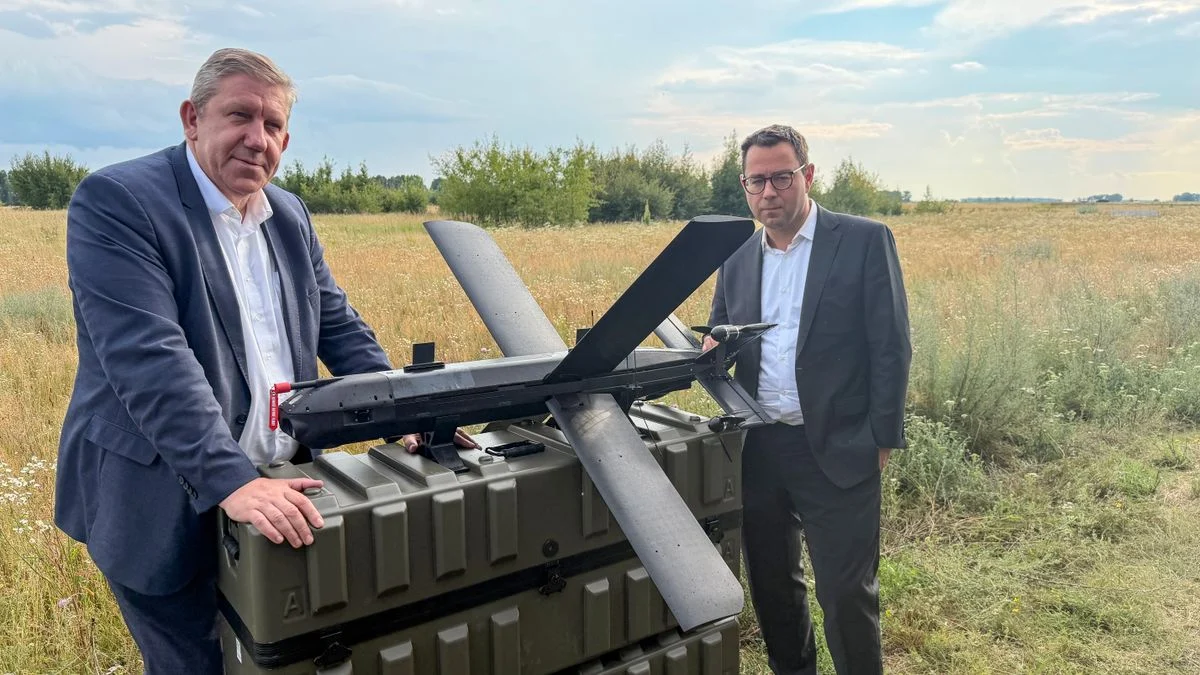
Ukraine has become a global leader in the rapid integration and deployment of commercial and purpose-built drones for a myriad of tasks: reconnaissance, artillery spotting, targeting, electronic warfare, and even direct attack with improvised munitions. The UAF’s ability to quickly develop, test, and field new drone technologies, often in collaboration with civilian tech companies, offers a masterclass in agile procurement and tactical adaptation. The Bundeswehr, traditionally burdened by lengthy procurement cycles and stringent certification processes, could learn from Ukraine’s pragmatic, "good enough" approach to technology adoption. This includes not only the hardware but also the training protocols and decentralized command structures that enable widespread and effective drone use.
2. Decentralized Command and Mission Command Principles:
Unlike the hierarchical, top-down Russian military, the UAF has effectively implemented NATO-style mission command, empowering junior officers and NCOs to make decisions on the ground. This decentralization fosters initiative, speed of action, and resilience, particularly when communications are disrupted or higher command is unavailable. The Bundeswehr, while theoretically subscribing to mission command, has often struggled to fully embed it in practice, particularly in large-scale exercises. Observing its real-world application under intense pressure in Ukraine could provide critical insights for doctrinal refinement and leadership training.
3. Logistics and Maintenance under Duress:
The UAF has demonstrated remarkable ingenuity in maintaining its diverse arsenal, including a mix of Soviet-era and complex Western systems, often with limited resources and under constant threat. This includes improvised repairs, cannibalization, and rapid logistical chains to deliver supplies to the front. The Bundeswehr, having faced persistent issues with spare parts and equipment availability, could glean lessons in battlefield maintenance, supply chain resilience, and the optimization of technical support in a high-attrition environment.
4. Medical Evacuation and Battlefield Care:
The efficiency of Ukrainian battlefield medicine, including rapid evacuation procedures and trauma care, has been frequently lauded. Learning from their protocols, particularly under conditions of intense artillery fire and mass casualties, would be invaluable for any modern military, including the Bundeswehr, which seeks to minimize casualties and preserve fighting strength.
5. Psychological Resilience and Information Warfare:
The unwavering morale of Ukrainian forces and civilians, coupled with highly effective strategic communications and counter-disinformation efforts, has been a decisive factor in the war. Understanding how Ukraine has built and maintained this psychological resilience, and how it combats enemy propaganda, offers crucial insights for modern military operations, where the information domain is as critical as the physical one.
6. Urban Combat and Defensive Fortifications:
The defense of cities like Mariupol, Bakhmut, and Avdiivka, while incredibly costly, showcased sophisticated urban combat tactics, including the use of underground networks, layered defenses, and coordinated small-unit actions. For a Bundeswehr potentially facing a future European conflict, these lessons in defensive warfare, fortification engineering, and urban combat would be directly applicable.
Official Responses: Germany’s Evolving Stance
German official responses to the war in Ukraine have evolved significantly since the full-scale invasion. Initially hesitant, Berlin has gradually ramped up its military and financial support, signaling a fundamental shift in its foreign and security policy.
Chancellor Olaf Scholz’s "Zeitenwende" speech in February 2022 was a watershed moment, committing €100 billion to modernize the Bundeswehr and pledging to meet NATO’s 2% defense spending target. This commitment acknowledges the systemic deficiencies that have plagued the German military for decades. Defence Minister Boris Pistorius has been particularly vocal about the need for urgency in Bundeswehr reform and has visited Ukraine, emphasizing Germany’s solidarity and commitment to support.
While Germany has been a major supplier of military aid and a key player in training Ukrainian forces on German soil (e.g., on Leopard tanks), the concept of a direct "on-site" learning presence for Bundeswehr personnel in Ukraine remains politically sensitive. The German government has consistently ruled out sending troops to Ukraine, fearing escalation with Russia. However, the interpretation of "on-site" learning does not necessarily mean combat deployment. It could involve:
- Expanded Training Missions: German instructors could conduct specialized training within Ukraine’s borders, perhaps in safer western regions, allowing for more tailored and context-specific instruction.
- Technical Advisory Roles: German experts could be embedded with Ukrainian units responsible for maintaining complex Western systems, providing real-time technical support and gathering data on equipment performance in combat.
- Joint Intelligence Gathering and Analysis: Closer liaison with Ukrainian intelligence services on the ground could provide the Bundeswehr with unparalleled insights into Russian tactics, electronic warfare capabilities, and logistical challenges.
Official statements often emphasize the importance of "learning from our partners" and adapting to the "new security reality." While direct references to "on-site" learning for Bundeswehr personnel in Ukraine are rare from top officials due to political sensitivities, the underlying rationale for such a move aligns perfectly with the stated goals of the Zeitenwende: to build a more capable, ready, and modern Bundeswehr. The pressure from allies and within the German defense establishment for more proactive engagement and learning is palpable, even if the methods remain a subject of careful diplomatic navigation.
Implications: Reshaping the Bundeswehr and European Security
The implications of the Bundeswehr embracing a strategy of direct, "on-site" learning from Ukraine are profound, potentially reshaping not only Germany’s military but also its role in European security.
1. Accelerated Bundeswehr Transformation:
Direct exposure to the realities of high-intensity conflict would provide an immediate and stark impetus for Bundeswehr reform. It would highlight critical gaps in doctrine, training, equipment, and readiness that might otherwise be overlooked in peacetime exercises. This could accelerate the modernization process, prioritize investments in key areas (like air defense, long-range artillery, and drone countermeasures), and foster a more adaptive and innovative military culture. The lessons learned could inform everything from procurement strategies to basic soldier training, instilling a sense of urgency and realism.
2. Enhanced Interoperability with NATO:
Many of Ukraine’s combat-proven tactics and operational procedures have been developed with significant input from NATO advisors. By deeply understanding these, the Bundeswehr could enhance its own interoperability with other NATO forces, particularly those that have also been involved in training the UAF. This shared understanding of modern battlefield dynamics would strengthen the alliance’s collective defense capabilities.
3. Germany’s Role as a Security Provider:
A more capable and battle-aware Bundeswehr would bolster Germany’s standing as a reliable security provider within Europe. Having learned directly from the crucible of conflict, Germany could contribute more effectively to NATO’s eastern flank defense and become a more credible voice in European security debates. This would be a significant step away from the post-Cold War image of a hesitant military power.
4. Deterrence and Credibility:
The ability of the Bundeswehr to rapidly assimilate and implement lessons from Ukraine would send a strong signal of resolve and capability to potential adversaries. A military that demonstrably learns from contemporary conflict and adapts swiftly is a more credible deterrent. This enhanced credibility would not only serve Germany’s national security interests but also strengthen the overall deterrence posture of NATO.
5. Evolution of Military Doctrine:
The war in Ukraine is challenging many long-held assumptions about conventional warfare. Lessons in combined arms warfare, the role of electronic warfare, the impact of precision munitions, and the psychological dimensions of conflict could lead to a significant overhaul of Bundeswehr doctrine, ensuring it remains relevant and effective in the 21st century. This might include a renewed focus on robust defensive capabilities, large-scale maneuver warfare, and comprehensive civil defense strategies.
6. Ethical and Political Considerations:
While the military benefits are clear, the political and ethical implications of "on-site" learning must be carefully managed. The risk of escalation, the safety of German personnel, and the optics of German military presence in a war zone are complex issues. Any such initiative would require meticulous planning, clear mandates, and transparent communication to avoid misinterpretation or unwanted political fallout. It would also necessitate a careful balance between learning from conflict and maintaining Germany’s principled stance against direct military intervention.
Conclusion
The call for the Bundeswehr to learn from Ukraine, particularly through a more direct "on-site" engagement, represents a critical juncture for German defense policy. It acknowledges the undeniable reality that the most pertinent lessons in modern warfare are currently being forged in the Ukrainian trenches and cities. While the political sensitivities surrounding direct presence are considerable, the strategic imperative for the Bundeswehr to absorb these lessons is arguably even greater. By doing so, Germany can not only accelerate its own military transformation but also solidify its commitment to European security, contributing to a stronger, more resilient NATO, and ultimately, a more stable continent. The "Zeitenwende" is not merely about spending more money; it is fundamentally about learning, adapting, and transforming, and Ukraine offers an unparalleled, albeit somber, classroom for this essential evolution.