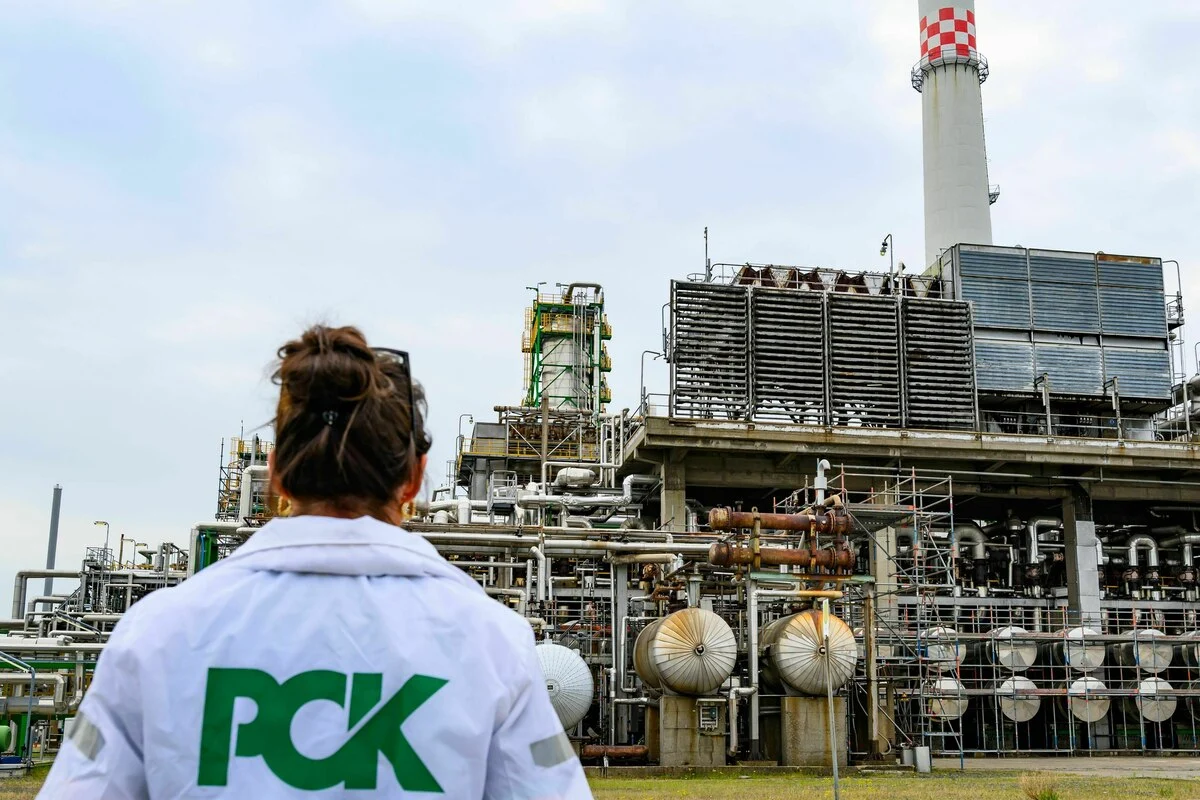
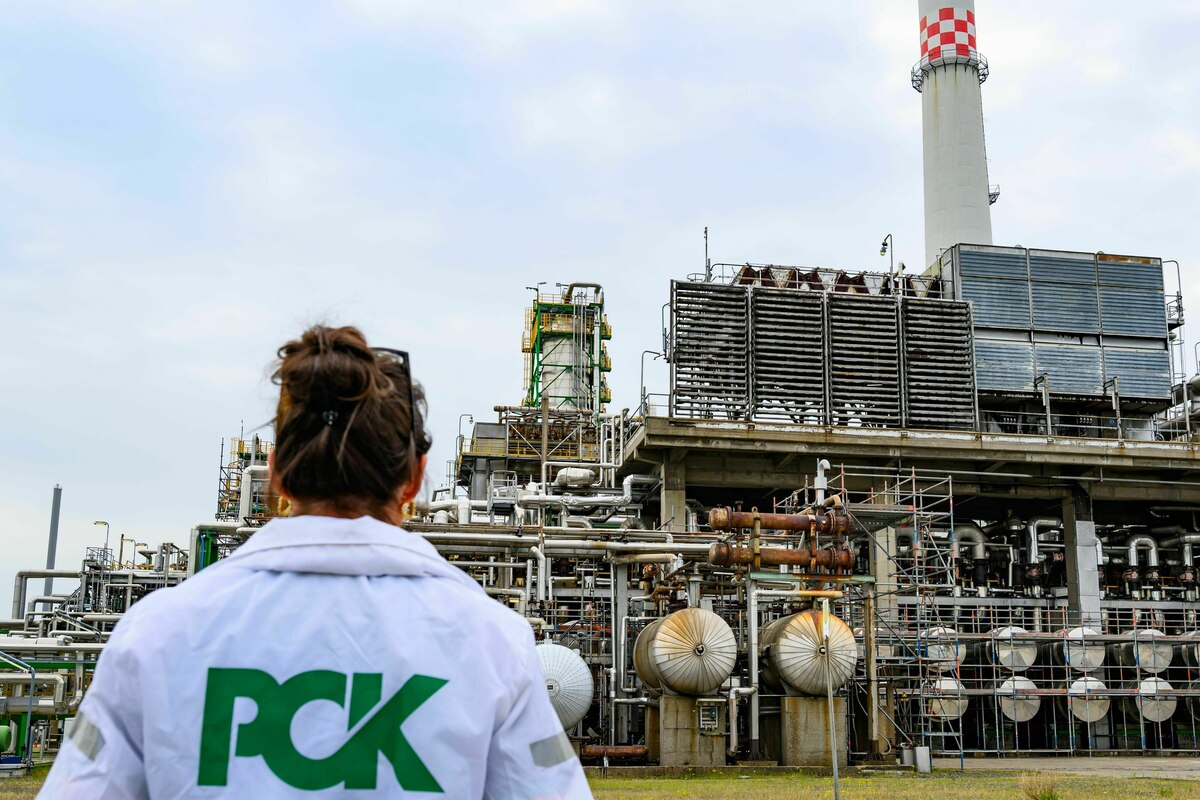
Berlin, Germany – A significant political debate is escalating in Germany over the future of the PCK refinery in Schwedt, Brandenburg, a critical energy hub for Northeast Germany, Berlin, and parts of Western Poland. Christian Görke, a member of the Bundestag for Die Linke party from Brandenburg, has issued a stark demand: the expropriation of Rosneft Deutschland, the German subsidiary of the Russian state-controlled oil giant, which holds a majority stake in PCK. Görke argues that this drastic measure is "long overdue" to safeguard the refinery’s operations and the livelihoods of its 3,000 direct and indirect employees amidst ongoing supply uncertainties and geopolitical tensions.
The demand comes as the refinery, placed under federal trusteeship since September 2022, grapples with a complex web of challenges, including disrupted oil supplies, unapproved federal aid, and a legal battle with its Russian owner. The federal government, while acknowledging the importance of PCK, maintains that supply security remains stable, a claim vehemently disputed by critics who fear an impending crisis.
A Chronology of Uncertainty and Intervention
The precarious situation surrounding the PCK refinery in Schwedt is deeply rooted in the geopolitical shifts triggered by Russia’s full-scale invasion of Ukraine in February 2022. The refinery, a vital component of Germany’s energy infrastructure, was historically reliant on Russian crude oil delivered via the Druzhba pipeline.
-
February 2022: Russia launches its full-scale invasion of Ukraine, prompting widespread international condemnation and a concerted effort by European nations, including Germany, to reduce their dependence on Russian energy imports. This immediately cast a shadow over the future of PCK, given its direct link to Russian oil supplies and its majority ownership by Rosneft.
-
September 2022: Seven months after the invasion, the then-federal government took a decisive step. Citing concerns over national energy security and the potential for Rosneft to disrupt supply, it placed Rosneft Deutschland and its subsidiary RN Refining & Marketing under the trusteeship of the Bundesnetzagentur (Federal Network Agency). This move effectively stripped Rosneft of its operational control over its German assets, including its 54% stake in PCK, without formally expropriating them. The goal was to ensure the continued operation of the refinery and diversify its crude oil sources away from Russia.
-
Initial Federal Support: Recognizing the urgent need to adapt PCK’s infrastructure, the "Ampel" (traffic light) coalition government – comprising the SPD, Greens, and FDP – approved a substantial aid package of 400 million euros. This funding was specifically earmarked for the "ertüchtigung" (upgrading or enhancement) of the oil pipeline connecting the port of Rostock to the Schwedt refinery in Uckermark. The objective was to significantly expand the pipeline’s capacity from its then-current 5.5 million tons of crude oil per year to 9 million tons, thereby allowing more non-Russian oil to reach Schwedt via Rostock.
-
EU Commission’s Intervention: The federal government’s plans, however, hit a major snag. The European Commission, responsible for approving state aid to ensure fair competition within the EU, has not yet given its consent to the 400 million euro package. Crucially, the Commission, in alignment with the German government’s initial intent, has made it clear that the Russian company Rosneft should not benefit from any such funding. This position effectively stalled the crucial pipeline upgrade, leaving PCK reliant on its existing, limited capacity from Rostock and other, more challenging, alternative routes. The German government, in response to an inquiry by Christian Görke, confirmed that the funding application remains "dormant" in Brussels.
-
May 2024: A new and significant blow to PCK’s supply security emerged. Kazakhstan, which had stepped in as an alternative supplier of crude oil to Schwedt after the cessation of direct Russian deliveries, was forced to halt its shipments. Russia claimed that the Druzhba pipeline, the very conduit through which Kazakh oil reached Germany, required urgent repairs. This sudden cessation meant the loss of approximately two million tons of Kazakh crude oil per year for Schwedt, exacerbating the refinery’s supply deficit.
These events paint a picture of continuous struggle and uncertainty for the PCK refinery, highlighting the complex interplay of international sanctions, national energy policy, and corporate interests in the wake of the Ukraine conflict.
The Demand for Nationalization: Görke’s Stance and Political Pressure
Christian Görke, the Bundestag member for Die Linke, has become a vocal advocate for a more decisive federal intervention. His call for the outright expropriation of Rosneft Deutschland’s majority stake in PCK underscores a deepening frustration with the current state of affairs and the perceived indecisiveness of the federal government.
Görke argues that the "long-delayed pipeline upgrade is now effectively canceled" due to the EU’s refusal to approve the aid while Rosneft remains the majority owner. This, he contends, places the 3,000 individuals directly and indirectly employed at PCK in a "dead end." He attributes this perilous situation to the "energy policy dilettantism" of the federal economic and energy ministry, accusing it of failing to secure the refinery’s future effectively.
For Görke, the problem is clear: as long as Rosneft retains its ownership, even under trusteeship, the refinery will be caught in a legal and political limbo that prevents necessary investments and secures crucial supply routes. He emphasizes that the 54% Rosneft share in PCK must be nationalized – either by the federal government or the state government of Brandenburg – to guarantee the region’s supply security.
His argument extends beyond mere operational concerns; it touches on principles of fairness and regional equity. Görke points to the perceived "unequal treatment" of the Schwedt refinery compared to similar situations in Western Germany. He cites the recent sale of the BP refinery in Gelsenkirchen, where the buyer reportedly received money as part of the deal, rather than paying for the asset. More pointedly, he references the 2024 nationalization of the struggling Meyer Werft, a cruise shipbuilder in Lower Saxony, by the federal government and the state of Lower Saxony to preserve jobs. Görke argues that if PCK were located in Western Germany, it would have been nationalized "long ago," implying a neglect of East German industrial concerns.
The Left Party, which Görke represents, has a long-standing ideological affinity for state intervention in strategic industries, particularly when jobs and regional stability are at stake. Their call for nationalization aligns with their broader political platform advocating for greater public control over essential services and infrastructure. Görke’s demand thus serves not only as a specific proposal for PCK but also as a broader critique of current economic policy, highlighting regional disparities and what he perceives as a failure of market-based solutions in critical sectors. The political pressure he exerts reflects a growing anxiety within the region about the long-term viability of PCK and its profound impact on the local economy.
The EU Hurdle and the Supply Dilemma: A Tangled Web
The operational stability of the PCK refinery hinges on a reliable supply of crude oil, a challenge exacerbated by two critical factors: the European Commission’s stance on state aid and the complex dynamics of oil transit through neighboring countries.
The EU Commission’s Rejection of Aid:
The 400 million euros approved by the German government for the upgrade of the Rostock-Schwedt pipeline was intended to be a cornerstone of PCK’s diversification strategy. The plan was to significantly boost the pipeline’s capacity, allowing more non-Russian crude oil to be transported from the Baltic Sea port of Rostock to Schwedt. However, this vital funding has been held up in Brussels. The EU Commission has indicated that it cannot approve the state aid as long as Rosneft, a Russian state-controlled entity, remains the majority owner of PCK, even under trusteeship.
The Commission’s position is rooted in the principle that state aid should not directly or indirectly benefit entities controlled by an aggressor state, especially in the context of the ongoing sanctions against Russia. While the trusteeship aimed to prevent Rosneft from exercising control, the underlying ownership structure still poses a legal and political hurdle for the EU. This deadlock means that the critical infrastructure upgrade, essential for reducing PCK’s vulnerability, cannot proceed, leaving the refinery with an insufficient pipeline capacity from Rostock. The current capacity of 5.5 million tons per year is already fully utilized, limiting the volume of non-Russian oil that can reach Schwedt by this route.
The Kazakh Oil Halt and the Druzhba Pipeline:
Adding to the supply woes, the flow of Kazakh crude oil to Schwedt, which had served as a crucial alternative, was abruptly halted on May 1st. Russia claimed that the northern branch of the Druzhba pipeline – literally meaning "Friendship" in Russian – required maintenance and repairs. Critics, however, suspect this is a politically motivated move by Moscow, using its control over transit infrastructure to exert pressure and destabilize European energy markets. The cessation of Kazakh deliveries means a loss of approximately two million tons of crude oil per year for Schwedt, further deepening its supply deficit. This incident underscores the ongoing vulnerability of European energy supply chains to Russian geopolitical maneuvering, even when dealing with non-Russian oil transiting through Russian-controlled pipelines.
Poland’s Refusal and the Gdansk Option:
With the Rostock pipeline at full capacity and Kazakh supplies cut off, PCK’s options for alternative crude oil dwindle. One potential route is through a pipeline originating from the Polish port of Gdansk. However, this avenue is currently blocked by Poland. Christian Görke explicitly states, "Poland clearly says: Rosneft gets nothing from Poland, regardless of whether it is under trusteeship." This firm stance by Warsaw highlights a critical aspect of the post-invasion energy landscape: the reluctance of EU member states, particularly those bordering Russia, to engage in any transactions that could be perceived as indirectly supporting Russian entities, even if those entities are under foreign government control. Poland’s position underscores the moral and political complexities that overshadow purely economic considerations, effectively denying PCK a viable and much-needed supply route.
Together, these factors create a formidable challenge for the PCK refinery. The EU’s conditionality on state aid, Russia’s alleged weaponization of pipeline maintenance, and Poland’s principled refusal to supply oil to a Rosneft-owned entity, even under trusteeship, form a tangled web that threatens the long-term viability and operational capacity of this strategically important German refinery.

Official Responses: Reassurance Amidst Alarm
Amidst Christian Görke’s urgent calls for nationalization and his warnings of an impending crisis, official government bodies offer a more measured, albeit sometimes contrasting, assessment of the situation at the PCK refinery.
Federal Ministry for Economic Affairs and Climate Action (BMWE):
The Federal Ministry for Economic Affairs and Climate Action (BMWE), responsible for Germany’s energy policy, projects an image of stability. A spokesperson for the BMWE informed the taz that "the utilization of PCK remains stable, at 85 to 90 percent." Furthermore, the ministry sees "no signs of a supply interruption or similar issues. Supply security remains guaranteed."
This official stance aims to quell public fears and signal confidence in the existing measures, particularly the trusteeship and the efforts to secure alternative supplies. The BMWE’s assessment suggests that while challenges exist, they are being managed effectively, and there is no immediate threat to the provision of essential fuels like petrol, diesel, and jet fuel to Northeast Germany, Berlin, and Western Poland. The ministry likely bases its assessment on the current operational levels and the various short-term measures in place to source crude oil, even if these are not ideal long-term solutions.
Brandenburg State Ministry for Economic Affairs, Energy, Climate Protection, and Europe:
The state government of Brandenburg, where the PCK refinery is located, also provided a response, though with a slightly different nuance. A spokesperson for the CDU-led Ministry for Economic Affairs, Energy, Climate Protection, and Europe in Brandenburg stated that it "naturally welcomes that PCK’s supply security has been restored and thanks the federal government for the successful negotiations."
This statement is interesting as it acknowledges a "restoration" of supply security, implying that it might have been at risk at some point. It also offers a vote of confidence and gratitude to the federal government’s efforts, suggesting a coordinated approach between the federal and state levels. The Brandenburg ministry’s perspective is crucial because the refinery’s fate directly impacts the regional economy and employment. Their welcoming of "restored" security could be interpreted as an endorsement of the trusteeship model and the current strategies, at least for the short to medium term.
Contrasting Narratives:
The contrasting narratives between Görke’s alarmist warnings and the government’s assurances highlight the political and economic tightrope walk involved. Görke’s perspective emphasizes the long-term structural issues, the legal impediments to investment, and the vulnerability to external geopolitical pressures. He focuses on the "what-ifs" and the potential for future disruptions if a definitive solution isn’t found.
The federal and state ministries, on the other hand, appear to focus on the "what-is" – the current operational status and the immediate absence of critical supply shortages. Their statements aim to maintain calm and reassure businesses and consumers that the energy supply remains robust. However, the underlying tensions regarding ownership, funding, and international relations remain unresolved, leaving open the question of how long this "stable" situation can be maintained without more fundamental interventions.
Rosneft’s Legal Battle and Valuation Disputes
The demand for nationalization by Christian Görke is further complicated by Rosneft’s own legal actions and the contentious issue of its stake’s valuation. The Russian oil giant is not passively accepting the German government’s trusteeship; it is actively fighting to reclaim its assets.
Rosneft’s Lawsuit Against Trusteeship:
Immediately after the German government placed Rosneft Deutschland and its subsidiaries under the trusteeship of the Bundesnetzagentur in September 2022, Rosneft initiated legal proceedings. The company has filed a lawsuit challenging the legality of the trusteeship, arguing that the German state’s intervention is unlawful and constitutes an infringement on its property rights. Rosneft’s objective is clear: it wants its majority stake in PCK back, along with full operational control.
This legal battle adds a layer of uncertainty to the refinery’s future. Should Rosneft succeed in its lawsuit, the German government would be forced to relinquish its control, potentially reversing all efforts to diversify crude oil supplies and integrate PCK more closely into Germany’s non-Russian energy strategy. Such a scenario would likely reignite severe energy security concerns and could lead to renewed calls for more aggressive measures. The outcome of this legal challenge is therefore critical, as it could dictate whether the German state can maintain its influence over a key piece of its energy infrastructure.

The Disputed Valuation of Rosneft’s Stake:
Central to any potential expropriation or negotiated buyout would be the valuation of Rosneft’s 54% stake in PCK. Rosneft has reportedly demanded six billion dollars for its share. Christian Görke, however, dismisses this figure as "completely absurd."
The vast discrepancy in valuation highlights the inherent difficulties in assessing the true worth of such an asset, particularly under current geopolitical circumstances and the existing trusteeship. Rosneft’s high demand could be a negotiating tactic, an attempt to recoup maximum value, or a reflection of its perception of the asset’s pre-war value.
Görke’s counter-argument is based on recent precedents in the German refining sector. He points to the sale of the BP refinery in Gelsenkirchen, which he claims was structured in such a way that the buyer actually received money in the transaction. While the specifics of such a deal are complex and can involve environmental liabilities, future investment requirements, or specific market conditions, Görke uses it to argue that a simple, high cash payout for Rosneft’s share is unwarranted. His comparison suggests that in a distressed or geopolitically complicated sale, the asset’s value might be significantly lower, or even negative, depending on the liabilities and future costs associated with it.
The valuation dispute underscores the economic complexities of any move towards nationalization. Expropriation, while a powerful tool, typically requires "just compensation" under German and international law. Determining what constitutes "just" compensation for an asset owned by an entity from a sanctioned country, currently under trusteeship, and operating in a volatile energy market, would be a formidable legal and financial challenge. The ongoing legal battle and the vast difference in valuation further complicate the path forward for PCK Schwedt, making a swift and clean resolution seem increasingly unlikely.
Broader Implications and Precedents
The saga of the PCK refinery in Schwedt extends far beyond a localized energy dispute; it carries significant broader implications for Germany’s energy policy, its relationship with Eastern Europe, and the application of state intervention in critical industries.
Energy Security and Geopolitical Independence:
The primary implication is for Germany’s energy security. PCK is not just a refinery; it is the sole supplier of refined petroleum products for Northeast Germany, including Berlin, and parts of Western Poland. Its stable operation is crucial for the regional economy, transportation, and even national defense. The reliance on Russian oil and the subsequent efforts to diversify have highlighted Germany’s vulnerabilities. A successful, stable transition for PCK away from Russian influence would be a powerful symbol of Germany’s pursuit of greater energy independence and resilience in the face of geopolitical pressures. Conversely, a failure to secure PCK’s future could lead to fuel shortages, economic disruption, and a perception of governmental weakness.
Relationship with Eastern European Partners:
The PCK situation also impacts Germany’s relationships with its Eastern European neighbors, particularly Poland. Poland’s refusal to supply crude oil via Gdansk as long as Rosneft maintains ownership, even under trusteeship, underscores a deep-seated distrust of Russian entities and a commitment to sanctions. This stance, while understandable from a Polish perspective, creates an additional hurdle for Germany. A resolution for PCK that satisfies Poland’s concerns could strengthen regional energy cooperation and trust, while continued deadlock could strain these relationships. The Druzhba pipeline incident, with Russia allegedly disrupting Kazakh oil flows, further illustrates the complex geopolitical chessboard where Germany’s energy future is being played out.
The Precedent of State Intervention and Unequal Treatment:
Christian Görke’s accusation of "unequal treatment" for the East German refinery compared to Western German cases raises important questions about industrial policy and regional equity. His comparison to the Meyer Werft, a shipbuilding company in Lower Saxony, is particularly salient. Meyer Werft, a significant employer in a different critical industry, faced financial difficulties in 2024 and was indeed nationalized by the federal government and the state of Lower Saxony to protect jobs. This precedent demonstrates a willingness by the German state to intervene decisively when major industries and employment are at risk, particularly in regions considered economically important.
Similarly, Görke’s reference to the BP refinery in Gelsenkirchen, where a transaction reportedly involved the buyer receiving funds, hints at a market reality where the divestment of certain industrial assets can be complex and may not always yield a positive sale price, especially if liabilities or future investment needs are substantial. Görke uses these examples to argue that if PCK were located in Western Germany, a similar decisive intervention – i.e., nationalization – would have already occurred. This highlights a perceived bias or hesitancy when dealing with industrial assets in the former East Germany, a region that has historically faced unique economic challenges and anxieties about its industrial base.
The debate around PCK thus becomes a microcosm of broader discussions within Germany about the role of the state in the economy, the equitable distribution of industrial support, and the strategic importance of critical infrastructure in a rapidly changing geopolitical landscape. The outcome for Schwedt could set a significant precedent for how Germany navigates future energy crises and manages its industrial base in a post-fossil fuel, post-Russian energy era.

Outlook and Potential Paths Forward
The future of the PCK refinery in Schwedt remains shrouded in uncertainty, with multiple stakeholders pulling in different directions and a complex web of legal, economic, and geopolitical factors at play. Several potential paths forward exist, each with its own set of challenges and implications.
1. Outright Nationalization:
Christian Görke’s proposed solution of outright nationalization of Rosneft’s 54% stake is the most radical but, in his view, the most decisive. This would involve the German government formally acquiring Rosneft’s shares, either through a negotiated settlement or compulsory acquisition.
- Challenges: This path faces significant legal hurdles, including international investment protection treaties that typically require "just and prompt compensation" for expropriated assets. Rosneft’s high valuation demand ($6 billion) would necessitate a substantial financial outlay, potentially contested in international courts. It could also trigger further legal battles and strain diplomatic relations with Russia, even amidst existing sanctions. However, it would resolve the ownership issue, potentially unblocking EU aid and easing supply concerns from Poland.
2. Prolonged Trusteeship and Incremental Solutions:
The current state of trusteeship could be extended indefinitely, relying on the federal government to manage PCK’s operations and secure alternative supplies.
- Challenges: While maintaining federal control, this approach does not resolve the underlying ownership issue, which continues to block the 400 million euro pipeline upgrade from the EU and potentially limits cooperation with Poland. It leaves PCK vulnerable to Rosneft’s ongoing legal challenges and creates long-term investment uncertainty. It forces the German government to continuously find stop-gap solutions for crude oil supply, which could be less efficient and more costly in the long run.
3. Negotiated Sale to a Western Partner:
The German government could seek to facilitate the sale of Rosneft’s shares (or the entire refinery) to a non-Russian, Western-aligned energy company.
- Challenges: Finding a willing buyer for a refinery facing significant supply challenges and located in a geopolitically sensitive area might be difficult. The sale price would still be a point of contention with Rosneft, and it’s unclear if Rosneft would agree to sell to a German-approved entity while its lawsuit against the trusteeship is ongoing. Such a sale would also require careful consideration of competition law and the strategic interests of the new owner.
4. Alternative Energy Transition:
In the very long term, Germany’s broader energy transition away from fossil fuels could eventually reduce the strategic importance of oil refineries like PCK.
- Challenges: This is a decades-long process, whereas the problems at PCK are immediate. Even in a decarbonized future, certain refined products might still be needed, or the infrastructure could be repurposed. However, the current focus is on securing the refinery’s short-to-medium-term viability.
Immediate Next Steps:
The most pressing issue remains the resolution of the crude oil supply. With Kazakh oil disrupted and the Rostock pipeline at capacity, securing sufficient alternative crude is paramount. This requires continued diplomatic efforts to ensure transit through Poland or to find other global suppliers accessible via Rostock. The federal government will also need to engage further with the EU Commission to find a workaround for the state aid approval, possibly by demonstrating a clear separation of benefits from Rosneft or by formally expropriating the shares before the aid is disbursed.
The conflicting statements from Christian Görke and the federal ministries highlight the ongoing tension between political urgency and governmental caution. While the BMWE asserts stability, the underlying structural issues and geopolitical pressures suggest that the PCK refinery will remain a focal point of Germany’s energy debate for the foreseeable future. A decisive, long-term solution is increasingly necessary to secure not only the refinery’s operations but also the economic stability of the entire region.