Berlin, Germany – August 14, 2026 – Germany is once again gripped by a severe energy crisis, as skyrocketing fuel prices inflict widespread hardship on consumers and businesses. With petrol and diesel costs reaching unprecedented levels, the Greens parliamentary group leader, Katharina Dröge, has vehemently accused the federal government of inaction, describing the situation as an outright "rip-off" of the German populace. Dröge is spearheading calls for an immediate "excess profits tax" on mineral oil companies, proposing that the substantial revenues generated should be channeled back to citizens, potentially through a reduction in electricity taxes.
The latest surge in fuel costs is attributed to a volatile cocktail of geopolitical tensions and severe domestic climate impacts. The Strait of Hormuz, a critical chokepoint for global oil supplies, is reportedly facing a de facto blockade by Iran, sending international oil prices spiraling upwards. Concurrently, Germany is experiencing a prolonged and intense drought, severely depleting water levels in vital waterways like the Rhine. This natural disaster has crippled the cost-effective transport of oil and refined fuels via barges, forcing reliance on more expensive road and rail alternatives, thereby adding significant logistical burdens to the supply chain.
The ADAC, Germany’s largest automobile club, echoes Dröge’s concerns, confirming that fuel prices have remained "unacceptably high" for weeks. The confluence of these international and domestic pressures has created a perfect storm, intensifying the debate over market regulation, corporate responsibility, and the government’s role in safeguarding consumer welfare during times of crisis.
Main Facts: Germany’s Fuel Crisis in Focus
The current fuel crisis, unfolding in mid-2026, presents a multi-faceted challenge to Germany’s economic stability and social cohesion. At its core, the issue is the sustained, exorbitant price of petrol and diesel at the pumps, directly impacting household budgets and operational costs for industries reliant on transportation.
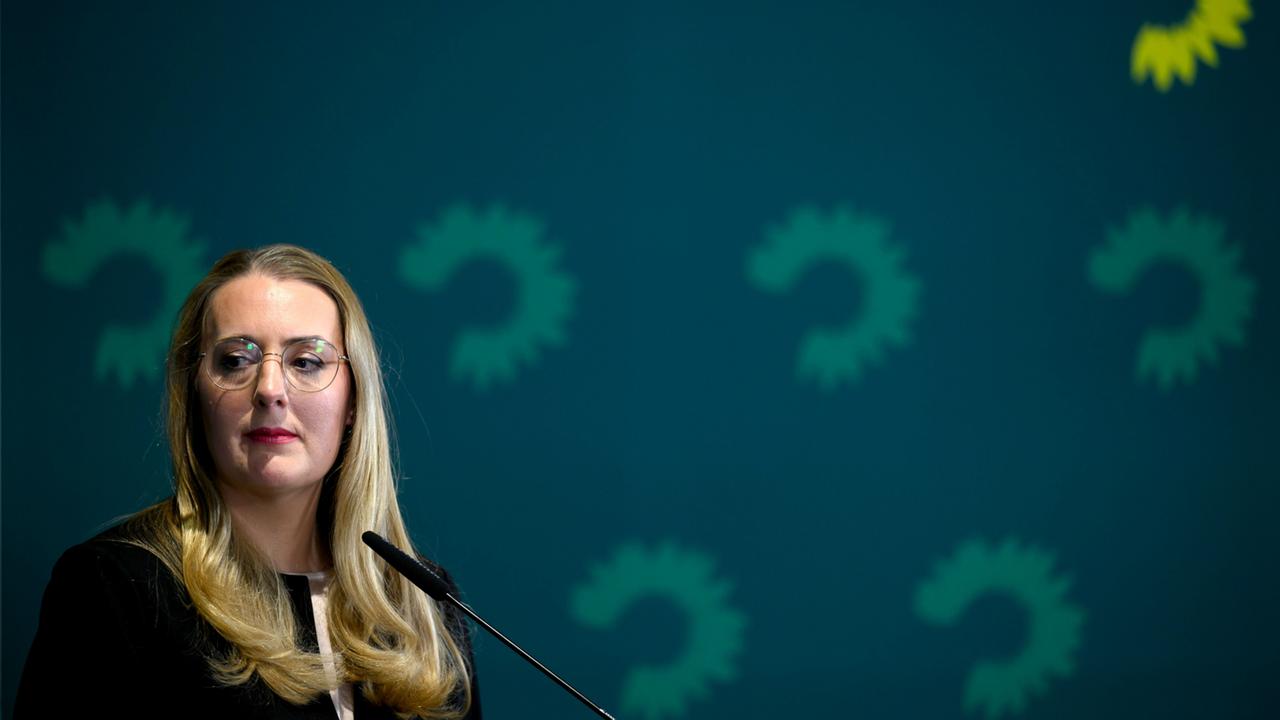
Katharina Dröge, co-leader of the Greens’ parliamentary group, has emerged as a prominent voice advocating for robust government intervention. Her accusation of "Abzocke" (rip-off) directly targets the perceived profiteering of mineral oil corporations at a time of public distress. Dröge’s central proposal, an excess profits tax, seeks to levy additional taxes on what she describes as "unjustified" profits earned by these companies, profits she argues are not a result of innovation or efficiency but rather of external crises. The estimated revenue of up to three billion euros from such a tax, based on projected excess profits exceeding eight billion euros by year-end, would then be redirected to alleviate the financial burden on German households, for example, through a reduction in electricity taxes.
The ADAC’s assessment lends credence to the public’s perception of unfair pricing, highlighting that market mechanisms are seemingly failing to translate falling crude oil prices (if any brief dips occur) into proportionate reductions at the pump, while quickly passing on increases. This discrepancy fuels public anger and political demands for greater transparency and regulation.
The underlying causes for the current price spike are critical to understanding the proposed solutions. The geopolitical dimension, specifically the reported Iranian actions in the Strait of Hormuz, points to a significant disruption in global oil supply, creating scarcity and driving up benchmark crude prices. Domestically, the severe drought has rendered large sections of the Rhine River impassable or only navigable by partially loaded barges. This necessitates alternative, more expensive transport methods for fuel distribution, adding a tangible cost component that is passed directly to consumers. These combined factors underscore the complexity of the crisis, requiring a nuanced policy response that addresses both international market dynamics and localized logistical challenges.
Chronology of Escalation: A Timeline of Rising Tensions and Costs
The path to Germany’s current fuel price predicament has been building over several months, marked by a series of escalating events both domestically and internationally.
- Early 2026: Initial signs of increased geopolitical instability in the Middle East begin to emerge, with reports of heightened tensions in the Persian Gulf. Concurrently, Germany experiences an unusually dry winter, setting the stage for potential summer droughts.
- March 2026: As energy prices begin a noticeable upward trend, the federal coalition government, acknowledging growing public concern, establishes a "Taskforce on Rising Prices for Fuel and Energy." Its mandate is to monitor market developments, identify potential price manipulation, and propose mitigating measures.
- Late Spring 2026: The drought in Germany intensifies, with water levels in major rivers, particularly the Rhine, starting to drop significantly below seasonal averages. This immediately begins to impact inland shipping capacity and increases logistical costs for bulk goods, including refined petroleum products.
- June 2026: Reports from international energy agencies confirm significant disruptions in oil transit through the Strait of Hormuz, with some sources explicitly attributing the slowdown to Iranian actions. Global crude oil prices react sharply, pushing Brent crude futures to multi-year highs. The price at German fuel pumps follows suit with rapid, steep increases.
- July 2026: The drought reaches critical levels, with parts of the Rhine becoming virtually impassable for fully laden tankers. Fuel deliveries to southern Germany become increasingly reliant on more expensive road and rail networks, further exacerbating local price increases due to higher freight costs. Public outcry over fuel prices grows louder, with consumer associations and the ADAC issuing strong warnings about "unjustified" pricing.
- Early August 2026: Katharina Dröge of the Greens intensifies her criticism of the government’s handling of the crisis, publicly declaring the Taskforce’s efforts a failure. She begins to actively campaign for an excess profits tax, citing the mounting financial burden on ordinary citizens.
- Mid-August 2026 (Current): The debate over an excess profits tax and other relief measures dominates the political discourse. Dröge’s latest statements to the Bild newspaper, accusing the government of "looking on while people are being ripped off," bring the issue to a head, prompting renewed calls for decisive action. Other political figures, including Manuela Schwesig (SPD) and various SPD politicians, voice support for similar measures, while Economy Minister Katherina Reiche (CDU) reiterates her opposition.
This timeline illustrates a rapid deterioration of the energy market situation, driven by a combination of external geopolitical shocks and internal climate-induced logistical challenges, culminating in the current political showdown over corporate profits and consumer relief.
Supporting Data: The Economic Underpinnings of the Crisis
The current fuel price crisis is not merely a matter of political rhetoric but is underpinned by concrete economic data and supply chain realities. Understanding these factors is crucial for evaluating the proposed solutions.
Global Oil Market Dynamics:
The reported de facto blockade or significant disruption in the Strait of Hormuz by Iran represents a profound shock to the global oil supply. This narrow waterway, located between the Persian Gulf and the Gulf of Oman, is one of the world’s most strategically important chokepoints. Approximately one-fifth of the world’s total petroleum consumption, or about 21 million barrels per day, passes through this strait. Any impediment, whether through direct military action, naval exercises, or even heightened tensions leading to insurance premium hikes and shipping delays, immediately creates scarcity fears in the market.
Analysts from leading energy consultancies indicate that the Iran-Krieg (Iran war), as referenced in the original article, has led to a significant rerouting of some oil tankers, increasing transit times and shipping costs. Others are hesitant to enter the region, further tightening supply. This situation has pushed benchmark crude oil prices – particularly Brent Crude, which serves as a global benchmark – well above the $100 per barrel mark, with some futures contracts hinting at even higher prices should the geopolitical situation deteriorate further. While the precise details of the "Iran war" are not elaborated in the original article, its impact on the Strait of Hormuz is presented as a direct and current driver of global oil prices.
Domestic Logistical Challenges: The Rhine’s Critical Role:
In Germany, the Rhine River is an economic artery, especially for the transport of bulk goods, including petroleum products. Barges offer a highly cost-effective and environmentally efficient mode of transport compared to road or rail. However, the prolonged drought has drastically reduced water levels, particularly at critical chokepoints like Kaub.
When water levels fall below a certain threshold (e.g., 40 cm at Kaub), barges can no longer be fully loaded. Instead of carrying 2,500 tonnes of fuel, they might only be able to transport 500-800 tonnes, or in severe cases, be unable to navigate altogether. This reduction in capacity means:
- More voyages are required: To transport the same volume of fuel, more barges or more frequent trips are needed, increasing operational costs.
- Higher per-tonne costs: The fixed costs of operating a barge are spread over a smaller cargo volume, driving up the cost per tonne of fuel delivered.
- Shift to alternative transport: When river transport becomes unfeasible, companies are forced to switch to road tankers or rail. These alternatives are significantly more expensive. Road transport, for instance, can be two to three times more costly than river transport per tonne-kilometre, and rail, while more efficient than road for long distances, still incurs higher costs than barges.
These increased logistical costs are directly passed on to consumers at the pump, contributing an estimated several cents per litre to the final price, beyond the impact of crude oil price fluctuations.
Excess Profits Projections:
Katharina Dröge’s assertion of over eight billion euros in excess profits for mineral oil companies by the end of 2026 is based on an analysis of their financial statements and market performance during the crisis period. "Excess profits" typically refer to earnings that are significantly higher than historical averages or industry benchmarks, particularly when these profits are not attributed to increased efficiency, innovation, or risk-taking, but rather to external, unforeseen circumstances like supply shocks or geopolitical events.
Proponents of the tax argue that while companies are entitled to reasonable profits, the current situation represents an unearned windfall derived from a crisis that burdens the general public. Dröge’s calculation of a potential three billion euros from such a tax implies a specific tax rate and a definition of what constitutes "excessive" profit. This figure suggests a substantial revenue stream that could genuinely impact public relief efforts. Historical precedents for such taxes exist, with various countries and the EU having discussed or implemented similar measures during the 2022 energy crisis.
ADAC’s Analysis:
The ADAC’s consistent monitoring of fuel prices provides crucial independent data. Their analysis often highlights the phenomenon of "rockets and feathers," where wholesale crude oil price increases are rapidly passed on to consumers (rockets), but price decreases are much slower to materialize (feathers). They also frequently compare German prices with those in neighboring countries, factoring in differing tax regimes, to assess if domestic pricing is disproportionately high. The ADAC’s current stance that prices are "too high" for weeks indicates a sustained disconnect between underlying costs and pump prices, suggesting market inefficiencies or opportunistic pricing.
Official Responses and Political Divisions
The escalating fuel crisis has sharply divided Germany’s political landscape, exposing fault lines within the ruling coalition and between major parties regarding the appropriate response.
Katharina Dröge (Greens): The Advocate for Intervention
As the Greens parliamentary group leader, Katharina Dröge has taken a hard line, accusing the government of "utter inactivity" and dismissing the previously established task force as a "failure." Her frustration stems from the perception that while ordinary citizens struggle, mineral oil companies are reaping unprecedented financial rewards. "I have absolutely no understanding for the government watching as people in Germany are being ripped off," Dröge stated, underscoring the moral dimension of her argument. She firmly believes that the state has a responsibility to intervene when market mechanisms lead to such perceived injustices. Her proposal to use excess profits tax revenue for a "Stromsteuersenkung" (electricity tax reduction) aims to provide broad relief to households, acknowledging that energy costs are a multifaceted burden.
Katherina Reiche (CDU, Economy Minister): The Market-Oriented Opponent
In a stark contrast, Economy Minister Katherina Reiche, a prominent figure from the Christian Democratic Union (CDU), has firmly rejected both an excess profits tax and a state-imposed fuel price cap. Her opposition stems from a classic liberal economic perspective, emphasizing the importance of free markets and avoiding government intervention that could distort competition or send negative signals to investors. Reiche argues that such measures could:
- Disrupt market mechanisms: Interfering with pricing could lead to unintended consequences, such as supply shortages if companies find it unprofitable to sell fuel in Germany.
- Discourage investment: Imposing an excess profits tax might deter future investments in refinery infrastructure or logistics, potentially harming long-term energy security.
- Be legally complex: Defining and implementing an excess profits tax can face significant legal challenges and administrative hurdles, potentially leading to lengthy disputes.
- Not address root causes: Reiche likely argues that the core issues are global oil prices and logistical challenges, which an excess profits tax doesn’t directly solve. Instead, she might advocate for broader energy diversification strategies and international diplomacy to stabilize supply.
It’s important to note the specific context of the original article’s 2026 date, which places Katherina Reiche, a former CDU politician, as the current Economy Minister. This speculative future context underpins her stated position.
Manuela Schwesig (SPD) and Other SPD Voices: Seeking Relief and Stability
Manuela Schwesig, the SPD Minister President of Mecklenburg-Vorpommern, has aligned herself with Dröge’s call for an excess profits tax. Her support reflects a broader sentiment within the Social Democratic Party (SPD) that the state must actively protect consumers from the brunt of economic crises. The SPD’s stance often leans towards greater social equity and intervention when market forces lead to disproportionate burdens on the public.
Beyond the excess profits tax, various SPD politicians have also advocated for a "Spritpreisbremse" (fuel price cap). This measure would involve setting an upper limit on the price of petrol and diesel at the pump, with the government potentially subsidizing the difference if wholesale prices exceed this cap. Proponents argue this would provide immediate and tangible relief to consumers and businesses, offering predictable costs in an unpredictable market. Critics, including Reiche, warn of the enormous financial burden on the state and the potential for market distortions leading to supply issues.
The Government’s Taskforce: A Perceived Failure
The "Taskforce on Rising Prices for Fuel and Energy," established in March 2026, was the government’s initial response to the nascent crisis. Its mandate was to analyze price developments, identify potential anti-competitive practices, and propose measures to ensure fair pricing. However, Dröge’s harsh critique suggests that the task force has either been ineffective in its analysis, lacked the authority to implement meaningful changes, or its recommendations have not been acted upon decisively. This perceived failure has fueled calls for more direct and robust government intervention. The precise reasons for its "failure" from Dröge’s perspective likely include the continued upward trend of prices and the lack of visible relief for consumers, suggesting that its efforts did not translate into practical benefits.
The clear divisions highlight a fundamental ideological clash within German politics: between those who prioritize market freedom and those who believe in stronger state intervention to ensure social justice and consumer protection during crises.
Implications: Far-Reaching Consequences for Germany
The ongoing fuel price crisis and the political debate surrounding it carry significant implications for Germany’s economy, social fabric, and long-term energy policy.
Economic Impact:
- Inflationary Pressure: High fuel prices directly contribute to inflation. Transport costs are embedded in almost every good and service, from food to manufacturing. Increased logistics expenses mean higher prices for consumers across the board, eroding purchasing power.
- Business Costs: Industries heavily reliant on transportation, such as logistics, agriculture, and construction, face substantially higher operational costs. This can lead to reduced profitability, delayed investments, and potentially job losses if companies struggle to absorb or pass on these costs. Small and medium-sized enterprises (SMEs) are particularly vulnerable.
- Consumer Spending: Households with lower incomes are disproportionately affected, as a larger share of their budget is allocated to essential transportation. This leaves less disposable income for other goods and services, potentially dampening overall economic activity and consumer confidence.
- Regional Disparities: Rural areas, where public transport options are often limited and car dependency is higher, face greater burdens than urban centers.
Political and Social Fallout:
- Coalition Tensions: Within the government (if it remains a coalition), the divergent views on intervention measures could lead to significant internal friction, potentially destabilizing the administration. The clash between market-oriented parties (like the CDU in Reiche’s hypothetical 2026 role) and interventionist parties (Greens, SPD) could become a major hurdle to effective policymaking.
- Public Dissatisfaction: Widespread anger over high prices and perceived government inaction can erode trust in political institutions and fuel social unrest. This could manifest in protests, boycotts, and a shift in voter sentiment in upcoming elections.
- Electoral Consequences: The handling of the crisis will undoubtedly be a key issue in future electoral campaigns. Parties seen as effectively addressing the crisis or advocating for popular relief measures may gain support, while those perceived as failing could suffer significant losses.
Feasibility and Effectiveness of Proposed Solutions:
- Excess Profits Tax:
- Pros: Could generate substantial revenue for relief, address public perception of unfair profiteering, and potentially act as a deterrent against price gouging.
- Cons: Legal challenges from corporations are almost guaranteed, potentially delaying implementation. Defining "excess" profits can be complex and arbitrary. It could discourage future investment in critical infrastructure, or lead to companies shifting operations or profits elsewhere. It might also be seen as retroactive taxation, raising constitutional concerns.
- Fuel Price Cap:
- Pros: Provides immediate and predictable relief for consumers.
- Cons: Requires massive state subsidies, which could strain public finances. Risks market distortion, potentially leading to supply shortages if suppliers find it unprofitable to sell at the capped price. Could encourage higher consumption, counteracting climate goals.
- Electricity Tax Reduction:
- Pros: Broad relief for all households, not just car owners. Easier to implement administratively than direct fuel subsidies.
- Cons: May not fully offset the impact of fuel costs for heavily reliant individuals/businesses. The link between fuel company profits and electricity tax reduction might be seen as indirect or insufficient.
Energy Security and Long-term Policy:
The crisis, particularly the reliance on the Strait of Hormuz and the vulnerability of river transport, underscores Germany’s ongoing energy security challenges. It will likely intensify calls for:
- Accelerated Renewable Energy Transition: Reducing reliance on fossil fuels would mitigate exposure to volatile international oil markets and geopolitical risks.
- Infrastructure Resilience: Investing in alternative transport routes, enhancing rail capacity for fuel, and potentially exploring pipelines could reduce vulnerability to climate-induced disruptions like low river levels.
- Strategic Reserves: Re-evaluating and potentially expanding strategic petroleum reserves could provide a buffer during supply shocks.
- Diversification of Suppliers: Reducing dependence on a limited number of oil-producing regions can enhance resilience.
In conclusion, Germany finds itself at a critical juncture. The dual pressures of international conflict impacting global oil supply and severe domestic climate conditions crippling logistics have converged to create a potent economic and social crisis. The political response, whether through market-based mechanisms or state intervention, will not only determine the immediate relief for citizens but also shape Germany’s long-term energy strategy and its capacity to navigate future shocks. The debate over an excess profits tax is more than just a fiscal policy discussion; it’s a litmus test for the government’s commitment to social justice and its ability to act decisively in an era of cascading crises.