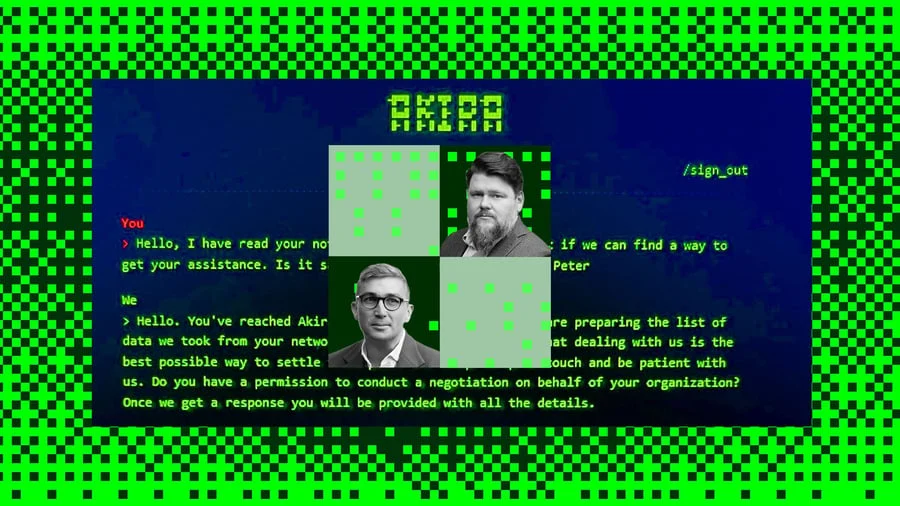
In the modern digital landscape, the distinction between a technical glitch and a catastrophic corporate collapse has blurred. For many companies, that line is crossed the moment they receive a cryptic note demanding payment in Bitcoin in exchange for the decryption of their own infrastructure. As ransomware attacks continue to cripple production lines, silence internal communications, and compromise sensitive data, business leaders are increasingly finding themselves in the eye of a storm they are often ill-equipped to navigate.
In an insightful discussion, crisis negotiation experts Michael Sjøberg—a veteran of the Danish military specializing in high-stakes hostage rescue—and Peter Skovbo, who helms the Swiss-based cybersecurity consultancy Delta Crisis, shed light on the brutal reality of digital extortion. Their message is clear: when the screens go black, the pressure on executive leadership is not just a technical issue—it is a test of organizational survival.
The Anatomy of a Modern Ransomware Siege
A ransomware attack is rarely a simple "lockout." In its current iteration, it is a multi-layered offensive. Criminal syndicates infiltrate corporate networks, move laterally to identify high-value assets, and deploy encryption protocols that render entire server infrastructures inaccessible.

However, the threat has evolved. Today, it is almost always accompanied by a "double extortion" strategy. Attackers exfiltrate sensitive data before locking the systems, threatening to publish trade secrets, customer data, or intellectual property on the dark web if the ransom is not paid. This shift forces management into a paralyzed state, where they must weigh the potential for massive regulatory fines and reputational ruin against the moral and legal implications of paying criminals.
Chronology of a Crisis: The Critical First Hours
The trajectory of a successful ransomware strike often follows a predictable, yet devastating, timeline.
Phase 1: Detection and Panic
It usually begins with a report from the IT department: "The server is unresponsive." Within minutes, the realization dawns that it is not a localized failure but a system-wide infection. In this phase, emotional volatility is the greatest enemy. Management often reacts with an instinctive need to "fix it," leading to impulsive actions—such as shutting down the entire network or rebooting infected servers—that can inadvertently destroy forensic evidence or trigger a "dead man’s switch" programmed by the attackers.

Phase 2: The Negotiation Interface
Once the scope of the damage is realized, the company enters the negotiation phase. This is where Sjøberg and Skovbo emphasize the necessity of a professional intermediary. The goal here is not merely to pay and recover, but to stall, gather intelligence on the attacker’s capabilities, and verify that the decryption tools actually function.
Phase 3: Strategic Decision-Making
By the 48-hour mark, the business is typically bleeding revenue. Production is stalled, logistics are frozen, and the board is demanding answers. This is the moment where legal, PR, and technical teams must coalesce into a unified crisis unit.
Supporting Data: The Rising Tide of Cyber-Extortion
The rise of the "Ransomware-as-a-Service" (RaaS) model has democratized cybercrime. Low-level actors can now lease sophisticated malware from professional developers, shifting the burden of the crime from a small group of hackers to a massive, distributed industry.
- Financial Impact: Recent studies suggest that the average cost of a ransomware recovery, including downtime, hardware replacement, and legal fees, now exceeds $4.5 million per incident.
- The "Mittelstand" Vulnerability: While global corporations grab headlines, small-to-medium enterprises (the Mittelstand) are increasingly becoming the primary targets. These firms often lack the massive, dedicated cybersecurity budgets of Fortune 500 companies, making them "low-hanging fruit" for automated phishing campaigns.
- Payment Trends: Despite warnings from government agencies like the FBI and Europol, a significant percentage of victimized firms still choose to pay the ransom. This is rarely because they trust the criminals, but because the alternative—rebuilding from scratch—is deemed too slow for the business to survive.
Official Responses and the Ethics of Payment
The debate surrounding the payment of ransoms remains one of the most contentious issues in cybersecurity.
The Regulatory Stance
Governments are increasingly hardening their stance. In the U.S. and the EU, law enforcement agencies strongly advise against paying ransoms, arguing that it funds further criminal activity and incentivizes future attacks. Furthermore, in some jurisdictions, payments to entities on international sanctions lists can result in massive legal liability for the victimized company.
The Pragmatic Reality
Sjøberg and Skovbo acknowledge the moral complexity but point to the cold, hard math of the boardroom. If a company faces a total loss of data that would lead to insolvency, the "pragmatic" choice for many is to pay. However, they emphasize that payment should only be the absolute last resort, and never done without professional legal and negotiation oversight.

Implications for Corporate Governance
The most profound lesson from the experts is that a ransomware attack is not an IT problem; it is a leadership crisis.
The Leadership Stress Test
"The management must be able to function under extreme stress," Sjøberg notes. A leader who panics during an active intrusion can make decisions that compromise the company’s future for years. This includes failing to communicate transparently with stakeholders or neglecting to involve cyber-insurance providers early enough in the process.
Building Resilience: Beyond the Firewall
To survive the next wave of attacks, companies must shift from a posture of "prevention at all costs" to "resilience and recovery." This requires:

- Immutable Backups: Ensuring that at least one set of data is stored in a way that it cannot be reached or encrypted by the network that holds the primary files.
- Incident Response Simulations: Conducting "tabletop exercises" where executives are placed in a simulated attack scenario to test their decision-making speed and coordination.
- Communication Protocols: Establishing pre-approved scripts for employees, customers, and the press to avoid the chaos of inconsistent messaging during the heat of an attack.
Conclusion: The New Normal
The era of digital immunity is over. As artificial intelligence makes phishing more convincing and automated tools make network scanning more efficient, every enterprise must assume that a breach is a question of "when," not "if."
The advice from Delta Crisis is not to build higher walls, but to build better internal structures. When the crisis hits, the companies that survive are those that have already rehearsed the disaster. They are the ones who do not scramble for a plan in the heat of the moment, but rather execute a pre-defined strategy designed to protect their employees, their customers, and their future.
The pressure is high, the stakes are existential, and the landscape is shifting—but for those who prepare, the digital siege need not be a death sentence.

Key Takeaways for Management:
- Don’t act alone: Engage professional negotiators and legal counsel within the first hour.
- Preserve evidence: Do not shut down or reboot systems until IT forensic experts have captured the current state of the network.
- Prioritize communication: Transparency is the key to maintaining customer trust, even when your systems are offline.
- Treat it as a business risk: Ensure the board of directors is involved, as the decisions made during a ransomware event often have long-term financial and legal ramifications.
As we move further into the digital age, the ability to maintain composure, adhere to strategic protocols, and prioritize the long-term health of the organization over short-term panic will be the defining trait of successful leadership. The criminals are counting on your fear; the best defense is to remain in control.