Guernsey is often swept into the collective imagination as just another dot in the English Channel—a mere neighbor to Jersey or a British offshore curiosity. Yet, to step onto the 63-square-kilometer island is to realize that it is a world unto itself. With a population of 64,500, a unique constitutional status, and a culture forged in the crucible of the Gulf Stream and a complex history, Guernsey is far more than a tax haven. It is a place where the butter is orange, the currency is local, and the pace of life is dictated by the tides.
The Foundations of Identity: Five Things Only Found in Guernsey
To understand Guernsey, one must look at the specific markers that define its existence.

- The Guernsey Sweater: More than just a garment, the Guernsey (or gansey) is a masterpiece of maritime utility. Traditionally knitted tightly to be water-resistant, it has been a staple of sailors since the 19th century. Companies like Le Tricoteur have kept the tradition alive since 1964, producing sweaters that are as durable as they are iconic.
- The Guernsey Press: A local newspaper with a penchant for the peculiar. It is the type of publication that captures the soul of island life—such as the viral story of a seventy-year-old local who, faced with a shattered windshield, simply leaned out of his car window to navigate the island’s lanes, only to be hit with a £3,000 fine for his ingenuity.
- The Guernsey Pound: While legally equivalent to the British Pound, the local currency is a distinct physical marker of independence. Seeing the local notes emerge from an ATM in Saint Peter Port is a vivid reminder that while Guernsey is linked to the UK, it operates on its own fiscal wavelength.
- Constitutional Autonomy: Guernsey is a Crown Dependency, not part of the United Kingdom. It manages its own affairs, including its own tax laws, which famously exclude capital gains, inheritance, and value-added taxes, creating a unique economic environment.
- The Golden Guernsey Cow: Perhaps the most delicious of all local treasures. The island is home to a unique breed of cattle whose milk is famously golden-orange due to their inability to process beta-carotene. This results in a butter of unparalleled richness, a culinary staple that defines the island’s gastronomy.
A Chronology of Resilience and Evolution
Guernsey’s history is a timeline of shifting allegiances and steadfast local identity.
- 1821: Thomas de la Rue, a Guernsey native, leaves the island to seek his fortune. After a failed venture in straw hats, he pivots to printing. His company, De La Rue, eventually becomes a global giant, printing over 140 of the world’s currencies—a testament to the island’s long-standing connection to the mechanics of international trade.
- 1856–1870: The French literary giant Victor Hugo resides on the island in exile. His time in Hauteville House produces masterpieces like Toilers of the Sea, cementing the island’s reputation as a sanctuary for thinkers and writers.
- 1940–1945: The island experiences the trauma of occupation by the Wehrmacht during World War II. Today, the landscape is still dotted with the remnants of this era—bunker complexes, the German Underground Hospital, and watchtowers that stand as somber reminders of the island’s strategic importance.
- 1963: The Beatles perform on the island, a moment that remains etched in the collective memory of the older generation, signifying the island’s integration into the wider British cultural consciousness.
- Present Day: The island continues to balance its heritage with modern aspirations, including the recent royal recognition of the "Royal Golden Guernsey Goats," a nod to the island’s enduring agricultural traditions.
Economic Implications: Freedom and Fiscal Responsibility
Guernsey’s fiscal policy is the backbone of its prosperity. By operating as a low-tax jurisdiction, the island has attracted significant financial services, yet it remains careful to maintain its social fabric. The "States of Guernsey" government ensures that while corporations and high-net-worth individuals find a friendly environment, the cost of living remains balanced.

The tax structure is remarkably simple: income tax is capped at 20 percent, and there is an absence of the typical levies found in the UK. Interestingly, the only tax that is enforced with "rigorous" focus is the annual dog tax—a modest ten Guernsey pounds. It is a humorous but telling detail: in a land of massive financial transactions, the humble dog tax remains a sacred ritual.
Culinary Landscapes: A Taste of the Gulf Stream
Guernsey’s dining scene is a direct reflection of its geography. Benefiting from a mild microclimate, the island produces exceptional produce. The Michelin-listed Le Nautique, helmed by German-born chef Günter Botzenhart, showcases the local bounty: scallops, oysters, and seasonal vegetables that benefit from the island’s nutrient-rich soil.
Nearby, Hook offers a modern take on island cuisine, serving up fresh sourdough with the aforementioned "Golden Guernsey" butter. The butter is more than a condiment; it is a cultural symbol. Because the local cows are a distinct breed brought over by medieval monks, the supply is limited to the island, making it one of the few places on earth where you can experience the true, orange-hued richness of this dairy product.
The "Real Guernsey" Safari: A Local Perspective
To truly see the island, one must look beyond the glossy brochures. Enter Ant Ford Parker, an Australian expat who has turned his love for his adopted home into a business: Real Guernsey. Traveling in a modified, safari-style Land Rover, Ford Parker offers visitors a glimpse into the "Big Three" of the island: the cow, the goat, and the donkey.

His tours are a masterclass in local trust. He stops at "hedge-veg stalls"—unmanned roadside stands where locals leave eggs, potatoes, and parsley for passersby to purchase by simply dropping money into a tin. It is a system built on mutual respect and honesty, a rarity in the modern world that underscores the tight-knit nature of the island’s 64,500 residents.
Official Responses and Strategic Outlook
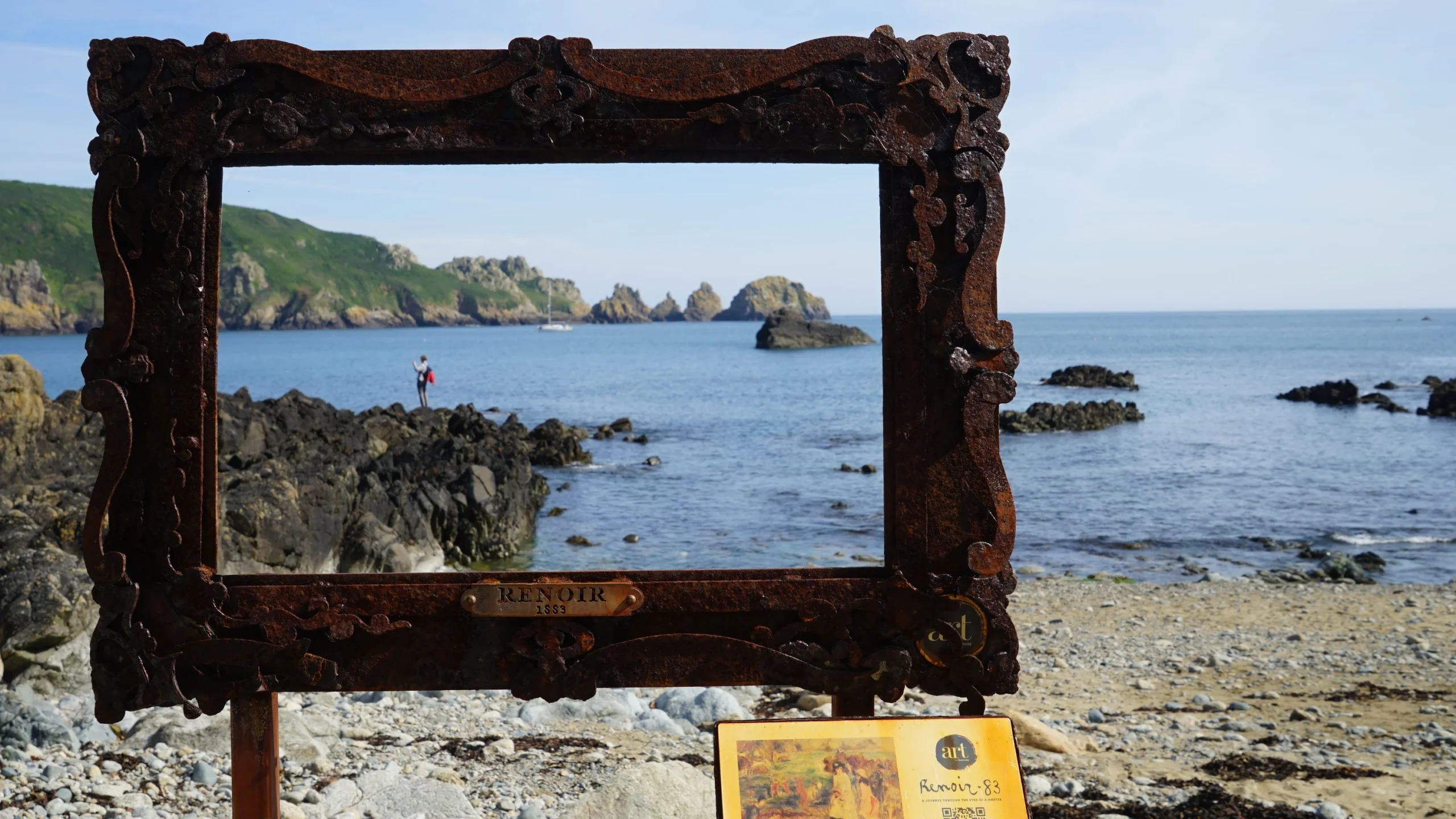
Government officials often emphasize that Guernsey’s strength lies in its ability to adapt without losing its soul. While the island is a global player in finance, it remains committed to preserving the natural beauty that inspired Auguste Renoir to paint the Moulin Huet Bay.

The strategy for the next decade is clear: sustainable tourism and the maintenance of high-quality local produce. The government has invested in infrastructure to ensure that the influx of visitors does not compromise the island’s unique "village" feel. Whether it is the renovation of coastal defenses or the support for local farmers, the goal is to ensure that Guernsey remains, as it has always been, an entity apart from the rest of the British Isles.
Conclusion: Everything is in "Butter"
As the sun sets over the Rocquaine Bay, and the red and yellow colors of the Guernsey flag flutter against the backdrop of an old bunker, the appeal of the island becomes clear. It is a place that has been occupied, tested, and transformed, yet it retains a quiet, defiant uniqueness.

From the "Golden Guernsey" milk to the "hedge-veg" honesty stalls, the island operates on a set of rules that defy standard logic. Whether you are dining at a Michelin-starred restaurant in Saint Peter Port or wandering across the car-free Shell Beach on Herm, the experience is consistent: you are somewhere else, somewhere entirely unique. As the locals might say, over a glass of Rocquette cider, "Everything is in butter." On Guernsey, that isn’t just an idiom—it’s a way of life.
Traveler’s Note:
- Getting There: British Airways offers daily flights from London-Heathrow. For those preferring the sea, Brittany Ferries connects the island with Saint Malo, France.
- Accommodation: The Duke Hotel in Saint Peter Port provides a central, character-filled base for exploring the island’s historic streets and coastal paths.