By International Sports Correspondent
October 7, 2026
As the global sporting landscape shifts, Munich has officially positioned itself as a serious contender for the Summer Olympic Games in 2036, 2040, or 2044. However, the path to hosting the world’s greatest sporting event has been fundamentally transformed by the International Olympic Committee (IOC). Gone are the days of public bidding wars, frantic infrastructure spending, and the high-stakes, often scandalous, final-day votes that defined the early 2000s. In their place is a methodical, secretive, and highly controlled process that prioritizes "dialogue" over competition.
For Munich, and for the German Olympic Sports Confederation (DOSB), the goal is clear: Germany must be ready to step onto the world stage when the IOC determines that Europe is the appropriate destination for the Olympic flame.
The Mechanics of the "Continuous Dialogue"
The modern IOC selection process is built around the concept of the "continuous dialogue." This is the first phase of an engagement that is essentially a non-committal, exploratory conversation. Munich, along with six other cities and regions—India, Qatar, South Korea, Turkey, Hungary, and South Africa—is currently in this phase.
In the language of the IOC, being in the "continuous dialogue" means that a city has officially "thrown its hat into the ring." However, it is not a formal bid in the traditional sense. There are no massive marketing campaigns, no glossy brochures costing millions of dollars, and no international lobbying tours. Instead, the IOC acts as a partner, guiding potential hosts through a process that emphasizes the alignment of the Olympic Games with the city’s existing long-term development plans.
The strategy is simple: the IOC wants to avoid the "white elephant" syndrome—the construction of multi-billion dollar stadiums that sit empty after the closing ceremony. By focusing on existing infrastructure and regional sustainability, the IOC hopes to make the Olympics attractive to democratic nations that are otherwise wary of the extreme financial burden associated with hosting.
Chronology: The Road to 2036
The timeline for the 2036 Summer Games is a multi-year marathon, not a sprint.
Phase 1: The Strategic Filter (March 2027)
In March 2027, the process shifts into what is known as the "strategic dialogue." This is a critical juncture for Munich. Passing this threshold means that the IOC has determined that holding the Games in Germany aligns with their strategic objectives for the 2036 cycle. This stage is exclusionary; if the IOC decides that, for instance, Asia or another continent is the strategic priority for that year, Munich will be informed that its bid is not viable for 2036. This early exit is designed to save candidates from wasting further resources on a lost cause.
Phase 2: The Targeted Dialogue (December 2028)
Following the strategic filter, the IOC will further refine the field. By December 2028, the committee is expected to move into the "targeted dialogue." In previous cycles, this phase was often reserved for a single preferred candidate, effectively serving as a pre-selection. While the IOC maintains that this does not have to be the case, the trend suggests that the field will be narrowed down to a single entity, with the final phase functioning as a period of finalization and due diligence.
Phase 3: The Final Decision (Mid-2029)
The final selection will be made by the full body of IOC members at the IOC Session in mid-2029. However, even this "democratic" vote is surrounded by uncertainty. Given the current structure of the process, it is highly probable that the Session will be asked to ratify a single, pre-negotiated project rather than choosing between multiple competing bids.
The Three Pillars of Power: Who Really Decides?
To understand how a host is chosen, one must distinguish between three distinct governing bodies within the Olympic movement:
1. The IOC Session
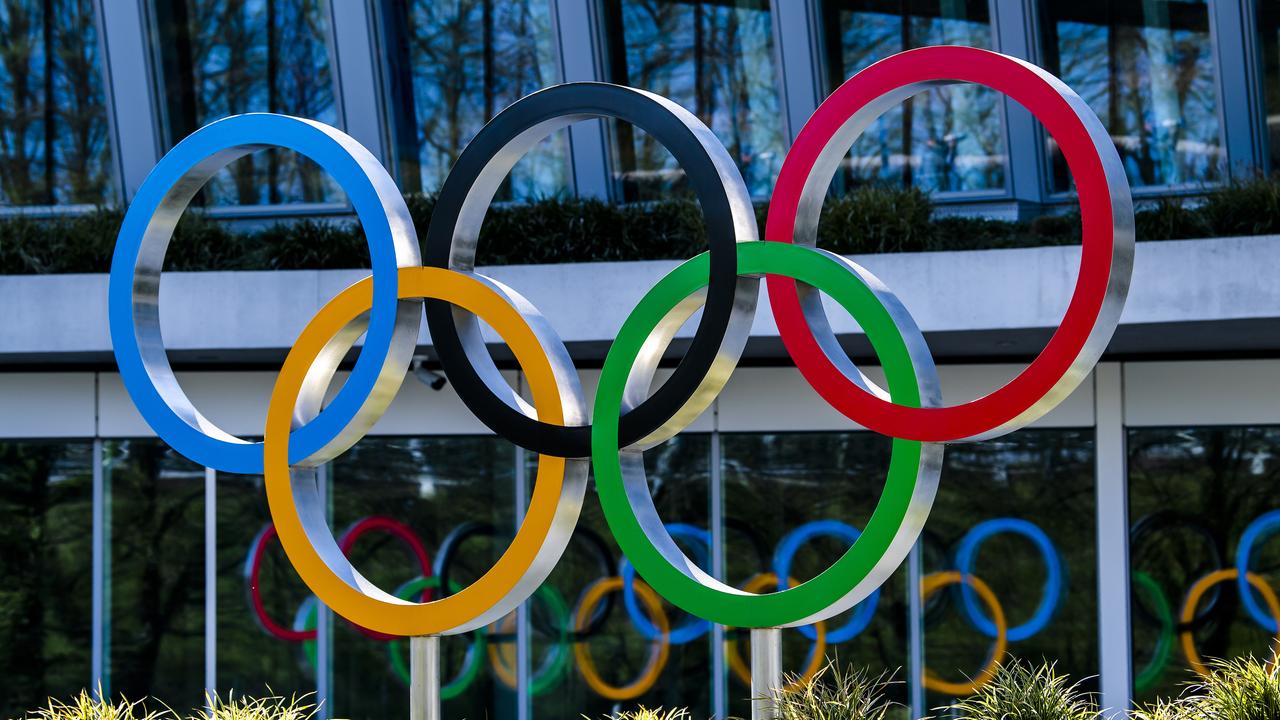
According to the Olympic Charter, the Session is the supreme authority responsible for choosing the host city. However, in practice, the Session has increasingly become a rubber-stamp institution. The influence of the individual members has waned as the selection process has shifted toward executive-level decision-making.
2. The Executive Board
The Board, led by President Kirsty Coventry, is the true engine of the selection process. Composed of the president, four vice presidents, and ten members elected by the Session, this group makes the critical decisions at every stage of the dialogue. They determine which cities advance and which are discarded.
3. The Future Host Commission
This is the "workhorse" of the IOC. A group of nine voting members and key staff, including Games Director Christophe Dubi, the Commission conducts site visits, suggests technical improvements, and crafts the reports that serve as the foundation for the Executive Board’s decisions. They are the eyes and ears of the IOC on the ground.
The Legacy of the Bach Reforms
The current system is a direct descendant of the era of Thomas Bach, the former IOC President. His tenure was marked by a desperate need to distance the organization from the rampant corruption and profligate spending of the past.
Before the reforms, the bidding process was a "race to the bottom." Candidates engaged in desperate efforts to outbid one another, leading to a climate where bribery was commonplace and the cost of hosting became astronomical. By the mid-2010s, cities in democratic nations were holding referendums and rejecting the Olympics in droves, citing the prohibitive costs.
Bach’s solution was to "dialogue-ize" the process, stripping away the rules that mandated open competition and replacing them with a more centralized, controlled system. While this successfully reduced the costs of bidding and stabilized the IOC’s image, it came at the cost of transparency. Critics argue that the process now occurs entirely in "backrooms," with the public and even many IOC members left in the dark about the criteria for selection.
Official Responses and Strategic Implications
The German Olympic Sports Confederation (DOSB) has maintained a cautious yet optimistic stance. Their messaging is consistent: "Germany must be ready when Europe is asked." This acknowledges that the IOC’s decision is as much about geopolitics as it is about sporting infrastructure.
Kirsty Coventry, upon taking the reins from Bach, promised to grant more influence to the general body of IOC members. She introduced the "strategic dialogue" phase as a way to keep members better informed. However, for critics within the Olympic movement, this is merely window dressing. The fundamental power remains concentrated at the top, and there is no guarantee that the final vote in 2029 will offer a genuine choice between competing concepts.
The Path Forward: 2040 and Beyond
For Munich, the 2036 bid is not a "do or die" scenario. The city’s successful referendum provides a long-term mandate, meaning that if 2036 is awarded elsewhere, the focus will immediately pivot to 2040 and 2044.
However, the landscape of Olympic hosting is shifting rapidly. The emergence of strong contenders like India and the persistent interest from Middle Eastern states suggests that the competition will only intensify. Furthermore, the IOC’s own process is in a state of constant evolution. It is entirely possible that by the time the 2040 or 2044 bids are finalized, the current "dialogue" process will have undergone yet another series of reforms.
As Munich moves forward, the city must balance the requirements of the IOC with the expectations of its own citizens. The success of a modern Olympic bid in Germany will depend not just on the technical excellence of the venues or the financial guarantees provided, but on the ability to frame the Games as a catalyst for social and urban progress—a narrative that the IOC is desperate to embrace as it looks toward the future of the movement.
In the end, the race for 2036 is a test of endurance, political alignment, and the ability to navigate a system that is as opaque as it is influential. Whether Munich ultimately crosses the finish line in 2029 remains a question of internal IOC dynamics that are far removed from the playing field, but for now, the conversation continues.