By [Journalist Name/Agency]
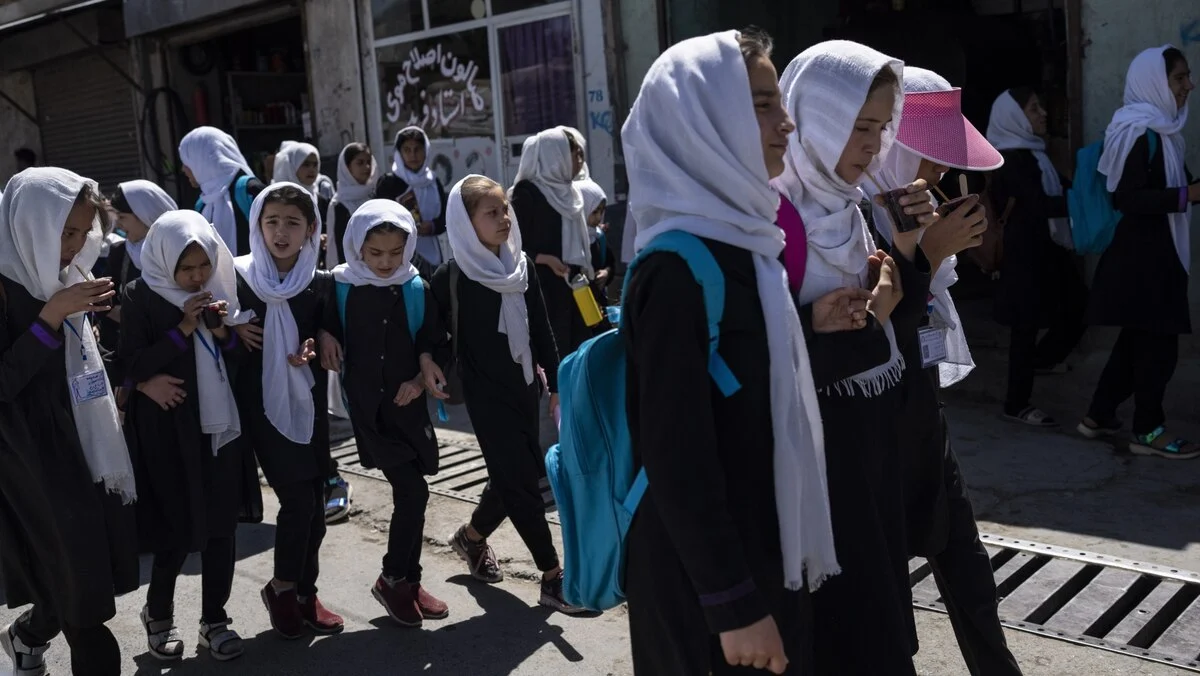
For Astana Qul, a 27-year-old Afghan refugee living in Ludwigshafen, the day begins not with the sunrise, but with the faint hope of a phone call. At 6:17 a.m. on a Saturday in June, his phone rings. It is his daughters—Khadija, Aisha, Fatima, and Ruqiya—calling from a remote village in the Faryab region of northeastern Afghanistan. They are reaching out across continents to hear their father’s voice, a desperate attempt to feel connected in a world that has systematically pushed them apart.
"I try to stay online constantly so they can reach me whenever the fear takes over," Qul explains. Before the Taliban seized control of Faryab in August 2021, Qul was a teacher, instructing girls in chemistry and natural sciences—a profession that placed him in the crosshairs of the radical Islamists. When the regime tightened its grip, he fled to Germany, leaving behind a family now trapped in a cycle of isolation and medical crisis. His wife, suffering from advanced cirrhosis, faces a precarious existence, often left alone with their four young daughters when her condition requires hospitalization.
Qul is not alone in this limbo. Taim Hasan, a 15-year-old Syrian refugee now living in Kiel, asks himself the same haunting question every day: "When will I see my parents again?"
The Legislative Freeze: A Policy of Indefinite Separation
On June 27, 2025, the German Bundestag passed a contentious resolution backed by the center-right coalition government to suspend the right to family reunification for individuals with "subsidiary protection" status. The suspension, which took effect in late July 2025, effectively froze thousands of ongoing applications. Only those who had already received visa approvals were permitted to enter the country.
While exact figures remain obscured by bureaucratic opacity, experts estimate that tens of thousands of individuals are caught in this legal stasis. Subsidiary protection is granted primarily to those fleeing war or inhumane conditions—individuals like Qul, who cannot return to their homes without facing persecution or death. By the end of 2024, there were nearly 300,000 such individuals from Syria in Germany, with tens of thousands more from Afghanistan, Iraq, Somalia, and Eritrea.
For adults, the requirements for reunification are stringent: they must prove they have adequate housing and the financial means to support their family members independently. For unaccompanied minors like Taim Hasan, the path is theoretically easier, yet the reality on the ground has become a bureaucratic nightmare of endless waiting and shifting goalposts.
Chronology of a Crisis
The struggle for families like Qul’s and Hasan’s is defined by a slow, soul-crushing timeline:
- 2021: Astana Qul flees Afghanistan after Taliban threats regarding his teaching of secular subjects.
- 2022: Qul is granted subsidiary protection status in Germany. He immediately begins working, delivering packages, and eventually finds a home, hoping for his family’s arrival.
- October 2024: Qul’s family visits the German embassy in Islamabad to initiate the reunification process.
- June 2025: The Bundestag suspends family reunification for those under subsidiary protection.
- January 2026: Both Qul and Hasan file "hardship applications" through the International Organization for Migration (IOM) as a last-ditch effort to reunite with their families.
As of mid-2026, the situation has hit a stalemate. The average wait time for an embassy appointment in cities like Accra, Islamabad, or Dakar now exceeds 52 weeks—over a year of waiting just to be interviewed.
The Human Cost: "It Is Inhumane and Heartless"
For Taim Hasan, the policy shift is not a matter of political debate; it is a personal tragedy. He arrived in Kiel at the age of 11, fleeing the violence in Deir ez-Zor, Syria. Now 15, he lives with his uncle, a man he respects, but who cannot replace the emotional anchor of his parents.
"My mother calls me every time she cooks something I love," Taim says, describing the bittersweet nature of these long-distance bonds. "It is inhumane and without a heart."
Taim’s story reflects a broader issue: the loss of childhood. When he arrived in 2022, he believed he would be reunited with his parents within two years. Now, facing the prospect of turning 17 while his family remains in the volatile environment of Damascus, he has begun to lose hope. "I’ve stopped believing they will come," he admits, his voice weary beyond his years.
Hussam Alhlwani, who runs a youth center for unaccompanied minors at the organization Lifeline, witnesses this despair daily. "The first meeting after the law was announced was devastating," he recalls. "We had to tell them it was true. Some cried, some lashed out, and others internalized the frustration." Alhlwani notes that these youths face a double burden: the pressure from their families back home, who cannot fathom why the process takes years, and the pressure to integrate into a German society that seems increasingly hostile to their presence.
The "Hardship" Myth and Official Responses
The German government maintains that the suspension includes exceptions for "hardship cases" under Section 22 of the Residence Act, which allows for residency permits based on "urgent humanitarian reasons." However, the data suggests this is a hollow promise. The Foreign Office has confirmed that only ten such visas have been issued globally since the policy’s inception.

In September 2025, a leaked internal directive from the Foreign Office revealed why the approval numbers are so low. The document imposes an extremely restrictive interpretation of what constitutes a "hardship." To qualify based on the duration of separation, children who were under three at the time of the asylum application must have been separated for at least five years, while older children or spouses must wait at least ten years.
Legal experts are scathing. Corinna Ujkašević, a lawyer specializing in refugee rights, argues that the directive is designed to ensure families cannot meet the criteria. "The directive is engineered to fail these families," she says. "It is clearly in violation of the European Convention on Human Rights."
Implications: A Legal and Moral Crossroads
The legal challenges are mounting. While the European Court of Human Rights previously ruled in a Danish case that a three-year suspension of family reunification violated the right to family life, the German government appears to be banking on the slow pace of the judicial system. As cases make their way through the German administrative courts, families are left to languish in uncertainty.
For Astana Qul, the stress has become a physical weight. "I am only 27, but I feel like I am 50," he says, leaning on the exhaustion of a man who works as a forklift driver by day and spends his evenings fighting for his family’s survival in the digital realm. He shows a video of his nine-year-old daughter, Khadija, practicing German, a testament to his effort to keep their future alive even as the present remains closed to them.
His wife’s condition continues to deteriorate, and the risk of the Taliban discovering a household of women without a male guardian grows by the day. "How much worse does she need to get before the embassy considers it a hardship?" Qul asks.
Conclusion: A Future on Hold
The policy of suspending family reunification is touted by proponents as a necessary tool for managing migration flows. Yet, for those living through it, it is a policy that destroys the very foundation of successful integration. As Taim Hasan noted, it is impossible to truly commit to a new life in Germany when your heart, your history, and your family are being held hostage by bureaucratic cruelty.
As the sun sets over the Kiel Fjord, and the reality of 14 years of war in Syria remains, Taim holds onto one simple, humble dream: "I want to sit with them for a week, just talk, and tell them everything about what life is like here." For thousands of refugees, that week remains a distant, fading horizon, caught in the cold machinery of a state that has prioritized administrative efficiency over the fundamental human need to belong.