

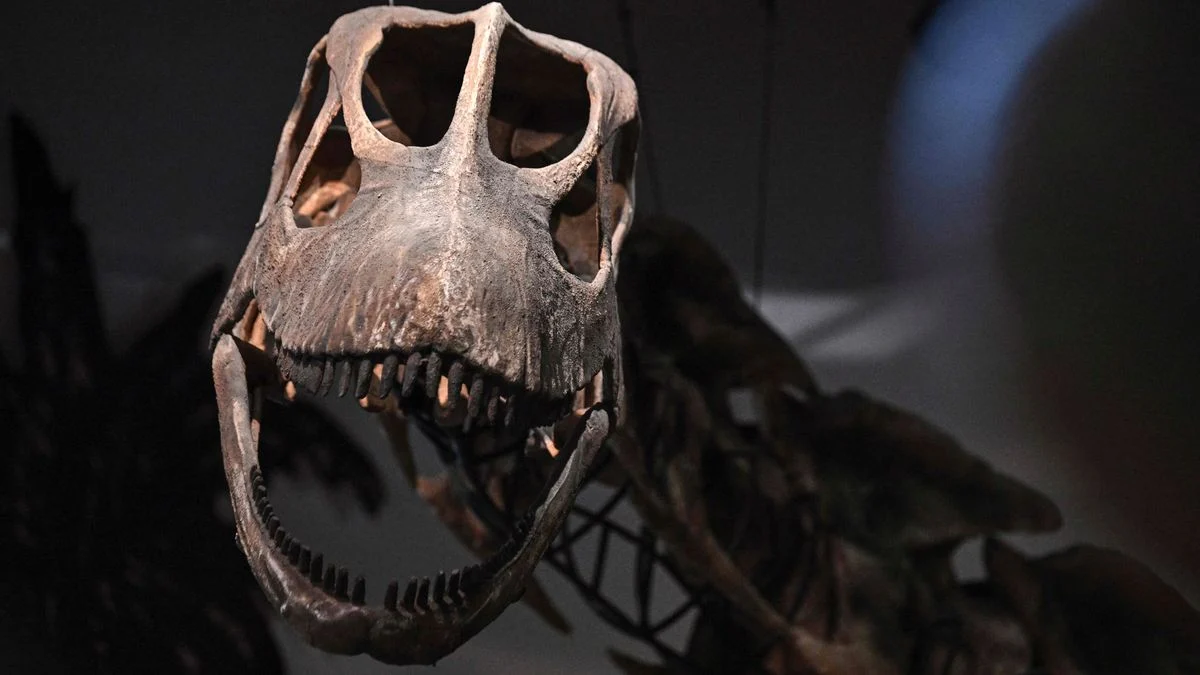
In the rugged, sun-drenched landscape of the Chaiyaphum province in northeastern Thailand, a discovery of prehistoric proportions has rewritten the paleontological narrative of Southeast Asia. Researchers have officially unveiled the remains of Nagatitan chaiyaphumensis, a colossal sauropod that once dominated the floodplains of the region approximately 113 million years ago. This discovery does more than just add a name to the dinosaur registry; it provides a vital window into a lost ecosystem, confirming that the "giants of the earth" reached truly gargantuan proportions in areas previously thought to be less significant in the global dinosaur record.
Main Facts: A Giant Among Giants
The Nagatitan chaiyaphumensis belongs to the Sauropoda—a clade of dinosaurs renowned for their elongated necks, whip-like tails, and relatively small heads. Measuring an estimated 27 meters (nearly 89 feet) in length, this herbivorous titan stood as a behemoth in its environment. While the discovery is geographically significant, its physical metrics are equally staggering.
Paleontologists estimate the creature’s weight at between 25 and 28 metric tons. To put this in perspective, the Nagatitan would have outweighed four full-grown African bull elephants combined. The recovery of key skeletal elements, including vertebrae, ribs, pelvic fragments, and a formidable 1.78-meter-long forelimb bone, allowed researchers to construct a detailed profile of this ancient herbivore.
The name itself, Nagatitan, pays homage to the mythological "Naga," the powerful serpent-like deity deeply embedded in Thai and Southeast Asian folklore, while the species name chaiyaphumensis honors the specific province where the first fossils were unearthed by a local villager. This synergy between local discovery and scientific rigor has culminated in the identification of what is currently recognized as the largest known dinosaur in Southeast Asian history.
The Chronology of Discovery: From Soil to Science
The story of the Nagatitan began years ago when a local resident in the Chaiyaphum province stumbled upon anomalous rock formations that turned out to be fossilized bone. What followed was a painstaking, multi-year excavation process led by a dedicated team of researchers.

The recovery phase was characterized by the careful extraction of massive, heavy elements buried deep within the earth. Each layer of sediment removed provided further clues about the environment in which the Nagatitan lived. The fossilization process in this specific region of Thailand was conducive to preserving the integrity of the bones, allowing experts to reconstruct the animal’s stature and anatomical structure with a high degree of confidence.
Following the extraction, the focus shifted to rigorous laboratory analysis. Researchers scrutinized the morphology of the limb bones and vertebrae to determine the dinosaur’s evolutionary lineage. By comparing these findings to other known sauropods, the team was able to categorize the Nagatitan as a member of a sub-group that emerged around 140 million years ago—a lineage that would eventually prove to be the only sauropod group to survive until the mass extinction event 66 million years ago.
Supporting Data: Life in the Subtropical Floodplains
Although the excavation did not yield a skull or teeth, the scientific team—led by Thitiwoot Sethapanichsakul of the University College London—has extrapolated a wealth of information regarding the Nagatitan’s dietary habits. Drawing parallels with better-preserved sauropod specimens, experts conclude that the Nagatitan functioned as a massive "vacuum cleaner" of vegetation. Its nutritional needs would have required it to consume vast quantities of foliage daily, likely requiring little to no complex chewing, as its digestive system was adapted to process large volumes of plant matter through fermentation.
The environment in which it roamed was vastly different from the Thailand we know today. Roughly 113 million years ago, the region was characterized by a warm, dry, and likely subtropical climate, featuring sprawling river systems. This habitat supported a diverse array of fauna, including various smaller dinosaurs, pterosaurs (flying reptiles), and a treacherous collection of aquatic predators.
The rivers were reportedly teeming with prehistoric crocodiles and even freshwater sharks, creating a high-stakes survival environment. The apex predator of this landscape was a carnivore reminiscent of the African Carcharodontosaurus, measuring roughly eight meters in length and weighing over 3.5 tons.

Official Responses and Ecological Implications
The research team, publishing their findings to the broader scientific community, emphasized the unique survival strategy of the Nagatitan. Despite the presence of formidable predators, the sheer scale of the Nagatitan acted as a biological deterrent.
"For the adult Nagatitan, the risk posed by predators was virtually non-existent," noted Thitiwoot Sethapanichsakul. "Their size was their primary defense. Even the largest theropods would have found a 28-ton adult impossible to bring down."
This sentiment is echoed by co-author Paul Upchurch, who notes that while sick, elderly, or juvenile sauropods were likely vulnerable to predation, the species possessed a distinct survival advantage: rapid growth. By reaching massive sizes quickly after hatching, young sauropods moved through their most vulnerable life stages at an accelerated rate, reaching a threshold of safety from carnivores far sooner than other contemporary species.
The implications of this discovery are profound for the field of biogeography. For years, the fossil records of South America and Africa have dominated the discourse on sauropod evolution, with giants like the Argentinosaurus and Patagotitan reaching lengths exceeding 30 meters. The Nagatitan proves that Southeast Asia was not a peripheral location but a central stage for the evolution of these "Titan" lineages. It serves as a reminder that the "last of the titans" in Southeast Asia occupied a crucial evolutionary niche, bridging the gap between earlier sauropod variations and the final, specialized forms that lived until the end of the Cretaceous period.
A Legacy Etched in Stone
As the region transitioned toward the late Cretaceous, shifting sea levels would eventually transform the Nagatitan’s terrestrial habitat into a shallow sea. This transition marks the end of an era for these giants in the region.

The Nagatitan chaiyaphumensis is more than just a massive fossil; it is a testament to the resilience and evolutionary success of the sauropods. By confirming that such colossal creatures thrived in Southeast Asia, paleontologists are now better equipped to map the global distribution of these animals.
Looking forward, the discovery in Chaiyaphum serves as a beacon for future research. It underscores the importance of local community involvement in paleontology—the initial discovery by a villager provided the spark for what has become a landmark study. As museum exhibits in Bangkok begin to showcase the skeletal models of this giant, the public is offered a rare glimpse into a world where the earth literally shook under the weight of titans, forever changing our understanding of the prehistoric landscape of Thailand.



















Leave a Reply