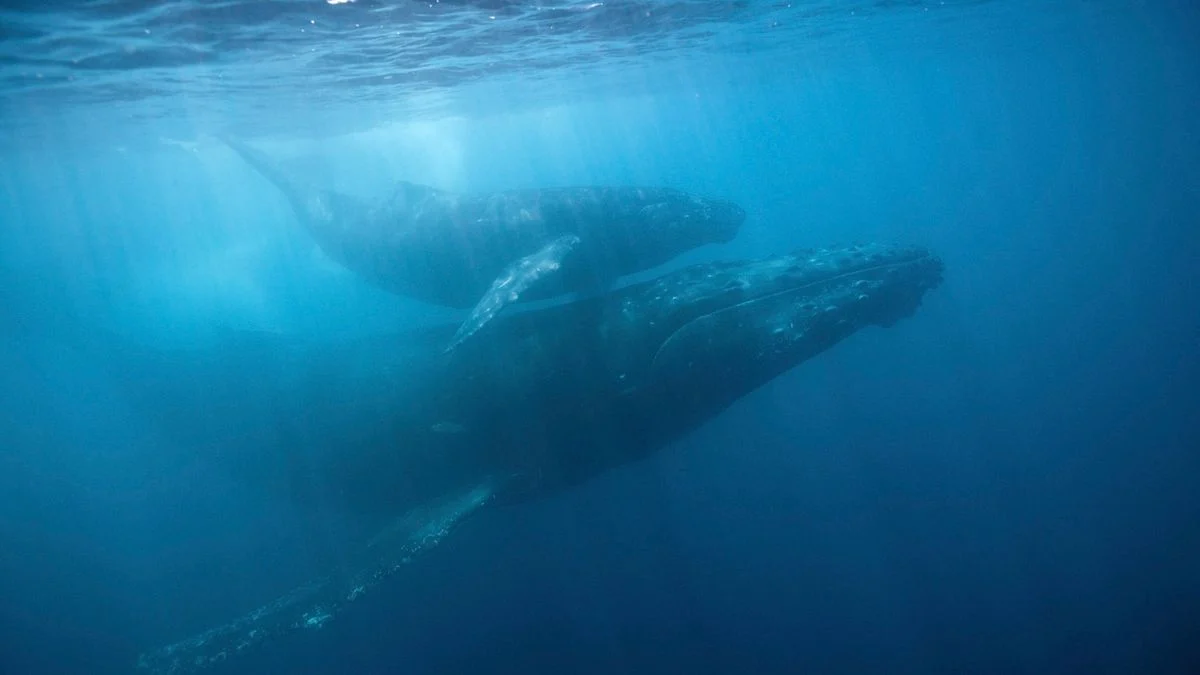
In a discovery that has sent shockwaves through the scientific community, researchers have identified a sprawling, ancient "whale graveyard" in the deep, dark reaches of the Indian Ocean. Located approximately 1,000 kilometers west of Perth, Australia, this site—stretching across the formidable Diamantina Fracture Zone—contains hundreds of whale fossils, some dating back millions of years. Resting at depths of up to 7,000 meters, this site represents the deepest and most extensive collection of whale remains ever documented, offering a rare window into both prehistoric marine life and the complex, specialized ecosystems of the deep ocean.
The discovery, detailed in a landmark study published in the journal Nature by a team led by Xiaotong Peng of the Chinese Academy of Sciences, provides unprecedented insights into the phenomenon known as "whale falls"—the process by which a deceased whale descends to the seafloor to sustain a thriving, localized ecosystem for years or even decades.
Main Facts: A Window into the Deep
The exploration of the Diamantina Fracture Zone began in February 2023, utilizing the advanced Chinese research submersible Fendouzhe. During its initial descent, the vessel encountered something unexpected near the Dordrechttief: whale bones protruding from the sediment, coated in a dark, mysterious layer of iron-manganese oxides.

What initially appeared to be a singular, isolated find quickly evolved into a realization of gargantuan proportions. Over the course of 32 subsequent dives, the research team mapped a "necropolis" spanning 1,200 kilometers. Within this vast corridor, they identified 476 distinct fossilized whale remains. The significance of this finding cannot be overstated: previous records of whale falls were limited to depths of about 4,000 meters. By finding remains at nearly double that depth, scientists are forced to recalibrate their understanding of deep-sea biological reach.
Chronology of Discovery and Investigation
The journey to uncovering this "super-corridor" of whale remains followed a methodical, multi-phase scientific approach:
- February 2023: The Fendouzhe submersible makes its first contact with the site. The discovery of bones at 7,000 meters marks a world record for the deepest known whale fossils.
- Spring 2023: The research team initiates a systematic mapping campaign. Over 32 dives, the team catalogs the extent of the graveyard, realizing that the site is not a cluster, but a continuous corridor stretching over 1,200 kilometers.
- Data Synthesis (2024–2025): Scientists analyze isotopic signatures (specifically strontium isotopes) to date the fossils, revealing some specimens to be as old as 5.3 million years.
- June 2026: The peer-reviewed findings are published in Nature, officially classifying the region as a "whale fall super-corridor" and detailing the unique, multi-generational nature of the site.
Supporting Data: An Ecosystem in Transition
The research team’s analysis highlights the distinct stages of these whale falls. The site is not merely a graveyard; it is an active, evolving habitat.

The Stages of Decay and Colonization
The study identifies three primary phases of the graveyard:
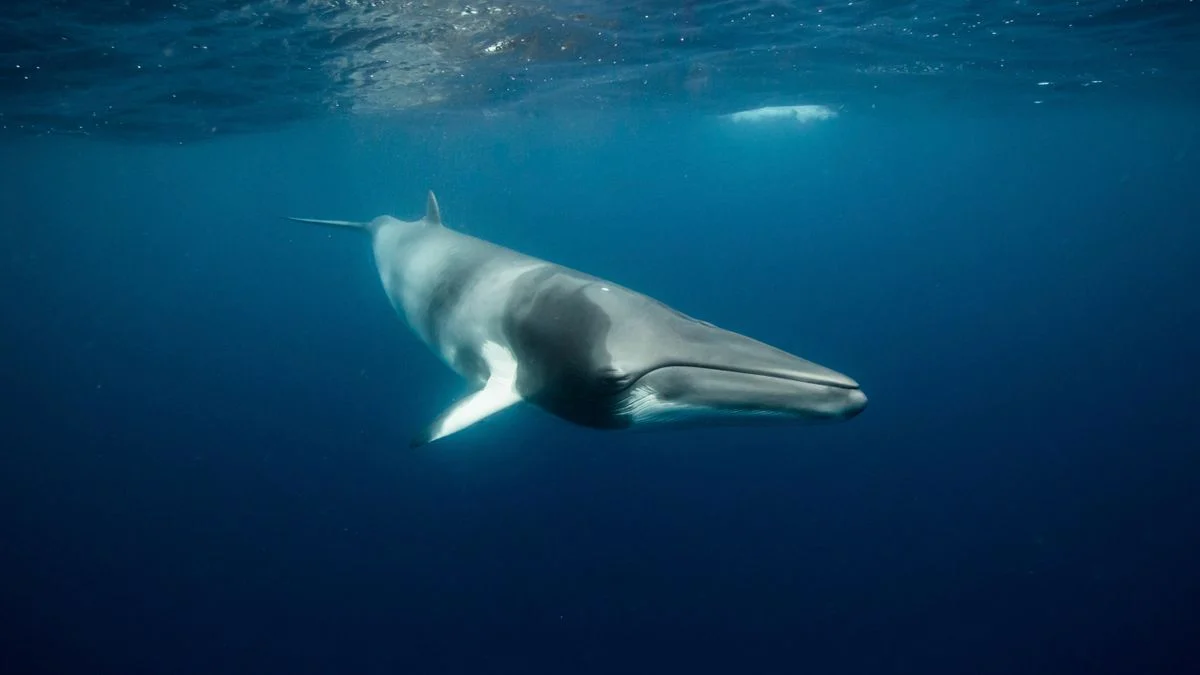
- The Active Stage: Newly discovered remains, such as a five-meter-long Southern Minke whale (Balaenoptera bonaerensis) found at 6,800 meters, are still being consumed. These are characterized by white microbial mats and colonization by bone-eating Osedax worms.
- The Intermediate Phase: As the soft tissue vanishes, the bones become a substrate for specialized deep-sea organisms. The team identified 35 distinct species larger than 0.5 millimeters, with densities reaching up to 2,840 individuals per square meter.
- The Riff/Fossil Stage: In the oldest parts of the necropolis, the bones have reached a final, mineralized state. Here, they are covered in hard-substrate life forms, including Galatheanthemum profundale (sea anemones), Caulophacus sponges, and Freyastera sea stars.
The identification of species is equally fascinating. While the researchers found contemporary species like the Andrew’s beaked whale (Mesoplodon bowdoini) and the Layard’s beaked whale (Mesoplodon layardii), they also unearthed remains of long-extinct genera, such as Pterocetus and Izikoziphius.
Official Responses and Scientific Context
The global scientific community has reacted with profound enthusiasm. Stephen Godfrey, a renowned paleontologist at the Calvert Marine Museum, described the discovery as "truly unique." He drew a direct comparison to the 1938 discovery of the coelacanth (Latimeria chalumnae) off the coast of Madagascar—a creature long thought to be extinct that resurfaced to challenge everything scientists knew about evolutionary history.

Godfrey emphasizes that the key to the preservation of these fossils is the environment itself. The extreme depth and the chemical composition of the sediment—rich in iron-manganese oxides—likely provide a "protective crust" that shields the bones from rapid biological erosion, allowing them to endure for millions of years.
Implications: Why Here?
The most pressing question remains: why has the Diamantina Fracture Zone become such a concentrated hub for whale remains? The researchers posit a combination of factors:
- Geographic Funneling: The fracture zone may act as a natural topographical trap, where deep-sea currents and the layout of the ocean floor guide falling carcasses into specific, lower-energy zones.
- Chemical Preservation: As noted by Dr. Peng’s team, the specific geochemical environment of the fracture zone—which differs significantly from the surrounding abyssal plains—plays a crucial role in preventing total decomposition.
- Historical Migration Patterns: The presence of both ancient and modern whales suggests that this area may have been a significant migratory path or feeding ground for millions of years, leading to a "layering" of whale falls over geologic time.
A Call for Further Exploration
The study suggests that the 14,400-square-kilometer area of the trench is likely only the tip of the iceberg. If a small submersible survey of 0.64 square kilometers could reveal nearly 500 fossils, the total number of remains within the entire fracture zone could be in the tens of thousands.

This discovery challenges the assumption that the deep ocean is a uniform, barren desert. Instead, it paints a picture of a dynamic, interconnected system where the death of surface giants sustains a thriving, hidden world in the abyss. As technology improves, the "whale fall super-corridor" will undoubtedly become a focal point for deep-sea biological and geological research, promising to yield more secrets about the life and death of the ocean’s greatest creatures.
The findings serve as a stark reminder of how little we know about the deepest reaches of our own planet. As we look to the stars for extraterrestrial life, this "necropolis" in the Indian Ocean serves as a humbling reminder that on Earth, entire worlds remain to be discovered just beneath the surface.