

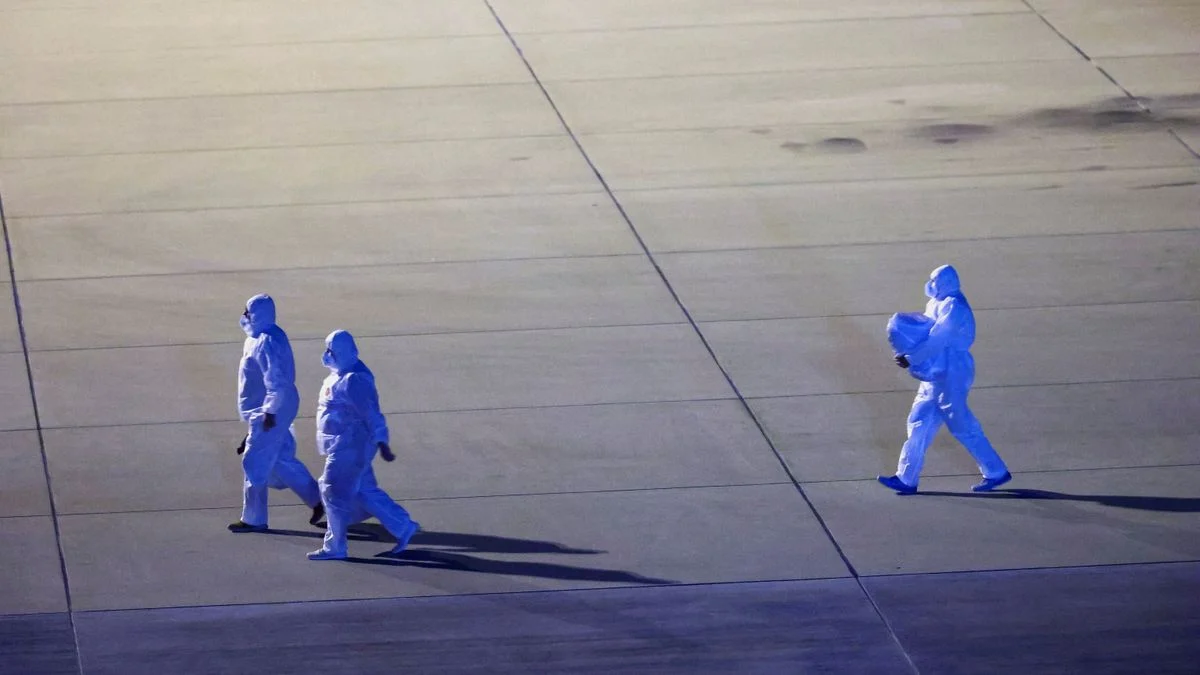
The recent Hantavirus outbreak aboard the expedition vessel MV Hondius has sent ripples of concern through the global medical community. While initially shrouded in uncertainty, the World Health Organization (WHO) has stepped in to clarify the nature of the pathogen, reassuring the public that the crisis does not stem from a dangerous, mutated strain of the virus. As the international response continues, the incident serves as a stark reminder of the unpredictable nature of zoonotic diseases in an interconnected world.
The Core Facts: A Pathogen Under the Microscope
The investigation into the Hondius outbreak has centered on whether the virus evolved to become more virulent or more easily transmissible. According to Dr. Maria Van Kerkhove, a leading expert at the WHO, genetic sequencing and comparative analysis with historical samples have yielded no evidence of an enhanced mutation.
The outbreak involves the South American Andes strain of the Hantavirus. Unlike many other Hantaviruses, the Andes strain is uniquely capable of human-to-human transmission, though this typically requires prolonged, intimate contact. Genetic mapping, made possible by samples taken from a Swiss passenger treated in Zurich, confirms that the virus retains its known characteristics rather than morphing into a new, more aggressive variant.
Despite the lack of a "super-virus" mutation, the toll has been significant. Of the roughly 150 individuals aboard the vessel, ten cases have been identified. Eight of these have been laboratory-confirmed, while one initial suspected case involving a U.S. citizen was ruled out after subsequent testing. Tragically, three individuals have succumbed to the infection, including a German national and a Dutch couple.
A Chronology of the Outbreak
The tragedy appears to have originated far from the high seas. The WHO’s working theory is that the "patient zero"—a passenger from the Netherlands—contracted the virus while on land in South America. Preliminary investigations suggest the individual was involved in birdwatching activities in the southern regions of South America, where they likely encountered rodents or dust contaminated by rodent excreta, the primary vector for Hantavirus.
Once the passenger boarded the Hondius in Argentina, the environment of a confined ship likely facilitated the spread of the virus. Because the Andes strain allows for human-to-human transmission, the virus spread among passengers and crew.
As the ship continued its journey, symptoms began to manifest among those infected. By the time the Hondius reached the vicinity of Tenerife, the severity of the illness prompted an emergency response. Passengers were evacuated and moved to various countries of origin, where they were placed under strict quarantine protocols to prevent further spread of the contagion.

Supporting Data and Clinical Realities
Hantaviruses are typically transmitted through contact with infected rodents—specifically through the inhalation of aerosolized particles from their urine, droppings, or saliva. The Andes virus remains an outlier in the Hantavirus family because of its documented ability to spread directly between humans.
The medical data from the Hondius case has provided researchers with a unique opportunity to study the virus in a controlled (albeit accidental) environment. Scientists have successfully decoded the full genome of the virus samples recovered from the Swiss patient. This data has been instrumental in ruling out the hypothesis of a new, highly contagious mutation.
However, the clinical picture remains complex. While the standard mode of transmission is well understood, the WHO has acknowledged that questions remain regarding how easily the virus spreads during "less intensive" contact. Experts are currently analyzing historical data from past outbreaks, such as one associated with a social gathering, to better understand the risk thresholds for transmission. This is crucial for medical professionals tasked with screening the remaining passengers who are currently under quarantine.
Official Responses and Global Coordination
The WHO has maintained a transparent stance throughout the ordeal. WHO Director-General Tedros Adhanom Ghebreyesus has emphasized that the potential for further cases to emerge is a result of the long incubation period of the Hantavirus—which can span several weeks—rather than an uncontrolled expansion of the outbreak.
"The emergence of additional cases is not a sign of a growing outbreak, but rather a reflection of highly effective surveillance and monitoring measures being implemented across multiple borders," Ghebreyesus noted.
The international coordination has been robust. Public health authorities in the countries where passengers have returned are working in tandem with the WHO to monitor symptoms. The rigorous quarantine protocols serve as a safeguard against a wider community spread, ensuring that any individual showing signs of infection is isolated and treated immediately.
Implications for Maritime Health Security
The Hondius incident raises critical questions about the health security of expedition cruising. As tourism pushes into increasingly remote areas of the world—from the southern tip of South America to the polar regions—the risk of travelers encountering local zoonotic reservoirs increases.

1. Surveillance and Screening Protocols
The outbreak highlights the limitations of current pre-boarding health screenings. While standard screenings focus on common respiratory illnesses or gastrointestinal issues, the Hondius case demonstrates that rarer, highly dangerous viruses can be brought on board by asymptomatic or mildly symptomatic travelers. Future maritime regulations may need to incorporate more detailed travel history questionnaires that account for high-risk environmental activities, such as trekking or wildlife observation in endemic areas.
2. The Challenge of "Human-to-Human" Vectors
The Andes strain serves as a warning for cruise operators. While most Hantaviruses are not considered a major risk for maritime outbreaks, the Andes variant changes the calculus. The maritime industry, in consultation with health authorities, must develop specific contingency plans for pathogens capable of direct transmission, including better air filtration systems and isolation facilities that can handle high-containment situations.
3. Zoonotic Awareness for Travelers
There is a clear need for increased education among eco-tourists and expedition travelers. Many passengers may not be aware of the risks associated with local wildlife or the environmental hazards in the regions they visit. Educational campaigns provided by travel agencies and expedition cruise lines could play a vital role in preventing future "patient zero" scenarios.
Conclusion: Lessons from the High Seas
The Hondius Hantavirus outbreak was a harrowing experience for all involved, resulting in the tragic loss of three lives and the widespread disruption of a major expedition. However, the swift response by international health organizations and the rigorous scientific analysis that followed have provided a clear path forward.
By confirming that the virus did not mutate into a more dangerous form, the scientific community has managed to prevent widespread panic. The incident underscores the importance of global health surveillance and the necessity of maintaining high standards of care, even in the most remote corners of the globe. As the remaining passengers complete their quarantine periods, the focus remains on ensuring that no further transmissions occur. The lessons learned from this incident will undoubtedly shape future maritime health protocols, ensuring that the spirit of exploration does not come at the cost of human health.
As we move forward, the Hondius case will be studied not only for its epidemiological data but as a case study in how international cooperation can mitigate the risks of a localized biological event, preventing it from becoming a global crisis. The vigilance shown by the WHO and the transparency of the scientific community provide a model for how to handle the inevitable challenges of living in an increasingly globalized and environmentally sensitive world.









Leave a Reply