By Science Editorial Desk
Date: July 20, 2026
For a brief, hopeful moment in the early 2020s, it appeared as though the rapid, terrifying pace of Arctic sea ice loss might be entering a period of stabilization. Climatologists and the public alike observed a slight "plateau" in the rate of decline, leading some to wonder if the Earth’s most vulnerable region had finally found a rhythm of resilience. However, that sense of relief has been shattered.
According to a rigorous new analysis published in the prestigious journal PNAS, the Arctic is not recovering. Instead, the temporary slowdown was merely a fluctuation—a brief, natural anomaly within a long-term, catastrophic trend. The winters of 2025 and 2026 have delivered a harsh reality check, confirming that the decline in sea ice is not only continuing but, in some metrics, accelerating at an unprecedented rate.
The Core Findings: A New Era of Diminishment
The study, which synthesizes satellite data and high-resolution climate modeling, highlights that the winters of 2025 and 2026 recorded the lowest and second-lowest sea ice extents since the beginning of modern satellite record-keeping in 1979.
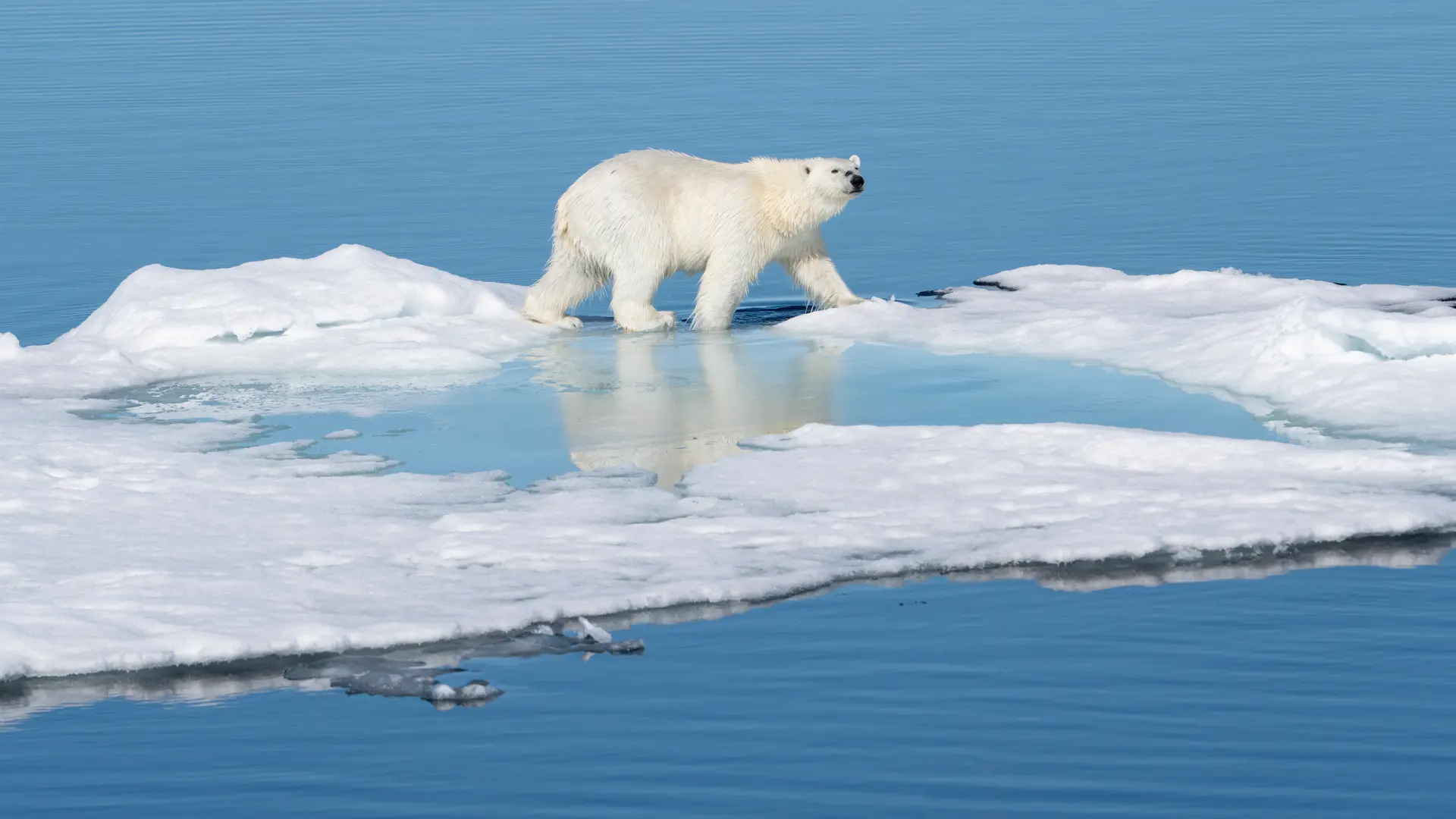
The most alarming statistic provided by the researchers is the delta between 2024 and 2025: a staggering six percent drop in winter sea ice extent. In the context of polar climate science, a six-percent annual plunge is not merely a statistical outlier; it is a profound shift that underscores the fragility of the Arctic’s cryosphere. This data effectively ends the speculation that the Arctic might have reached a "new normal" where ice loss would taper off.
"The idea of a ‘pause’ in the decline was always a misinterpretation of short-term variability," says one of the lead climate modelers involved in the study. "When we look at the trajectory through the lens of the 2025 and 2026 data, the signal is clear: the underlying forcing mechanisms of anthropogenic climate change are overwhelming the natural buffering capacity of the Arctic system."
Chronology of a Crisis: From Stability to Rapid Retreat
To understand the current state of the Arctic, one must look back at the historical progression of the region’s climate.
- 1979–2000: The baseline era. While some decline was noted, the Arctic sea ice coverage remained relatively consistent in its seasonal oscillation, providing a stable, reflective shield for the planet.
- 2000–2015: The "Acceleration Phase." Rapid warming in the Arctic—a phenomenon known as Arctic Amplification—began to outpace global warming rates by a factor of three. The multi-year, thick sea ice began to disappear, replaced by thinner, seasonal ice that melts easily.
- 2020–2024: The "False Plateau." A period of natural climatic variability, including shifts in atmospheric pressure systems and ocean circulation, led to a brief stabilization in winter ice coverage. This period provided a false sense of security, which was seized upon by some as evidence that the system might be stabilizing.
- 2025–2026: The "Reality Check." The sharpest decline in recorded history occurs, effectively erasing the gains of the early 2020s and placing the Arctic on a steeper downward trajectory than previously modeled.
Supporting Data: Why the Numbers Matter
The PNAS analysis leans heavily on satellite altimetry, which measures not just the surface area of the ice, but its thickness and volume. This is a critical distinction. Surface area can be misleading; a large expanse of "slushy" or thin ice might look significant from space, but it offers little structural protection to the Arctic ecosystem.
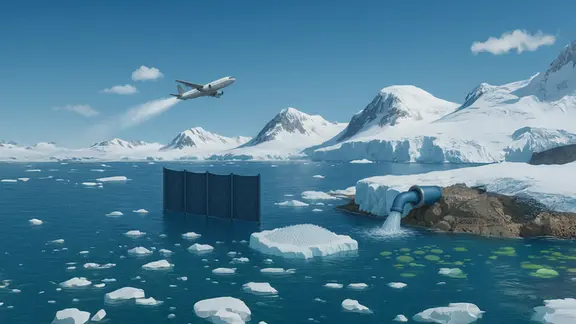
The data shows a consistent loss in "old ice"—ice that has survived at least one summer melt season. This multi-year ice is the backbone of the Arctic; it is thicker, salt-depleted, and harder to melt. As this category of ice continues to vanish, the entire system becomes more susceptible to thermal forcing. The researchers point out that the winter of 2025 saw the lowest volume of multi-year ice ever recorded, suggesting that the Arctic is losing its ability to "reset" itself during the colder months.
Official Responses and Scientific Consensus
The scientific community has largely rallied behind these findings, viewing them as a vindication of the models that predicted a long-term, non-linear decline.
"We have been warning that natural variability is a fickle friend," says Dr. Helena Vance, a lead climatologist at the Polar Research Institute. "It can mask the long-term trend for a few years, but it cannot override the fundamental physics of a warming atmosphere and a warming ocean. The 2025/2026 data isn’t a surprise to those who study the energy budget of the Arctic—it’s a confirmation of the inevitable."
Policy bodies, including the Intergovernmental Panel on Climate Change (IPCC) representatives, have noted that this data will be crucial for the next round of climate negotiations. The findings emphasize that the "buffer" time humanity thought it had to mitigate the loss of the Arctic is effectively gone.
Implications: The Domino Effect of a Melting North
The implications of a rapidly disappearing Arctic ice cap extend far beyond the polar bear and the seal. The loss of sea ice has a profound effect on the Earth’s "albedo"—the reflectivity of the planet.
1. The Albedo Feedback Loop
When white ice covers the dark ocean, it reflects the majority of the sun’s energy back into space. As the ice disappears, it exposes the dark, absorbent ocean water. This water absorbs heat, which in turn melts more ice. This is the classic "Arctic Amplification" feedback loop. The PNAS study confirms that this loop is currently operating at maximum efficiency, creating a self-reinforcing warming cycle that is difficult to reverse.
2. Extremes in European Weather
For those living in mid-latitudes, particularly in Europe, the Arctic is not a distant, irrelevant wilderness. The loss of sea ice is fundamentally changing the jet stream. As the temperature difference between the Arctic and the tropics narrows, the jet stream—the river of air that regulates our weather—becomes "wavier" and slower. This leads to "stuck" weather systems.
We are already seeing the consequences: prolonged heatwaves, persistent droughts, and, conversely, intense, heavy snowfall events in areas that rarely see them. The evaporation from the newly exposed, ice-free Arctic waters adds massive amounts of moisture to the atmosphere, which is then transported southward, fueling extreme precipitation events across the Northern Hemisphere.

3. Disruption of Marine Ecosystems
The biological impact is equally dire. The Arctic marine food web is built on the foundation of ice-dwelling algae. When the ice goes, the primary production cycle is disrupted. This ripples up the food chain, affecting everything from zooplankton to the iconic species that rely on the ice for hunting and breeding. The "new" Arctic is becoming a place where traditional biological rhythms are failing, leading to an uncertain future for endemic species.
The Road Ahead: Mitigation or Adaptation?
The PNAS report concludes with a somber, yet urgent call to action. While the loss of Arctic sea ice is likely irreversible on human timescales, the rate at which it vanishes can still be influenced by global carbon emissions.
"We are not talking about a binary ‘ice or no ice’ scenario," the authors note. "We are talking about a spectrum. Every fraction of a degree of warming we prevent is a fraction of a percent of ice we might preserve for future generations."
The focus must now shift to a dual-pronged approach. First, an immediate and aggressive reduction in global greenhouse gas emissions to slow the thermodynamic pressure on the Arctic. Second, a realistic assessment of the consequences of an ice-free Arctic. Governments must prepare for the geopolitical, economic, and meteorological shifts that will accompany a transformed North Pole.
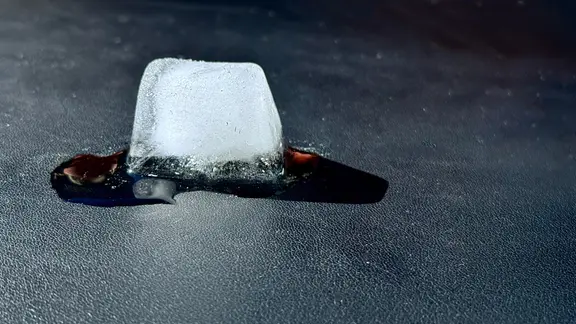
As we look at the satellite images of the Arctic today—dotted with puddles and cracks where there should be solid, blindingly white expanses—it is clear that the "pause" was a ghost. The reality is that the North is melting, and with it, the stability of the global climate we have enjoyed for millennia. The era of the Arctic as a reliable, frozen regulator is closing, and a more volatile, unpredictable epoch has begun.
The task for humanity is no longer to prevent the change, but to understand its full scope and act with the urgency that the melting ice demands. The data from 2026 is the final warning; what we do with this information will define the environmental legacy of the 21st century.