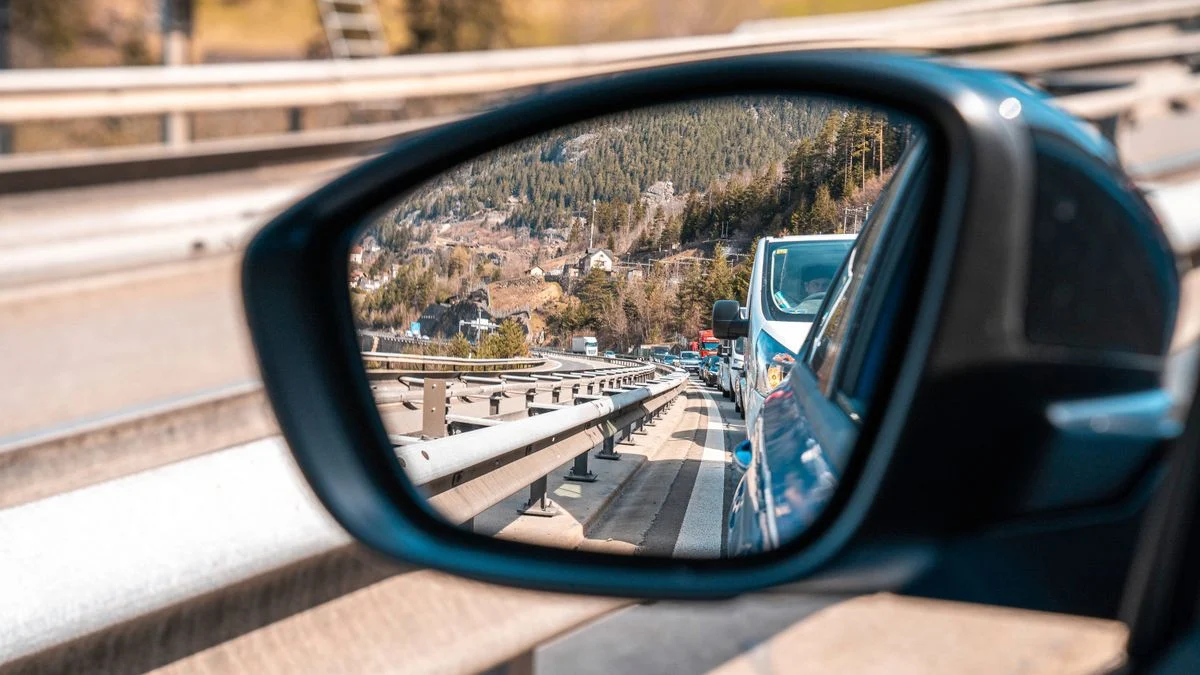
Every driver knows the feeling: the sudden transition from high-speed freedom to the frustrating, repetitive crawl of an Autobahn traffic jam. In those moments, the dashboard clock becomes an antagonist, and the decision to stay the course or seek an alternative route becomes a high-stakes gamble. But is there a scientific approach to "escaping" the jam, or are we simply victims of the collective behavioral patterns of millions of commuters?
This article explores the mechanics of traffic flow, the psychological traps of navigation, and the strategic considerations of when to abandon the highway—and when to simply endure the wait.
Main Facts: The Science of "Phantom" Traffic Jams
To understand whether one should exit the highway, one must first understand why the traffic exists in the first place. Most congestion on major highways is not caused by accidents or construction, but by what traffic engineers call "phantom traffic jams" or "shockwaves."
The Ripple Effect
When a single driver brakes slightly—perhaps due to a distraction, a lane change, or a slight curve in the road—the driver behind them must brake slightly harder to maintain a safe distance. This reaction cascades backward through the line of cars, intensifying until the cars at the back of the queue come to a complete standstill.
Capacity vs. Demand
Highways are designed with a theoretical maximum capacity. However, as the volume of vehicles approaches 80–90% of that capacity, the system becomes unstable. Small perturbations in speed lead to exponential increases in density. Once this threshold is crossed, the flow transitions from a "laminar" state (smooth, predictable movement) to a "turbulent" state (stop-and-go).
Chronology: The Evolution of Congestion Management
The history of traffic management has evolved from simple infrastructure expansion to complex, data-driven behavioral science.
- 1950s–1970s: The Expansion Era. The prevailing belief was that congestion was a supply-side problem. If the roads were full, the solution was to build more lanes. History has since shown that "induced demand" often negates these gains; when more lanes are added, more people choose to drive, filling the capacity almost immediately.
- 1980s–1990s: The Introduction of Intelligent Transport Systems (ITS). Engineers began installing induction loops and cameras to monitor flow. The focus shifted to "smoothing" traffic through variable speed limits, intended to keep traffic moving at a steady pace rather than allowing a surge of cars to hit a bottleneck at high speeds.
- 2000s–Present: The Algorithmic Age. Today, traffic management is dominated by real-time navigation platforms (Google Maps, Waze, HERE). These tools have fundamentally changed driver behavior. We are no longer navigating by intuition or local knowledge; we are following algorithms that balance the individual’s desire for speed against the global need for road stability.
Supporting Data: When to Stay and When to Go
Is it worth exiting the highway? The decision-making process is fraught with cognitive biases, specifically the "sunk cost fallacy" and the "optimism bias."
The Mathematical Threshold
Traffic flow experts suggest that leaving the highway is only statistically beneficial if the alternative route is significantly shorter in distance and has a predictable, low-density traffic profile.
- The "Short-Jam" Paradox: If you are in a jam that lasts less than 15 minutes, the time lost in the congestion is often less than the time required to navigate local traffic lights, school zones, and roundabout congestion on secondary roads.
- The "Dynamic Rerouting" Risk: When a navigation app identifies a "faster" route through local villages, it simultaneously routes thousands of other users along that same path. This frequently leads to "secondary congestion" on roads that were never designed for high-volume through-traffic, often resulting in a net loss of time for everyone.
- The Fuel Efficiency Factor: Constant stop-and-go driving on the highway is inefficient, but frequent acceleration and braking on winding, hilly, or traffic-light-heavy secondary roads can be even worse for fuel consumption and mechanical wear.
Data Points on Human Behavior
Research indicates that drivers are notoriously bad at estimating how much time they are losing. We tend to overestimate the duration of a jam while we are in it, and underestimate the time required to navigate a detour. When GPS suggests a route that is only 2–3 minutes faster, it is often better to remain on the highway, as the margin of error for unexpected obstacles on secondary roads is much higher.
Official Responses: The Infrastructure Perspective
Transportation authorities across Europe and North America have taken a firm stance on the use of "backroads" as a means of bypassing highway congestion.
The Problem of "Ghost Traffic"
Local municipalities often express concern over the impact of navigation algorithms on small-town traffic safety. When a major highway gets backed up, algorithms often divert thousands of cars through residential areas. This increases noise pollution, endangers pedestrians, and accelerates the degradation of local road infrastructure.
Regulatory Measures
In several regions, local authorities have begun to lobby tech companies to limit the flow of traffic through sensitive residential zones. Some jurisdictions have even experimented with "smart" traffic lights that recognize when a major highway has stalled and prioritize the highway-adjacent arterial roads to keep flow moving, discouraging the use of narrow local detours.
The consensus from departments of transport is clear: The highway is the most efficient path for high-volume transit. Diverting traffic to secondary roads creates a systemic inefficiency that hurts the community at large.
Implications: The Psychology of the Commute
The decision to exit the highway is rarely purely logical; it is an emotional response to the stress of being trapped.
The Illusion of Control
When we are sitting in a stationary car, we feel powerless. Taking an exit, even if it adds miles to the journey, provides a sense of agency. It feels like we are "doing something" about the problem. However, this is often a psychological coping mechanism rather than a rational navigation strategy.
The Future of Commuting
As we look toward the future, the integration of Connected and Autonomous Vehicles (CAVs) may eventually solve the "phantom jam" problem. If cars can communicate with each other, they can synchronize their braking and acceleration, effectively eliminating the shockwaves that cause traffic to stop. Until that technology reaches mass adoption, the human driver remains the primary variable in the traffic equation.
Final Recommendation
For the average driver, the best strategy is a disciplined approach to information:
- Trust the primary data: If your navigation app shows a delay of under 10 minutes, stay the course.
- Factor in the human cost: Consider the stress of navigating unfamiliar local roads versus the predictable, if boring, nature of the highway.
- The 50% Rule: Only consider a detour if the highway delay exceeds 20 minutes and the alternative route is verified by real-time data as having a clear, low-density status.
In the end, patience is not just a virtue; it is a mathematical strategy. By staying on the highway, you contribute to the stability of the overall traffic network, ensuring that the system functions for everyone, rather than succumbing to the temptation of a "shortcut" that is often, in reality, a longer and more stressful path home.
As technology continues to advance, the gap between our perception of traffic and the reality of the road will likely narrow. Until then, remember that in the world of high-speed transit, sometimes the fastest way forward is simply to keep your foot off the brake.