After nearly 35 years of silence, the masterminds behind one of the most explosive leaks in post-reunification German history have finally stepped out of the shadows. A new MDR documentary, The Great Stasi Leak – Heroes or Traitors?, reconstructs the clandestine operation that exposed 4,500 suspected East German informants, forcing a nation to grapple with the blurred lines between justice and vigilante action.
The Incident: A Bombshell in the Mail
In the summer of 1992, the newly reunified Germany was still reeling from the collapse of the German Democratic Republic (GDR). Trust in public institutions was fragile, and the process of "coming to terms" with the Stasi’s pervasive surveillance state was in its infancy. Then, the silence was shattered by a series of anonymous envelopes.
Across the city of Halle, government ministries, local authorities, and media outlets received an unsolicited 112-page document. It was not a political pamphlet or a protest manifesto; it was a hit list. Contained within were the real names and corresponding code names of 4,500 individuals suspected of being Inoffizielle Mitarbeiter (IM)—unofficial collaborators—of the Ministry for State Security (Stasi) within the district of Halle.
The impact was seismic. For many, it was the first time they realized their neighbors, colleagues, or even family members might have been reporting their every move to the secret police. For the legal system, it was a nightmare of unauthorized data dissemination. For the city of Halle, it was a social explosion that would echo for decades.
A Chronicle of Clandestine Resistance
The path to this massive data breach began long before the envelopes hit the mailboxes. Following the fall of the Berlin Wall in 1989, activists were terrified that the Stasi would destroy their records—a fear that proved to be well-founded as the shredders worked overtime at the Ministry’s headquarters.
The group of seven activists—six men and one woman—operating in the shadows of the collapsing regime, decided that the only way to ensure accountability was to bypass the official, slow-moving bureaucratic channels of the Gauck Authority.

"Mir war klar, wenn das morgen in den Briefkästen ist, wenn diese Briefe geöffnet werden… Das wird in Halle einschlagen wie eine Bombe," recalls Matthias Waschitschka, one of the key figures behind the operation.
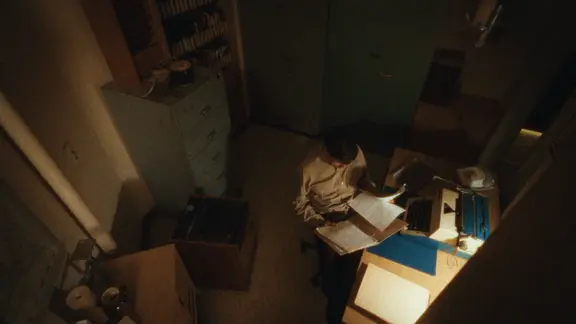
The logistics were straight out of a Cold War thriller. The group had to navigate the highly complex, encoded filing system of the MfS (Stasi). Through a combination of technical ingenuity and what they describe as a moral imperative, they managed to decode the internal identifiers. They spent months in secret, cross-referencing microfilms and hand-copying data, working in the constant fear of being discovered. The group operated under the firm belief that the truth was not the state’s property to hide, but the public’s right to know.
The Moral Dilemma: Justice or Vigilantism?
The central question that has haunted the case for over three decades is the ethical legitimacy of the leak. Was the act a necessary stroke of civil courage, or was it a reckless breach of the rule of law?
The documentary presents the voices of the seven perpetrators, who, for the first time, reflect on the long-term consequences of their actions. Ulrich Schlademann, another participant, underscores the desperation of the era: "Alle Beteiligten wussten, dass wenn wir es nicht machen, ist es verloren."
To the perpetrators, the state’s failure to rapidly process Stasi files left victims in a state of perpetual uncertainty. By releasing the list, they sought to force a public reckoning. However, the release was indiscriminate. Because the list was essentially a raw database, it lacked the context of individual culpability. Was a "collaborator" someone who had ruined lives, or someone who had been blackmailed into providing harmless information? The "Halle List" made no such distinctions, effectively placing thousands of people under a blanket of suspicion.
Official Responses and the Legal Fallout
The arrival of the lists in 1992 triggered an immediate and aggressive response from the German judiciary. Investigations were launched to track down the source of the leak, as the distribution of the documents violated privacy laws and arguably compromised ongoing efforts to integrate the former GDR into the Federal Republic of Germany.

Public institutions were forced into a defensive position. The sheer volume of names created a logistical catastrophe. How could an office verify the authenticity of each entry? How could they protect those wrongly named from public harassment? The leak created a climate of fear and mutual suspicion that hindered the official, structured process of archival research. Yet, paradoxically, the leak also accelerated the public demand for access to Stasi files, proving that the appetite for transparency was stronger than the government’s desire for order.
The Legacy of the "True Crime" Spionage
The story of the Halle List is now being framed as a "True Crime" historical thriller. It contains all the hallmarks of the genre: the high-stakes risk of discovery, the use of secret communication, and the transformation of ordinary citizens into clandestine actors.
However, the documentary moves beyond the thrill of the espionage to address the deeper, unresolved questions of the post-GDR era. The "Halle List" represents a microcosm of the entire reunification process: a collision between the desire for immediate moral justice and the necessity of establishing a stable, law-abiding democracy.
Implications: Why It Matters Today
The significance of this revelation lies in its timing. Nearly 35 years later, the generation that lived through the GDR is aging, and the memory of the Stasi is fading into history books. By finally speaking out, the activists are providing a crucial piece of the puzzle regarding how the "wild east" of the early 90s actually functioned.
The film forces the audience to confront uncomfortable questions:
- The Right to Privacy vs. The Right to Truth: Does the public interest in knowing who worked for the Stasi override the personal data protection of the individuals listed?
- Civil Disobedience: At what point does a "heroic" act of whistleblowing become a dangerous subversion of the democratic process?
- The Burden of History: How do we deal with a past that is documented in a system built on lies and manipulation?
The "Halle List" remains a cautionary tale about the volatility of truth in times of political transition. As the participants in the documentary look back, their reflections are not purely triumphalist. There is a palpable sense of gravity regarding the human cost of their decision—the lives that were disrupted and the reputations that were permanently altered.
Conclusion: A Final Reckoning
The ARD-History-produced documentary, The Great Stasi Leak – Heroes or Traitors?, is not just a retelling of a past event; it is a profound examination of the moral cost of justice. By humanizing the people who decided to take the law into their own hands, the film provides a nuanced look at the motivations that drove a small group of people to challenge the state.
As the viewers follow the reconstruction of these clandestine activities, they are invited to judge for themselves. Were they heroes who ignited the necessary spark of truth, or were they reckless actors who prioritized their own moral code over the stability of a fragile new society?
Regardless of the verdict, the story of the Halle List is now cemented as a seminal chapter in the history of German reunification—a reminder that the path to truth is often paved with secrets, and the search for justice is rarely a clean or simple affair. The documentary is now available in the ARD Mediathek, inviting a new generation to engage with one of the most complex, controversial, and captivating episodes of the post-Cold War era.