By MDR WISSEN Editorial Team
Published: June 21, 2026, 17:46 CET
As the evening light lingers and the horizon refuses to surrender to the darkness, the people of central Germany are once again reminded of the Earth’s rhythmic dance around the sun. On June 21, 2026, at precisely 10:24 AM CET, the Northern Hemisphere reached its celestial peak: the Summer Solstice. It is the longest day and the shortest night of the year, a moment that has been observed with both scientific precision and cultural reverence for thousands of years.
The Science of the Longest Day
The summer solstice occurs when the Earth’s axial tilt is most inclined toward the sun. For residents of Mitteldeutschland, this manifests as an extended period of daylight that seems to defy the natural rhythm of the clock. While we often perceive the solstice as a single day, it represents the exact astronomical moment when the sun reaches its northernmost point in the sky—the Tropic of Cancer.
The experience of this "Day of Light" is not uniform across the region. Geography plays a definitive role in the duration of daylight. In the northern reaches of the region, such as Salzwedel, residents enjoy a generous 16 hours and 54 minutes of daylight. Moving south toward the Thuringian Forest, the duration tapers slightly; in Sonneberg, the sun provides 16 hours and 25 minutes of light.
This phenomenon is part of a broader atmospheric and astronomical sequence. Since mid-May, the nights over central Germany have failed to achieve "astronomical darkness." This is the time of the "White Nights," where the sun does not dip far enough below the horizon to eliminate twilight. For casual observers, it is a period of endless evenings; for amateur astronomers, it is a period of frustration, as the sky remains too bright for deep-sky photography.
A Chronology of the Solstice
To understand the significance of this day, one must look at the transition of the seasons.
- Early June: The sun reaches its highest altitude at local noon, and the twilight period lengthens significantly.
- June 21, 10:24 AM: The precise astronomical moment of the summer solstice. The sun stands directly over the Tropic of Cancer.
- The Afternoon of June 21: Local communities begin traditional celebrations, ranging from public festivals to intimate gatherings around open bonfires.
- June 22 and Beyond: The "imperceptible decline" begins. While the change is measured in mere seconds initially, the nights will slowly begin to reclaim the daylight, moving us inevitably toward the autumnal equinox.
Astronomy as Local Heritage: The Archeological Connection
In Mitteldeutschland, astronomy is not merely a scientific pursuit; it is, in many ways, an act of local history and heritage. Our region serves as a living museum of how our ancestors understood the heavens.
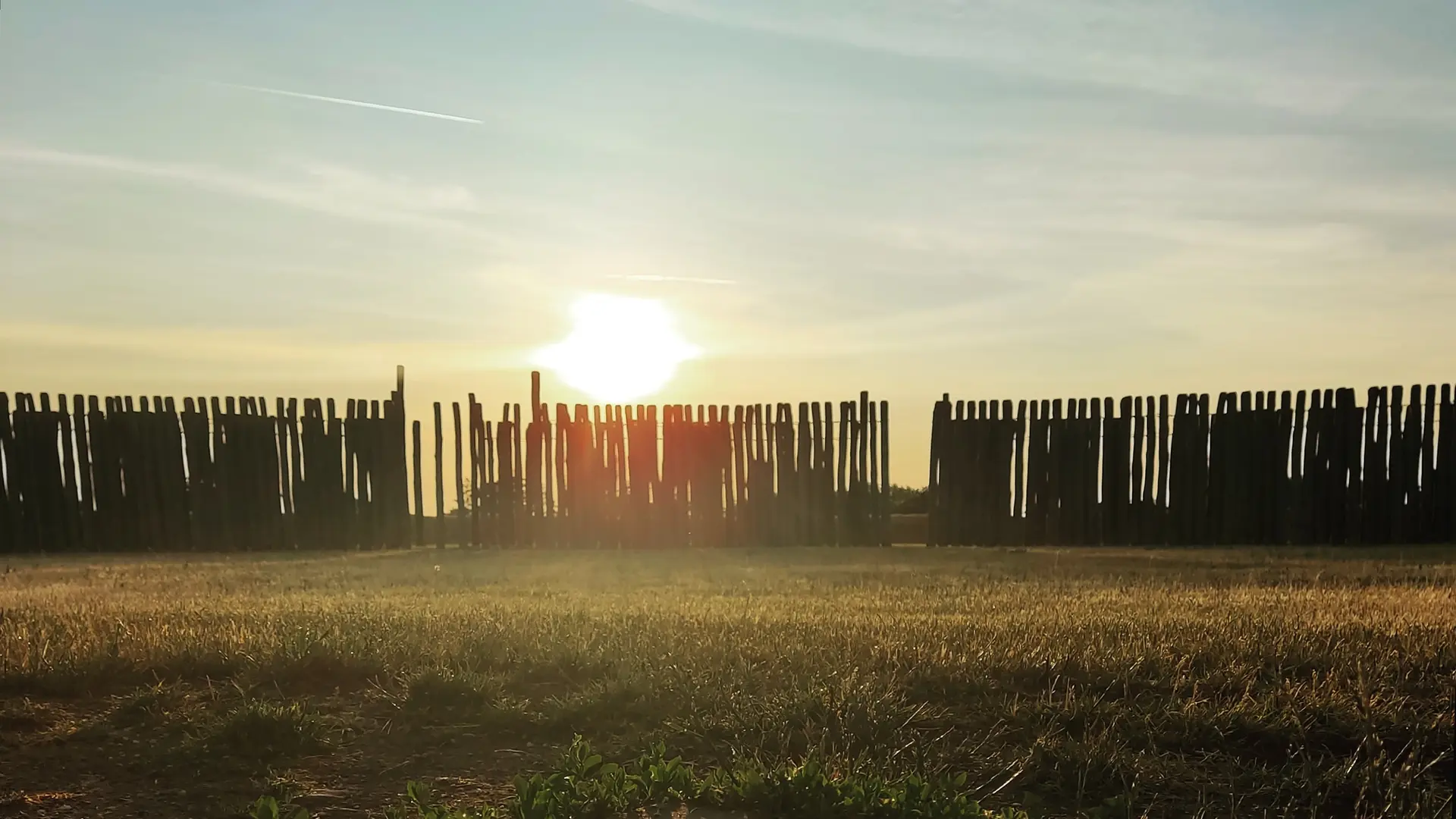
The Goseck Circle, a 7,000-year-old Neolithic sun observatory, remains one of the most significant sites in Europe. It predates the more famous Stonehenge and demonstrates that early human societies in this region were not merely surviving, but observing, calculating, and documenting the solar cycle. Standing within the reconstructed palisades of Goseck during the solstice offers a profound connection to the past—a reminder that the people who built these structures looked up at the exact same sun that warms our faces today.
Similarly, the Ring Sanctuary of Pömmelte, often dubbed the "German Stonehenge," provides a focal point for modern celebrations. Thousands of visitors travel here annually to experience the solstice in a setting that mirrors the spiritual and observational practices of the Early Bronze Age.
Further south, the Nebra region hosts the site where the world-renowned Nebra Sky Disk was unearthed. This artifact, which contains the oldest concrete depiction of the cosmos, underscores the deep-rooted importance of the sun and stars to the identity of central Germany.
Expert Perspectives: Bridging the Gap Between History and Modernity
The intersection of ancient observation and modern technology is a recurring theme this weekend. At the Arche Nebra, science journalist and radio expert Dirk Lorenzen is scheduled to deliver a keynote presentation titled "From Nebra to the James Webb Telescope."
"We are looking at a continuum of human curiosity," says Dr. Elena Fischer, an archeoastronomer involved in the local outreach programs. "When we stand at the Goseck site, we aren’t just looking at dirt and wood; we are looking at the foundational evidence of human intellect. Connecting this to the cutting-edge images provided by modern space telescopes isn’t a stretch—it’s the logical continuation of what those early observers started 7,000 years ago."
The sentiment is echoed by the Sternfreunde (Star Friends) of Merseburg, who have organized a public observation event at the Goseck facility. "We want to demystify the science while keeping the magic alive," says a spokesperson for the group. "By providing high-powered telescopes, we allow the public to see the sun not as a flat disk, but as a dynamic, boiling sphere of plasma, complete with sunspots and solar flares that are invisible to the naked eye."
Implications and Public Engagement
The solstice is more than a scientific curiosity; it is a vital economic and cultural driver for the region. Tourism statistics in Saxony-Anhalt, Thuringia, and Saxony show a distinct uptick in visitors during the solstice weekend, as families and history enthusiasts flock to sites like the Arche Nebra and the various local observatories.
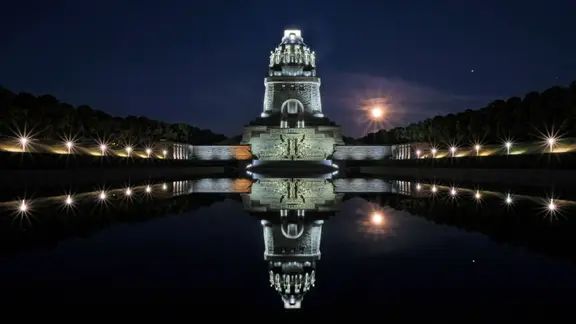
The societal implications of the solstice are equally profound. In an age dominated by digital screens and artificial lighting, the solstice serves as a communal "reset button." It encourages outdoor activity, public assembly, and a reconnection with the natural environment. Whether it is a formal celebration at a museum or a simple backyard gathering, the focus on the sun fosters a shared experience of the natural world.
Event Highlights for the 2026 Solstice:
- Goseck Sun Observatory: Telescopic observations and guided tours focusing on the alignment of the ancient structures with the summer sun.
- Arche Nebra: Evening lectures on the evolution of astronomical observation, followed by stargazing sessions.
- Schneeberg Observatory (Saxony): Specialized daytime observations of the sun’s surface, focusing on sunspots and solar activity.
- Kirchheim Observatory (Thuringia): Morning sessions dedicated to solar observation, providing a unique look at the star that dictates our seasons.
- Pömmelte Ring Sanctuary: A celebratory festival marking the 10th anniversary of the site’s reconstruction, blending cultural performances with historical education.
Looking Ahead: The Slow Shift
While the atmosphere is currently one of celebration, the reality of the celestial cycle is absolute. As we pass the June 21 mark, the northern hemisphere begins its slow, measured tilt away from the sun. The days will begin to shorten. By the time July arrives, the change will be noticeable; by August, the late-summer twilight will feel distinctly different.
However, for this weekend, the focus remains on the light. The tradition of the "Sonnenwendfeuer" (solstice fires) burning across the hills of Saxony, Thuringia, and Saxony-Anhalt is a testament to the resilience of human tradition. These fires symbolize the human attempt to capture the sun’s warmth and hold onto it just a little longer.
As we bask in the glow of the 2026 summer solstice, we are invited to consider our place in the cosmos. We are, as the ancient inhabitants of Nebra understood, part of a vast, predictable, and awe-inspiring system. The sun will continue its journey, the seasons will continue their cycle, and the people of Mitteldeutschland will continue to be the custodians of these ancient, celestial memories.
Enjoy the light while it lasts. The night will come, but for now, the sky remains ours to contemplate.