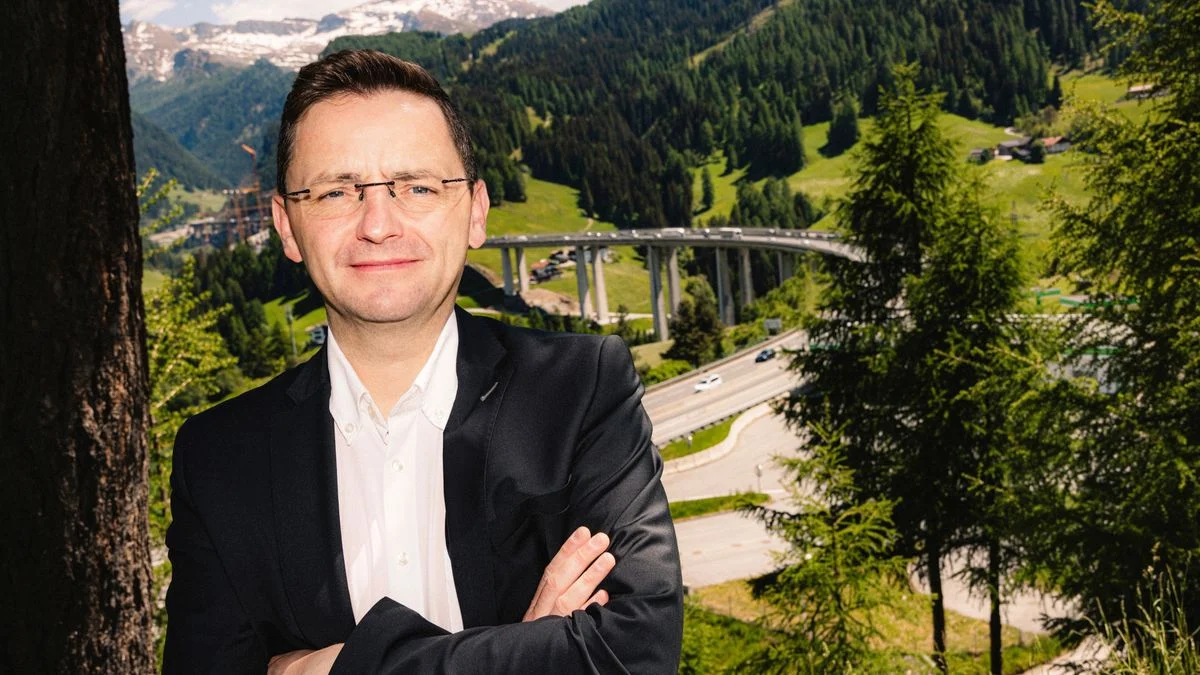
As the summer travel season reaches its zenith, one man has effectively paralyzed the most critical artery between Northern Europe and Italy. This weekend, the Brenner Pass—the primary lifeline for European transit—faces an unprecedented shutdown. Behind the chaos lies a calculated protest, a battle for regional autonomy, and the growing frustration of a local population pushed to the brink by relentless heavy-goods traffic.
Main Facts: A Strategic Chokepoint
For millions of vacationers and thousands of logistics companies, the Brenner Pass is more than just a mountain crossing; it is the physical spine of the European Union’s internal trade. Connecting Innsbruck in Austria to Sterzing in Italy, the pass serves as the primary gateway for German travelers heading toward the Mediterranean.
This Saturday, that gateway is being shuttered. The blockade is not an accident of nature or a technical failure; it is a deliberate, orchestrated act of civil disobedience. At the heart of the disruption is a local activist whose name has become synonymous with the "Brenner revolt." By utilizing a combination of local zoning laws, tactical protests, and political leverage, this individual has managed to force authorities to implement a full-scale restriction on transit, effectively stalling the pulse of the continent.
The motive is clear: the residents of the Tyrol region, represented by this grassroots movement, are demanding a permanent reduction in the daily deluge of trucks that clog the valley floor, pollute the pristine alpine air, and pose significant safety risks to the local population.
Chronology of a Crisis
The path to this weekend’s total blockade was paved over several years of escalating tension.
- 2019–2021: As the European economy rebounded post-pandemic, freight volume through the Brenner Pass shattered previous records. Local residents reported sleep deprivation due to the constant drone of heavy engines, and local health boards noted a spike in respiratory issues linked to particulate matter.
- Early 2023: Local protest groups began organized "slow-drive" demonstrations, where cars and tractors moved at a snail’s pace through the pass. These actions caused hours-long backlogs, forcing the regional government to acknowledge the severity of the situation.
- Late 2023: The central figure behind this weekend’s closure began leveraging local municipal permits to "reclaim" sections of the access road for community events and safety inspections, legal loopholes that the state eventually struggled to block.
- The Current Week: Following a breakdown in negotiations between the regional Tyrolean government and the federal transport authorities in Vienna and Rome, the "Gatekeeper of the Alps" announced that he would utilize a specific, legally protected protest window to effectively halt all non-essential traffic on the primary transit route this Saturday.
Supporting Data: The Cost of Transit
The statistics surrounding the Brenner Pass are staggering. According to the European Environment Agency, the Brenner corridor sees upwards of 2.5 million trucks pass through annually. This volume is nearly triple what the regional infrastructure was designed to handle in the 1980s.
Economic Impacts:
- Logistics Costs: For every hour a truck is stalled at the border, transport costs increase by approximately €150. With the expected delays this Saturday, the logistics sector estimates losses in the millions of euros.
- Tourism: The travel industry, already reeling from high fuel prices, warns that the blockade could cause a 15% drop in last-minute bookings for Italian resorts, as families opt for alternative, less reliable transit routes.
Environmental Impacts:
- Nitrogen Dioxide (NO2) Levels: Sensors stationed along the highway frequently record levels that exceed EU safety limits, particularly during the summer "peak" months.
- Noise Pollution: Decibel levels in the villages surrounding the pass regularly exceed 75 dB, creating a "permanent state of acoustic stress" for the roughly 15,000 residents living within 500 meters of the highway.
Official Responses: A Diplomatic Deadlock
The blockade has ignited a firestorm of political rhetoric across three nations.
The Austrian Perspective:
Regional Governor Anton Mattle has long championed a "transit cap," arguing that the health of the Tyrolean population outweighs the efficiency of the European single market. "We are not trying to destroy the economy," Mattle stated in a recent press conference. "We are trying to preserve the livability of our home. If the EU cannot provide a sustainable solution, the people will take matters into their own hands."
The Italian Reaction:
Rome has been significantly more combative. Italy’s Minister of Infrastructure has repeatedly characterized the blockades as an "illegal obstruction of European transit." The Italian government has threatened to take the matter to the European Court of Justice, arguing that the actions violate the Treaty on the Functioning of the European Union, which guarantees the free movement of goods.
The Brussels Response:
The European Commission remains caught in the middle. While they acknowledge the environmental concerns of the Tyrol region, they maintain that the Brenner Pass is a "strategic infrastructure asset" that cannot be held hostage by regional activists. A spokesperson for the Commission noted that they are "closely monitoring the situation" and have urged all parties to return to the negotiating table to discuss a digital tolling system and a potential shift of freight from road to rail.
The Broader Implications: Europe at a Crossroads
The blockade of the Brenner Pass is symptomatic of a much deeper malaise within the European Union: the conflict between regional quality-of-life and continental economic integration.
1. The Death of "Just-in-Time" Logistics
The reliance on the Brenner Pass as a primary corridor highlights the fragility of modern supply chains. The fact that one individual can disrupt the flow of goods between Munich and Verona suggests that the EU’s "Green Corridor" strategy is failing. Businesses are now being forced to consider more expensive, longer routes, potentially accelerating inflation for consumer goods in Southern Europe.
2. The Rise of "NIMBY" Activism as a Political Tool
This event marks a shift in how local protests operate. Instead of simply holding signs, activists are becoming adept at using the legal frameworks of their own municipalities to stall national and international infrastructure. This "procedural sabotage" is becoming a template for environmental movements across Europe, particularly concerning airport expansions and high-speed rail lines.
3. The Future of the Alps
The Brenner conflict poses an existential question for the Alpine region: Should these mountains remain a transit hub or a protected habitat? The current stalemate is unlikely to be resolved through this weekend’s blockade alone. It is, however, accelerating the call for a "Brenner Base Tunnel," a massive, multi-billion euro infrastructure project designed to move heavy freight underground.
The tunnel, which has been under construction for years, is intended to solve the transit crisis. But as the "Gatekeeper of the Alps" continues to push for immediate results, the pressure on project managers to accelerate the timeline—or face further blockades—is immense.
Conclusion
As Saturday approaches, the silence of the highway will be deafening. The blockade is a physical manifestation of a social contract that has frayed. While commuters and freight companies express their frustration, the people of the Tyrol see a rare victory in their long struggle for agency.
Whether this is a turning point that forces a permanent, sustainable solution or merely a temporary irritant in an increasingly congested Europe remains to be seen. What is certain is that the Brenner Pass is no longer just a road; it is the frontline of a new European struggle—one where the speed of commerce must finally contend with the reality of those who live in its shadow.