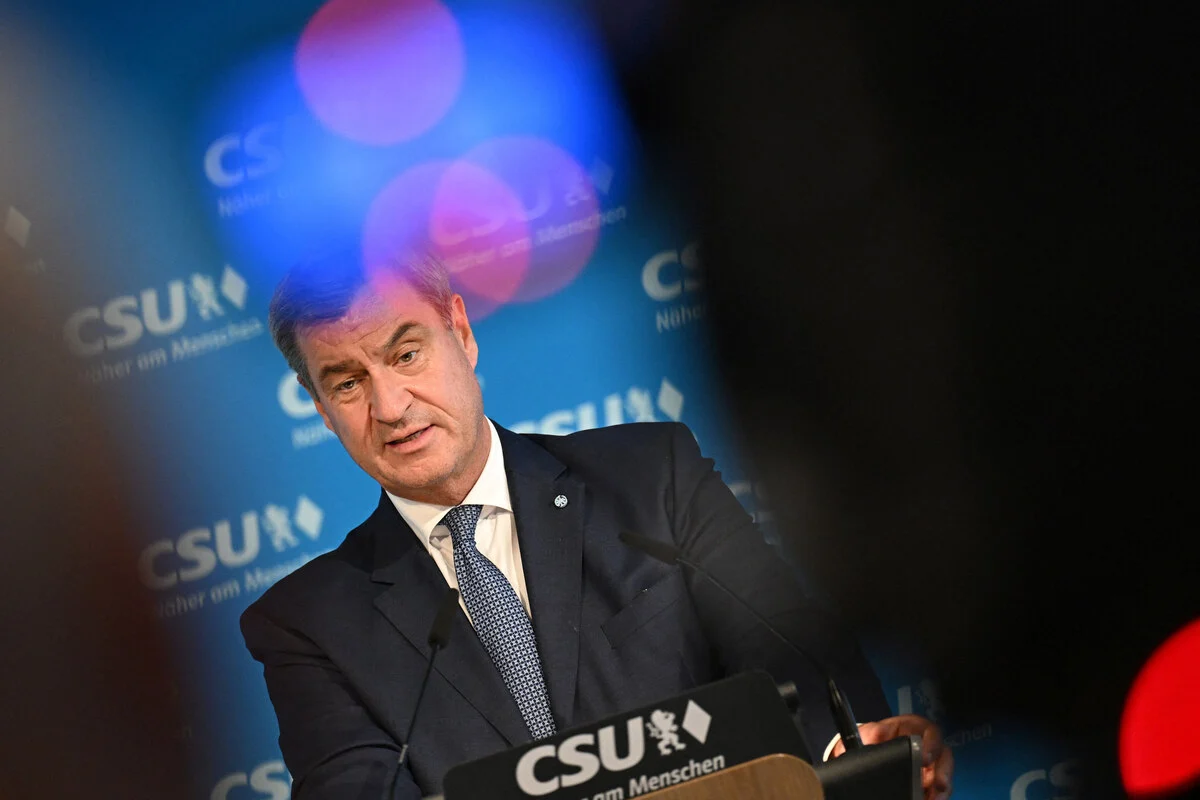
In an increasingly polarized political landscape, the Christian Social Union (CSU) has ignited a fierce national debate by proposing a radical revision to the German Länderfinanzausgleich (the state fiscal equalization system). Spearheaded by Bavarian Minister-President Markus Söder and staunchly defended by party General Secretary Martin Huber, the proposal—dubbed the "Extremism Clause"—aims to curtail or withhold financial transfers to federal states governed by parties deemed to be in opposition to the constitutional order, specifically targeting the AfD (Alternative for Germany) and Die Linke (The Left).
This proposal represents more than a mere policy tweak; it challenges the foundational principles of German federalism, which has historically functioned on the premise of creating "equal living conditions" across the republic, regardless of the political complexion of individual state governments. As the CSU prepares for its upcoming party conference in Munich, the "Extremism Clause" has moved from a fringe suggestion to a central pillar of the party’s aggressive political positioning.
The Core Proposal: Weaponizing Fiscal Solidarity
The fundamental objective of the CSU’s initiative is to ensure that federal states governed by parties that do not align with the CSU’s interpretation of constitutional loyalty do not benefit from the fiscal strength of economically prosperous states like Bavaria.
According to Martin Huber, the current system is fundamentally flawed. In a recent appearance on the ARD Morgenmagazin, Huber described the existing mechanism as "generally unjust" and argued that it is "absurd" to expect the Bavarian taxpayer to subsidize state administrations that he claims are "clearly violating our constitution."
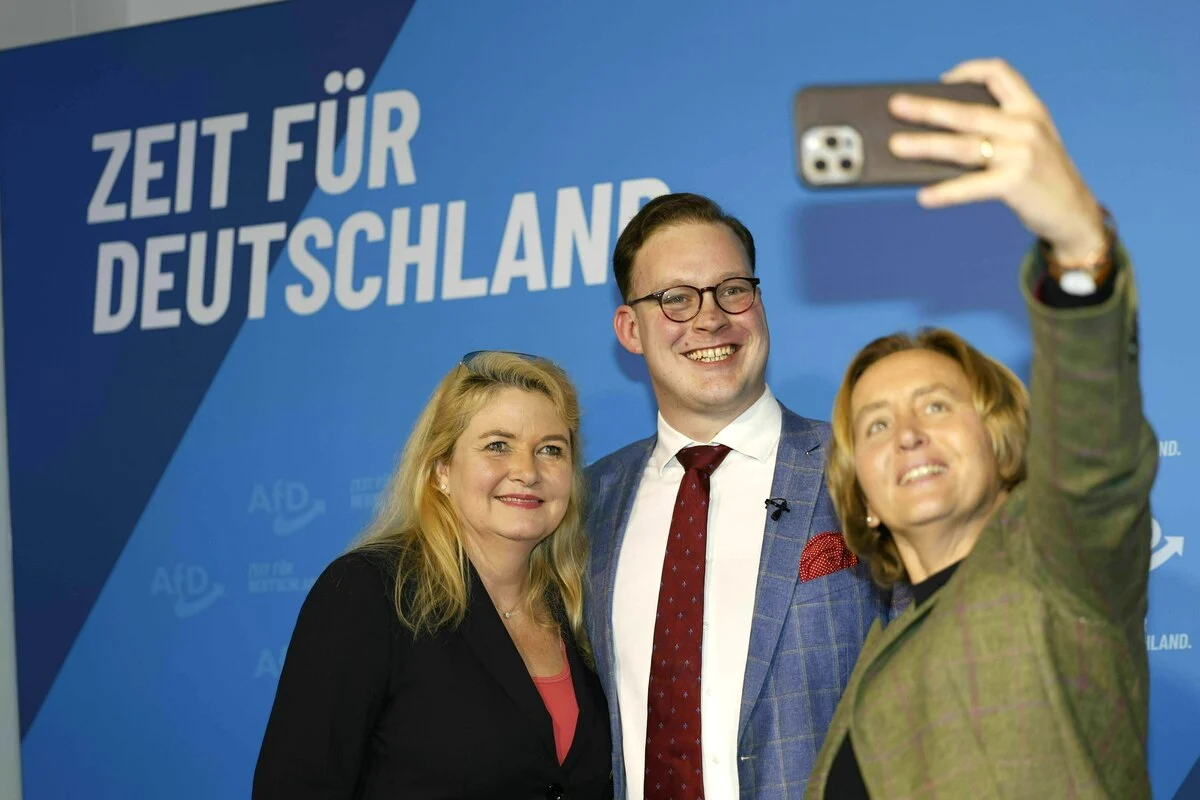
The CSU’s argument rests on the premise that political accountability should have a financial dimension. By creating an "Extremism Clause," the party hopes to establish a system where fiscal transfers are conditional upon a state’s adherence to a specific political ethos. The targets of this rhetoric are explicit: the AfD, which the CSU labels as extremist, and The Left, which the CSU characterizes as a party of "expropriation."
Chronology: From Rhetoric to Policy Ambition
The proposal did not emerge in a vacuum but is the culmination of shifting electoral tides and the CSU’s desire to regain its footing in the national discourse.
- September 2026: Following a series of unfavorable polling results, Markus Söder intensified his rhetoric regarding the fiscal burden of the Länderfinanzausgleich.
- The Berlin Shift: The catalyst for the recent escalation was the political maneuvering in Berlin, where potential coalition talks between the SPD, The Left, and the Greens raised alarms within the conservative camp. The proposed policy of "socialization"—or the expropriation of large housing conglomerates—became the lightning rod for Söder’s critique.
- Negotiations with Peers: Söder revealed that Bavaria has entered into active discussions with the other two primary "donor states"—Hessen and Baden-Württemberg—to seek a unified front in implementing these fiscal constraints.
- The Impending Party Congress: As the CSU gathers in Munich this week, the "Extremism Clause" serves as a strategic rallying cry. With Chancellor-candidate and CDU leader Friedrich Merz expected to address the congress, the proposal serves to signal to the party base that the CSU remains the staunch defender of "orderly" fiscal policy.
The Economics of Redistribution: How the System Works
To understand the severity of the CSU’s proposal, one must understand the role of the Länderfinanzausgleich. The system was designed as a mechanism of horizontal and vertical financial equalization. Its primary goal is to ensure that every German state has the financial capacity to provide public services—education, infrastructure, and social welfare—at a level comparable to its neighbors.
Currently, Bavaria, Hessen, and Baden-Württemberg are the primary net contributors to this pool. They generate substantial tax revenue, a portion of which is redistributed to states with smaller tax bases. The CSU’s argument is that this redistribution has become a "one-way street" that rewards fiscal irresponsibility or, in their view, ideological extremism.
However, critics of the proposal point out that the equalization system is legally and constitutionally mandated. By making these payments conditional on the political makeup of a state government, the CSU is effectively suggesting a move toward a "politically conditional federalism," a concept that many constitutional scholars argue would undermine the very sovereignty of the states (Länder) guaranteed by the Basic Law.
Official Responses and Political Fallout
The reception to Söder’s proposal has been starkly divided, reflecting the deep fissures within the Union (CDU/CSU) bloc itself.
The Support
Boris Rhein, the Minister-President of Hessen, has expressed support for the initiative. His alignment with Söder underscores the frustration among the wealthiest states regarding the current distribution model. For these leaders, the clause is a tool to demand more fiscal discipline from poorer or politically divergent states.
The Opposition
The backlash has been swift and significant. Gordon Schnieder, the Minister-President of Rhineland-Palatinate and the current chairman of the Minister-Presidents’ Conference, was blunt in his assessment. He explicitly rejected the proposal, labeling it a "wrong path." Schnieder’s opposition carries weight, as it highlights the fear that if fiscal transfers become a political weapon, the entire federal structure could dissolve into partisan warfare, paralyzing the functioning of the state.

Critics further argue that the proposal is performative—a "distraction" from the CSU’s own political decline. With polls showing the CSU losing traction, analysts suggest that the "Extremism Clause" is an attempt to reclaim the "conservative edge" and differentiate the CSU from the more moderate stance of its federal coalition partners.
The Ideological Battlefield: Expropriation vs. Constitutionality
A significant portion of the CSU’s ire is directed at the potential for "expropriation" in Berlin. The proposed policy of the local Left party to socialize housing units owned by major real estate firms is framed by the CSU as an act of economic sabotage.
The debate highlights a fundamental clash of visions for Germany:
- The Liberal-Conservative View: Private property is sacrosanct, and state interference in the market through "expropriation" is a violation of the constitutional order. Therefore, states pursuing such policies should not be entitled to support from "fiscally responsible" states.
- The Left-Progressive View: Housing is a human right, and the constitutional framework (specifically Article 15 of the Basic Law) allows for socialization under specific circumstances. They argue that the CSU’s attempt to use fiscal policy to block democratic outcomes in other states is an anti-democratic overreach.
Implications for the Future of the Republic
The "Extremism Clause" carries profound implications for the future of German governance:
1. Erosion of Federal Trust
If states begin to dictate the fiscal behavior of their peers based on party lines, the spirit of solidarity that has defined the post-war German state will be permanently damaged. The federal system relies on a degree of trust that the common good outweighs individual state agendas.
2. A Precedent for Polarization
By labeling the AfD and The Left as "extremist" in the context of a fiscal penalty, the CSU is creating a new category of "second-class states." This risks creating a permanent political divide where voters in certain regions are financially penalized for their electoral choices, potentially radicalizing those regions further and fueling anti-establishment sentiment.

3. Legal and Constitutional Challenges
It is highly unlikely that such a clause could be implemented without a major challenge before the Federal Constitutional Court. The court has historically been protective of the states’ autonomy. A successful challenge would likely deem such a clause unconstitutional, but the political damage caused by the debate itself may be irreversible.
4. The Stability of the CDU/CSU Union
The discord between Söder and other CDU leaders like Schnieder demonstrates that the "Union" is not a monolith. If the CSU continues to push populist-leaning fiscal policies, it may find itself increasingly isolated from the more moderate wings of the CDU, potentially leading to further fragmentation on the German right.
Conclusion: A Dangerous Gamble
The CSU’s push for an "Extremism Clause" is a high-stakes gamble. By linking fiscal policy with political ideology, Markus Söder is attempting to redefine the boundaries of acceptable government in Germany. While the proposal serves to energize his base and frame the political narrative ahead of the next federal election, it does so at the cost of undermining the constitutional architecture of the German state.
As the party prepares for its upcoming congress, the question remains whether this rhetoric will translate into tangible legislation or whether it will be remembered as a desperate attempt to shore up declining popularity by attacking the very federalism that has provided Germany with decades of stability. For now, the "Extremism Clause" stands as a testament to the deepening divisions within the German political landscape—a landscape where the traditional consensus is rapidly giving way to a more combative, confrontational style of governance. Whether this leads to a "renewal" of the fiscal system or a fracturing of the federal state is a question that will occupy the German political class for years to come.