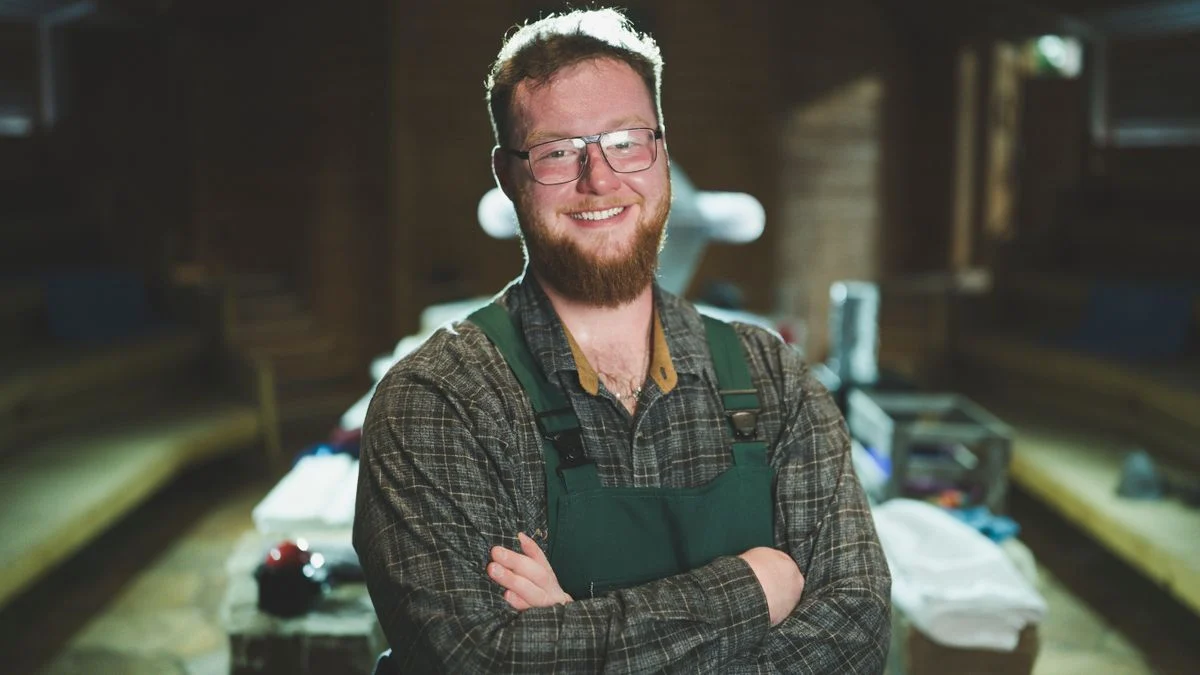
In the sweltering, wood-paneled chambers of elite wellness centers, a new form of high-stakes performance art has emerged. It is not defined by athletic speed or brute strength, but by the precise manipulation of heat, humidity, and scent. At the center of this movement is Lennart Kloss, a professional lifeguard turned "Aufgussmeister," who recently captivated the international stage at the Sauna Aufguss World Championships. His journey represents the transition of the traditional sauna experience into a choreographed, sensory theater that demands months of grueling preparation.
The Evolution of the Aufguss
Traditionally, Aufguss—the German word for "infusion"—is a simple ritual: water, often infused with essential oils, is poured over hot sauna stones to create a burst of steam. However, in the competitive sphere, the practice has evolved into "Aufguss-Show."
Competitors are judged on a complex rubric: the quality of the steam, the distribution of heat using towels (the "fanning" technique), the choreography of the performance, and the psychological impact of the aroma journey. Lennart Kloss did not merely enter the competition; he treated it as a grueling athletic and artistic endeavor, spending months refining his routine to ensure that every movement of his towel—every wedeln—synchronized perfectly with his curated soundtrack and thematic narrative.
Chronology of a Champion’s Preparation
Phase 1: Conceptualization and Narrative (Months 1–2)
For Kloss, the process began not with heat, but with a story. Competitive sauna is as much about drama as it is about perspiration. Kloss spent weeks researching themes that would resonate with an international panel of judges. He selected a concept that merged classical elements of nature with modern, high-energy electronic soundscapes. During this time, he also experimented with the "olfactory pyramid"—the strategic layering of base, heart, and top notes of essential oils to ensure the scent evolved throughout the 15-minute session.
Phase 2: Technical Fanning Drills (Months 3–4)
The physical demands of a 15-minute high-intensity performance are extreme. Fanning, or wedeln, requires constant movement of the shoulders, wrists, and core to circulate the steam effectively without creating uncomfortable "hot spots." Kloss practiced for hours daily, focusing on the fluidity of his towel movements. He needed to master the art of the "butterfly" wave and the "whirlwind" finish, ensuring that the steam reached the back corners of the room while maintaining a consistent temperature profile for the audience.
Phase 3: The Heat Threshold (Months 5–6)
To perform under extreme conditions, a competitor must be able to withstand the very heat they are creating. Kloss underwent systematic heat-acclimatization training. This involved spending increasing amounts of time in saunas at temperatures exceeding 90°C (194°F), maintaining a controlled heart rate and steady breathing pattern. This stage of his training was vital for maintaining the "performer’s composure" when the room reached its peak humidity.
The Science and Art of Sensory Engineering
The competitive Aufguss is a mastery of thermodynamics and sensory psychology. Kloss’s routine was not random; it was a calibrated experiment.
Thermodynamic Management
The challenge for the master is the "steam shock." When water hits the stones, the humidity spikes instantly, making the air feel significantly hotter. If the steam is not distributed correctly, the guests suffer; if it is too dispersed, the impact is lost. Kloss utilized precise amounts of ice-balls impregnated with essential oils to control the rate of evaporation, ensuring a steady, rather than explosive, release of heat.
The Olfactory Narrative
Aroma therapy is the backbone of the performance. Kloss’s routine featured a transition from the grounding scent of pine to the sharp, invigorating notes of eucalyptus and finally the delicate, uplifting aroma of bergamot. The science of smell is linked directly to the limbic system, which controls emotion and memory. By timing the release of these scents to the crescendo of his music, Kloss aimed to induce a state of "flow" among his audience—a collective meditative state.
Supporting Data: The Rise of Wellness Tourism
The dedication shown by professionals like Kloss reflects a broader shift in the global wellness economy. According to the Global Wellness Institute, the wellness tourism sector has expanded significantly in the post-pandemic era. Sauna culture, once considered a niche Nordic or Germanic tradition, is seeing a surge in popularity in North America and Asia.
- Industry Growth: The global sauna market is expected to grow at a CAGR of over 5% through 2030.
- Performance Metrics: Competitive Aufguss events have seen a 40% increase in viewership over the last five years, moving from local spa events to stadium-style venues with live streaming.
- Physical Toll: Studies on professional sauna masters indicate they exhibit cardiovascular adaptations similar to endurance athletes, owing to the repeated heat stress and high-intensity physical exertion required during performances.
Official Responses and Peer Perspectives
The professional community views Kloss as a pioneer in technical precision. "Lennart has redefined the ‘fanning’ technique," noted a member of the International Aufguss Association (IAA). "In the past, masters focused on intensity. Now, the standard is elegance. Kloss has bridged that gap."
However, not everyone agrees that competition is the ideal environment for the practice. Critics within the industry argue that the pressure of the championship can distract from the fundamental purpose of the sauna: relaxation. Yet, Kloss remains steadfast. He argues that the competition serves as a "living laboratory" where new techniques in heat management and scent distribution are developed, which eventually trickle down to everyday sauna-goers, improving the quality of the experience for everyone.
Implications for the Future of Wellness
What does the rise of competitive sauna mean for the average visitor to a local health spa?
A Higher Standard of Quality
As competition grows, public expectations are rising. Sauna operators are increasingly looking for staff who are trained in the "show" elements of the craft, rather than simple attendants who merely monitor temperatures. This professionalization is elevating the status of the "Bademeister" (lifeguard/sauna master) from a custodial role to an expert role in wellness hospitality.
The Integration of Technology
We are seeing the early adoption of smart-sauna technology. Kloss’s preparation involved using digital sensors to track humidity and temperature in real-time. Future sauna facilities may integrate these sensors to help masters provide a more consistent, personalized experience for their guests, essentially turning every sauna session into a data-driven performance.
Mental Health and Community
Ultimately, the implications are psychological. In an increasingly digitized and high-stress world, the Aufguss provides a rare space for sensory immersion. Whether it is a championship performance or a daily visit to a local spa, the act of "sitting in the heat" serves as a communal ritual of detachment. Kloss’s obsession with his craft, while extreme, highlights a human need for shared, transformative experiences that require nothing more than breath, heat, and presence.
Conclusion: Beyond the Steam
Lennart Kloss’s months of preparation—the sweat, the tears, the scorched towels, and the intricate choreography—serve as a testament to the fact that no craft is too small to be treated with mastery. His journey into the world of competitive sauna highlights a profound truth: when we commit to the details of an experience, we elevate it from a routine task into a work of art.
As the world of professional sauna continues to expand, Kloss’s influence will undoubtedly be felt. He has proven that the sauna is not just a room for sweating, but a stage for human potential. Whether in the heat of competition or the quiet of a Tuesday afternoon, the next time you step into a sauna and feel the rush of steam, remember the months of training, the calculated scent layering, and the art of the towel—the hidden labor behind the perfect heat.