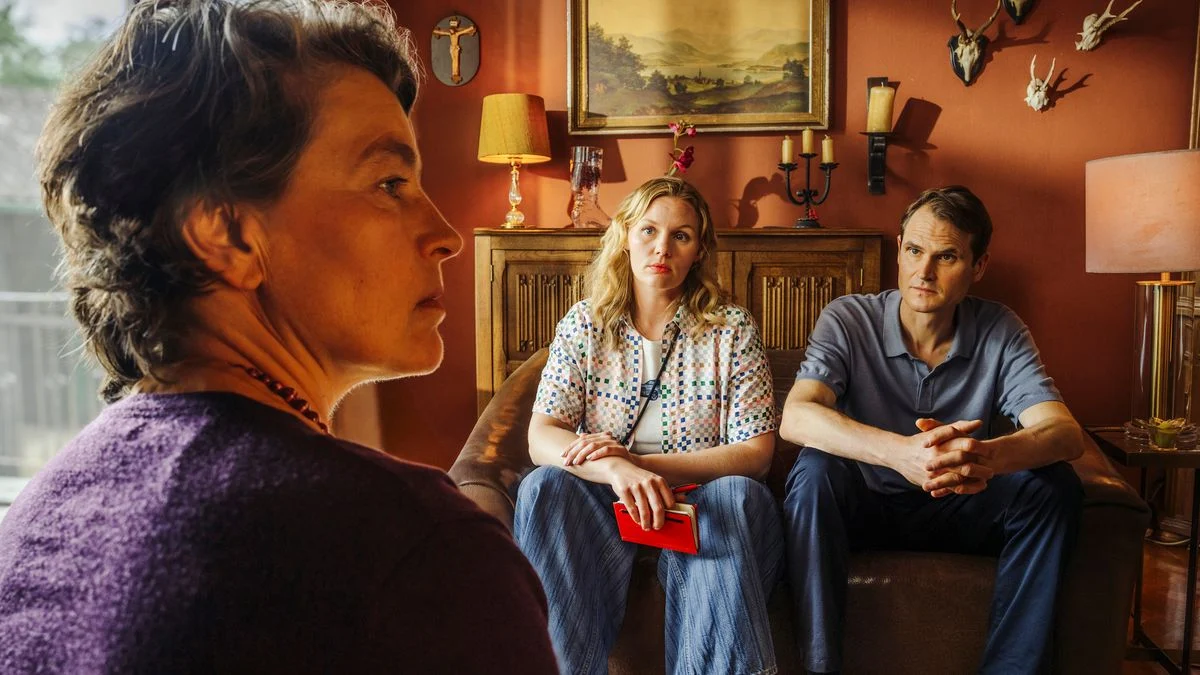
LOS ANGELES — The 2026 Emmy Awards ceremony in Los Angeles has concluded, marking a watershed moment in the history of television. In a night defined by both record-breaking sweeps and poignant farewells, the horror-comedy sensation Widow’s Bay shattered long-standing industry records, while the gritty, humanistic medical drama The Pitt solidified its status as a modern classic by defending its title as the year’s best drama.
As the industry gathers to reflect on the results of the 78th Primetime Emmy Awards, it is clear that the landscape of television is shifting toward darker, high-concept storytelling that balances technical brilliance with deep character exploration.
The Main Facts: A Night of Records
The headline of this year’s gala was undoubtedly the overwhelming success of Widow’s Bay. Produced for Apple TV+, the series—which follows the bizarre, supernatural, and darkly comedic happenings on a fictional island off the U.S. East Coast—entered the evening with 19 nominations. By the time the final trophy was handed out, it had secured 14 statues, setting an all-time record for the most wins by a comedy series in a single Emmy ceremony.
In the drama category, the competition remained fierce, but HBO Max’s The Pitt proved untouchable. For the second consecutive year, the series, which documents the high-stakes environment of a Pittsburgh emergency room, was named Best Drama Series. The win underscores the audience’s continued appetite for grounded, socially conscious storytelling that eschews melodrama in favor of nuanced, humanistic character studies.
Chronology: How the Night Unfolded
The evening began with a wave of momentum for Widow’s Bay. As the comedy categories were announced, the show’s technical mastery and writing staff were repeatedly honored, creating a "clean sweep" narrative that dominated the first two hours of the telecast.
Following the comedy segment, the focus shifted to the limited series and drama categories. The mood turned solemn and celebratory as The Pitt once again bested heavy hitters like Pluribus – Glück ist ansteckend and the political thriller Diplomatische Beziehungen.
Perhaps the most surprising moment of the night involved Welsh actor Matthew Rhys, who achieved a feat previously thought impossible. Rhys secured the Emmy for Best Male Lead in a Comedy Series for his work in Widow’s Bay, only to return to the stage later in the night to accept the award for Best Actor in a Limited Series for his haunting performance in Netflix’s The Beast in Me. Rhys now stands as the only actor in Emmy history to hold two lead-acting trophies in the same ceremony, a testament to his versatility and the sheer breadth of his talent.
Supporting Data: The Winners and the Stats
The 2026 Emmys were characterized by both the rise of new phenomena and the celebration of enduring excellence.
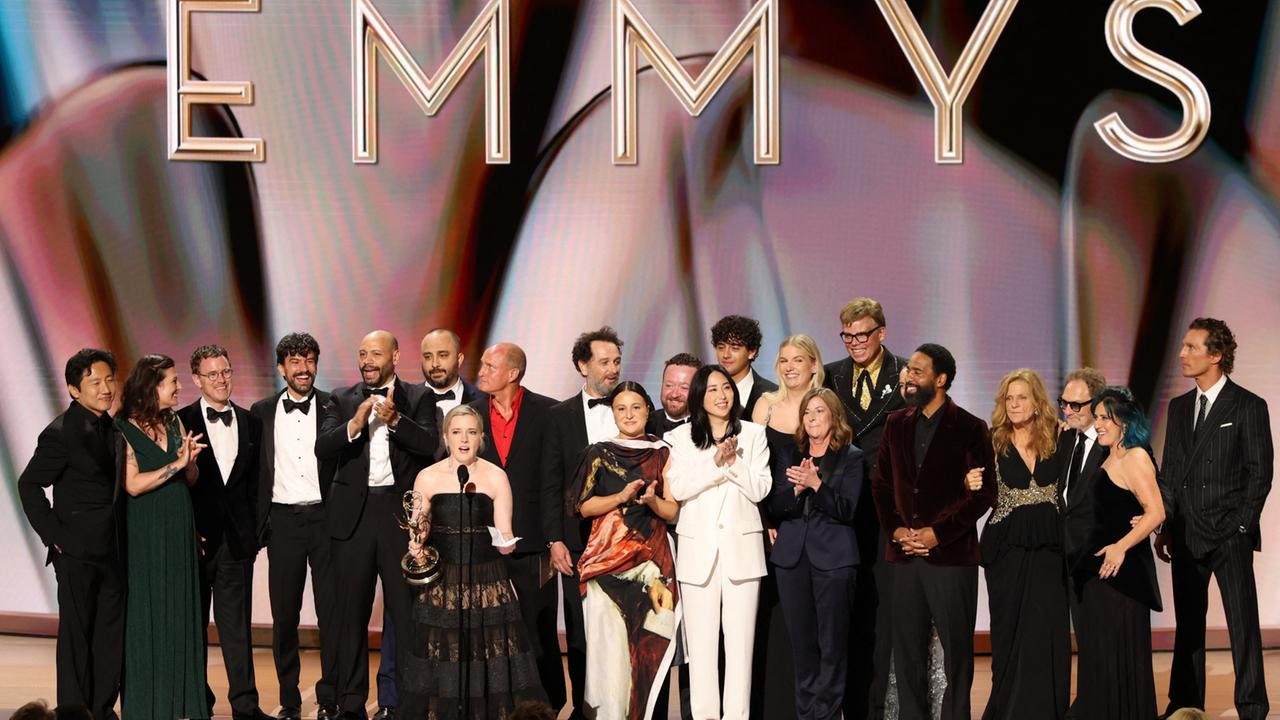
- Jean Smart’s Historic Run: For the fifth consecutive year, Jean Smart was named Best Lead Actress in a Comedy Series for her role as Deborah Vance in Hacks. As the show concludes its final season, Smart’s win cements her legacy. She is now the first performer in Emmy history to be awarded for every single season of a series that ran for more than three years, a remarkable streak that highlights her singular importance to contemporary television.
- The Breakthrough of Rhea Seehorn: After years of being considered a perennial "snub" during her time on Better Call Saul, Rhea Seehorn finally claimed her first Emmy for Best Lead Actress in a Drama Series. Her performance in the science-fiction hit Pluribus was lauded by critics for its emotional depth and intellectual rigor.
- Miniseries Dominance: DTF St. Louis took home the top prize for Best Miniseries, a category that continues to grow in prestige as major film stars increasingly pivot to short-form television storytelling.
Official Responses and Industry Sentiment
The atmosphere at the post-ceremony press junkets was one of both exhaustion and exhilaration. Showrunners for Widow’s Bay spoke at length about the "isolation of the setting" as a metaphor for the human condition, noting that the show’s success was a gamble that paid off because viewers were craving "a mix of the macabre and the mundane."
In the drama camp, the producers of The Pitt addressed their second consecutive win with humility. "We don’t look at this as a victory over other shows," said the show’s lead producer, "but as a validation that audiences still want to see the struggles of real people, in real time, in a place as chaotic as an ER."
However, not all discourse was focused on the winners. The victory of The Late Show with Stephen Colbert in the Best Variety Series category sparked significant conversation. Despite being cancelled by CBS, the show secured the win, an outcome many in the industry viewed as a statement from the Academy. While CBS cited "economic factors" for the cancellation, the industry remains deeply divided over whether the network bowed to political pressure following Colbert’s persistent, high-profile critiques of the Trump administration. The Emmy win is widely interpreted by pundits as a symbolic rebuke of the cancellation.
Implications: The Future of Prestige Television
The 2026 Emmys have set a distinct tone for the next cycle of production. First, the success of Widow’s Bay signals that "Horror-Comedy" is no longer a niche genre. Networks are expected to increase investment in high-concept, genre-bending series that utilize dark humor to address existential dread.
Second, the continued dominance of The Pitt suggests that the "humanist drama" is the gold standard for prestige television. In an era where viewers are bombarded with CGI-heavy epics and sprawling fantasy universes, the return to the intimate, character-driven hospital drama feels like a recalibration.
Finally, the controversy surrounding The Late Show points to a growing tension between creative freedom and corporate governance in late-night television. As streaming platforms and traditional networks continue to merge and restructure, the ability for satire to survive will likely be the next major battleground for Emmy-worthy programming.
As the industry looks toward 2027, the challenge for creators will be to maintain this high bar of innovation. If the 2026 awards have proven anything, it is that the audience is not just watching—they are paying close attention to the stories that challenge, unsettle, and ultimately humanize our modern experience. The Emmys have once again served as a mirror to the zeitgeist, reflecting a culture that finds comfort in the dark, the real, and the unapologetically bold.