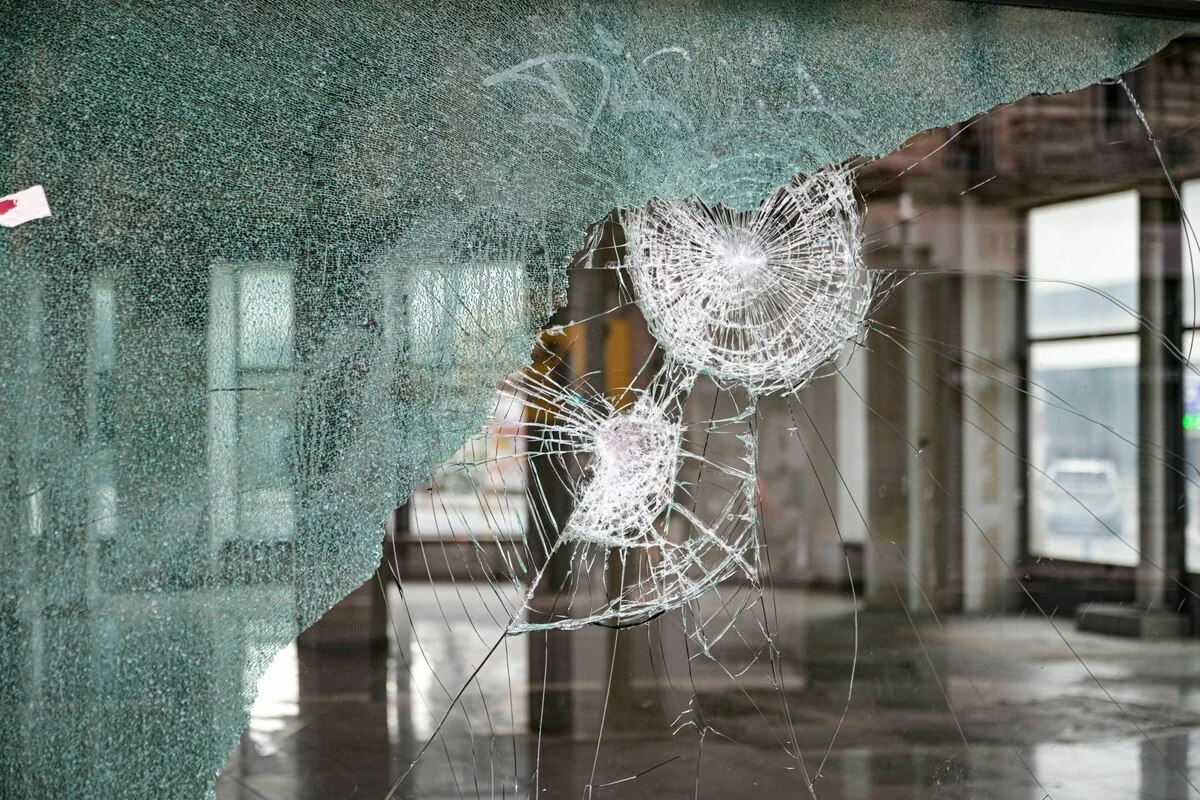
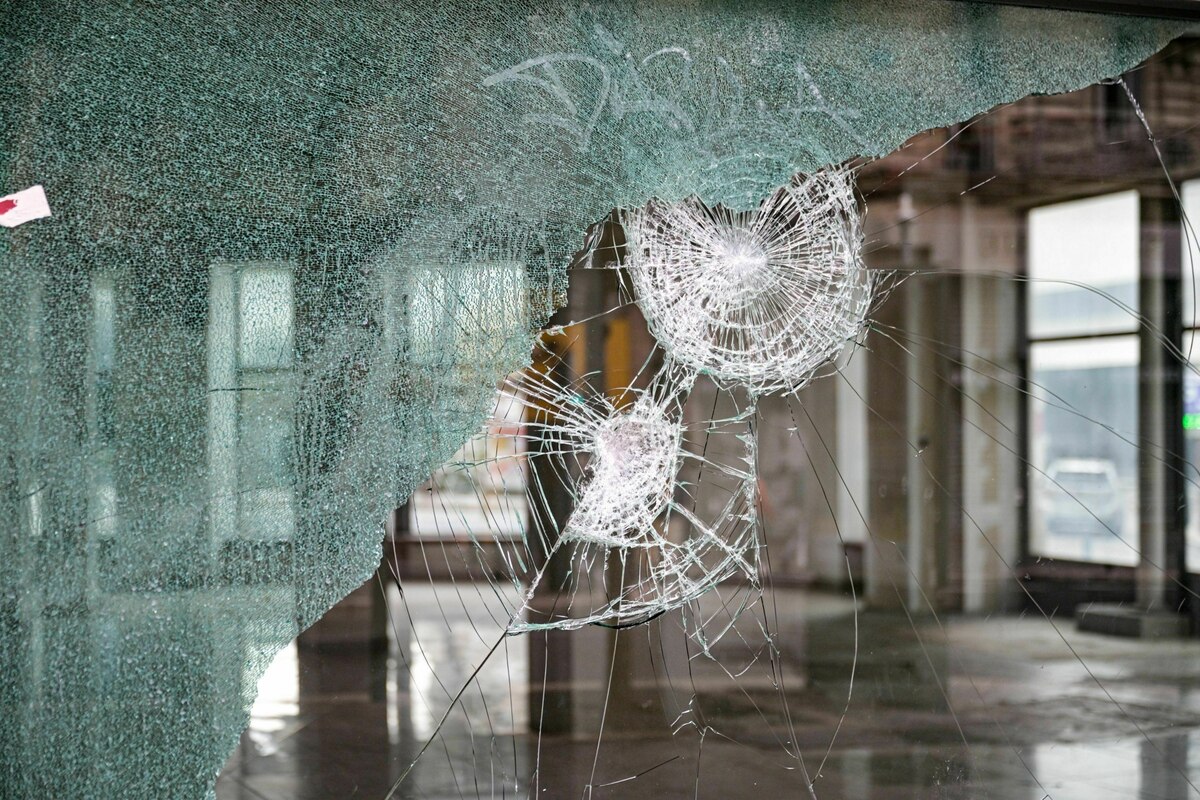
MARSEILLE, FRANCE – In the vibrant, often volatile heart of France’s second-largest city, the scars of recent unrest are starkly visible. Following a nationwide "Day of Mobilization against the expensive life" last Saturday, Marseille was left reeling from a wave of destruction, looting, and clashes that laid bare deep-seated social and political tensions. As the city attempts to sweep away the debris and mend shattered storefronts, an pervasive sense of unease lingers, intensified by the anticipation of further demonstrations and a government grappling with a spiraling crisis of legitimacy.
From luxury boutiques to essential pharmacies, the city’s central thoroughfares bear witness to the raw aftermath. Boards hastily cover gaping holes where windows once stood, and the air still carries a faint scent of burnt refuse. The red emblem of a hammer and sickle, stenciled defiantly on a shattered window of the city’s stock exchange, serves as a small yet potent symbol of the revolutionary sentiment simmering beneath the surface. This recent eruption of violence is not merely a consequence of isolated acts but a complex interplay of systemic inequality, political frustration, and opportunism that has left Marseille, and indeed much of France, profoundly shaken.
The Scars of Saturday: A City Under Siege
The "Day of Mobilization," intended as a broad protest against the rising cost of living and deteriorating conditions, particularly in schools, quickly descended into chaos in Marseille. What began as diverse, largely peaceful marches rapidly fragmented, giving way to widespread vandalism and looting that targeted an indiscriminate range of establishments. The destruction was not confined to symbols of wealth, like high-end fashion stores, but extended to local businesses catering to daily needs, exacerbating the hardship for ordinary citizens.
The sheer scale of the damage has shocked residents and authorities alike. Along the bustling streets, the visible signs of devastation are everywhere. Banks, their facades now fortified with plywood, stand as grim monuments to the fury unleashed. Pharmacies, crucial for community well-being, paradoxically remain open despite their frontages being entirely demolished, their resilience a testament to local determination amidst the disarray. "They should finally stop this crap," a woman reportedly shouted in exasperation, passing one such shattered pharmacy, her words echoing the widespread frustration.
Beyond commercial properties, the very symbols of French republicanism were attacked. The venerable door of the old city hall, strategically located on the historic port mile, was violently forced open. Inside, the iconic "Marianne," the allegorical figure personifying the French Republic, was torn from her plinth in the foyer – an act of profound symbolic defiance against the state. By Tuesday, two police officers stood guard before the barricaded entrance, a stark image of state vulnerability and the need for constant vigilance.
Echoes of Conflict: Residents Grapple with Curfews and Chaos
The recent events have plunged Marseille into an atmosphere akin to a warzone, a sentiment articulated by Julie, a 55-year-old alternative city guide. "It’s the first time in my life I’ve experienced a curfew," she stated, referencing the newly imposed restriction on minors. "As if we were in a war." She recalled the initial optimism of Saturday’s protests, noting the "peaceful and much more colorful and lively than usual" gatherings, before witnessing the rapid descent into pandemonium.
Julie described the unfolding disaster as an "unevenness" and a "completely failed coordination of state power to regain control of the situation." This perceived inadequacy of the authorities fueled further disorder. In a particularly egregious incident, the municipal police station on the bustling shopping street, Canebière, was set ablaze and remains closed indefinitely. Adjacent to it, the Monoprix department store, a popular retailer, also stands shuttered, its interior ravaged.
The aftermath revealed a grim reality of opportunistic exploitation. In front of the Monoprix, a large container brimmed with white garbage bags, filled with salvaged, yet unsellable, cosmetic products. A woman was observed waist-deep in the container, systematically opening bags and distributing intact items to children waiting below, a vivid illustration of the desperate circumstances and the blurring lines between protest and plundering. Julie, observing this scene, later commented over coffee, "The sociology of the city is clearly readable. They simply seize the opportunity to loot." This stark observation underscores the deep socio-economic fissures that contribute to such outbursts, where poverty and affluence coexist in uncomfortable proximity within Marseille’s city center.

Unpacking the Numbers: Discrepancies and Demographics
The initial reporting on the scale of the looting in Marseille quickly became a point of contention and confusion. The prefecture of the Bouches-du-Rhône metropolitan region initially announced a staggering figure of approximately 30,000 looting incidents in France’s second-largest city by Monday. This number, however, was swiftly challenged and subsequently corrected, highlighting the difficulty in assessing the extent of chaos in real-time and potentially reflecting an initial attempt to emphasize the severity of the situation.
Mayor Benoît Payan deemed the prefecture’s initial estimate "absurd," a sentiment echoed by public prosecutor Nicolas Bessone, who drastically revised the figures downwards. Bessone estimated the number of actual looters to be between 1,800 and 3,000, while confirming that approximately 8,000 rioters were involved in the broader unrest. This significant correction underscores a crucial narrative battle: whether the events were primarily driven by widespread criminal opportunism or by a smaller, more focused group of agitators.
The police response and subsequent arrests further complicated the picture. A total of 101 arrests were made, with the first individuals brought before court by Tuesday. According to the Marseilles online magazine Marsactu, those arrested were predominantly young adults. Crucially, they were not characterized as belonging to the organized "black bloc" anarchist groups often associated with violent protests, nor were they career rioters. Instead, they were described largely as "fellow travelers and occasional thieves." This demographic profile suggests that many participants were not ideologically motivated, but rather individuals swept up in the moment, seizing an opportunity amidst the breakdown of order. The unfortunate implication, as noted by the reporter, is that "hardly anyone of the real perpetrators of violence seems to have been caught." This disparity between the number of rioters and the arrests, coupled with a reported police force of only 800 officers facing an estimated 8,000 rioters, points to a severe imbalance in control and a potential strategic failure in law enforcement.
A City Divided: Political Blame Games and Accusations
The events in Marseille and other French cities have ignited a fierce political blame game, exposing the deep fractures within the country’s political landscape and further eroding trust in President Emmanuel Macron’s government. Mayor Benoît Payan, who leads a center-left coalition in Marseille, issued a scathing critique of the national government. In a joint statement with the mayors of Limoges and Paris, Payan lamented feeling "abandoned" by the state. He asserted that the prefecture had been forewarned about the potential for unrest, yet individuals were allowed to act "unhindered," suggesting a critical failure in anticipating and containing the violence.

The vacuum created by the chaos has been quickly filled by competing theories and accusations. Right-wing and conservative factions have been quick to attribute the violent excesses to the left-populist "Insoumis" (Unbowed) movement led by Jean-Luc Mélenchon, portraying the unrest as a direct consequence of their rhetoric. Mélenchon’s movement, known for its strong anti-establishment stance and appeals to marginalized communities, has become a convenient scapegoat for those seeking to deflect attention from broader systemic issues.
Concurrently, the rapid mobilization of young people from the suburbs, often facilitated by social media, is widely acknowledged as a significant factor in the escalation. These platforms provide an immediate and unregulated means for coordinating actions, bypassing traditional protest organizations and making containment by authorities incredibly difficult. There are also reports, though less prominent in Marseille, of far-right elements attempting to exploit the unrest. In Lyon, for instance, neo-Nazis openly marched through the city on Monday evening, an act that would be "unthinkable" in the historically left-leaning and diverse Marseille.
Simon, a bookseller who participated in the protests last Saturday, offered his own assessment of the complex tapestry of actors involved. "Probably a mix of everything," he mused, describing how the demonstration began "peacefully and joyfully" but "at some point became really complicated." For Simon, however, a more cynical interpretation prevails: "That was strategy: they let the violent perpetrators do their thing." This theory, gaining traction among some segments of the population, suggests a deliberate or negligent failure by authorities to intervene, perhaps to discredit the broader protest movement or to avoid direct confrontation in highly volatile situations. Regardless of the truth, such accusations further undermine public confidence in the state’s capacity and willingness to protect its citizens and maintain order.
On the Precipice: Anticipating the Next Wave of Unrest
As Marseille struggles to regain its footing, the prospect of further unrest casts a long shadow over the city. A nationwide day of action is once again announced for the upcoming Saturday, October 24th, raising fears of a repeat of the recent devastation. In a clear attempt to assert control and prevent a recurrence of uncontrolled violence, President Emmanuel Macron has declared that only demonstrations organized by recognized trade unions will be permitted. This directive, however, presents a significant challenge, as the recent unrest demonstrated a potent, often unorganized, force of disaffected youth and opportunists operating outside traditional union structures.

The prevailing mood in the city is one of deep exhaustion and frustration. "Not again" and "We’re fed up – with the riots and the Macron government" are common refrains heard on the streets. Businesses, having already sustained significant losses, are bracing for the worst. Many shops in the city center have announced they will remain closed on the upcoming Saturday as a precautionary measure, prioritizing safety over commerce. The curfew for minors remains in effect, a tacit acknowledgment of the perceived role of young people in the disorder. Further underscoring the anxiety, schools and universities in the region are now on holiday for the next week, a period that could either allow tensions to dissipate or provide more opportunity for unsupervised activity. Adding to the preventative measures, city museums have also announced their closure for the entire week.
The two police officers guarding the old town hall, now reinforced, openly express their fears of new riots. Their hope for a "peaceful course" for the upcoming protests is shared by many, yet it is tinged with apprehension. Julie and Simon, despite their mixed feelings and deep-seated frustrations, will once again take to the streets, driven by a hope for change but cognizant of the potential for further escalation.
The sun may have dried the streets of Marseille, but it has done little to soothe the inflamed tempers and profound grievances simmering beneath the surface. The recent events are not isolated incidents but symptoms of a broader societal malaise in France, characterized by persistent economic inequality, social marginalization, and a growing disconnect between the populace and its political leadership. Macron’s government, already weakened by previous challenges, faces a formidable task in restoring order, rebuilding trust, and addressing the root causes of discontent. The coming days will be crucial in determining whether France can navigate this period of intense volatility towards a path of dialogue and resolution, or if it is destined for a cycle of escalating confrontation. The fate of Marseille, a microcosm of the nation’s struggles, hangs precariously in the balance.