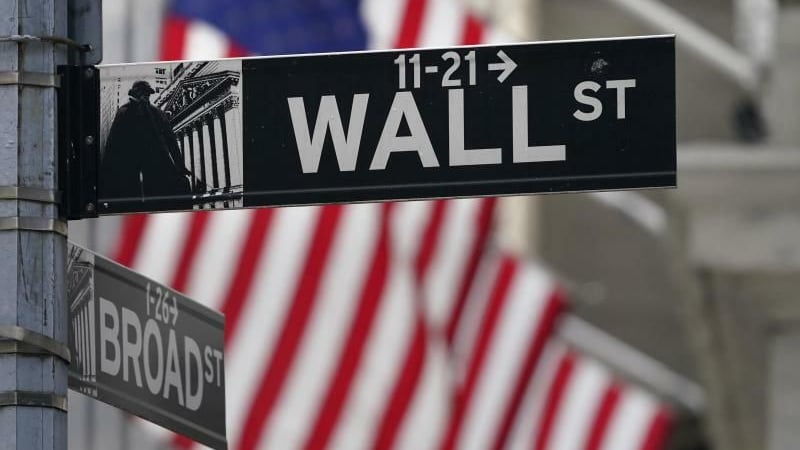
The American stock market is currently navigating a period of heightened volatility, defined by a tug-of-war between the optimism surrounding the ongoing corporate earnings season and the mounting anxiety over geopolitical instability. On Thursday, major U.S. indices, including the Dow Jones Industrial Average, the S&P 500, and the Nasdaq, experienced a session of erratic fluctuations as investors weighed the prospect of fresh military conflict in the Middle East against the backdrop of rising global energy prices.
Main Facts: The Current Market Landscape
As of the latest market session, the primary U.S. indices are exhibiting a lack of clear direction. While the Nasdaq has felt the brunt of the pressure—largely due to a sell-off in heavyweight technology stocks—the Dow Jones managed to claw its way back into positive territory during late-afternoon trading.
The primary catalysts for this nervous sentiment are two-fold:
- Energy Market Inflation: The price of crude oil has seen a significant surge, with the European benchmark Brent crude rising by 2.8 percent to nearly $112 per barrel for November delivery.
- Geopolitical Uncertainty: A report from the New York Times suggesting that U.S. and Israeli military officials are coordinating plans for potential strikes against Iran following the U.S. midterm elections on November 3rd has spooked market participants, leading to a "risk-off" environment.
Chronology of the Day’s Trading
The trading day in New York began with a cautious tone as traders digested the latest developments regarding the Middle East. By mid-morning, the negative sentiment had solidified, with investors rotating out of growth-oriented technology assets and into defensive positions.
- Early Session: The indices opened lower, reflecting overnight concerns regarding supply chain disruptions and the potential for a wider regional conflict.
- Mid-Day: As the price of oil breached the $110-per-barrel mark, inflationary fears took center stage. Technology firms, which are highly sensitive to interest rate expectations and economic stability, saw their valuations dip, dragging the Nasdaq deeper into the red.
- Late Afternoon: A late-session rally, often attributed to "dip buying" and bargain hunting by institutional investors, allowed the Dow Jones to reverse its earlier losses. This recovery suggests that despite the underlying anxiety, there remains a resilient core of market optimism tied to strong corporate balance sheets.
Supporting Data: Energy and Tech in Focus
The correlation between oil prices and equity market performance has become increasingly pronounced. Analysts note that when oil spikes due to fears of supply disruption, it creates a dual-threat for the broader market: higher operational costs for corporations and increased inflationary pressure for consumers.
Oil Price Dynamics
The 2.8 percent jump in Brent crude is largely a premium placed on the fear of supply chain bottlenecks. Markets are pricing in the risk that any military escalation involving Iran could disrupt the flow of oil through the Strait of Hormuz, a critical maritime chokepoint for global energy supplies. Market experts, including Tamas Varga of the brokerage firm PVM, have noted that current diplomatic efforts to de-escalate tensions in both the Middle East and Ukraine have failed to convince investors, leading to this sustained "fear premium" on energy assets.
Technology Sector Pressure
The Nasdaq’s underperformance is reflective of a broader shift in investor sentiment. Tech companies, which have enjoyed a multi-year bull run, are currently facing a "re-pricing" phase. High-growth, high-multiple stocks are particularly vulnerable when uncertainty rises, as investors favor the stability of value-oriented sectors over the speculative potential of the tech giants.
Official Responses and Diplomatic Context
While the New York Times report has provided the spark for the current market volatility, official channels have remained relatively tight-lipped regarding specific tactical plans. However, the diplomatic backdrop remains fraught. The U.S. government has consistently emphasized a commitment to stability in the region, yet the mention of "post-election" planning has introduced a specific timeline that the markets are now attempting to quantify in terms of risk.

The ongoing "reporting season" (corporate earnings) acts as a secondary layer of complexity. Many major U.S. firms are currently releasing their third-quarter results. While many of these reports have shown better-than-expected earnings, the market is currently choosing to focus on the "macro" narrative—the geopolitical risks—rather than the "micro" narrative—the company-specific success stories.
Implications for Global Markets
The current situation serves as a stark reminder of the interconnectedness of modern financial markets. Several key implications emerge from the current volatility:

1. The Inflationary Feedback Loop
If oil prices remain elevated, they will likely force the Federal Reserve to maintain a hawkish stance on interest rates for longer than previously anticipated. The market is currently bracing for the possibility that the "soft landing" scenario could be derailed by external supply shocks, leading to a period of "stagflation" where growth slows while prices remain high.
2. Shift in Investor Sentiment
Investors are clearly moving away from a "growth-at-any-price" mentality. Defensive sectors—such as energy, utilities, and consumer staples—are becoming the new safe havens. This rotation is likely to continue as long as the headlines from the Middle East remain dominated by potential military confrontation.

3. The "Event-Driven" Market
The market is currently entering an "event-driven" cycle. Rather than moving based on fundamental economic data like employment figures or GDP growth, the market is now moving based on the "news cycle." This makes technical analysis difficult and increases the risk of sharp, sudden reversals (as seen in the Dow Jones’ late-day recovery).
Conclusion: A Delicate Balancing Act
As the world looks toward the U.S. midterm elections, the stock market is acting as a proxy for global anxiety. The confluence of a volatile energy market and the specter of war in the Middle East has created a precarious environment for investors.

For the average retail investor, the advice remains consistent: diversification and a long-term perspective are the only reliable defenses against such rapid shifts in sentiment. While the Dow Jones’ ability to recover on Thursday provides a glimmer of hope, the underlying structural issues—inflation, energy dependency, and geopolitical fragility—are not going away. The coming weeks will likely be characterized by continued turbulence as the market attempts to reconcile corporate profitability with the grim reality of global political instability.
Investors should remain vigilant, watching not just the earnings reports, but the diplomatic signals from Washington and the regional powers in the Middle East. As history has shown, the market eventually finds its footing, but the path to that stability is rarely a straight line.

Disclaimer: This report is for informational purposes only and does not constitute financial advice. Market investments carry inherent risks.