The political landscape of Western Europe is currently grappling with a wave of widespread civil unrest that has seen major cities in France and Italy descend into chaos. From the historic boulevards of Paris to the industrial hubs of Milan and Turin, tens of thousands of citizens have taken to the streets. While the motivations behind these demonstrations are diverse—ranging from grievances over the cost of living and energy prices to concerns about educational infrastructure and national defense—the common thread is a profound disillusionment with the status quo.
As the authorities scramble to restore order, the situation has sparked an urgent debate regarding the limits of democratic protest, the role of radical elements in subverting peaceful assemblies, and the potential for external influence to exacerbate local tensions.
The Scope of the Crisis: A Nationwide Security Challenge
In France, the scale of the mobilization has pushed the national security apparatus to its limits. Interior Minister Laurent Nuñez reported that, as of the most recent weekend of action, nearly 1,000 individuals have been detained across the country. While the authorities have managed to prevent large-scale systemic looting—largely by proactively securing business districts and deploying heavy police presence—the environment remains volatile.
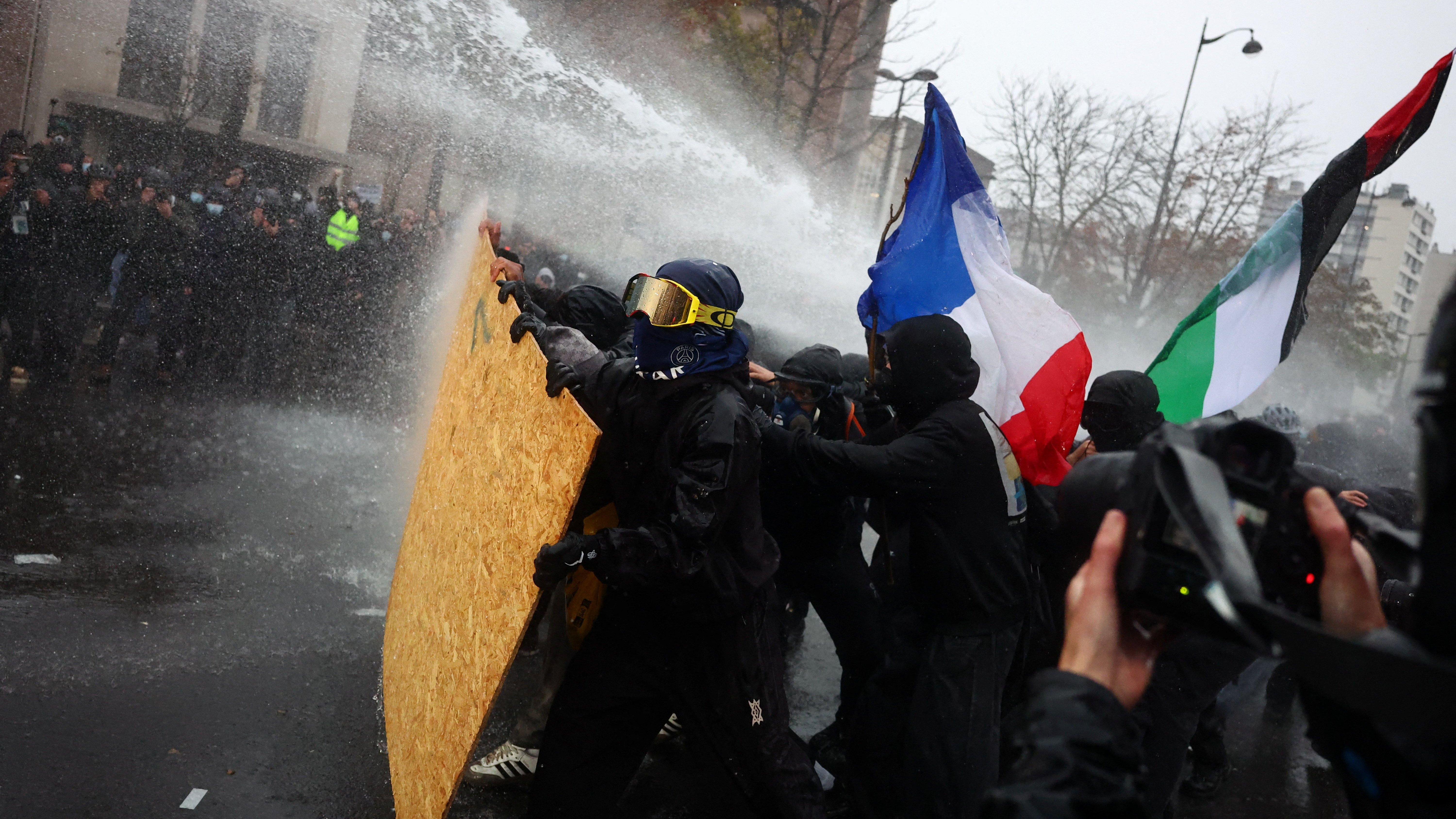
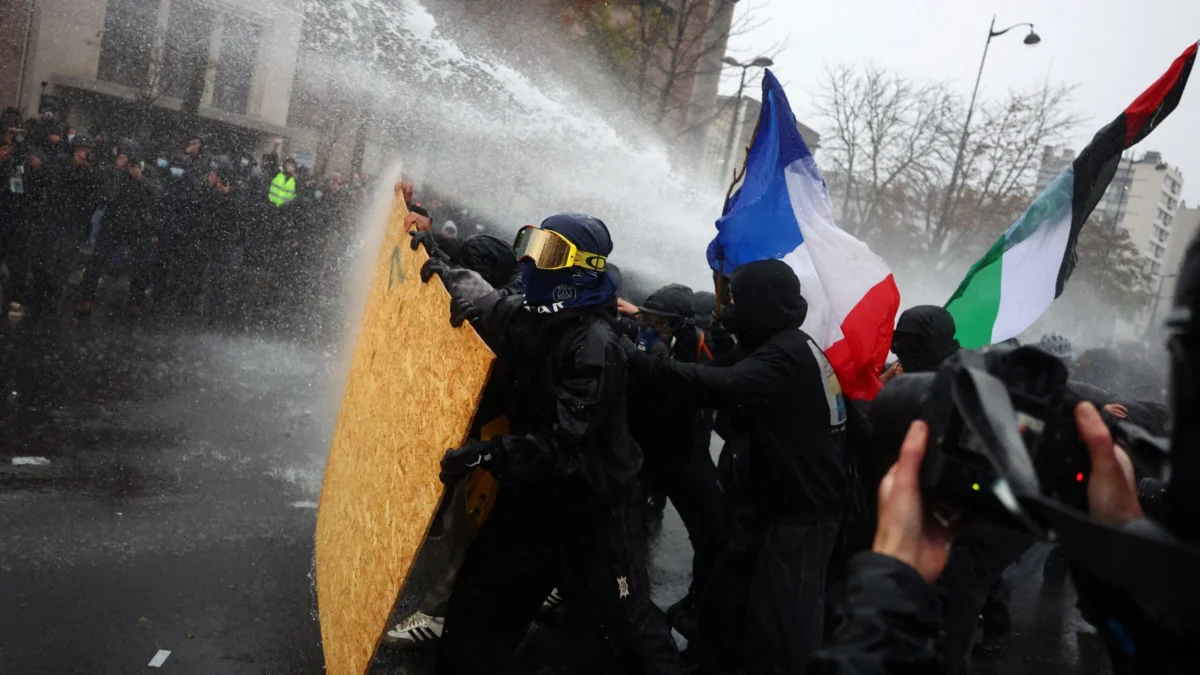
The security measures are unprecedented. Approximately 70,000 police officers and gendarmes were mobilized to maintain public order, equipped with water cannons and armored vehicles. In the capital, Paris, the atmosphere was one of grim anticipation; business owners, fearing a repeat of the destructive episodes seen in previous weeks, boarded up shop windows with reinforced plywood. Multiple cities implemented strict assembly bans and localized curfews to mitigate the risk of overnight violence.
According to official data from the Interior Ministry, approximately 410,000 people participated in the nationwide protests, with 110,000 concentrated in Paris alone. However, the sheer volume of people has created a tactical nightmare for security forces, who are tasked with distinguishing between legitimate protesters and organized "risk groups."
Chronology and Patterns of Escalation
The current unrest did not emerge in a vacuum. It follows a period of mounting tension that peaked around October 17th, when demonstrations in several French cities turned violent, resulting in significant property damage and injuries.

The French Experience
In Paris, the Prefecture reported over 3,000 individual identity checks, leading to 65 arrests in a single evening. The nature of the protests has shifted from single-issue movements—such as the youth-led campaigns for better school funding—to a broader coalition of dissent. This loose alliance includes trade unions, remnants of the "Yellow Vest" (Gilets Jaunes) movement, and far-left political factions.
Interior Minister Nuñez noted that while the majority of marches remained largely peaceful, a recurring pattern of "radicalization" was observed. "At almost every gathering, we have seen the emergence of risk groups," Nuñez explained. "They detach themselves from the peaceful processions and move with a classic, highly tactical approach designed to provoke confrontation with law enforcement." These groups, often dressed in black and masked, have been identified by the Ministry as elements of the "ultraleft," utilizing tactics such as direct attacks on security personnel and the strategic destruction of urban infrastructure.
The Italian Front: Milan, Bologna, and Beyond
The unrest has mirrored across the border in Italy, where the authorities are facing a similarly complex challenge. In cities like Milan, Bologna, Turin, and Rome, thousands have demonstrated against rising inflation, surging fuel costs, and military spending.

Milan, which experienced severe riots just one week prior, remained a flashpoint. Security forces were forced to deploy riot gear and batons to stop a demonstrator march from penetrating the city center, which had been turned into a fortress of shuttered luxury boutiques. In Bologna, police resorted to tear gas and water cannons to prevent protesters from occupying the central railway station. In Turin, officers used shield walls to push back demonstrators, while in Rome, the historic center was flooded by a large, primarily pro-Palestinian demonstration that complicated the city’s security coordination.
Official Responses and Tactical Data
The response from the authorities has been a blend of firm law enforcement and attempts at administrative containment.
Confiscated Contraband
The severity of the intent among some protesters is evidenced by the material seized by French police. During the weekend operations, authorities recovered a disturbing array of items, including heavy steel boule balls, high-powered slingshots, and even non-lethal but dangerous airsoft weapons. These seizures underscore the premeditated nature of the violence in certain quarters.

The human cost has been significant, with reports of two individuals sustaining severe injuries during confrontations in Clermont-Ferrand and Toulouse.
The Spanish Connection: Violence in Barcelona
The regional turmoil also extended to Barcelona, where hundreds of youths engaged in what local officials described as "senseless vandalism." The Spanish authorities reported approximately 100 arrests, including a significant number of minors.
Salvador Illa, the President of the Generalitat of Catalonia, condemned the events, stating, "Violence has no place in Catalonia. Never. Protesting is a democratic right; however, attacks, intimidation, and property damage are not." Barcelona Mayor Jaume Collboni added a stern warning: "We will not allow the city to be devastated. There will be consequences for the participants and, where appropriate, for those responsible for the minors involved."

Implications: The Future of Protest in Europe
The resurgence of the "Yellow Vest" spirit—manifesting in calls for a "3rd Act" of protests—suggests that the current wave of discontent is unlikely to dissipate quickly. The movement has already scheduled further demonstrations, including calls for sit-ins at the National Assembly and city halls across France.
The "Casserolade" and Social Media Mobilization
New forms of protest are also evolving. Organizers are promoting a "Casserolade" for the coming Friday, a form of protest involving the loud banging of pots and pans to signal social dissatisfaction. This tactic, historically rooted in French tradition, is being amplified by social media, which continues to play a pivotal role in organizing flash-demonstrations that evade traditional police monitoring.
The Political Capital of Chaos
A central question remains: who benefits from this instability? Observers have pointed to the risk that the current climate of disorder is being exploited by political actors to build "political capital." In cities like Orléans, the convergence of thousands of protesters to oppose a rally by the far-right Rassemblement National (RN) highlights the deep societal fractures currently being tested. With 3,000 security and emergency personnel mobilized for that specific event, the strain on national resources is becoming unsustainable.

Looking Ahead
The French and Italian governments now face the unenviable task of balancing the protection of democratic rights with the urgent need to maintain public order. The implementation of curfews and the increased use of tactical force are stopgap measures that, while effective in the short term, do not address the underlying economic and social grievances fueling the anger.
As Europe enters a period of heightened social volatility, the events of the past few weeks serve as a grim reminder of the fragility of the social contract. Whether the current protests remain a series of isolated, albeit intense, incidents or coalesce into a sustained, continent-wide movement remains to be seen. What is clear, however, is that the authorities are under immense pressure to find a path that avoids both the total breakdown of order and the potential erosion of civil liberties.
For now, the cities of France and Italy remain on high alert, with the sound of sirens and the presence of armored vehicles acting as the backdrop to a continent struggling to find its footing in an era of persistent crisis.