A catastrophic train derailment in the picturesque county of East Sussex, southeastern England, has sent shockwaves across the region, leaving dozens injured and disrupting vital transport links. The incident, which occurred late on a summer afternoon, saw several carriages of a passenger train overturn, prompting a large-scale emergency response and sparking immediate concern from government officials.
LEWES, EAST SUSSEX – August 13, 2026 – The tranquility of the East Sussex countryside was shattered late Thursday afternoon when a passenger train veered off the tracks near the historic town of Lewes. The dramatic incident, which eyewitnesses described as a sudden and violent jolt, resulted in multiple carriages of the train overturning, creating a scene of chaos and prompting an immediate and extensive emergency operation.
Initial reports from the scene indicate that approximately 150 individuals were on board the train at the time of the derailment. While the primary focus of rescue efforts has been on treating the injured, authorities have confirmed that, thankfully, there have been no fatalities. However, the human cost of the disaster is still being assessed, with a significant number of passengers sustaining injuries, ranging from minor to severe.
The derailment occurred on a stretch of railway line between the towns of Haywards Heath and Lewes, areas renowned for their rolling hills and popular with both local commuters and tourists. The exact cause of the catastrophic failure remains unknown, and an urgent investigation has been launched by the Rail Accident Investigation Branch (RAIB), the United Kingdom’s independent body responsible for investigating rail incidents.
The Incident: A Sudden Descent into Chaos
The derailment took place around late afternoon, casting a pall over what would typically be a routine journey for many passengers. Eyewitness accounts, some shared through social media and corroborated by preliminary media reports, paint a harrowing picture of the moments leading up to and immediately following the incident. Passengers described a sudden, violent lurch, followed by the terrifying sounds of metal grinding against metal and the unmistakable sensation of the train leaving its intended path.
"It felt like the world was being shaken apart," recounted Sarah Jenkins, a passenger who was in one of the less affected carriages. "One minute we were cruising along, the next there was this horrific noise and we were thrown around. People were screaming. It was absolute pandemonium."
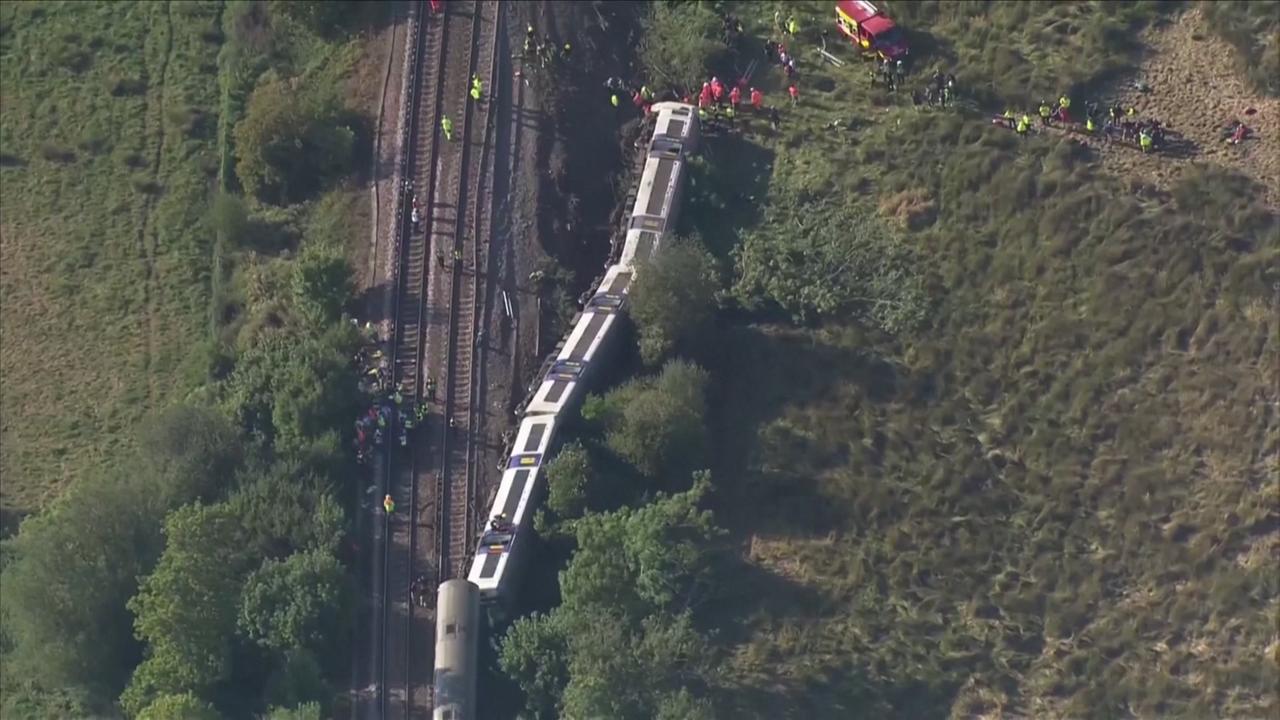
Aerial footage captured by the BBC helicopter shortly after the incident revealed the stark reality of the derailment. Several of the rear carriages of the train were seen lying on their sides, some precariously balanced, with debris scattered across the embankment and surrounding fields. In a poignant testament to the chaotic nature of the event, some individuals could be seen standing on the overturned carriages, apparently seeking safety or assessing the damage.
Emergency services, including ambulance crews, fire brigades, and police, were dispatched to the scene with remarkable speed. The remote location of the derailment presented logistical challenges for responders, but a coordinated effort ensured that medical assistance was swiftly provided to those in need. The local NHS trust confirmed that a number of patients were transported to nearby hospitals, with two individuals reported to be suffering from serious injuries and nine others sustaining less severe wounds.
Chronology of Events and Initial Response
While a definitive timeline of the derailment is still being pieced together by investigators, the following provides a preliminary chronology of the key events based on available information:
- Late Afternoon, August 13, 2026: A passenger train, operated by Southern Rail, en route between Haywards Heath and Lewes, derails.
- Immediate Aftermath: Eyewitnesses report chaos and distress. Emergency services are alerted.
- Within Minutes: First responders arrive at the scene, establishing a casualty clearing station and beginning rescue operations.
- Early Evening: Aerial footage from the BBC highlights the scale of the damage, showing overturned carriages.
- Evening: The number of injured passengers is confirmed, with authorities stating no fatalities. Hospitals begin receiving casualties.
- Late Evening: Transport Minister Heidi Alexander issues a statement expressing concern and pledging support. The RAIB announces its involvement in the investigation.
- Ongoing: Rescue and recovery operations continue. Disruption to rail services is significant.
The prompt deployment of emergency services was crucial in mitigating the impact of the incident. The South East Coast Ambulance Service, working in conjunction with other regional NHS trusts, established a robust triage and treatment system at the scene. Firefighters were instrumental in extricating passengers trapped within the mangled carriages, while police worked to secure the area and manage the influx of emergency personnel and media.
Supporting Data and Operational Impact
The derailment has had a profound and immediate impact on the region’s rail network. Southern Rail, the operator of the affected service, confirmed that the incident has led to the cancellation of numerous services and significant delays on routes across the southeastern part of the country. The line between Haywards Heath and Lewes has been closed indefinitely, forcing passengers to seek alternative travel arrangements, including bus replacements, which are themselves facing considerable strain.
The economic implications of such a significant disruption are also noteworthy. East Sussex, a popular tourist destination, relies heavily on its rail links to connect with London and other major cities. The extended closure of this vital artery is likely to affect local businesses, particularly those in the tourism and hospitality sectors, during the peak summer travel season.
Furthermore, the incident raises broader questions about the state of the UK’s railway infrastructure and the safety protocols in place. While the RAIB’s investigation will undoubtedly delve into the specific circumstances of this derailment, it is part of a wider conversation about the ongoing need for investment and maintenance in an aging rail network. Data from the Office of Rail and Road (ORR) consistently highlights the importance of infrastructure integrity in preventing such incidents.
Official Responses and Statements
The gravity of the situation was reflected in the swift and concerned responses from various official bodies and political figures.
Transport Minister Heidi Alexander issued a statement on X (formerly Twitter) expressing her deep concern over the incident: "I am deeply concerned to hear about the train derailment in East Sussex this afternoon. My thoughts are with all those affected. We are working closely with the railway industry and local partners to ensure passengers receive the help they need and that services are restored as quickly and safely as possible."
The Minister’s statement underscored the government’s commitment to understanding the cause of the derailment and supporting those impacted. Her mention of working with "local partners" suggests a multi-agency approach to both the immediate response and the long-term recovery of the affected area.
The Rail Accident Investigation Branch (RAIB) has officially launched an investigation into the derailment. A spokesperson for the RAIB stated: "Our team of inspectors has been deployed to the scene in East Sussex to begin an investigation into the circumstances surrounding this derailment. We will be working closely with Network Rail, Southern Rail, and other stakeholders to determine the cause of the incident and identify any safety recommendations." The RAIB’s reports are typically comprehensive, providing detailed analysis and contributing significantly to railway safety improvements across the UK.
Southern Rail, the train operating company, issued a statement acknowledging the incident and apologizing for the disruption. "We are working with emergency services to respond to the incident near Lewes. The safety of our passengers and staff is our top priority. We are investigating the cause of the derailment and will provide further updates as soon as possible. We advise passengers to check our website for the latest travel information." The company’s focus on "safety" and "investigation" is standard procedure, but the scale of this incident will undoubtedly place significant scrutiny on their operations.
Local authorities in East Sussex have also been actively involved, coordinating with emergency services and providing support to affected communities. The county council has set up a helpline for concerned relatives and has been working to manage the logistical challenges posed by the disruption.
Implications and Future Outlook
The East Sussex train derailment serves as a stark reminder of the inherent risks associated with rail travel, even in a country with a generally strong safety record. The investigation by the RAIB will be crucial in determining the root cause, whether it be track defects, human error, rolling stock failure, or external factors. The findings will likely lead to a review of safety procedures and potentially significant investment in infrastructure upgrades.
The incident also highlights the importance of effective emergency response planning and inter-agency cooperation. The speed and efficiency with which emergency services were deployed and operated in challenging circumstances are commendable. However, the aftermath will involve a complex process of recovery, including the removal of damaged carriages, repair of the track, and a thorough investigation that could take months, if not longer.
For passengers, the immediate concern is recovery and support. The long-term implications for the rail network in the region will depend on the duration of the line closure and the scale of the necessary repairs. The incident is also likely to reignite public debate about the funding and modernization of the UK’s railway system. As the investigation unfolds, the nation will be watching closely, hoping for answers and a renewed commitment to ensuring the safety and reliability of its rail infrastructure. The resilience of the affected communities and the dedication of the emergency responders will undoubtedly play a significant role in navigating the difficult days and weeks ahead.