

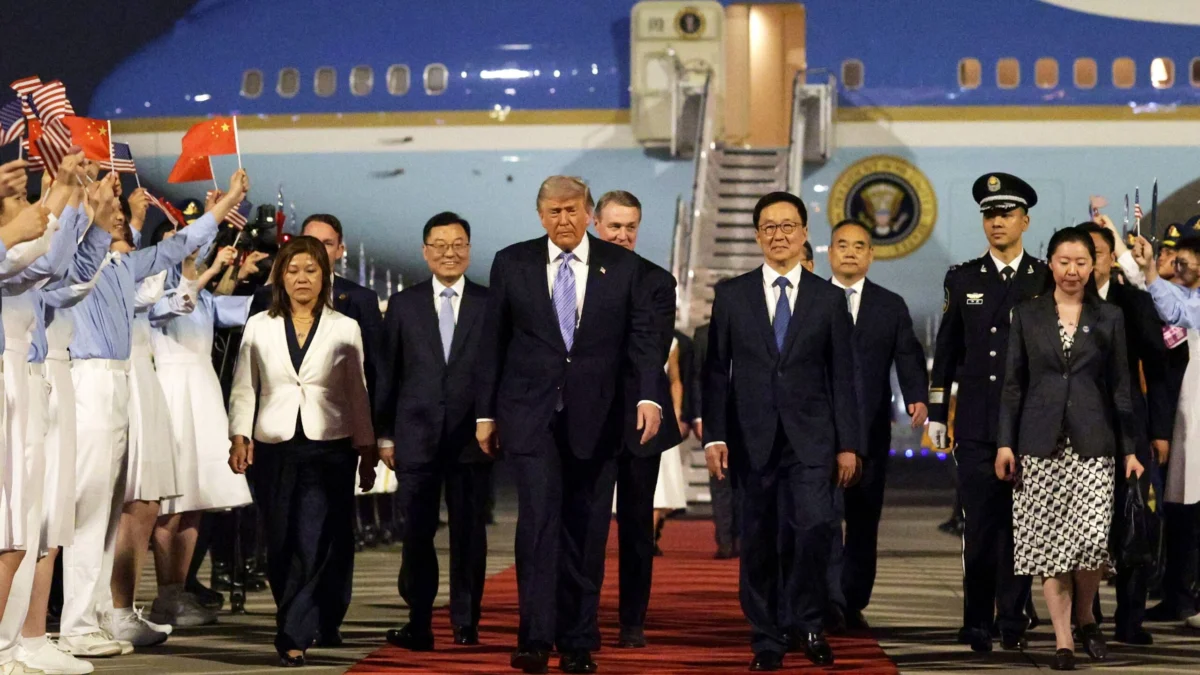
Beijing, Washington, Tokyo – May 13, 2026 – US President Donald Trump has once again landed in Beijing, marking a pivotal moment in the complex and often contentious relationship between the world’s two largest economies. Received with a meticulously orchestrated display of pomp and circumstance, including a military honour guard and hundreds of flag-waving youths, Trump’s arrival on Wednesday evening (local time) set the stage for crucial discussions with Chinese President Xi Jinping on Thursday and Friday. This visit, the first by a US President to Chinese soil since late 2017, finds the hosts considerably more self-assured and assertive on the global stage, raising significant anxieties among China experts within the US administration.
The spectre of a "rotten deal" looms large, with American officials privately expressing fears that President Trump might compromise critical US interests for superficial gains – a "handful of soybeans," as one insider revealed to Handelsblatt – in pursuit of easy headlines. Despite years of accusing China of "ripping off" the United States through its substantial export surplus, Trump has consistently lauded Xi Jinping as "a great gentleman," a sentiment that belies the increasingly repressive nature of China’s domestic and international policies under Xi’s leadership. This meeting, coming at a time of heightened geopolitical tensions and economic competition, is expected to grapple with three primary points of contention that continue to define the bilateral relationship and shape the future of global order.
A Red Carpet Welcome Masks Deep Divisions
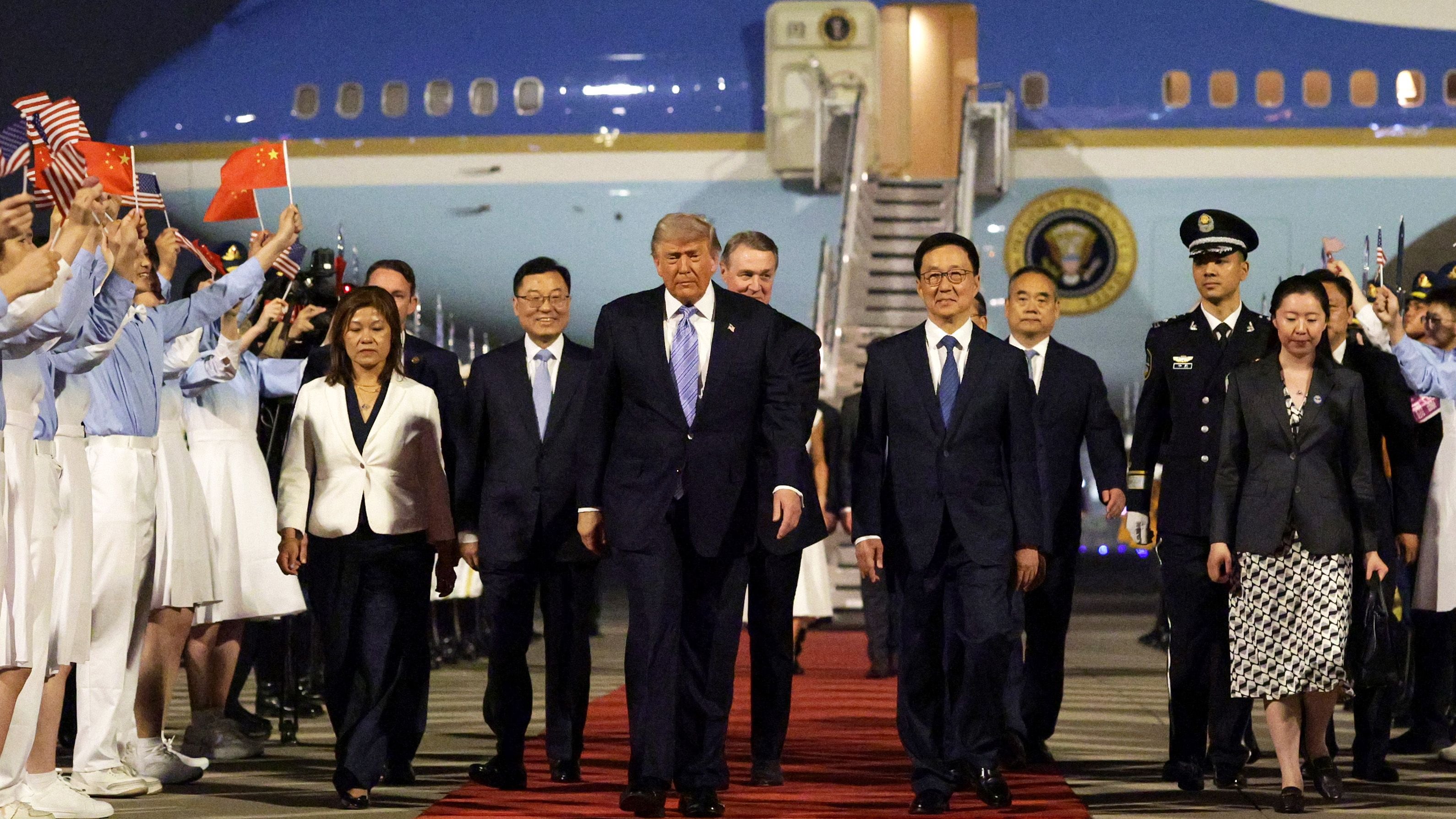
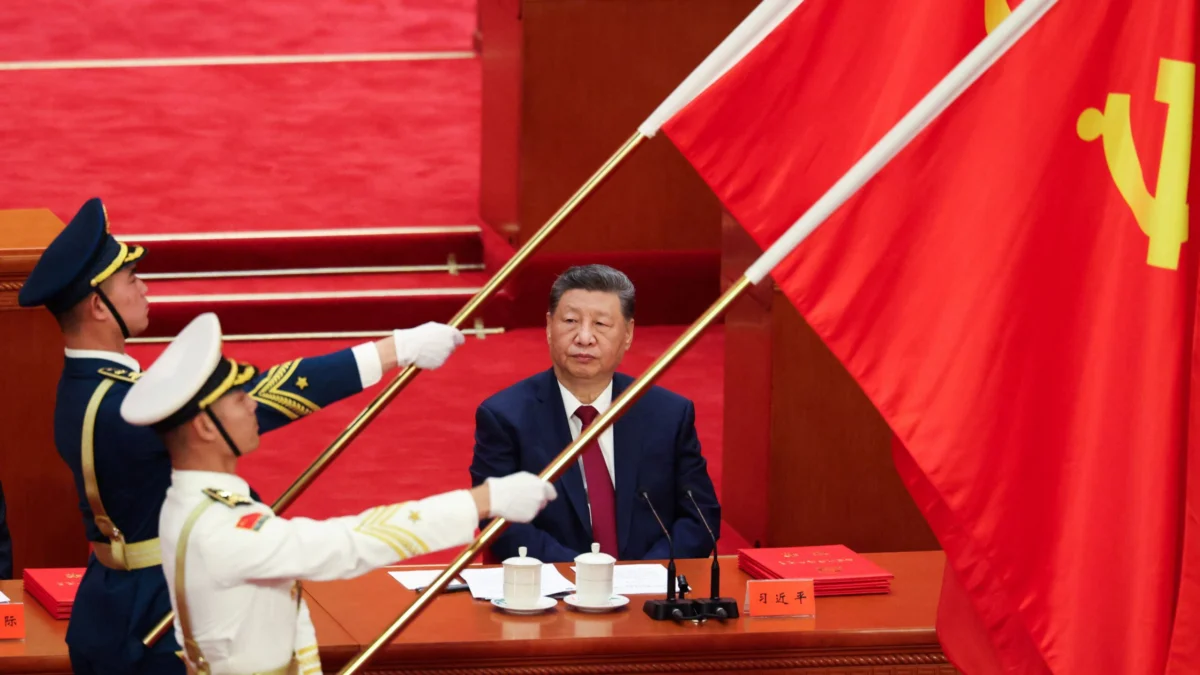
President Trump’s reception in Beijing was a masterclass in diplomatic pageantry, designed to project an image of robust bilateral relations and mutual respect. Vice President Han Zheng personally greeted Trump, underscoring the high-level importance China attaches to the visit. The meticulously arranged welcome ceremony, complete with an honour guard and a vibrant display of American and Chinese flags waved by impeccably dressed young people, served as a powerful visual testament to China’s rising global stature and its capacity for grand-scale hospitality.
However, beneath this veneer of cordiality lies a chasm of profound disagreements and strategic mistrust. This meeting transcends mere transactional diplomacy; it is a clash of ideologies, economic systems, and visions for the 21st century. The last time a US President visited Beijing, in late 2017, the world was on the cusp of a trade war that would reshape global commerce. Since then, the geopolitical landscape has shifted dramatically, with China consolidating its power, expanding its influence, and challenging the US-led international order more directly. The elaborate welcome, therefore, can be seen as both a traditional diplomatic gesture and a subtle assertion of China’s enhanced confidence and position on the world stage.
A Chronology of Confrontation and Cooperation
The relationship between the United States and China has been characterized by an oscillating dynamic of engagement and competition since the Nixon administration’s historic opening in the early 1970s. For decades, US policy largely embraced the idea that economic integration would inevitably lead to political liberalization in China, a notion that has largely been disproven by subsequent events.
The early 2000s saw China’s accession to the World Trade Organization (WTO), further embedding it into the global economic system. While this spurred unprecedented economic growth for China and provided cheap goods for Western consumers, it also exacerbated concerns in the US about unfair trade practices, intellectual property theft, and a lack of reciprocity in market access.
Donald Trump’s first presidency, beginning in 2017, marked a significant pivot in US foreign policy towards China. Moving away from the engagement-heavy approaches of his predecessors, Trump adopted a confrontational stance, particularly on trade. His visit to Beijing in November 2017, shortly after taking office, was notable for its opulent reception and a series of large-scale business deals announced, which Trump hailed as a success. However, these deals failed to address the systemic trade imbalances or structural issues that concerned many US experts.
The subsequent years saw the imposition of tariffs on billions of dollars worth of Chinese goods, igniting a full-blown trade war. Beyond economics, tensions escalated over China’s militarization of the South China Sea, its human rights record in Xinjiang and Hong Kong, and its increasingly assertive posture towards Taiwan. The COVID-19 pandemic further strained relations, leading to accusations and counter-accusations regarding its origin and management.
This hypothetical 2026 visit therefore occurs against a backdrop of deeply entrenched rivalry, where the initial hopes of strategic partnership have given way to a recognition of long-term strategic competition. The current meeting is not merely a bilateral discussion but a barometer of the global power struggle, reflecting years of evolving policy and escalating friction.
The Three Pillars of Discord: Key Contentious Issues
The forthcoming discussions between President Trump and President Xi are expected to be dominated by three overarching areas of disagreement that represent fundamental divergences in national interest and geopolitical strategy.
1. The Persistent Trade Imbalance and Unfair Practices
At the forefront of US concerns remains the vast trade deficit with China, which President Trump has consistently characterized as a symptom of China "ripping off" American workers and industries. While the intricacies of global supply chains make a simplistic accounting difficult, US policymakers point to a range of structural issues within China’s economic model that they argue create an uneven playing field.
Key grievances include:
- Intellectual Property Theft and Forced Technology Transfer: US companies operating in China have long reported pressures to transfer proprietary technology to Chinese partners as a condition for market access, along with widespread intellectual property infringement. This not only undermines American innovation but also fuels China’s rapid technological advancement.
- State Subsidies and State-Owned Enterprises (SOEs): Critics argue that massive state subsidies for Chinese industries, particularly in strategic sectors like steel, aluminium, and high-tech manufacturing, distort global markets by allowing Chinese companies to operate at an unfair cost advantage. SOEs, backed by the state, often enjoy preferential treatment and lack the market discipline of private firms.
- Market Access Barriers: Despite China’s WTO commitments, many US industries, particularly in services, finance, and technology, face significant non-tariff barriers, restrictive licensing requirements, and opaque regulatory processes that limit their ability to compete fairly in the Chinese market.
- Currency Manipulation: Although less prominent in recent years, past accusations of China deliberately devaluing its currency to boost exports have contributed to the perception of unfair trade practices.
The fear among US experts is that President Trump, known for his transactional approach, might be swayed by Chinese offers of large-scale purchases of American agricultural products or energy – a "handful of soybeans" – without securing fundamental, structural changes to China’s economic system. Such a deal, while offering immediate positive headlines, would fail to address the systemic issues that continue to disadvantage US businesses and workers in the long run.
2. North Korea’s Nuclear Ambitions and Regional Stability
The denuclearization of North Korea remains a critical, albeit often frustrating, point of convergence and divergence for Washington and Beijing. Both nations share an interest in preventing a nuclear-armed North Korea from destabilizing the Korean Peninsula and the broader Indo-Pacific region. However, their approaches and priorities diverge significantly.
The US has consistently pressed China, as North Korea’s primary economic lifeline and diplomatic protector, to exert greater pressure on Pyongyang to abandon its nuclear weapons program. Beijing, while endorsing UN sanctions, has often been reluctant to fully enforce them, fearing a complete collapse of the North Korean regime could lead to instability on its border, a refugee crisis, and potentially a US-aligned, unified Korea.
During his first term, President Trump notably engaged in unprecedented direct diplomacy with North Korean leader Kim Jong Un, with China playing a mediating role at times. However, these efforts ultimately failed to achieve denuclearization. The current meeting provides another opportunity, or perhaps a last resort, to re-engage China on this intractable issue.

The US seeks a more robust commitment from China to enforce sanctions, curtail illicit trade, and use its diplomatic leverage to bring Pyongyang back to meaningful negotiations. China, in turn, often advocates for a phased approach, emphasizing dialogue and sanctions relief, which the US views as premature given North Korea’s continued development of its arsenal. The strategic implications are vast, as North Korea’s nuclear capabilities continue to pose a direct threat to US allies like South Korea and Japan, and by extension, to US security interests in the region.
3. Geopolitical Chessboard: South China Sea, Taiwan, and Human Rights
The third major area of contention encompasses a range of interconnected geopolitical and ideological disputes, reflecting a fundamental clash over regional hegemony and universal values.
- South China Sea Militarization: China’s aggressive territorial claims and its rapid militarization of artificial islands in the South China Sea remain a flashpoint. The US, upholding international law and freedom of navigation, conducts regular "freedom of navigation operations" (FONOPs) in these disputed waters, which China views as provocative. The ongoing construction of military facilities on these islands threatens regional stability and challenges the security interests of US allies and partners in Southeast Asia.
- Taiwan’s Sovereignty: Taiwan’s status is perhaps the most sensitive issue in US-China relations. Beijing views Taiwan as an inalienable part of "one China" and has not ruled out the use of force to achieve unification. The US, while acknowledging the "One China Policy," has historically maintained strategic ambiguity regarding Taiwan’s defence and provides defensive weaponry to the island. Any perceived shift in US policy, or increased Chinese military assertiveness towards Taiwan, could trigger a severe crisis.
- Human Rights Abuses: Under Xi Jinping, China’s human rights record has deteriorated significantly. The mass internment of Uyghurs and other Muslim minorities in Xinjiang, the systematic crackdown on democracy and dissent in Hong Kong, and ongoing repression in Tibet and against human rights lawyers and activists across mainland China draw strong condemnation from the international community and the US. These issues are not merely internal affairs for China but are increasingly viewed by the US as a challenge to universal values and the rules-based international order.
These interconnected issues highlight the broader ideological struggle between democratic principles and authoritarian governance, casting a long shadow over any attempts at pragmatic cooperation.
Divided Counsel: Fears Within the US Administration
The concerns voiced by "China experts in the US government" are not merely speculative; they reflect a deep-seated apprehension rooted in past experiences and a nuanced understanding of China’s strategic objectives. These experts, often career diplomats, intelligence analysts, and policy advisors, fear that President Trump’s preference for personal diplomacy and grand gestures could inadvertently undermine long-term American strategic interests.

Their primary worry is that China, adept at strategic negotiation and long-term planning, might offer enticing, short-term economic concessions – such as commitments to purchase US goods – in exchange for a reduction in US pressure on more fundamental issues like intellectual property theft, state subsidies, or human rights. Such a "faulen Deal" (rotten deal) would allow China to continue its structural economic advantages and geopolitical assertiveness, while the US might declare victory based on easily quantifiable trade figures.
Furthermore, there is a perceived tension between President Trump’s personal rapport with President Xi – often expressed through effusive praise – and the more hawkish elements within his administration who advocate for a robust, comprehensive strategy to counter China’s rising influence. These internal divisions could weaken the US negotiating position and present an opportunity for China to exploit perceived inconsistencies.
Many US strategists argue for a unified front, emphasizing that China’s challenges extend beyond trade to national security, technological dominance, and ideological competition. They advocate for maintaining pressure across all fronts, including human rights and regional security, to ensure that any deal struck addresses the systemic nature of the US-China rivalry rather than just its symptoms.
Xi’s Ascendant China: A New Global Posture
The "much more self-confident hosts" greeting President Trump in Beijing reflect a transformed China under Xi Jinping. Since his ascent to power, Xi has consolidated authority, dismantled internal opposition, and launched ambitious domestic and international initiatives that underscore China’s determination to reclaim what it perceives as its rightful place at the centre of the global order.

Domestically, Xi has championed the "China Dream," a vision of national rejuvenation that entails economic prosperity, military strength, and cultural pride. This vision is underpinned by a tightening grip on political dissent, extensive surveillance technologies, and a concerted effort to promote party ideology across all facets of society. The increasingly repressive internal environment, as noted in the original article, stands in stark contrast to the democratic values the US purports to uphold.
Internationally, China’s confidence is manifest in several key initiatives:
- The Belt and Road Initiative (BRI): This colossal infrastructure project aims to connect Asia, Africa, and Europe through a network of roads, railways, ports, and pipelines, extending China’s economic and political influence across continents.
- Technological Ambition: Programmes like "Made in China 2025" signal China’s drive to become a global leader in high-tech manufacturing, reducing its reliance on foreign technology and challenging the dominance of Western tech giants.
- Military Modernization: China has embarked on an extensive military modernization programme, rapidly expanding its navy, air force, and missile capabilities, particularly in the Indo-Pacific, challenging US military primacy in the region.
- Multilateral Engagement: While pushing its own agenda, China has also become a more active player in international organizations, seeking to reshape global governance in ways that align with its interests and values.
This assertiveness means that Xi Jinping approaches negotiations with a strong hand, less inclined to make concessions that might compromise his long-term strategic objectives. The "great gentleman" persona Trump attributes to Xi is often seen by experts as a calculated diplomatic manoeuvre by the Chinese leader, designed to disarm and influence foreign counterparts while pursuing a clear and unyielding national agenda.
Implications for the Global Order
The outcome of the Trump-Xi meeting in 2026 holds significant implications not only for bilateral relations but for the broader global order. A successful, substantive dialogue could potentially de-escalate tensions, open new avenues for cooperation on issues like climate change or pandemic preparedness, and inject a degree of predictability into international affairs. However, given the deep-seated structural issues and ideological divergences, such an outcome appears challenging.

Conversely, a superficial agreement that fails to address core grievances could exacerbate existing frustrations, leading to renewed trade disputes, increased geopolitical competition, and a further erosion of trust. The risk of miscalculation remains high, particularly in flashpoints like the South China Sea or Taiwan, where even minor incidents could rapidly escalate.
The long-term trajectory points towards a continued era of strategic competition, where the US and China vie for influence across economic, technological, and military domains. This competition will inevitably impact global alliances, trade patterns, and the future of multilateral institutions. Nations worldwide, from Europe to Southeast Asia, will closely watch the interactions between Trump and Xi, as their relationship continues to define the geopolitical landscape of the 21st century, challenging the very foundations of the liberal international order that has prevailed for decades. The stakes could not be higher.



















Leave a Reply