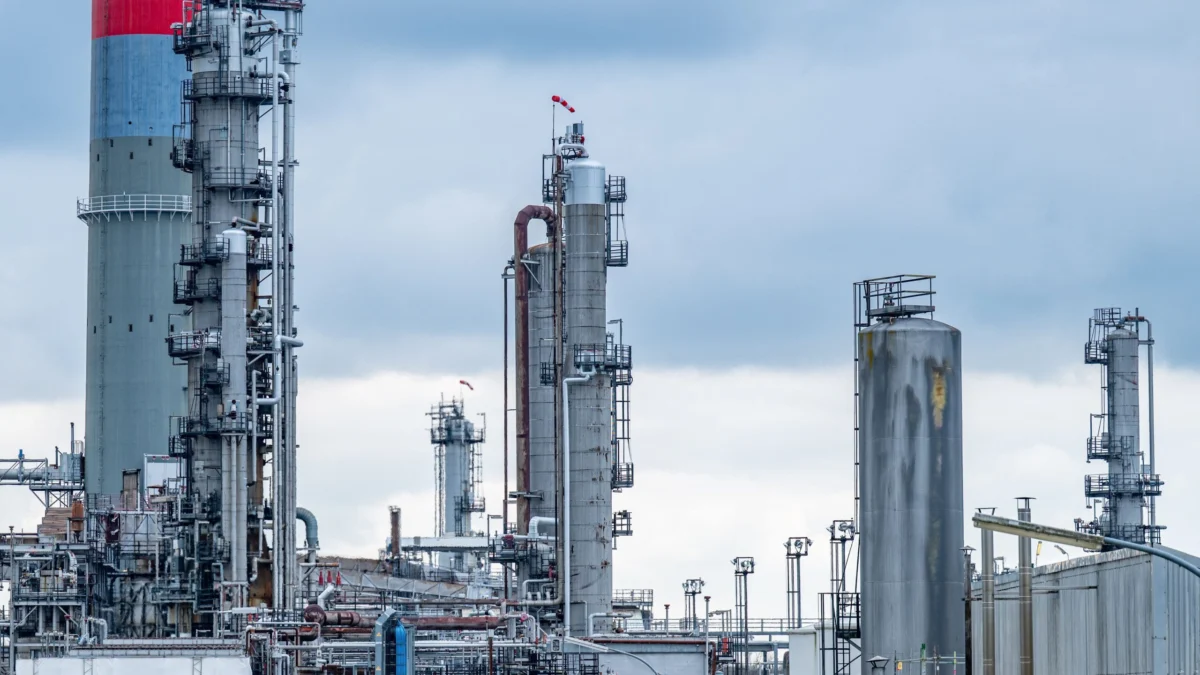
Berlin, Germany – In a pivotal move aimed at balancing industrial resilience with ambitious climate goals, the German federal government has launched a comprehensive dialogue to forge a national refinery strategy. Spearheaded by the Ministry of Economic Affairs, led by CDU politician Katherina Reiche, this initiative seeks to ensure the long-term viability of Germany’s crucial refinery sites while simultaneously accelerating their transformation towards climate-friendly energy sources and production methods. The strategy underscores a complex but critical dual objective: safeguarding a vital industrial backbone that underpins numerous sectors, from automotive to pharmaceuticals, even as the nation commits to a decarbonized future.
The announcement marks the beginning of an extensive consultation process involving key stakeholders from the mineral oil industry, federal states, trade unions, and other affected industrial branches. The ultimate goal is to present a robust and forward-looking refinery strategy to the federal cabinet, positioning the preservation of Germany’s refinery capacities as a strategic imperative for its industrial policy. This strategic pivot acknowledges the indispensable role these facilities play not only in fuel supply but also in providing essential precursors for a wide array of manufacturing processes, the absence of which could trigger severe economic repercussions.
Germany currently boasts eleven refinery sites with an impressive annual processing capacity exceeding 92 million tons of crude oil. These facilities are more than just producers of gasoline and diesel; they are intricate industrial complexes that yield a spectrum of vital products, including jet fuel, heating oil, lubricants, asphalt, and, critically, naphtha and other petrochemical feedstocks indispensable for the chemical and pharmaceutical industries. The challenge, as articulated by the Ministry, lies in transitioning these energy-intensive and historically fossil-fuel-dependent operations into sustainable hubs, a transformation that will necessitate investments running into billions of euros.
The government’s proactive stance reflects a growing awareness of the structural pressures facing the European refinery industry, coupled with an unwavering commitment to national energy security and industrial sovereignty in an era of geopolitical volatility and climate urgency. This strategy is not merely about adapting to change; it is about actively shaping the future of a foundational industry, ensuring its continued contribution to Germany’s economic strength and its journey towards a carbon-neutral economy.
Deep Dive into the Strategy’s Genesis: A Chronology of Necessity
The initiation of Germany’s refinery strategy is not an isolated event but rather the culmination of mounting pressures and evolving priorities over recent years. For decades, Germany’s refinery landscape has been a cornerstone of its industrial might, ensuring a steady supply of energy and raw materials for its highly developed economy. However, the confluence of several factors has brought this critical sector to a crossroads, necessitating a proactive and structured approach to its future.
Early 2020s: Geopolitical Shifts and Climate Imperatives
The early 2020s saw a significant acceleration of the global energy transition debate, amplified by the European Union’s ambitious "Fit for 55" package and Germany’s own tightened climate targets. This put immense pressure on traditional fossil fuel industries, including refining, to demonstrate clear pathways to decarbonization. Simultaneously, geopolitical events, particularly the war in Ukraine and the subsequent re-evaluation of energy dependencies, underscored the fragility of global supply chains and the strategic importance of domestic processing capabilities. Germany, traditionally reliant on Russian crude oil, was forced to diversify its energy imports, highlighting the vulnerability of its refinery infrastructure to external shocks.
Ongoing Structural Pressures on European Refineries
Even before these recent crises, the European refinery sector had been grappling with significant structural challenges. Overcapacity, particularly compared to burgeoning mega-refineries in Asia and the Middle East, led to fierce competition and depressed margins. Stricter environmental regulations within the EU also imposed additional costs and investment burdens on European operators. The long-term outlook of declining demand for traditional fossil fuels, driven by the rise of electric vehicles and renewable energy, further compounded these concerns, making long-term investment decisions difficult for private companies without clear policy signals.
The "Friday" Launch: A Formal Commitment
Against this backdrop, the Ministry of Economic Affairs’ announcement on "Friday" (referring to the day the dialogue was launched) represents a formal acknowledgement of these multifaceted challenges and a concrete step towards addressing them. The dialogue is framed as an urgent response, recognizing that a haphazard decline or uncontrolled closure of refinery sites would have devastating consequences for industrial employment, regional economies, and Germany’s overall economic resilience.
Anticipated Timeline and Milestones
The dialogue phase is expected to be comprehensive, allowing ample time for all stakeholders to articulate their concerns, propose solutions, and contribute to a shared vision. While specific timelines for the dialogue and the final strategy presentation were not detailed in the initial announcement, such complex inter-ministerial and multi-stakeholder processes typically span several months, if not a full year, for initial drafting and consultation rounds.
- Phase 1: Dialogue and Data Gathering: Initial meetings with industry, federal states, and unions to identify challenges, opportunities, and specific regional needs. This phase involves extensive data collection on refinery capacities, feedstock requirements, technological readiness, and investment gaps.
- Phase 2: Strategy Formulation: Based on the dialogue, the Ministry will draft a comprehensive strategy document. This will involve internal governmental coordination and policy development, potentially outlining regulatory frameworks, funding mechanisms, and technological roadmaps.
- Phase 3: Stakeholder Review and Refinement: The draft strategy will likely be circulated among the key stakeholders for feedback, ensuring that diverse perspectives are incorporated and potential pitfalls are addressed.
- Phase 4: Cabinet Presentation and Implementation: The refined strategy will then be presented to the federal cabinet for approval, after which legislative and executive actions will commence to implement its provisions. This structured approach aims to build consensus and ensure the strategy’s robustness and long-term effectiveness.
This chronological perspective illustrates that the current initiative is not merely reactive but a carefully considered strategic imperative, designed to navigate Germany’s industrial core through a period of profound global transformation.
Germany’s Refining Landscape: A Strategic Asset Under Pressure
Germany’s eleven refinery sites represent a critical national asset, far exceeding their immediate function of producing fuels. With a combined annual processing capacity of over 92 million tons of crude oil, these facilities are deeply integrated into the country’s industrial fabric, supplying foundational materials for diverse economic sectors. Understanding their scope and output is crucial to grasping the strategic significance of the government’s new initiative.
Geographical Distribution and Key Players
Germany’s refineries are strategically located across the country, often near major industrial hubs or ports, ensuring efficient distribution and access to crude oil pipelines. Prominent examples include:
- PCK Schwedt (Brandenburg): Historically vital for eastern Germany, initially supplied by the Druzhba pipeline from Russia. Its future diversification is a major focus.
- Leuna (Saxony-Anhalt): Operated by TotalEnergies, a major supplier to central and eastern Germany, known for its advanced petrochemical integration.
- Miro (Karlsruhe, Baden-Württemberg): One of Europe’s largest, critical for southern Germany and parts of Switzerland, supplied via the South European Pipeline.
- Shell Rheinland (Wesseling and Godorf, North Rhine-Westphalia): A key complex serving Germany’s industrial heartland.
- BP Gelsenkirchen (North Rhine-Westphalia): Another significant player in the industrial Ruhr region.
- ExxonMobil in Ingolstadt (Bavaria) and Karlsruhe (Baden-Württemberg): Important for southern Germany.
- Holborn Europa Raffinerie (Hamburg): Serving northern Germany.
- Bayernoil (Neustadt and Vohburg, Bavaria): Jointly owned, crucial for Bavaria.
- Eni Deutschland (Schwedt, part of PCK): Another participant in the eastern German complex.
These facilities are operated by a mix of international energy majors, reflecting a diverse ownership structure that adds complexity to policy formulation. Each site has unique characteristics, integration with local industries, and specific technological capabilities, making a one-size-fits-all approach challenging.
Beyond Fuels: The Indispensable Role in Chemical and Pharmaceutical Supply Chains
While gasoline, diesel, and jet fuel constitute a significant portion of refinery output, their strategic importance extends far beyond energy. Refineries are primary producers of a vast array of petrochemical feedstocks, which are the building blocks for countless products:
- Naphtha: A critical raw material for steam crackers in the chemical industry, producing ethylene, propylene, butadiene, and aromatics – compounds essential for plastics, synthetic rubbers, fibers, and detergents.
- Aromatics (Benzene, Toluene, Xylenes): Used in the production of solvents, plastics (e.g., polystyrene, polycarbonate), pharmaceuticals, and dyes.
- Lubricants and Greases: Essential for machinery in virtually every industrial sector, as well as automotive applications.
- Bitumen/Asphalt: Crucial for road construction and infrastructure projects.
- Sulphur: A byproduct used in fertilizers and various chemical processes.
- Specialty Chemicals: Many refineries produce or contribute to the supply chain of highly specialized chemicals used in niche applications.
The Ministry’s warning is stark: the loss of these domestic capacities could not simply be offset by imports. The intricate logistics, quality specifications, and just-in-time delivery requirements of the chemical and pharmaceutical sectors mean that relying solely on foreign suppliers would introduce unacceptable risks, potentially threatening the existence of many German companies or forcing them to relocate. This highlights the deep interdependency between the refining sector and Germany’s broader manufacturing prowess.
Recent Production Trends: A Glimpse into Energy Independence Efforts
The data for the first half of 2026, as reported by the Federal Statistical Office, offers an interesting snapshot of the sector’s current dynamics:
- Gasoline Production: Increased by 1.8% to 11.0 million tons.
- Diesel Production: Saw a more significant rise of 9.4% to 15.8 million tons.
- Fuel Imports: Decreased significantly during the same period.
This trend suggests a concerted effort, possibly driven by market forces and strategic policy, to enhance domestic fuel production and reduce reliance on imported refined products. The increase in diesel production, in particular, is noteworthy given its vital role in commercial transport, logistics, and agriculture. This push for greater self-sufficiency in refined products can be interpreted as a direct response to the energy security concerns that emerged prominently in the wake of geopolitical disruptions. It underscores the immediate, practical value of maintaining robust domestic refinery operations, even as the long-term goal shifts towards non-fossil alternatives. This short-term boost in traditional fuel production, however, adds another layer of complexity to the government’s long-term strategy of decarbonization, creating a challenging balancing act between current energy needs and future climate commitments.
A Multi-Stakeholder Dialogue: Voices and Visions for the Future
The success of Germany’s refinery strategy hinges on its ability to integrate the diverse perspectives and address the critical concerns of all involved parties. The Ministry of Economic Affairs has explicitly committed to a broad dialogue, recognizing that a sustainable transformation requires collective buy-in and shared responsibility.
The Ministry’s Stance: A Strategic Industrial Priority
From the government’s perspective, specifically the Ministry of Economic Affairs under Katherina Reiche, the preservation of refinery capacities is framed as a "strategic priority of industrial policy." This elevates the discussion beyond mere energy supply to one of national economic resilience and competitiveness. The Ministry emphasizes:
- Energy Security: Maintaining domestic processing capabilities to reduce vulnerability to global supply shocks and ensure a stable provision of essential fuels and raw materials.
- Industrial Base Preservation: Preventing de-industrialization by safeguarding the chemical and pharmaceutical industries, which are heavily reliant on refinery outputs. The warning of existential threats and potential company relocation underscores this concern.
- Managed Transition: Recognizing the need for a gradual, economically viable pathway to decarbonization, rather than abrupt closures that could cause widespread disruption. The strategy aims to guide the industry towards new, sustainable feedstocks and technologies.
- Investment Mobilization: Acknowledging that the transition will require "billions in investments," implying a potential role for state support, incentives, and regulatory frameworks to de-risk these massive capital expenditures for the private sector.
Industry’s Perspective: Investment Security and Level Playing Field
The mineral oil industry, comprising major international players, is likely to welcome the dialogue as an opportunity to secure long-term planning certainty. Their key demands will likely include:
- Regulatory Predictability: Clear, stable, and long-term policy signals regarding carbon pricing, environmental standards, and support for new technologies.
- Investment Incentives: Financial support mechanisms (subsidies, tax breaks, guaranteed loans) to help fund the transition to sustainable feedstocks (e.g., hydrogen, biomass, waste plastics) and the necessary infrastructure upgrades.
- Technological Openness: Support for a variety of decarbonization pathways, including carbon capture and storage (CCS), green hydrogen production, and advanced biofuel technologies, without overly prescriptive mandates.
- Level Playing Field: Ensuring that German and European refineries are not disadvantaged by stricter environmental regulations or higher energy costs compared to international competitors.
- Infrastructure Development: Support for the development of new infrastructure required for green hydrogen, CO2 transport, and sustainable feedstock supply chains.
Workers’ Unions: Job Preservation and Just Transition
Trade unions, representing the thousands of workers employed directly and indirectly by the refining sector, will be crucial advocates for a "just transition." Their priorities will undoubtedly revolve around:
- Job Security: Protecting existing jobs and creating new, high-quality employment opportunities in the evolving industry.
- Retraining and Upskilling: Ensuring comprehensive programs are in place to re-skill the workforce for new roles in green technologies and processes.
- Social Safety Nets: Providing adequate support for workers affected by any unavoidable job reductions or site reconfigurations.
- Collective Bargaining Rights: Ensuring that workers’ representatives are fully involved in planning and implementing the transition, securing fair wages and working conditions in the new industrial landscape.
Federal States: Regional Economic Impact and Infrastructure Maintenance
The federal states where refineries are located (e.g., Brandenburg, Saxony-Anhalt, North Rhine-Westphalia, Bavaria) have a vested interest in the strategy’s outcome. Their concerns will center on:
- Regional Employment: The significant number of jobs and associated economic activity generated by refineries in their respective regions.
- Tax Revenues: The substantial tax contributions refineries make to local and state budgets.
- Infrastructure Maintenance: Ensuring that critical infrastructure linked to the refineries (pipelines, ports, energy grids) is maintained or repurposed for future needs.
- Regional Development: Leveraging the transition to attract new industries and foster regional innovation ecosystems.
Environmental Advocates: Balancing Act and Urgency for Fossil Phase-Out
Environmental organizations will likely approach the strategy with a critical eye, emphasizing the urgency of decarbonization. While acknowledging the complexity, their core demands will include:
- Clear Decarbonization Pathways: Concrete roadmaps with ambitious targets and timelines for reducing emissions and phasing out fossil fuel reliance.
- Avoidance of "Greenwashing": Ensuring that the strategy leads to genuine environmental improvements and not merely cosmetic changes that prolong the life of fossil fuel infrastructure.
- Prioritization of Renewables and Green Hydrogen: Advocating for significant investment in truly sustainable feedstocks and energy sources.
- Transparency and Accountability: Demanding clear metrics for tracking progress and public reporting on the strategy’s environmental impact.
Chemical and Pharmaceutical Sector: Ensuring Feedstock Availability
Companies in the downstream chemical and pharmaceutical industries will closely monitor the dialogue to ensure their critical feedstock supplies remain secure and competitive. Their main concern is maintaining access to high-quality, cost-effective raw materials derived from refinery processes, or viable alternatives, to preserve their own manufacturing capabilities and global competitiveness.
This multi-faceted dialogue underscores the intricate web of economic, social, and environmental considerations that the German government must untangle to craft a strategy that is both pragmatic and transformative.
Charting the Course: Implications and Outlook for Germany’s Industrial Future
The refinery strategy currently being formulated by the German government carries profound implications across economic, environmental, social, and geopolitical dimensions. It is not merely a sectoral policy but a blueprint for how a major industrial nation intends to navigate the global energy transition while safeguarding its core economic strengths.
Economic Implications: Resilience, Competitiveness, and Investment
The primary economic implication is the reinforcement of Germany’s energy security and industrial resilience. By maintaining and transforming domestic refinery capacities, Germany aims to reduce its vulnerability to global supply chain disruptions and volatile international markets for refined products. This strategic autonomy is particularly crucial in a world grappling with geopolitical instabilities.
Furthermore, the strategy is designed to preserve the competitiveness of Germany’s industrial base. The Ministry’s stark warning about the existential threat to the chemical and pharmaceutical industries underscores the direct link between refinery output and the viability of these high-value-added sectors. A secure and domestically sourced supply of petrochemical feedstocks is essential for these industries to innovate, produce, and compete globally.
The transition itself represents a massive investment opportunity. The "billions in investments" required for the shift to sustainable feedstocks and processes can stimulate economic growth, foster innovation in green technologies, and potentially position Germany as a leader in "green refining" solutions. This could lead to the development of new export markets for German engineering and technology. However, without clear policy support and financial incentives, these investments may not materialize, leaving the industry in a state of uncertainty.
Environmental Implications: Decarbonization Pathway and Green Innovation
Environmentally, the strategy walks a tightrope. On one hand, the commitment to "climate-friendly energy sources" and "sustainable raw materials" aligns with Germany’s ambitious decarbonization targets. The vision of a "green refinery" involves a radical shift from fossil crude oil to alternative feedstocks such as:
- Biofuels: Sustainable aviation fuels (SAF), advanced biodiesels derived from waste, algae, or non-food crops.
- Synthetic Fuels (e-fuels): Produced using renewable electricity, water, and captured CO2, offering a truly carbon-neutral alternative for hard-to-electrify sectors like aviation and heavy transport.
- Hydrogen: Green hydrogen, produced via electrolysis using renewable energy, can be used directly as a fuel or as a feedstock for synthetic fuels and chemicals.
- Waste Plastics: Chemical recycling of plastic waste into new feedstocks for plastic production, contributing to a circular economy.
The challenge lies in ensuring that the "securing" of refinery sites does not become a delaying tactic for phasing out fossil fuels. Environmental advocates will closely scrutinize the strategy for concrete targets, timelines, and verifiable mechanisms to ensure genuine emissions reductions. The strategy must demonstrate a clear pathway to decarbonization, moving beyond merely optimizing existing fossil fuel processes to fundamentally transforming the feedstock basis and energy consumption of these industrial complexes. This involves massive investments in renewable energy integration, carbon capture and utilization (CCU) technologies, and the development of new process chemistries.
Social Implications: Workforce Transition and Regional Development
The social dimension of the strategy is critical. The "just transition" principle demands that the shift away from fossil fuels does not leave workers behind. This implies:
- Workforce Development: Significant investment in retraining and upskilling programs to equip the current workforce with the skills needed for new green technologies and processes.
- Job Creation: Identifying and fostering new job opportunities within the transformed refinery sector and associated industries (e.g., hydrogen production, circular economy infrastructure).
- Regional Support: Targeted support for regions heavily dependent on refineries to mitigate potential economic shocks and foster diversification. This could include infrastructure projects, educational initiatives, and incentives for new businesses.
Geopolitical Implications: European Energy Autonomy and Global Leadership
From a geopolitical standpoint, Germany’s refinery strategy contributes to broader European energy autonomy. By strengthening domestic and regional refining capacities, Europe can reduce its reliance on refined product imports from potentially unstable regions, enhancing its overall energy security.
Furthermore, if Germany successfully pioneers the transformation of its refinery sector into a hub for sustainable fuels and chemicals, it could position itself as a global leader in green industrial solutions. This leadership could translate into technological exports, international partnerships, and enhanced diplomatic influence in the global energy transition debate. It would demonstrate that industrial power and climate ambition are not mutually exclusive but can be synergistically pursued.
Long-Term Vision: The Future-Proof Refinery
The long-term vision articulated by this strategy is not the demise of the refinery but its radical reinvention. The "future-proof" refinery will likely be a highly integrated, flexible industrial complex that:
- Processes diverse, sustainable feedstocks: Biomass, waste, hydrogen, captured CO2.
- Produces green fuels and chemicals: Sustainable aviation fuel, e-diesel, green hydrogen, bio-based plastics.
- Is powered by renewable energy: Directly connected to wind and solar farms, potentially integrating energy storage.
- Operates within a circular economy: Maximizing resource efficiency, minimizing waste, and recycling byproducts.
- Serves as an energy hub: Producing and distributing green hydrogen and synthetic fuels to other industrial sectors and transport.
This vision requires not only technological innovation but also a comprehensive policy framework that incentivizes investment, fosters research and development, and creates a stable market for sustainable products.
Conclusion
Germany’s ambitious initiative to develop a national refinery strategy reflects a profound understanding of the intricate challenges and opportunities inherent in the global energy transition. By committing to a multi-stakeholder dialogue, the government aims to forge a pathway that simultaneously secures vital industrial infrastructure, protects jobs, and accelerates the shift towards a climate-neutral economy.
The complexity of this undertaking cannot be overstated. It requires navigating the immediate needs for energy security and industrial competitiveness while laying the groundwork for a radical, long-term transformation away from fossil fuels. The success of this strategy will depend on the government’s ability to provide clear policy signals, mobilize significant investments, foster technological innovation, and ensure a just transition for the workforce and affected regions. If successful, Germany could not only safeguard a crucial part of its industrial heritage but also emerge as a frontrunner in the development and implementation of sustainable industrial processes, setting a precedent for other industrial nations grappling with similar challenges. The journey ahead for Germany’s refineries is undoubtedly challenging, but the commitment to strategically manage their evolution underscores the nation’s determination to remain an industrial powerhouse in a rapidly changing world.