St. Petersburg, Russia – October 21, 2026 – In a surprising diplomatic maneuver, Russian President Vladimir Putin has proposed a high-stakes trilateral meeting with U.S. President Donald Trump and Chinese President Xi Jinping to discuss the ongoing conflict in Ukraine. The proposal emerged during a meeting in St. Petersburg with U.S. Special Envoy Steve Witkoff, who was in Russia for discussions aimed at de-escalating the protracted war. Simultaneously, Putin announced the commencement of significant diesel fuel shipments to the United States, a move that has already drawn sharp criticism from Kyiv and underscores a complex and evolving geopolitical landscape.
The Russian leader’s suggestion for a summit with Trump and Xi, while not accompanied by a specific timeline or agenda, signals a potential shift in Russia’s diplomatic strategy. The Kremlin stated that while no concrete plans are in place, the November Asia-Pacific Economic Cooperation (APEC) summit in China presents a possible venue for such a gathering. This initiative arrives at a critical juncture, with the war in Ukraine continuing to exact a heavy toll and international efforts for a lasting peace remaining elusive.
The St. Petersburg Summit: A Diplomatic Overture
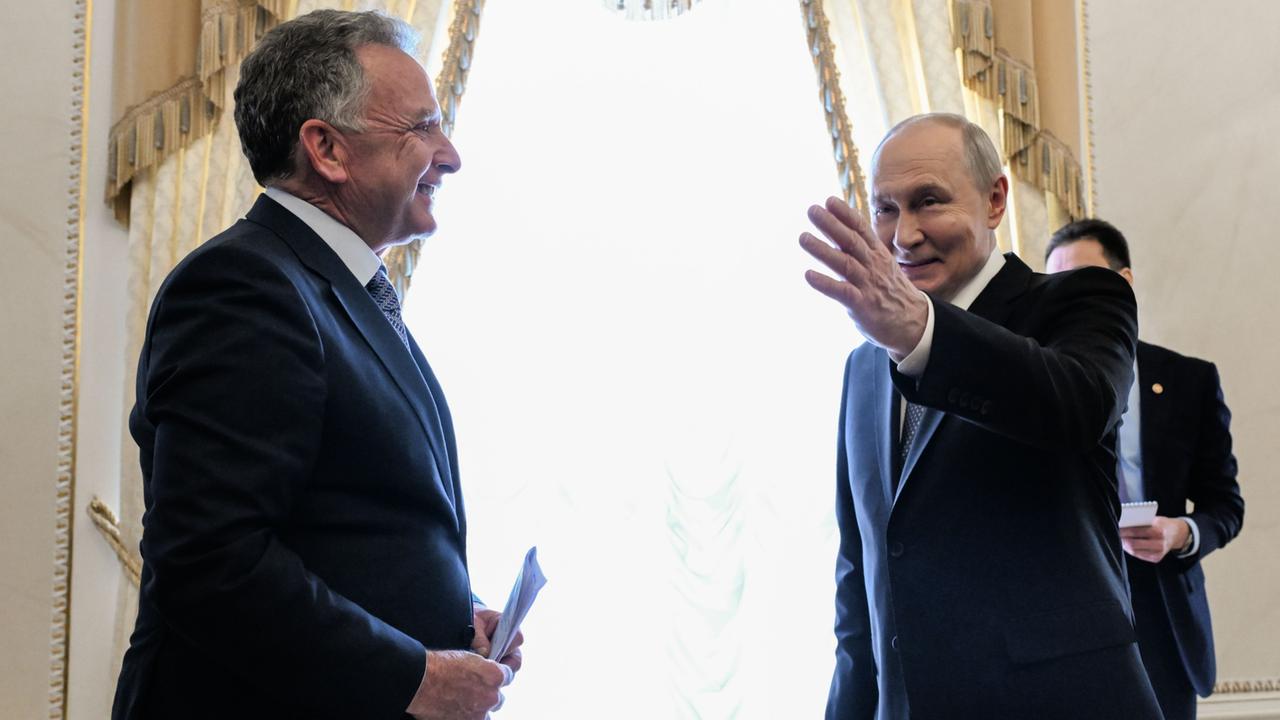
The meeting between President Putin and Special Envoy Witkoff in St. Petersburg was framed as a crucial step in the broader efforts to resolve the Ukraine conflict. Putin, prior to the official proposal of the trilateral summit, extended his gratitude to President Trump for his perceived efforts to end the war. This sentiment was immediately followed by the announcement of the impending release of American citizen Stephen Hubbard, who had been serving a lengthy sentence for allegedly fighting alongside Ukrainian forces. This gesture, while humanitarian in nature, also serves as a potential goodwill offering in the complex diplomatic negotiations.
Witkoff, before the commencement of discussions, expressed optimism regarding the potential for concrete steps toward a peace process. He indicated that a basis for a ceasefire exists and voiced hope that Putin would agree to direct negotiations involving Russia, the United States, and Ukraine. This directly addresses a long-standing Russian stance, which has historically resisted direct multilateral talks that include Ukraine as an equal participant.
The current discussions in St. Petersburg build upon preliminary talks held in Oslo, Norway, earlier in the week. These Norwegian-based consultations involved Ukrainian President Volodymyr Zelenskyy and representatives from both NATO and the European Union. Key topics on the Oslo agenda reportedly included security guarantees for Ukraine, territorial disputes, the impact of sanctions, and the broader framework for European security in a post-war era.
The Kremlin, in response to the proposals discussed, indicated a willingness to evaluate them. The Russian Presidential Administration, as cited by the Interfax news agency, deemed progress in resolving the "Ukraine conflict" as "theoretically possible." However, the statement also emphasized that much of the outcome would depend on Ukraine’s willingness to make "necessary decisions," warning that a failure to do so could lead to a deterioration of the situation for the country. This assertion places significant responsibility on Kyiv for any potential breakthroughs.
Trump’s Influence and the Diesel Deal
Adding another layer of complexity to the unfolding diplomatic scenario is President Trump’s recent actions and statements regarding Russia. Putin highlighted the growing economic cooperation between the two nations, a sentiment seemingly echoed by Trump himself. Just days prior to the St. Petersburg meeting, Trump announced his intention to suspend a recently imposed sanctions package against Russia, citing "national interest." This move, which directly impacts economic leverage against Moscow, was followed by an earlier announcement from Trump confirming that Russia would supply hundreds of thousands of tons of diesel fuel to the United States.
Putin confirmed that the initial delivery of 40,000 tons of diesel is slated to depart by tanker the following day. Furthermore, he suggested the possibility of Russia providing large quantities of fertilizer to the U.S. This offer comes at a time when fertilizer has become a scarce commodity in the U.S. following disruptions linked to the ongoing conflict in Iran and the subsequent blockade of the Strait of Hormuz.
The diesel agreement and the U.S. pivot away from certain Russian sanctions have been met with strong condemnation in Ukraine. President Zelenskyy has accused the United States of tacitly enabling Russia to continue its war unimpeded. Zelenskyy has repeatedly voiced concerns over insufficient deliveries of military equipment, particularly air defense missiles, which are critical for Ukraine’s defense capabilities. More recently, Ukraine has expressed frustration over the reported throttling of Starlink and Starshield satellite communication services, services that have played a vital role in coordinating the Ukrainian military, drone operations, and air defense efforts.
The growing tensions between the United States and Ukraine have been exacerbated by Trump’s public statements. Following the Oslo talks, Trump reiterated his assertion that Russia is prepared to end the war and that Zelenskyy must agree to a "deal." He further claimed that the U.S. had provided "a lot" to Ukraine without receiving "anything back." These pronouncements have fueled perceptions of a potential divergence in U.S. and Ukrainian objectives, creating uncertainty within the broader Western alliance supporting Ukraine.
Escalating Conflict Amidst Diplomacy
Despite the high-level diplomatic engagements aimed at de-escalation, the conflict on the ground remains intensely active. In the early hours of the morning, Russian military forces launched attacks on several Ukrainian regions. Ukrainian President Serhiy Korezkyj reported via Telegram that at least four people were killed in these assaults. Two individuals lost their lives when a drone struck a multi-story building in the capital, Kyiv, while two others perished in the northeastern Kharkiv region.
Korezkyj detailed that Russia had been conducting "incessant" attacks since Tuesday evening targeting energy facilities, railway infrastructure, shopping centers, and residential buildings. The regions of Kyiv, Volyn, Odesa, and Mykolaiv were reportedly affected. Ukrainian authorities also indicated that further attacks were directed at a university in Kremenchuk, Poltava region, where at least two people were injured.
The Russian Ministry of Defense acknowledged the strikes on Poltava and Kyiv, as reported by Reuters. The ministry stated that a drone depot was targeted in Poltava, while a substation in Kyiv that supplies electricity to Ukraine’s defense and industrial sectors, as well as logistics centers, was attacked.
Conversely, Russian authorities reported drone attacks on the Leningrad region. Regional Governor Alexander Drosdenko announced these attacks, noting that the region in northwestern Russia surrounds St. Petersburg, the very city hosting the meeting between Putin and Witkoff. The Bryansk region also reportedly came under drone attack, with regional governor Yegor Kovalchuk reporting at least one fatality and two injuries.
These ongoing military actions underscore the precariousness of the diplomatic efforts. While leaders engage in discussions aimed at peace, the realities on the battlefield continue to paint a starkly different picture, highlighting the immense challenges in bridging the divide between the warring parties and their international backers. The coming days and weeks will be crucial in determining whether these diplomatic overtures translate into tangible de-escalation or if the conflict will continue its destructive trajectory.
Implications and Future Outlook
The events of October 21, 2026, present a complex and multi-faceted geopolitical scenario. President Putin’s proposal for a trilateral summit with Trump and Xi, coupled with the announcement of diesel deliveries to the U.S., suggests a strategic pivot by Moscow. The offer of economic cooperation, particularly in the energy and agricultural sectors, could be aimed at leveraging potential divisions within the Western alliance and further solidifying Russia’s economic resilience amidst ongoing sanctions.
The growing friction between the U.S. and Ukraine, amplified by Trump’s rhetoric and policy shifts, raises serious questions about the future of Western support for Kyiv. If this divergence intensifies, it could significantly impact Ukraine’s ability to sustain its defense and pursue its territorial objectives. The implications of such a rift could be far-reaching, potentially emboldening Russia and undermining the unified front that has characterized the international response to the invasion.
The continued military engagements by both sides, despite the diplomatic outreach, highlight the deeply entrenched nature of the conflict. The casualties and destruction reported in Ukraine, juxtaposed with Russia’s counter-claims of strikes on military-related targets, underscore the human cost of this prolonged war.
Ultimately, the success of any diplomatic resolution will hinge on the willingness of all parties to engage in genuine dialogue, compromise, and de-escalation. The proposed trilateral summit, if it materializes, could represent a significant opportunity to chart a new course. However, the underlying tensions, differing strategic objectives, and the ongoing violence on the ground present formidable obstacles that will require sustained and determined diplomatic effort to overcome. The world watches with bated breath as these high-stakes negotiations unfold, with the future of Ukraine and the broader global security architecture hanging in the balance.