Introduction
The delicate threads of diplomatic engagement between the United States and the Russian Federation have frayed almost as quickly as they were spun. Only hours after the conclusion of high-level discussions in St. Petersburg, held by Donald Trump’s special envoy Steve Witkoff, the Kremlin unleashed a fresh, multi-wave assault on Ukraine. This surge in kinetic military action has left the international community questioning the sincerity of Moscow’s overtures and the efficacy of the current U.S. approach to mediating an end to the conflict.
As ballistics rain down on Kyiv and other regions, the geopolitical landscape remains volatile. President Volodymyr Zelenskyy has labeled the attacks a cynical display of bad faith, noting that the timing of the bombardment—directly following diplomatic talks—signals that the Kremlin’s core objectives in the conflict remain unchanged, despite rhetoric suggesting otherwise.
The Chronology of Diplomatic Discord
The recent sequence of events highlights a widening chasm between the perceptions of the incoming U.S. administration and the reality on the ground in Ukraine.
- The St. Petersburg Summit: Special envoy Steve Witkoff met with Vladimir Putin to discuss the architecture of a potential peace deal, including the controversial topic of security guarantees for both combatant parties. Moscow indicated a willingness to engage in further trilateral talks—involving the US, Russia, and Ukraine—slated for mid-November.
- The Rhetoric of "Humanity": During the visit, Witkoff described Putin as a "humanitarian" following the release of an elderly American prisoner. This characterization, mirrored by President Trump’s earlier claims that Russia had "behaved well" regarding the Ukraine issue, has drawn sharp rebukes from both sides of the aisle in Washington.
- The Retaliatory Strikes: Almost immediately following the diplomatic handshake, Russia launched three distinct waves of ballistic missile attacks across the capital and a dozen other regions.
- The Counter-Strike: In a significant escalation, Ukrainian forces targeted the "75 Arsenal" facility in Serpuchow, near Moscow. This site is a critical node for the Russian Main Missile and Artillery Directorate (GRAU), responsible for the production and maintenance of artillery systems and air defense complexes.
Supporting Data: The Human and Material Cost
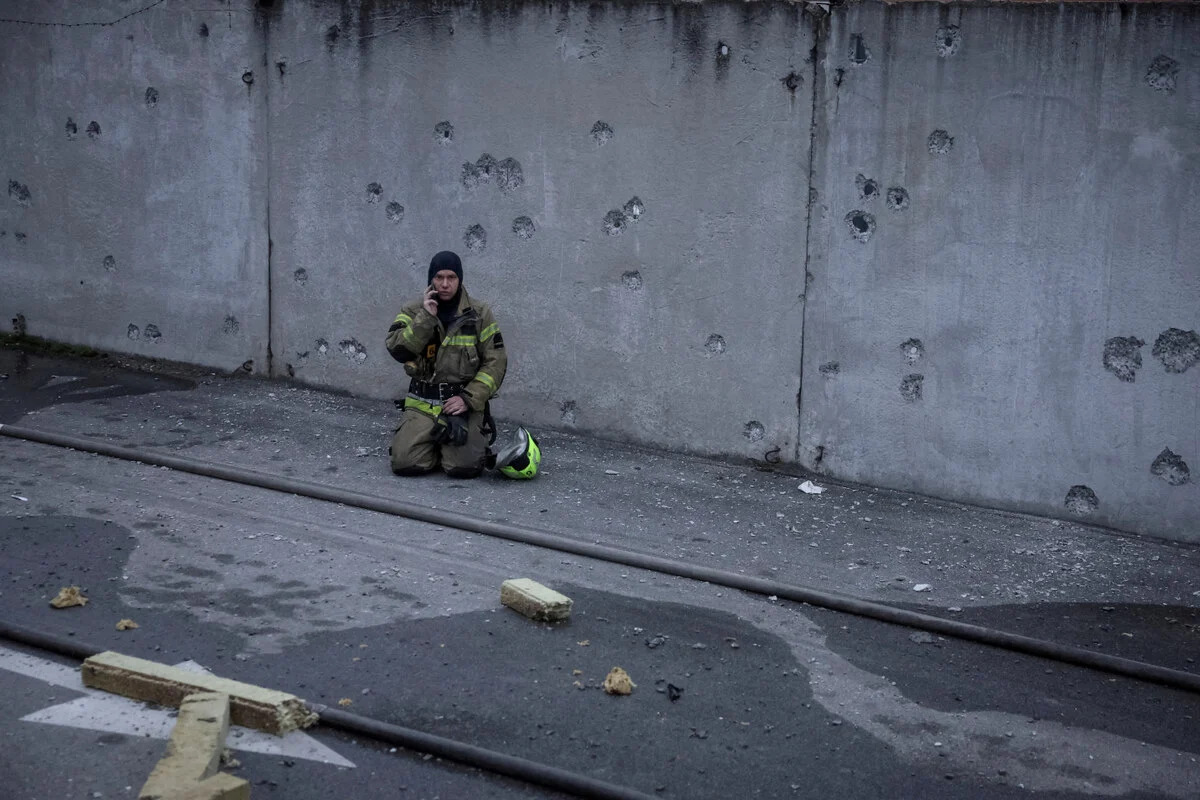
The overnight onslaught on Thursday left a trail of destruction that extended well beyond military targets. According to reports from the field, at least two people were confirmed dead and 34 were injured, including five children—the youngest of whom is just one year old.
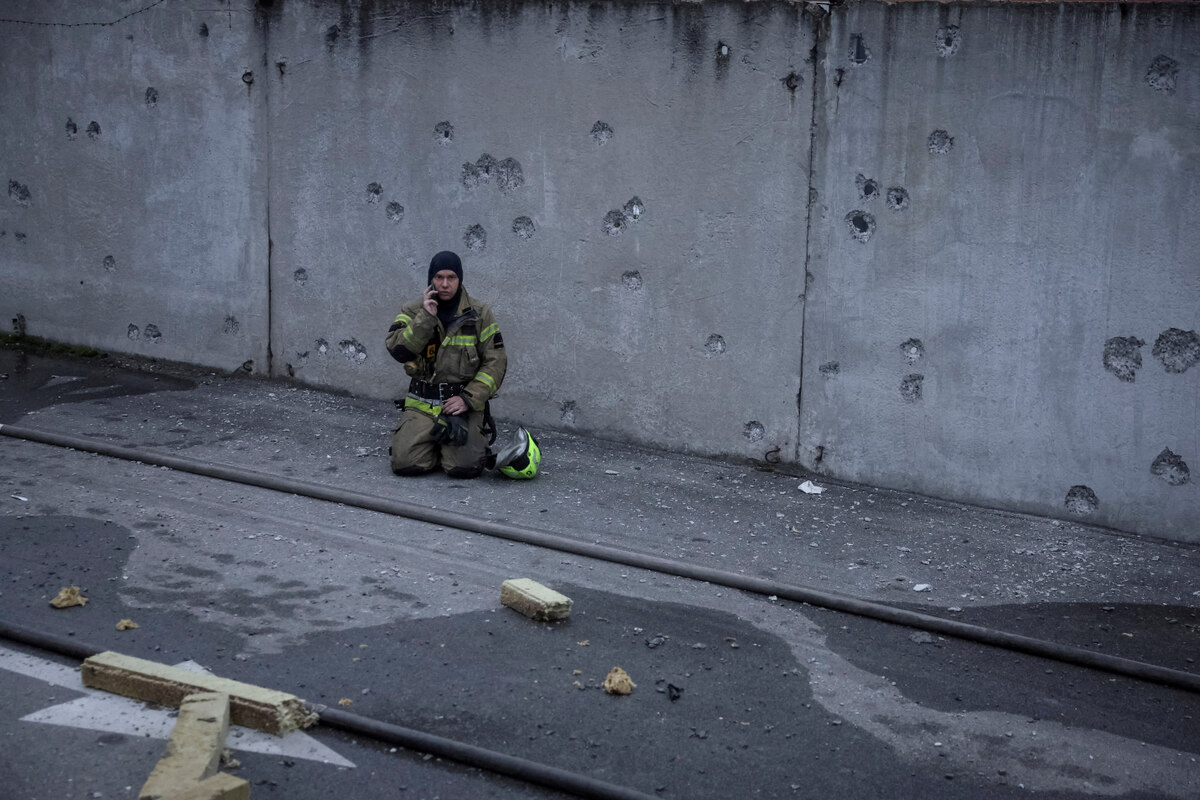
The strategic nature of the Russian strikes suggests an attempt to degrade civilian morale and infrastructure, with reports indicating hits on a monastery in Kyiv and a bustling market in the Kharkiv region.
Conversely, the Ukrainian strike on the Serpuchow ammunition plant represents a sophisticated tactical shift. Visual evidence gathered by independent monitors, such as the Telegram channel Astra, confirms that the strike successfully hit a critical facility used for the repair of PVO (air defense) systems. This suggests that while Ukraine is under heavy pressure, its ability to project power into the Russian heartland remains a significant factor in the strategic calculus.
Official Responses and Internal American Friction
The backlash against the Trump administration’s diplomatic strategy is not limited to Kyiv. Within the United States, prominent members of the Republican Party have expressed profound discomfort with the current trajectory of negotiations.
The Moral Critique
Representative Don Bacon (R-NE) delivered a blistering critique of the administration’s stance during a CNN interview. "Our president is morally blind regarding this war," Bacon stated, arguing that the administration has effectively aligned itself with a "dictator and war criminal." His comments echo a broader sentiment among twelve senators—a bipartisan coalition of six Republicans and six Democrats—who issued a formal protest letter to the White House. The letter characterizes the potential "deals" being discussed as a betrayal of the Ukrainian people and an act of capitulation to Russian aggression.

The Musk Factor
Adding fuel to the fire is a report from The Wall Street Journal, which alleges that SpaceX founder Elon Musk, in consultation with Donald Trump, personally throttled the Starlink satellite internet access for the Ukrainian military. The implication is that this move directly hampered Kyiv’s ability to defend against Russian drone swarms, creating a technological handicap that has significantly altered the effectiveness of local air defense.
Strategic Implications for the G20 Summit
As eyes turn toward the G20 summit in Miami this December, the path toward a "peace agreement" remains fraught with obstacles. Trump has publicly stated his goal of finalizing a framework for peace at this gathering. However, the current reality—defined by the "demonstrative strike" by Russia—suggests that Moscow views diplomacy merely as a tool for tactical pauses rather than a path toward a sustainable, sovereign peace for Ukraine.
The Illusion of Security Guarantees
The proposed security guarantees are at the heart of the disagreement. Russia views these as a mechanism to cement its territorial gains and neutralize Ukraine’s defense capabilities. Ukraine, conversely, views these guarantees as a hollow promise if they are not backed by firm, ironclad military support and a clear path toward the restoration of territorial integrity.
The "Operation Vivaldi" counter-offensive, which has seen the Ukrainian military reclaim ground in the Donbass, suggests that the conflict is far from a frozen state. The ability of the Ukrainian forces to stop and push back Russian advances proves that the front lines remain fluid.

Conclusion: A Conflict in Flux
The events of the last 48 hours serve as a stark reminder that international diplomacy in the absence of a shared reality is destined for failure. While the U.S. envoy speaks of peace, the reality on the ground—characterized by ballistic strikes on civilian centers and the destruction of ammunition depots—speaks of a war that is intensifying.
For the international community, the challenge is twofold: how to maintain the pressure required to prevent further Russian aggression, and how to navigate the internal political fragmentation of the United States. As the November talks approach, the question remains: is the world witnessing the birth of a genuine peace process, or is it merely watching as the stage is set for a more dangerous phase of the conflict?
The Ukrainian perspective, articulated by President Zelenskyy, remains resolute. By refusing to accept the "humanitarian" framing of a regime that continues to bomb cities, Kyiv is signaling that no deal will be reached that compromises the fundamental sovereignty of the state. As the death toll rises and the political rhetoric sharpens, the coming weeks will likely determine whether the G20 summit becomes a milestone for peace or a monument to the failures of 2024’s diplomatic efforts.
The silence from the Kremlin regarding the specific criticism of the post-talks strikes speaks volumes. In the world of power politics, silence is often the loudest answer. For now, the "humanitarian" envoy’s efforts have resulted in little more than a hardened battlefield and a deeply divided international coalition, leaving the path to a lasting peace further away than ever.