In the northernmost reaches of Germany, where the Baltic Sea bites into the coastline of Schleswig-Holstein, the city of Flensburg finds itself entangled in a profound debate over memory, authenticity, and the ethics of historical commemoration. At the heart of the controversy is a municipal decision to establish a "Mediation Center for the Critical Appraisal of National Socialism." While the goal—to confront the darkest chapter of German history—is broadly supported, the proposed location has ignited a fierce conflict between local authorities and a coalition of historians, writers, and civic leaders.
The central question is simple yet historically weighty: Should the history of the Third Reich be displayed in a neutral, modern exhibition space, or should it be anchored in the very buildings where the crimes were conceived and the perpetrators sought refuge?
A Tale of Two Sites: Norderhofenden vs. Friedrich-Ebert-Straße
The two sites at the center of the dispute are separated by only a few hundred meters, yet they represent vastly different historical narratives.
On one side stands the Deutsches Haus on Friedrich-Ebert-Straße, a brick structure that serves as a monument to the city’s complex identity. Gifted by the German government following the 1920 plebiscite—in which Flensburg’s population voted to remain part of the German Empire rather than joining Denmark—it is a site of political negotiation and national belonging. It is currently the city’s preferred location for the new mediation center, citing its status as city-owned property and the findings of a feasibility study that deems it the most cost-effective option.
On the other side sits the Flensburg Police Headquarters on Norderhofenden. This building is a repository of traumatic history. From 1934 onwards, it served as the regional hub of the Gestapo, a site from which the regime’s terror was projected far beyond Flensburg, reaching deep into occupied Denmark. The building still contains original detention cells and the very session hall where Heinrich Himmler, the head of the SS, delivered his final address to high-ranking officers and concentration camp commandants on May 5, 1945.
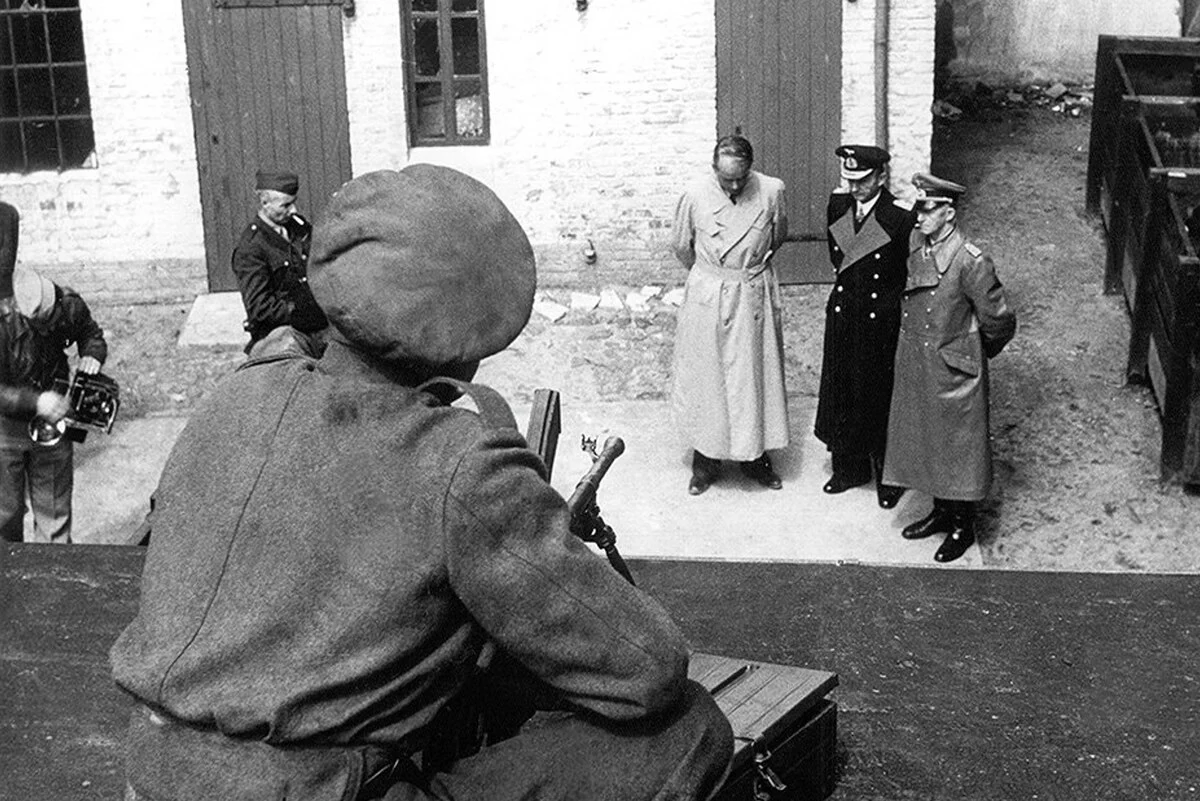
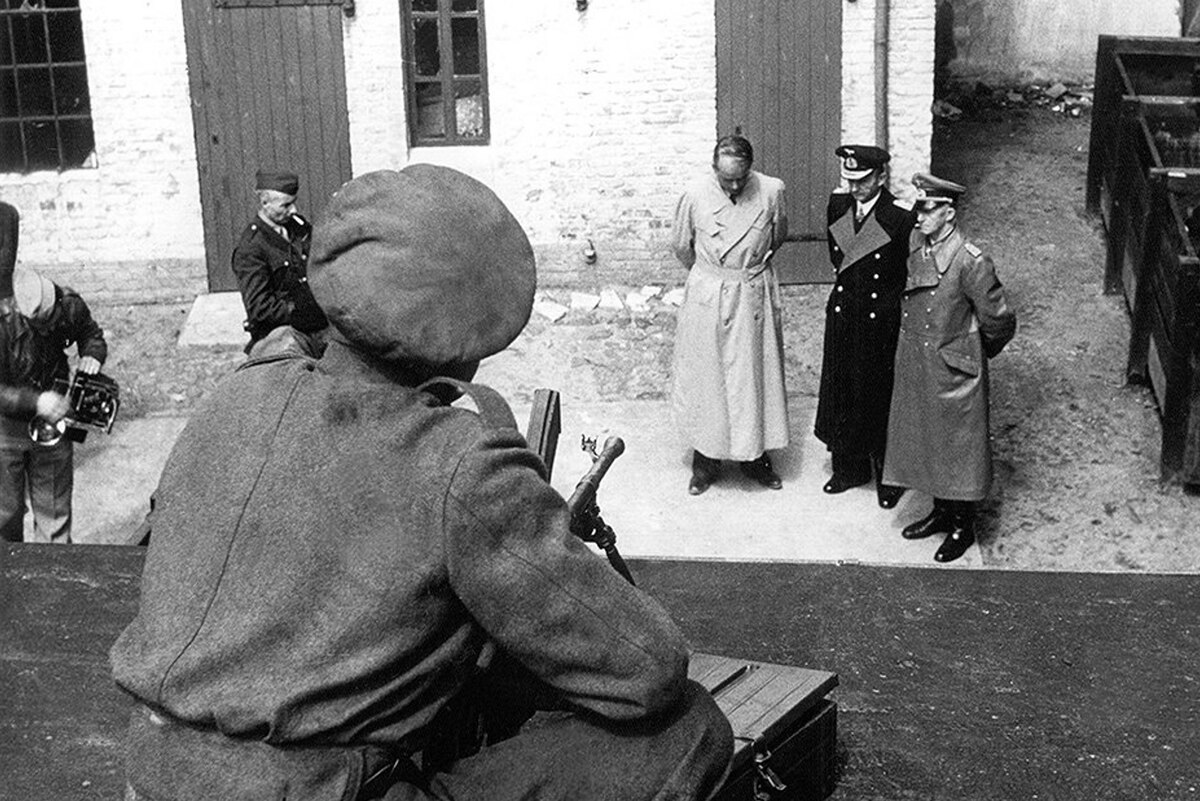
It was also here, in the courtyard of the police headquarters, that the "Flensburg Government"—the short-lived, final administration of the Third Reich led by Grand Admiral Karl Dönitz—saw its members arrested by British forces on May 23, 1945. This moment, captured in iconic black-and-white photography, remains one of the most recognizable images of the collapse of the Nazi regime.
The Case for Authenticity: A Historian’s Plea
The city’s decision to opt for the Deutsches Haus has drawn sharp criticism from prominent figures, including renowned historian Professor Gerhard Paul. A pioneer of "Visual History" and a contributor to the conceptualization of the "Topography of Terror" memorial in Berlin, Paul argues that the city is making a profound mistake.
"There is no necessity to set up a historical exhibition in a place that had nothing to do with the subject matter," Paul asserts. He is joined by an influential group of local voices, including long-time city leader Knut Franck, author Jochen Missfeldt, and former Flensburger Tageblatt editor-in-chief Stephan Richter.

For Paul, the authenticity of the police headquarters is non-negotiable. He argues that the building is not merely a site of memory but a "perpetrator site" (Täterort) that offers a unique educational opportunity. He envisions a center that does not just display artifacts, but forces visitors to confront the reality of how the war ended and how Nazi officials attempted to reinvent themselves after the collapse.
"I know the sources, I know where the photos are, the documents; I also know where the furniture of the Dönitz government is—everything is there," says Paul, who has developed a concrete proposal for a memorial and learning center at the Norderhofenden site. He suggests that, with proper political will, a foundation could be established to fund the project through a collaboration between the federal government, the state of Schleswig-Holstein, and the city.
Official Responses and Bureaucratic Hurdles
The position of the Flensburg city administration is caught between fiscal pragmatism and the desire to finalize a project before the next municipal election. Melanie Bach, the non-partisan city councilor for culture and education, finds herself in a difficult position. She acknowledges the historical significance of the police headquarters but remains bound by the current resolution of the City Council.
"It is undisputed that the police headquarters is the more historically significant place," Bach admits. However, she faces two major obstacles: the building is owned by the state of Schleswig-Holstein, which has remained largely silent on its own intentions for the property, and the site is in urgent need of expensive renovations.

The city has cited a lack of access to a clear cost-benefit analysis regarding the police building, leading them to prioritize the Deutsches Haus to ensure the project does not stall. Bach notes that the council was eager to move forward with a plan that was "irreversible," fearing that future political shifts could threaten the entire initiative.
Critics, however, argue that the city is using financial ambiguity as an excuse to avoid a more complex, albeit more necessary, path. The state Ministry of Finance, when pressed, stated that they were unaware of any specific expert reports regarding the building’s renovation costs that might justify the city’s skepticism.
The Implications: Why This Matters
The dispute over the Flensburg center touches on a broader, ongoing conversation in Germany about how to handle "difficult heritage." In cities like Hamburg, the conversion of former Gestapo centers into commemorative sites has shown both the potential and the pitfalls of such projects. If the police headquarters is ignored in favor of the Deutsches Haus, historians like Paul fear that the site will be sold to private developers, potentially becoming a hotel or luxury condominiums. This, they argue, would be an irreparable loss of historical evidence.
Furthermore, the pedagogical value of a "perpetrator site" is distinct from that of a museum. At the police headquarters, visitors would not just read about the regime; they would stand in the spaces where the final, desperate illusions of the Nazi leadership were fostered—such as Dönitz’s delusional plan to forge an alliance with the British against the Soviet Union. It is also the site where many functionaries secured new, fake identities, facilitating their escape from justice.

Looking Forward: A Call for Transparency
As it stands, the city’s plans for the Deutsches Haus remain vague. The timeline aims for an opening in the early 2030s, but the funding, the curatorial concept, and the mechanisms for involving civil society are still in their infancy. While a advisory board is promised, the decision-making process regarding the location has been largely closed to public debate.
The fundamental disagreement highlights the tension between the "city management" approach—which favors ease, ownership, and low-cost implementation—and the "historian’s" approach, which insists that the weight of the past demands a specific, site-based confrontation.
For Flensburg, the choice is not just about where to hang an exhibition. It is a decision about whether the city will lean into its uncomfortable past as a refuge for the dying Nazi regime or whether it will sanitize that history by moving it into a more neutral, "safe" space.
As Professor Paul warns, "The city has somewhat overshot the mark with its idea of a ‘mediation center.’ Such things already exist in other cities. I don’t know why one would want to do that again in Flensburg." For those who believe that history should be taught where it happened, the fight for the police headquarters is a fight for the integrity of memory itself. The coming months will be decisive, as the city must decide whether to remain on its current course or to open a dialogue that acknowledges the unique, if painful, potential of the Norderhofenden site.