


Madrid, Spain – October 9, 2026 – The streets of Spain thrummed with a potent mix of grief and anger this past week, as tens of thousands took to the pavements in memory of Maricarmen Abascal, an 87-year-old woman whose death, shortly after her forced eviction from her lifelong home, has become a galvanizing symbol of the nation’s deepening housing crisis. What began as a localized tragedy has erupted into a nationwide movement, sparking widespread protests, a planned general strike, and calls for immediate elections, signaling a profound discontent with the current socio-economic landscape. The palpable sense of injustice surrounding Maricarmen’s fate has shaken the foundations of Spanish society, leaving many to question the efficacy of current housing policies and the ethical considerations of unchecked market forces.
The Spark That Lit the Fire: Maricarmen’s Story
The narrative of Maricarmen Abascal, a name now whispered with reverence and sorrow across Spain, is a stark illustration of the human cost of a nation grappling with soaring housing costs and precarious tenancy. Her passing on Wednesday, October 7th, followed a debilitating hospitalization that began on September 23rd, the very day she was forcibly removed from the Madrid apartment she had called home for over seven decades.
The eviction, according to the tenants’ association, was precipitated by a staggering 275% rent increase, pushing the monthly cost from an affordable sum to an untenable €2,650. This drastic escalation, orchestrated by an investor who had acquired the building, left Maricarmen, a pensioner, with no viable option but to vacate the only home she had ever known. Reports indicate that she was carried out of her apartment on a stretcher, a harrowing image that has resonated deeply with a populace increasingly burdened by the specter of housing insecurity.
In the hospital, reportedly weakened by exhaustion and the emotional toll of her displacement, Maricarmen succumbed to her fate. Her final days were marked by a growing awareness of the national outcry her situation had ignited. From her hospital bed, she reportedly managed to convey a message of solidarity to the burgeoning protest movement, a testament to her enduring spirit in the face of overwhelming adversity.
A Wave of Grief and Defiance: Nationwide Protests Erupt
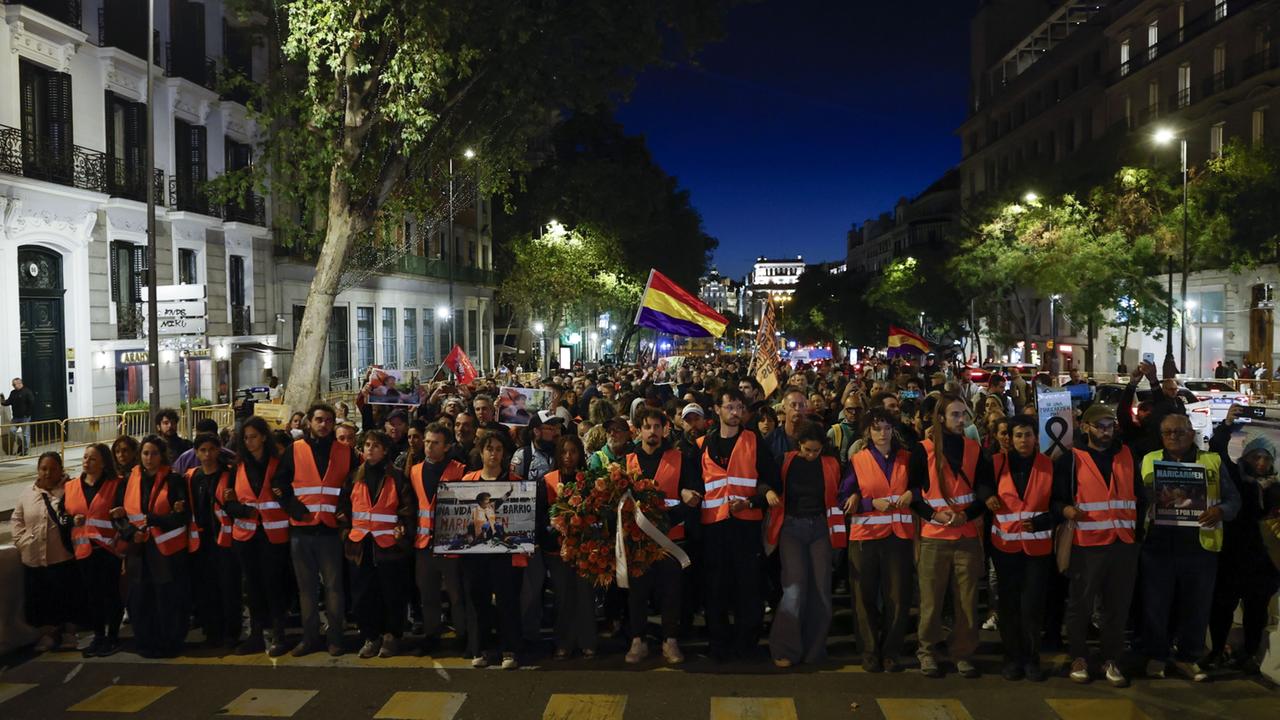
In the wake of Maricarmen’s death, Spain has witnessed an unprecedented outpouring of public grief and a surge of organized protest. The capital city, Madrid, became the epicenter of these demonstrations, with a significant march commencing at the iconic Puerta del Sol, a central plaza that has become a focal point for housing activism. Hundreds of people had already established a protest camp at Puerta del Sol, transforming the space into an impromptu memorial adorned with candles, flowers, and placards bearing poignant messages.
The march, which stretched approximately three kilometers to the Retiro district where Maricarmen had lived, drew an estimated 20,000 participants, according to police figures. The air was thick with the collective sorrow of the mourners, punctuated by impassioned chants of "Vultures out of our neighborhoods!" and the deeply resonant, "We are all Maricarmen!" Similar vigils and demonstrations reverberated through cities and towns across the nation, demonstrating the widespread impact of her story and the shared anxieties it has exposed.
Echoes of a Movement: Voices from the Streets
The sentiment on the ground is one of profound frustration and a collective demand for systemic change. Rosa Marin, a 48-year-old teacher and demonstrator, articulated the feelings of many when she told the Agence France-Presse (AFP): "Maricarmen will become an icon of the struggle. She has woken us up and made us say, ‘Enough is enough!’" Her words underscored a growing impatience with the status quo, a feeling that the housing crisis has reached a tipping point. "We can no longer tolerate this situation," she added, her voice laden with the weight of concern for her own future and that of her community.
Anton Alexander, another participant in the protests, echoed this sentiment, highlighting Maricarmen’s role as a catalyst for broader action. "Maricarmen was the drop that made the bucket overflow – she triggered all of this," he stated, referring to the protest camp and the mass demonstrations. He went on to emphasize her symbolic significance: "Maricarmen is a symbol. I hope this is a turning point." This hope for a fundamental shift in policy and public consciousness is a recurring theme among those who have taken to the streets.
A Chronology of Escalation: From Eviction to National Uprising
The tragic events surrounding Maricarmen Abascal’s eviction and subsequent death have unfolded against a backdrop of simmering discontent, rapidly escalating into a national crisis. Understanding the timeline of these events provides crucial context for the current surge of activism.
- September 23, 2026: Maricarmen Abascal is forcibly evicted from her Madrid apartment of over 70 years. The eviction follows a drastic rent increase of 275% by a new investor. She is reportedly taken to the hospital in a weakened state due to exhaustion and distress.
- Late September 2026: News of Maricarmen’s eviction and her deteriorating health begins to circulate, sparking initial protests and raising public awareness of her plight. A protest camp is established at Puerta del Sol in Madrid.
- Early October 2026: Maricarmen Abascal reportedly sends a message of solidarity from her hospital bed to the growing protest movement, further galvanizing public support.
- October 7, 2026: Maricarmen Abascal passes away.
- October 8-9, 2026: Following her death, tens of thousands of Spaniards participate in large-scale memorial marches and demonstrations across the country, including a significant march in Madrid. The protests are met with a visible police presence.
- October 9, 2026 (Present): The article is published, detailing the ongoing protests, the public outcry, and the broader implications of the housing crisis. Calls for a general strike and new elections are gaining momentum.
This compressed timeline reveals how quickly a single, deeply unjust event can ignite a national movement when it resonates with widespread societal anxieties and unmet needs.
Supporting Data: The Unseen Crisis of Housing Affordability
Maricarmen Abascal’s story is not an isolated incident but a stark symptom of a pervasive and escalating housing crisis in Spain. The country has been grappling with a significant imbalance between housing supply and demand, exacerbated by factors such as increasing foreign investment, a surge in short-term rental properties, and stagnant wage growth for many citizens.
- Rent Increases: The 275% rent hike that led to Maricarmen’s eviction is an extreme example, but indicative of a broader trend. Rental prices in major Spanish cities have seen substantial year-on-year increases, far outpacing inflation and wage growth. In Madrid and Barcelona, for instance, average rents have climbed significantly, making it increasingly difficult for long-term residents, particularly pensioners and low-income families, to afford to stay in their homes.
- Housing Affordability Gap: A significant portion of the Spanish population now spends more than the recommended 30% of their income on housing. This financial strain leaves little room for other essential expenses and savings, creating a precarious economic situation for many households.
- Investor Activity: The influx of both domestic and international investors into the Spanish property market has driven up prices and contributed to the commodification of housing. This has led to concerns that housing is increasingly viewed as a speculative asset rather than a fundamental human right.
- Eviction Rates: While specific national data on forced evictions can be complex to track, anecdotal evidence and reports from social organizations suggest a persistent issue, particularly impacting vulnerable populations.
- Youth Housing Insecurity: The housing crisis disproportionately affects younger generations, who face significant challenges in accessing affordable housing, whether renting or buying, leading to delayed independence and increased financial precarity.
These statistics paint a grim picture of a housing market that is failing to serve the needs of a significant portion of the Spanish population, creating fertile ground for the kind of widespread discontent that Maricarmen’s tragedy has brought to the forefront.
Official Responses and Political Ramifications
The escalating protests and the growing public pressure have inevitably drawn a response from Spanish political leadership. While specific policy proposals are still being debated and formulated, the sheer scale of the public outcry has forced the issue of housing affordability to the top of the political agenda.
- Calls for Early Elections: The unrest has fueled demands for snap elections. Critics argue that the current government has failed to adequately address the housing crisis, and that a fresh mandate is needed to implement meaningful change. The possibility of early elections hangs over the political landscape, as parties scramble to formulate credible solutions and win back public trust.
- Proposed Legislation: While concrete legislative measures are still under discussion, there are indications that the government is considering interventions such as stricter rent controls, incentives for building affordable housing, and measures to curb speculative investment in the property market. The effectiveness and scope of these potential regulations will be closely scrutinized.
- Political Division: The housing crisis has become a deeply divisive issue, with different political factions offering contrasting approaches. Left-leaning parties are generally advocating for more robust state intervention and tenant protections, while more conservative factions tend to emphasize market-based solutions and deregulation.
- Social Dialogue: In an effort to de-escalate the situation, there have been calls for increased social dialogue between government officials, housing advocacy groups, and tenant organizations. The aim is to foster a collaborative approach to finding sustainable solutions.
The political ramifications of this crisis are profound. The government faces the immense challenge of balancing the interests of property owners and investors with the urgent need to provide secure and affordable housing for its citizens. The public’s trust, once lost, is difficult to regain, and the current wave of protest could have a significant impact on future electoral outcomes.
Implications for the Future: A Nation at a Crossroads
The tragic death of Maricarmen Abascal has served as a potent catalyst, exposing the deep-seated vulnerabilities within Spain’s housing system and igniting a powerful demand for systemic change. The implications of this ongoing crisis are far-reaching and will undoubtedly shape the nation’s social and political trajectory for years to come.
- Rethinking Housing as a Right: The protests have amplified the discourse around housing as a fundamental human right rather than a purely market-driven commodity. This shift in perspective could lead to a re-evaluation of housing policies and a greater emphasis on social welfare and equitable access.
- The Future of Tenant Protections: The incident is likely to spur intensified efforts to strengthen tenant protections, including potentially more robust rent stabilization measures, limitations on arbitrary evictions, and increased legal aid for vulnerable tenants.
- Economic Impact: The ongoing uncertainty, coupled with potential government interventions in the housing market, could have significant economic implications. Investors and developers will be closely watching policy developments, and the broader economic stability of the nation may be influenced by the government’s ability to effectively manage the housing crisis.
- Social Cohesion: The housing crisis has the potential to exacerbate social inequalities and create divisions within communities. The challenge for Spain will be to find solutions that promote social cohesion and ensure that all citizens have access to secure and affordable housing.
- A Symbol of Resistance: Maricarmen Abascal has transcended her personal tragedy to become a powerful symbol of resistance against economic injustice. Her legacy will likely continue to inspire activism and advocacy for affordable housing, ensuring that the lessons learned from her experience are not forgotten.
Spain stands at a critical juncture. The outpouring of grief and anger in the wake of Maricarmen Abascal’s death presents an opportunity for profound reflection and meaningful action. Whether this moment of collective awakening will translate into lasting policy change and a more equitable housing future for all Spaniards remains to be seen, but the fervent spirit of the protests suggests that the demand for justice will not be easily silenced.


