Introduction: The New Frontier of Border Security
The modern challenge of border control has evolved from physical fences and naval patrols to the invisible, rapid-fire transmission of data through fiber-optic cables and satellite links. Last week, the Spanish enclave of Ceuta, a tiny European territory on the North African coast, became the epicenter of a geopolitical crisis that has forced the European Union to re-evaluate the role of Big Tech in state security.
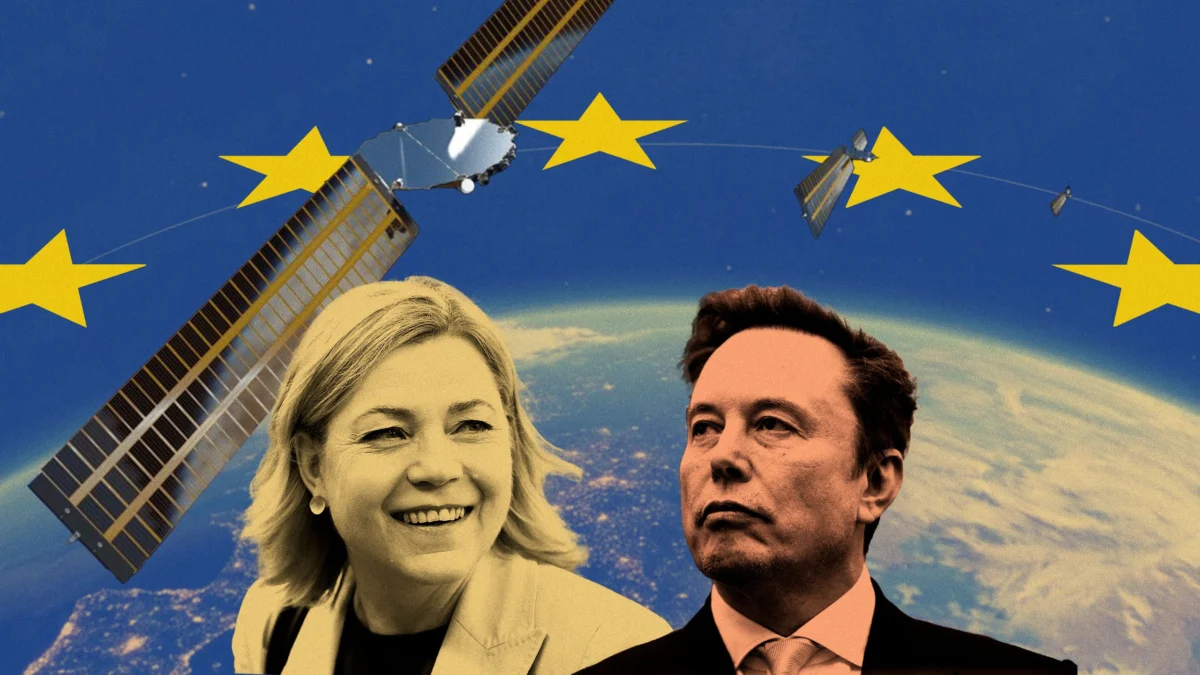
Henna Virkkunen, the European Commissioner for Digital Affairs, has directly challenged tech giants Meta and TikTok, suggesting their failure to curb the spread of misinformation contributed to the chaotic storming of the Ceuta border. As tens of thousands of migrants descended upon the enclave, fueled by viral rumors of open gates and guaranteed transit to the Spanish mainland, the EU signaled a paradigm shift: the digital integrity of these platforms is now officially a matter of European border sovereignty.
The Anatomy of the Crisis: A Chronology of Events
The Surge at the Fence
The events of the past week were not spontaneous in the traditional sense; they were, according to analysts, "digitally orchestrated." The timeline of the crisis began with a series of coordinated messages spreading through encrypted messaging apps and public-facing social media platforms.
- Initial Rumors: Reports began circulating in North African regions suggesting a temporary lapse in security at the Spanish-Moroccan border. These rumors were bolstered by manipulated or miscontextualized video footage appearing on TikTok and Facebook.
- The Mobilization: Within 48 hours, the digital narrative shifted from rumor to perceived reality. Thousands of individuals began converging on the border town, prompted by claims that the EU had relaxed entry requirements and that local facilities were prepared for mass arrivals.
- The Breach: By midweek, the sheer volume of people overwhelmed local border forces. The scene was characterized by scenes of desperation and confusion, as the physical reality of the heavily fortified border collided with the digital promise of an open passage.
- The Aftermath: By the end of the week, as the dust settled, European officials were left to manage the humanitarian fallout and the political backlash that has since strained relations between Madrid and Brussels.
Supporting Data: The Digital Catalyst
The role of social media in facilitating irregular migration is no longer a fringe theory; it is a documented phenomenon. Data from regional monitoring groups indicates that during the height of the Ceuta crisis, engagement rates on videos tagged with keywords related to "crossing," "Ceuta," and "border open" spiked by over 400% in a 72-hour window.
The mechanism is twofold:
- Algorithmic Amplification: Once a narrative gains traction, algorithms prioritize the content, pushing it into the feeds of vulnerable populations who may be actively seeking information on migration routes.
- The Illusion of Credibility: For many users, a video showing a crowd moving toward a border looks like a "live" news report, even if the footage is months or years old. This lack of content verification allows false narratives to travel faster than government-issued warnings.
Official Responses and Regulatory Pressure
The Stance of the European Commission
Following a high-stakes meeting with representatives from Meta and TikTok, Commissioner Virkkunen took to X (formerly Twitter) to issue a stern directive. Her message was unambiguous: the era of tech platforms operating with limited liability regarding their role in civil unrest is coming to an end.
"To preserve the integrity of the digital space, platforms must act decisively during crises," Virkkunen stated. She emphasized that the current level of content moderation is insufficient, particularly when that content poses a direct threat to the stability of EU borders. The Commission is now demanding:
- Enhanced Cooperation: A formal integration with independent fact-checking organizations to verify content in real-time during emergency situations.
- Proactive Monitoring: A shift from reactive moderation (deleting content after it is reported) to proactive, AI-driven detection of coordinated disinformation campaigns.
The Response from Tech Giants
Meta and TikTok have responded with standard corporate rhetoric, emphasizing their commitment to safety. Representatives from both firms pointed to their existing Community Guidelines, which prohibit the facilitation of illegal activities, including human trafficking and the coordination of unauthorized border crossings.
However, the EU remains skeptical. Brussels points to the "hollow" nature of these policies, arguing that while the guidelines exist, the enforcement mechanisms are severely lacking when it comes to non-English languages and localized regional dialects, where much of the disinformation in this crisis originated.
Implications: The Future of Border Surveillance
The "Early Warning" Doctrine
The Ceuta crisis has acted as a catalyst for a new EU policy: the development of a digital "Early Warning System." This system aims to monitor social media trends to detect signs of impending border surges before they materialize on the ground.
Critics of this approach, however, raise significant concerns. Civil liberties groups argue that constant monitoring of social media for the purpose of border control could lead to:
- Mass Surveillance: The potential for overreach where the private communications of legitimate asylum seekers are swept up in state surveillance dragnets.
- Chilling Effects: The risk that platforms may over-censor content, removing legitimate calls for aid or news reporting out of fear of EU regulatory fines.
The Geopolitical Tightrope
The situation in Ceuta is not merely a technical or social media issue; it is a deeply political one. Spain and the EU must balance the protection of their borders with the humanitarian obligations mandated by international law. If the EU begins to treat social media platforms as extensions of border security, it risks creating a "digital Iron Curtain" where information flow is strictly regulated by state-sanctioned narratives.
Conclusion: A New Era of Responsibility
The crisis at the gates of Ceuta has underscored a fundamental truth of the 21st century: the digital world and the physical world are no longer separate domains. When an algorithm promotes a lie, the consequences can manifest as a human tidal wave at a border fence.
Commissioner Virkkunen’s push for increased oversight is the first major step in what promises to be a long and litigious battle between the EU’s regulatory ambitions and the profit-driven models of Big Tech. As the Union moves toward the implementation of its new digital monitoring protocols, the world will be watching to see if it can successfully balance the need for security with the preservation of the open, democratic internet.
The coming months will likely see new legislation or "emergency protocols" that force platforms like Meta and TikTok to prioritize regional stability over engagement. Whether these measures will be enough to prevent the next border crisis remains to be seen, but one thing is certain: the era of the tech giant as a neutral bystander in international politics is officially over.
Key Takeaways for Policymakers:
- Accountability: Tech firms must be held accountable for the real-world consequences of their content distribution.
- Linguistic Competence: Algorithms and human moderators must be equipped to handle localized disinformation campaigns in the languages of the regions they serve.
- Transparency: The EU must ensure that any new "Early Warning" systems are transparent, subject to judicial oversight, and do not infringe upon the fundamental rights of individuals seeking safety.
As the political fallout from Ceuta continues to ripple through Brussels and Madrid, the intersection of technology and migration will remain the most volatile front line of European politics.