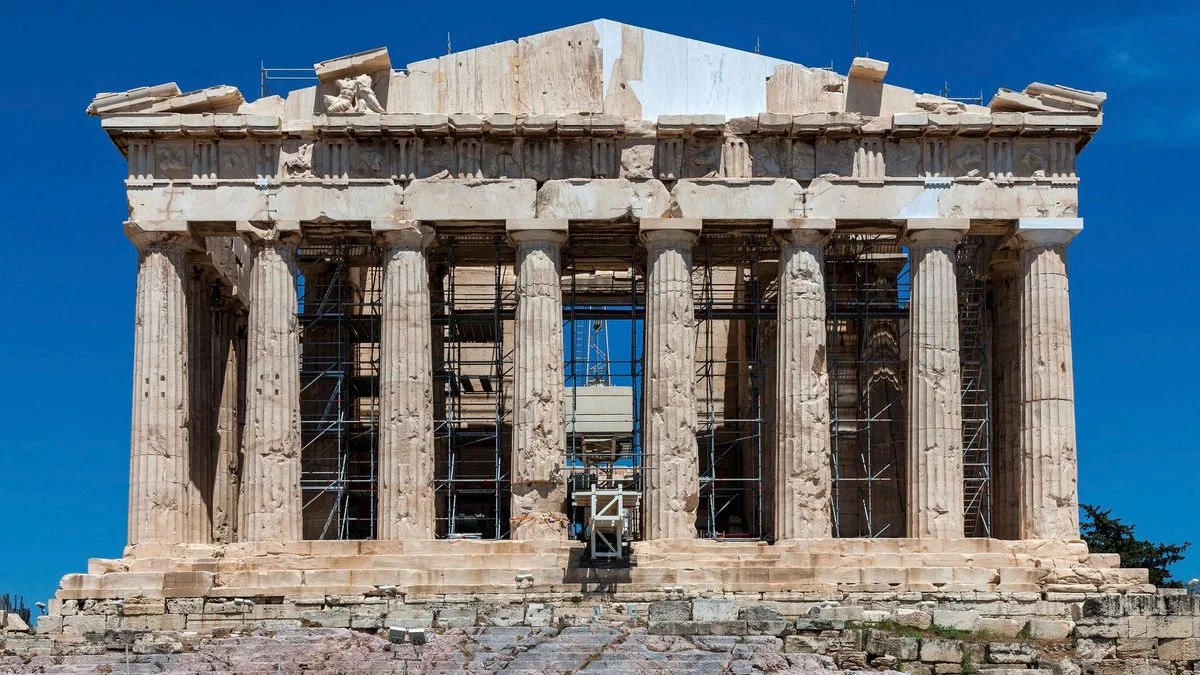
For the first time in over 200 years, the western facade of the Parthenon—the crown jewel of the Athenian Acropolis and perhaps the most iconic symbol of Western civilization—stands unencumbered by scaffolding. The completion of a painstaking, decades-long restoration project marks a watershed moment in the history of archaeological preservation, signaling a new chapter for the 2,500-year-old marble monument.
Greek Minister of Culture Lina Mendoni announced the milestone this week, describing the removal of the external support structures as a "historic moment" not only for Greece but for the global community dedicated to the protection of human cultural heritage. The restoration of the West Pediment is the culmination of an arduous, multi-generational effort to stabilize and unify the structure, which had been left fragmented by centuries of war, environmental erosion, and previous, less sophisticated interventions.
The Scope of the Restoration: Architectural Precision and Aesthetic Harmony
The restoration process was defined by an extreme level of technical complexity. The primary objective was to reconcile the architectural unity of the West Pediment, which had suffered from structural instability and the degradation of original masonry.
To achieve this, engineers and specialized stone masons utilized a combination of conserved original ancient marble fragments and new, precisely cut pieces sourced from the same quarries at Mount Pentelicus that provided the stone for the original temple in the 5th century BCE. The technical team focused on the installation of two massive, reconstructed internal supports and the structural rehabilitation of a key retaining wall. By anchoring these elements, the team successfully restored the structural integrity of the pediment, ensuring that the heavy marble components are supported in a way that mimics the original engineering of the ancient architects, Ictinus and Callicrates.
"The work was an exercise in extreme precision," Minister Mendoni stated. "We were not merely repairing stone; we were engaged in a dialogue with the past, striving to respect the original intent of the builders while ensuring the monument survives for centuries to come."
A Chronology of Decay and Renewal
The narrative of the Parthenon’s restoration is as complex as the history of Athens itself. The temple, completed in 438 BCE, remained largely intact for nearly two millennia until the devastating Venetian bombardment of 1687, which ignited an Ottoman gunpowder magazine inside the structure, blowing the roof off and shattering the pediments.
The 19th Century: The Era of Misguided Interventions
Following the Greek War of Independence in the early 19th century, the newly formed Greek state began the first efforts to "clean up" the Acropolis. However, these early efforts, often characterized by a lack of modern conservation ethics, frequently resulted in the use of iron clamps that rusted, expanded, and cracked the ancient marble.
The 20th Century: Scientific Conservation
A paradigm shift occurred in the late 1970s with the establishment of the Committee for the Conservation of the Acropolis Monuments (ESMA). This body introduced the modern, scientific approach that governs the site today: the "anastylosis" method. This involves reassembling ancient monuments using as many original pieces as possible, while using new material only where structural necessity demands, and always in a way that is clearly distinguishable from the original to avoid historical forgery.
The 21st Century: Modern Challenges
The recent completion of the West Pediment follows years of systematic work. Funded in part by the European Union’s Recovery and Resilience Facility, the project represents a significant investment in European cultural identity. The process involved the careful removal of 19th-century iron reinforcements—which had caused significant damage—and their replacement with modern titanium dowels, which are non-corrosive and possess the tensile strength required to protect the marble against seismic activity.
Supporting Data: Engineering the Eternal
The restoration of the Parthenon is not merely an artistic endeavor; it is a feat of modern civil engineering. The project utilized:
- Materials Analysis: Geologists conducted extensive X-ray fluorescence analysis to match the chemical composition of the new marble with the original components.
- Seismic Modeling: Computerized stress tests were performed to ensure that the restored West Pediment could withstand the seismic activity common to the Attica region.
- Photogrammetry: Before any stone was moved, the entire facade was mapped in 3D using high-resolution photogrammetry, allowing the team to document every crack and fragment to sub-millimeter precision.
- The "Anastylosis" Metric: Approximately 85% of the material currently visible in the restored section consists of original ancient marble, with the remaining 15% being new additions required for load-bearing and structural safety.
Official Responses and Global Significance
The completion of the West Pediment has elicited praise from the international archaeological community. Dr. Elena Stavropoulou, a lead conservator on the project, noted, "The goal was never to make the Parthenon look ‘new.’ Our goal was to make it ‘legible.’ We wanted the visitor to be able to read the architecture as it was meant to be seen, without the distraction of modern iron scaffolding or the fear of further collapse."
Minister Mendoni emphasized the symbolic weight of the project during the unveiling ceremony. "The Acropolis belongs to the world. By preserving it, we are not just guarding a pile of stones; we are protecting the foundations of democracy, philosophy, and art. The removal of the scaffolding is a statement to the world that even after 200 years of struggle, we are capable of restoring the dignity of our past."
Implications: The Future of the Acropolis
While the West Pediment is now clear, the work on the Acropolis continues. The Parthenon is an ongoing site of research, and the methodologies perfected during this project are now being applied to other parts of the site, including the Propylaea and the Erechtheion.
The Tourism Impact
For the millions of visitors who flock to Athens annually, the unobstructed view of the West Pediment offers an unprecedented aesthetic experience. Tourism officials anticipate that this visual restoration will increase the appeal of the Acropolis, though they remain mindful of the need to manage visitor flow to prevent physical degradation of the site.
The Ethics of Restoration
The project has also reignited discussions regarding the ethics of archaeological conservation. Some purists argue that any addition of new marble is a compromise of the "authentic" ruin. However, the Greek Ministry of Culture maintains that the "anastylosis" approach is the only ethical path forward. By reinforcing the structure, they argue, they are preventing the total loss of the monument to the ravages of time and climate change.
A Symbol of Resilience
The restoration of the West Pediment serves as a powerful metaphor for Greece itself—a nation that has faced significant economic and political instability over the last decade, yet has prioritized the preservation of its cultural heritage as a pillar of national identity.
As the scaffolding comes down, the Parthenon stands once more as a testament to human endurance. The sharp, clean lines of the restored marble contrast with the weathered, golden-hued surfaces of the surviving ancient blocks, creating a visual timeline that tells the story of the monument’s destruction, neglect, and eventual, painstaking resurrection. For the first time in two centuries, the Athenian sunset hits the West Pediment exactly as it did when the temple was first consecrated, unmarred by the scaffolding of the modern age. It is a victory for history, a triumph of science, and a gift to the future.