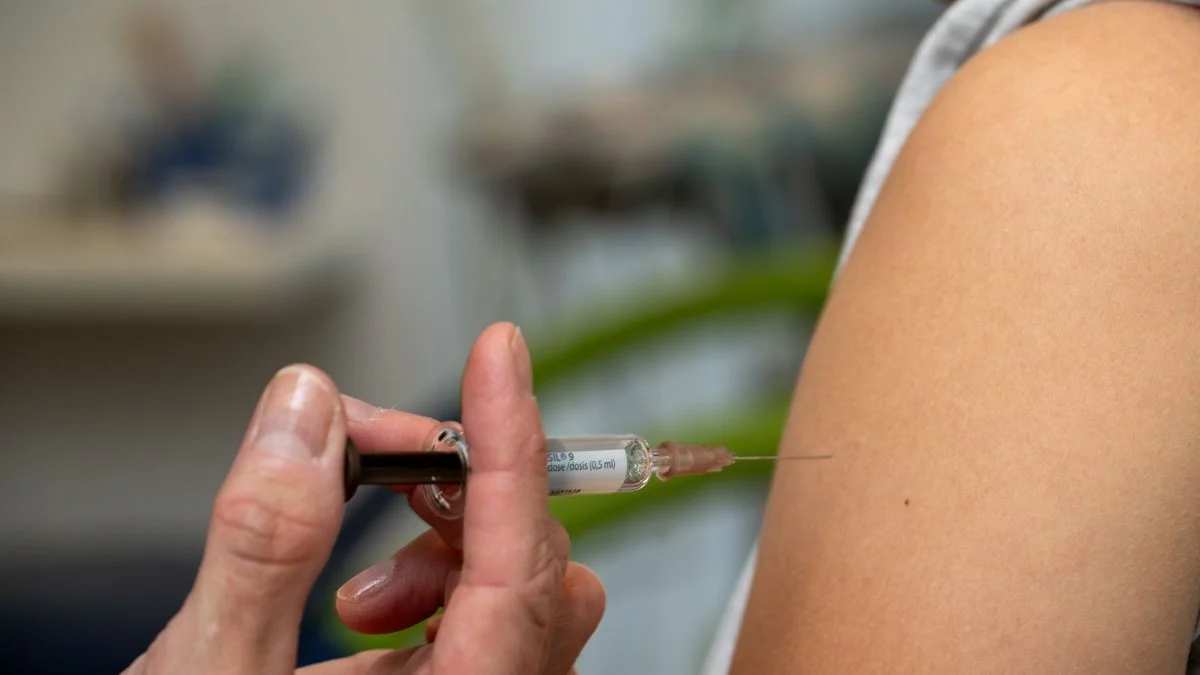
In what is being hailed as a monumental triumph for public health, a groundbreaking study published in the prestigious medical journal The Lancet has revealed that the systematic implementation of the Human Papillomavirus (HPV) vaccination program in England has achieved an unprecedented milestone. According to the research, the risk of death from cervical cancer among young women has been driven to near-zero levels.
The data, covering the period between 2020 and 2024, shows that not a single woman aged 20 to 24 in England died from cervical cancer. This historic achievement suggests that the proactive immunization strategy has effectively saved nearly 200 lives within this specific cohort, marking a pivotal moment in the global fight against cancer.
The Chronology of a Public Health Revolution
The path to this victory was paved by decades of rigorous clinical research and a sustained, long-term commitment to public health infrastructure in the United Kingdom.
The Foundation: 2008 and the Launch of the Vaccine
The United Kingdom took a pioneering stance in 2008 by becoming one of the first nations to introduce a national, routine HPV vaccination program. Initially targeted at adolescent girls aged 12 to 13, the program was designed to immunize individuals before they were likely to be exposed to the virus. At the time, the rollout faced logistical challenges and public skepticism, yet the National Health Service (NHS) maintained a steadfast focus on school-based delivery, ensuring high uptake rates.
The Expansion: 2019 and Universal Coverage
Recognizing that HPV is not exclusive to females—and that herd immunity is bolstered by broader coverage—the UK government expanded the program in 2019. The vaccine was extended to include adolescent boys. By ensuring that both genders were protected, the program significantly reduced the circulation of the virus within the community, thereby providing a stronger "shield" for the entire population.
The Data Trend: 2015–2019
Even before the current findings, the success of the program was evident. Between 2015 and 2019, England recorded an 80% reduction in cervical cancer deaths among the young female demographic. This period served as a bellwether, indicating that the vaccine was not merely theoretical in its benefit but was actively preventing the progression of pre-cancerous lesions into invasive, life-threatening malignancies.
Understanding the Virus: What is HPV?
To understand the magnitude of this success, one must understand the adversary. Human Papillomaviruses are a group of more than 200 related viruses, some of which are sexually transmitted. While many infections are cleared by the body’s immune system, persistent infection with high-risk HPV strains can lead to cellular changes in the cervix, which, if left undetected and untreated, can evolve into cancer.
Beyond cervical cancer, HPV is linked to a range of other malignancies, including cancers of the mouth, throat, anus, and external genitalia in both men and women. The 2019 expansion to include boys was a strategic move to combat these secondary cancers, demonstrating a comprehensive approach to viral suppression.
The Lancet Study: Analyzing the "Near-Zero" Impact
The recent study published in The Lancet provides the most compelling evidence to date that the HPV vaccine is the single most effective tool in the modern gynecological arsenal.
Methodology and Findings
Researchers analyzed death records and vaccination registries spanning over a decade. By comparing vaccinated cohorts with historical data from the pre-vaccination era, the study was able to isolate the effect of the immunization program. The result was stark: for girls who received the vaccine at the age of 12 or 13, the risk of developing and subsequently dying from cervical cancer before the age of 30 was found to be statistically negligible.
Why This Matters
For decades, cervical cancer was a leading cause of cancer-related mortality in young women. The psychological and physical toll of diagnosis and treatment—which often involves surgery, chemotherapy, and radiotherapy—is immense. By effectively preventing the infection from taking root in the first place, the medical community has bypassed the need for these invasive procedures, sparing a generation of women from a life-altering diagnosis.
Official Responses and Expert Commentary
The global medical community has reacted with a mix of celebration and cautious optimism, viewing this data as a roadmap for other nations to follow.
The Perspective from Cancer Research UK
Michelle Mitchell, Chief Executive of Cancer Research UK, described the findings as a historic turning point. "Dank HPV-Impfung und Gebärmutterhalsuntersuchungen ist eine Zukunft, in der nahezu niemand Gebärmutterhalskrebs bekommt, jetzt klar in Sicht," Mitchell stated. Her sentiment echoes a growing consensus among oncologists: that cervical cancer, once considered an inevitable risk for women, could eventually be relegated to the history books.
The Role of Screening
While the vaccine is the primary driver of this success, experts are quick to note that it works in tandem with the NHS cervical screening program (the "smear test"). Screening remains a vital safety net for those who remain unvaccinated or for the small percentage of cases where the vaccine may not provide full coverage against all rare strains. The synergy between prevention (vaccination) and early detection (screening) is the cornerstone of the UK’s success.
Global Implications: A Model for the World
The success in England provides a blueprint for global health organizations, including the World Health Organization (WHO), which has set an ambitious goal to eliminate cervical cancer as a public health problem by the end of the century.
Challenges in Low-Income Nations
While the UK’s experience is a triumph, it also highlights the "vaccination divide." In many low- and middle-income countries, access to the HPV vaccine remains limited by cost, supply chain issues, and a lack of school-based delivery infrastructure. The Lancet study serves as powerful advocacy for global health equity; it proves that if the vaccine is delivered systematically, the results are near-miraculous.
Addressing Vaccine Hesitancy
Despite the irrefutable data, vaccine hesitancy remains a hurdle in some communities. Public health officials are now tasked with using this new evidence to reassure parents and guardians. The argument is no longer about hypothetical benefits; it is about a proven, real-world reduction in mortality that has been witnessed across an entire country.
Looking Ahead: The Future of Cervical Cancer
As we look toward the next decade, the focus in England and beyond will likely shift toward two main objectives: maintaining high coverage rates and refining screening protocols.
Sustaining the Gains
Success is not a static state. Public health programs require constant funding, public education, and logistical support. As the cohorts of vaccinated women age, the medical system must ensure that they continue to receive appropriate care while remaining vigilant for any shifts in viral mutation or coverage gaps.
The Vision of Elimination
The term "elimination" does not mean that the virus will disappear from the earth entirely, but rather that the incidence of cervical cancer will fall to a level where it is no longer a public health threat. If the current trajectory holds, England is well on its way to becoming the first country to effectively end cervical cancer as a major cause of death.
Conclusion: A Testament to Science
The news from England is more than just a set of statistics; it is a testament to the power of preventative medicine. It demonstrates what can be achieved when scientific innovation meets political will and public trust.
For the families of those who might have otherwise been lost to this disease, the impact is immeasurable. For the world at large, the English experience provides the clearest evidence yet that through the HPV vaccine, we hold the key to eradicating a devastating disease. As researchers continue to monitor the long-term outcomes, the world watches with hope, recognizing that we are closer than ever to a future where cervical cancer is a relic of the past.
The achievement in England is not just a milestone for the UK; it is a beacon of hope for every nation, confirming that with the right tools and the right strategy, we can protect future generations from the scourge of cancer.