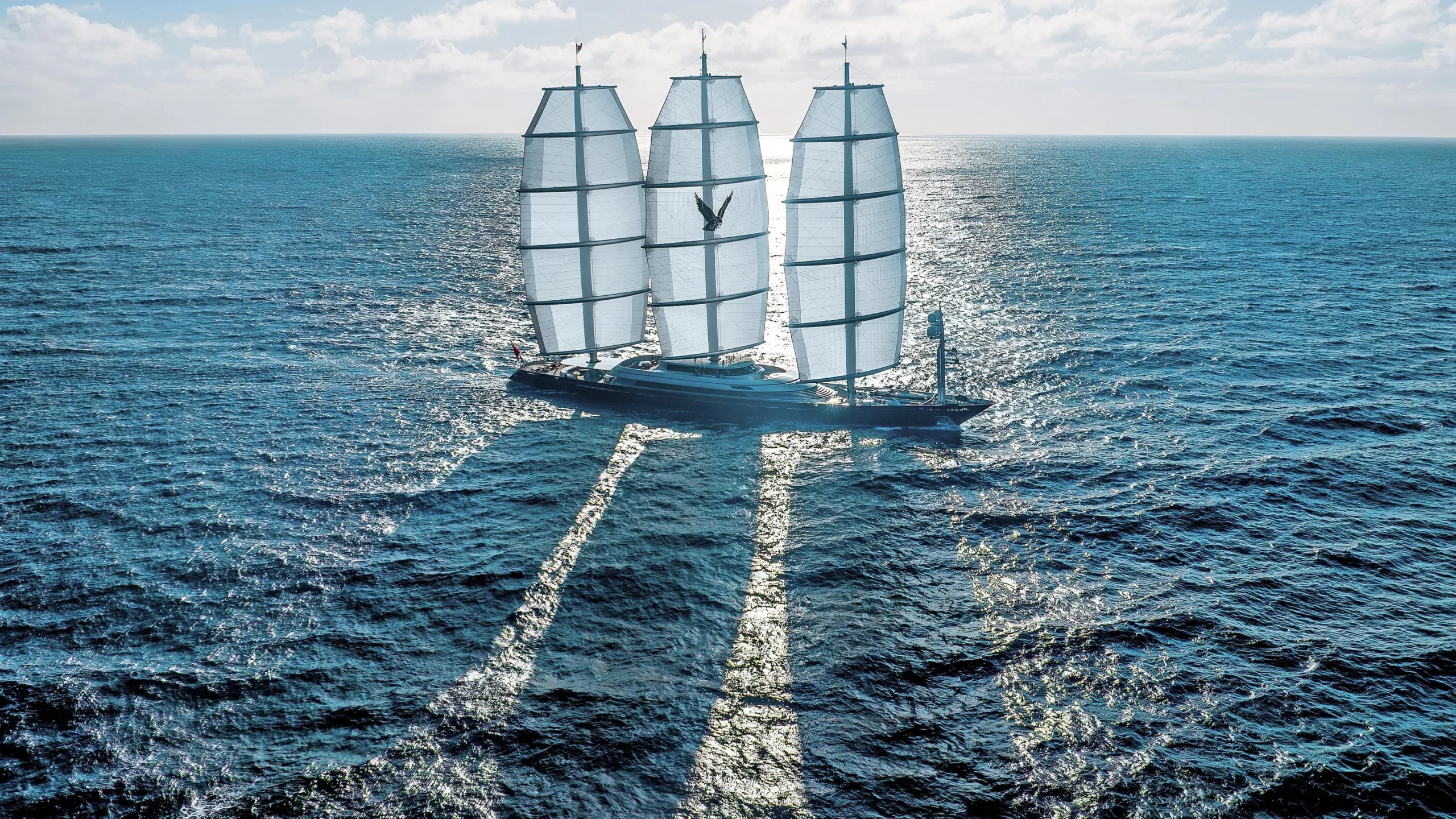
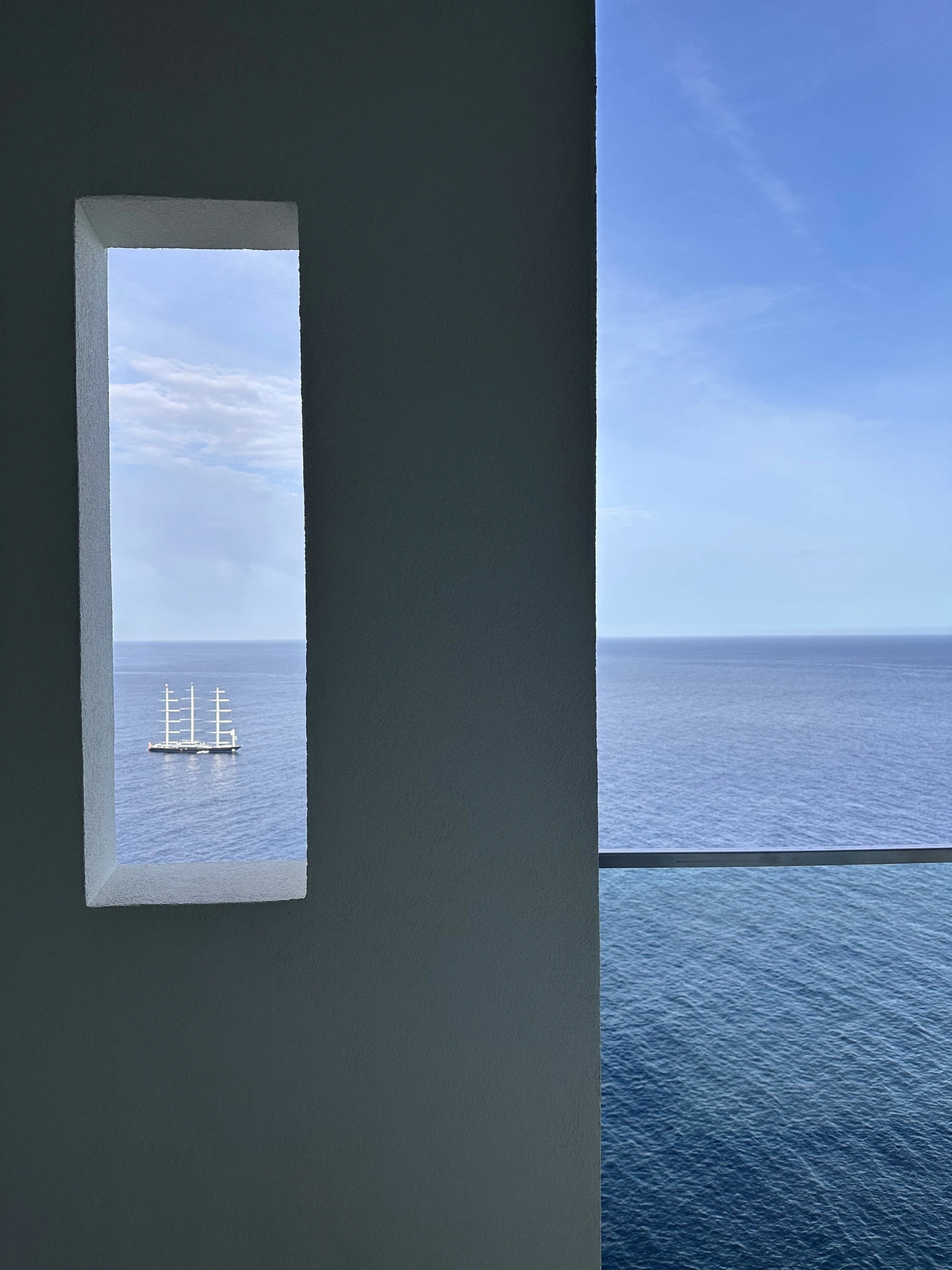
Wherever she appears, the Maltese Falcon commands the horizon. With her midnight-blue hull and three towering, aerodynamic masts that pierce the sky like silver needles, she is more than a vessel—she is a maritime legend. For those who spend their summers oscillating between the exclusive berths of Ibiza Magna, Port Hercule in Monaco, and Marina Grande on Capri, the sight of her silhouette is an immediate signal: a masterpiece of engineering has arrived.
Now, two decades after her sensational debut, the Maltese Falcon is entering a new chapter, bridging the gap between historical innovation and the modern ultra-luxury hospitality market through a strategic partnership with the Jumeirah Group.
The Engineering Marvel: A Dream Realized
The Maltese Falcon is an 88-meter, 1,200-ton clipper that defies conventional naval architecture. Her most striking feature is the "DynaRig," a revolutionary sailing system that allows her 2,400 square meters of sail to be deployed or furled automatically in just seven minutes. There is no tangle of ropes on deck, no crew climbing the rigging in peril; instead, the masts are free-standing and rotating, a triumph of carbon fiber and hydraulic engineering.
The genesis of this design traces back to the 1960s and the visionary German naval engineer Wilhelm Prölss. He predicted that by the 21st century, economic and ecological pressures would force commercial freighters to return to sail power, manned by minimal crews. At the time, his ideas remained theoretical—stifled by the low cost of oil and the limitations of contemporary materials. Had his vision been realized sooner, the world might have been spared millions of tons of toxic bunker fuel emissions.
It was not until the American venture capital pioneer Tom Perkins—a man with both the intellectual curiosity and the vast resources required—encountered Prölss’s designs that the dream finally took flight. By integrating modern carbon fiber, sophisticated hydraulics, and cutting-edge computer control systems, Perkins turned a theoretical white paper into the world’s most advanced sailing yacht.
Chronology: From Visionary Concept to Jumeirah Icon
- 1960s: Wilhelm Prölss publishes his research on automated sailing rigs for commercial cargo ships.
- 2006: The Maltese Falcon is launched, stunning the yachting world with her DynaRig system and unprecedented performance.
- 2009: Following a short ownership period by Tom Perkins, the yacht is acquired by Greek hedge fund manager Elena Ambrosiadou.
- Present Day: Ownership transfers to the Italian Rovati pharmaceutical family, who initiate a high-level collaboration with the Jumeirah Group, integrating the vessel into the "Jumeirah Privé Collection."
Supporting Data: Luxury at the Extremes
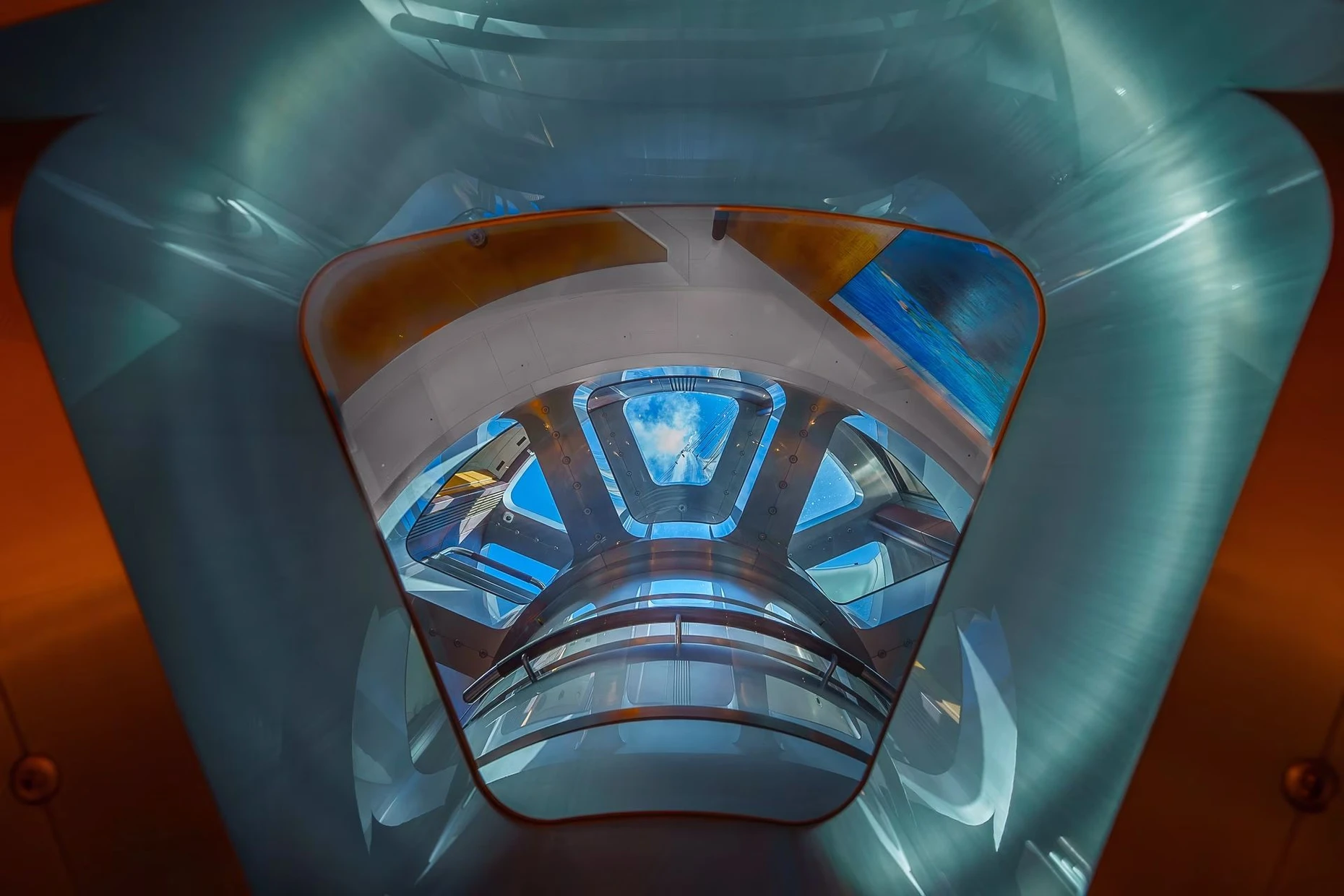
The Maltese Falcon is not merely a static monument to design; she is a high-performance craft capable of holding her own in a regatta. Under deck, the interior functions as a spacious, floating spacecraft, blending aesthetic grace with raw power.
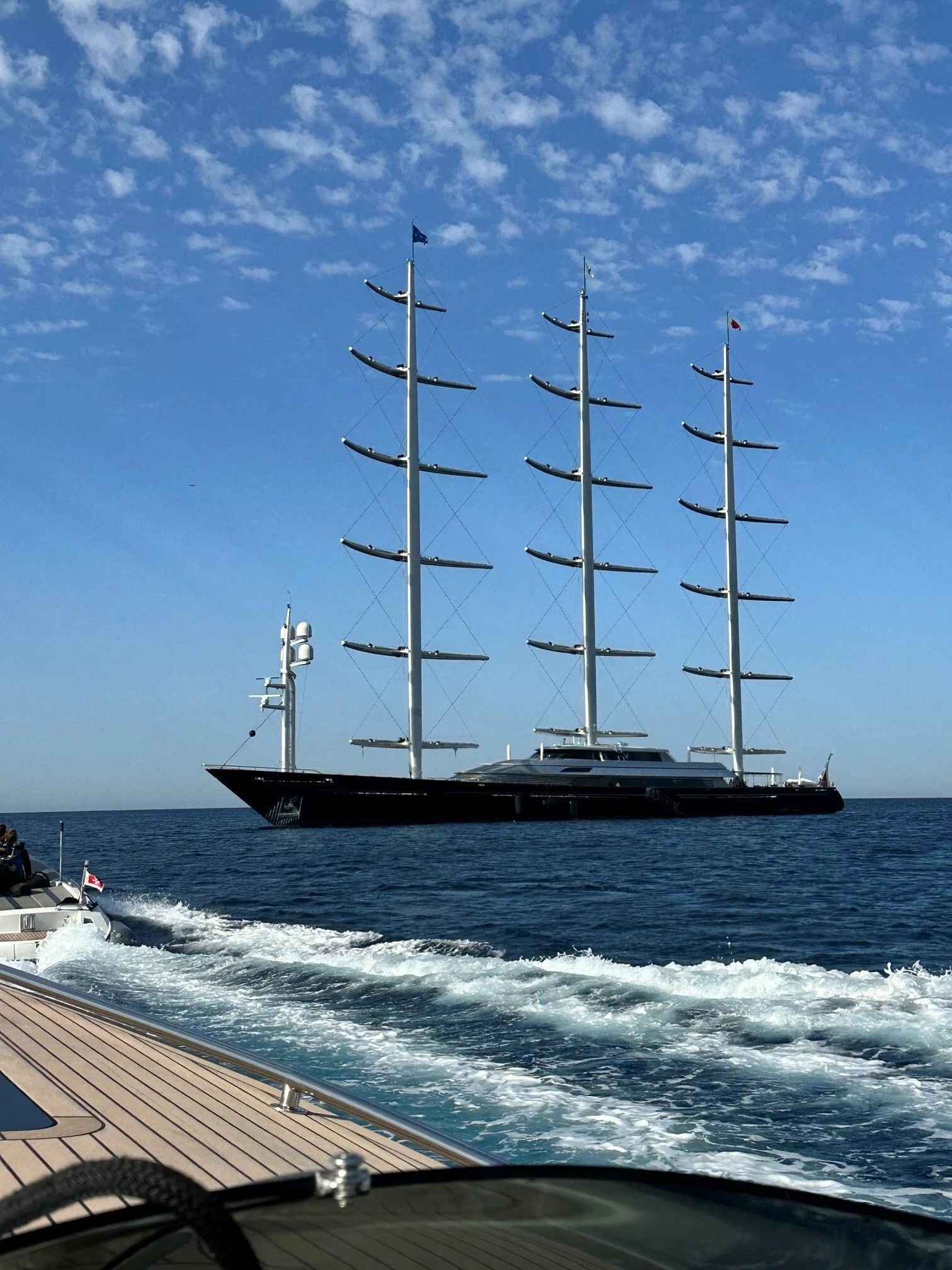
To understand the scale of the operation, one must look at the economics of the "Ultra-High-Net-Worth" (UHNW) sector. Chartering this sailing legend requires a commitment of approximately €800,000 for seven nights. For that price, up to 12 guests receive a comprehensive, bespoke experience that includes a full spa, a curated wine cellar, and a world-class culinary team. The vessel operates with a crew of 18, ensuring that every guest whim—from E-foils and Seabobs to specialized water-sport gear—is met instantaneously.
The demand for such experiences is surging. As the global population of the ultra-wealthy grows, so does the competition among luxury hospitality brands to offer "legendary" experiences that transcend the traditional hotel stay.
The Strategic Pivot: The Jumeirah Connection
The partnership between the Maltese Falcon and Jumeirah is a marriage of two icons born of similar DNA. Jumeirah, owned by the Dubai ruling family (the Al Maktums), rose to global prominence with the 1999 launch of the Burj Al Arab, a hotel designed to look like a wind-filled sail.
"The Jumeirah Privé Collection is designed to go beyond the ordinary," says a company representative. By incorporating the Maltese Falcon, Jumeirah is offering their most elite guests access to a nomadic luxury experience. With Jumeirah properties already established in prime locations like Port de Sóller in Mallorca and Anacapri, the brand can now offer a seamless transition from a five-star suite on land to a five-star suite on the water.
This move follows a broader industry trend where the world’s most prestigious hotel groups are turning to the sea. Ritz-Carlton has already launched three custom-built superyachts, while Aman, Four Seasons, and LVMH (via the Orient Express brand) are all aggressively expanding into the luxury cruise sector. These are not cruise ships in the traditional sense; they are intimate, floating resorts that offer a level of privacy and personalization that land-based resorts struggle to match.
Implications for the Future of Sustainable Travel
The Maltese Falcon represents more than just the pinnacle of wealth; she is a living proof-of-concept for the future of maritime travel. In an era where the environmental impact of luxury tourism is under intense scrutiny, the yacht serves as a powerful symbol of emissions-free, wind-assisted travel.
While she is currently a toy for the elite, the underlying technology of the DynaRig is being revisited by commercial shipping companies as a way to reduce reliance on heavy fuel oils. The implication is profound: the "toys" of the billionaires of today often become the essential technologies of the industries of tomorrow.
Life on Board: A Floating Masterpiece
For the guests on board, the experience is designed to be as effortless as it is awe-inspiring. As Captain Pierfrancesco Cafaro navigates the waters off the coast of Mallorca, the majority of the 18-member crew remains invisible, working behind the scenes to maintain the seamless illusion of a vessel that runs on air alone.
During the day, guests can enjoy a quiet lunch in a secluded bay, surrounded by the clear, azure waters of the Mediterranean. If the heat becomes too much, the crew is ready with a full suite of water toys, including "ocean-friendly" golf balls that dissolve in the water, releasing fish food—a small, thoughtful nod to the ecological responsibility that the ship’s design implies.
As the sun sets over the Serra de Tramuntana, the atmosphere shifts. On wind-still evenings, the massive sailcloth is sometimes repurposed as a cinematic screen. The film of choice? Appropriately, the 1941 classic The Maltese Falcon. The film, a gritty noir about a group of people obsessed with a bird statuette—which eventually turns out to be a worthless illusion—serves as a poetic counterpoint to the reality of the ship itself. Unlike the object in the movie, the Maltese Falcon is very real, very functional, and a testament to the endurance of human ingenuity.
Conclusion
The Maltese Falcon remains a rare intersection of art, history, and radical technology. She is a bridge between the era of the great clippers and the future of sustainable maritime navigation. As she continues to ply the waters of the Mediterranean under the Jumeirah banner, she serves as a reminder that even in a world where "having it all" is the baseline, true luxury is found in the moments where the wind catches the canvas, and the machine disappears, leaving only the sound of the sea.