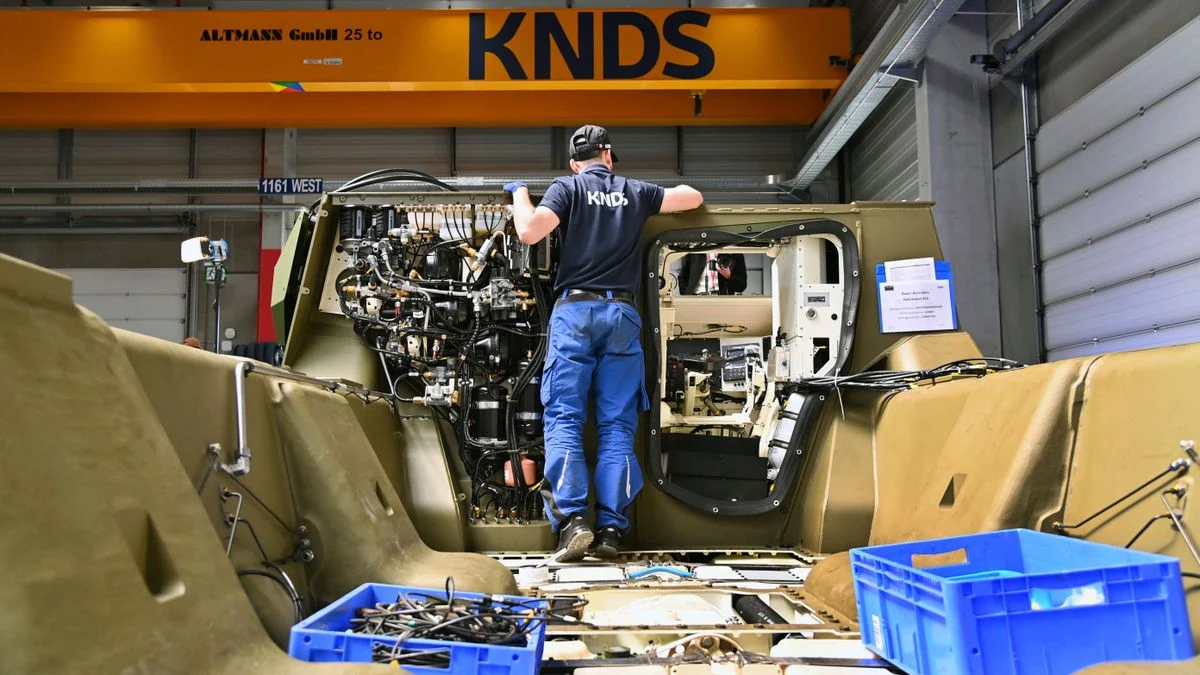
The German-French defense giant KNDS, a linchpin of European land-based military hardware, is currently navigating a complex geopolitical and financial storm. As the company pushes forward with its long-anticipated initial public offering (IPO), it finds itself caught between the rigorous demands of global capital markets and the strategic, often slow-moving maneuvering of the German federal government. Despite intense political pressure to delay the listing, KNDS leadership has signaled that the firm will not wait for Berlin to resolve its ownership aspirations.
The Core Conflict: IPO Ambitions vs. Governmental Hesitation
The central friction point involves the German government’s desire to secure a direct stake in KNDS—the manufacturer of the Leopard 2 tank—before it goes public. While KNDS, under the leadership of CEO Jean-Paul Alary, remains committed to its original timeline for a public listing, high-ranking officials in Berlin have been reportedly lobbying for a postponement until the autumn.
This disconnect underscores a fundamental clash of priorities. For KNDS, the IPO represents a critical juncture to unlock capital, increase transparency, and provide liquidity to its founding family owners. For the German government, the primary concern is sovereignty and control over a strategic defense asset in a time of heightened European insecurity. The German state’s late-stage interest in acquiring a 30% to 40% stake from the owning families, Bode and Braunbehrens, has created a bottleneck that threatens to derail the carefully orchestrated financial debut of the company.
Chronology of the Standoff
The path to the current stalemate has been marked by a series of rapid developments that have kept investors and policymakers on edge:
- Initial IPO Preparation: KNDS, formed through the merger of Germany’s Krauss-Maffei Wegmann (KMW) and France’s Nexter, began formalizing plans for an IPO to capitalize on the massive surge in defense spending across Europe following the invasion of Ukraine.
- The State Enters the Fray: In recent weeks, state secretaries from the German Ministries of Defense and Economics initiated formal discussions with the KNDS founding families. The proposal: an equity stake of 30% to 40% for the German federal government.
- The "Summer Deadline": Media outlets, including Manager Magazin and Die Welt, reported that the German government had requested a delay of the IPO until the autumn, citing the complexity of finalizing such a significant state entry into the equity structure.
- The Rejection of Delay: CEO Jean-Paul Alary issued a definitive statement: KNDS is proceeding with its preparations "along the original schedule" with the full backing of its current owners and the supervisory board.
- Ongoing Investigations: Compounding the pressure, reports regarding potential corruption allegations involving contracts in Qatar have surfaced, adding a layer of regulatory and reputational risk to the IPO process.
Supporting Data: Why KNDS Matters to Europe
To understand the intensity of the struggle, one must examine the market position of KNDS. As the prime contractor for the Leopard 2, the company is at the heart of the "Tank Coalition" supporting Ukraine.
Strategic Value
The current defense landscape in Europe is characterized by a "rearmament" phase. With European nations collectively increasing defense budgets by billions of euros, the demand for KNDS’s core products—the Leopard 2, the Caesar self-propelled howitzer, and the future Main Ground Combat System (MGCS)—is at an all-time high.
Financial Snapshot
- Order Backlogs: The company is sitting on a record-breaking order book, providing revenue visibility for the next decade.
- The Valuation Gap: By going public, KNDS aims to achieve a valuation that reflects both its current industrial output and its potential as a consolidated European champion.
- Family Holdings: The Bode and Braunbehrens families are looking for an exit or a partial liquidity event, which is why the government’s interest is both a welcome source of capital and a potential complication for the IPO’s pricing and placement.
Official Responses and Corporate Strategy
The official position from the KNDS boardroom is one of professional detachment from political drama. Jean-Paul Alary’s messaging has been clear: while the company welcomes the German government as a potential shareholder, it will not allow the political process to dictate its corporate trajectory.
"KNDS would naturally welcome a potential participation of the federal government in the shareholder circle," the company stated in a recent press release. However, this is immediately followed by a firm boundary: "The focus remains on the careful preparation of the IPO in the best interest of the company, its existing owners, employees, and customers."
This statement is a calculated signal to potential institutional investors that the company maintains its independence and that its management is not being steered by the fluctuating whims of Berlin’s coalition government. It suggests that if the German government wants in, they must move at the speed of the market, not the speed of a parliamentary committee.
The Broader Implications: A Test of European Defense Industry Consolidation
The KNDS saga is more than a dispute over timing; it is a case study in the challenges of European defense industrial policy.
1. Sovereignty vs. Efficiency
European governments often speak of the need for "strategic autonomy," yet they frequently intervene in the corporate governance of defense firms in ways that can hinder efficiency. By attempting to force a stake purchase before an IPO, the German government is attempting to balance the need for democratic control with the need for competitive, market-driven defense giants.
2. The Corruption Hurdle
The emergence of allegations concerning potential illicit payments in Qatar poses a significant hurdle. For any IPO, transparency is the primary currency. If investigators find evidence of systemic corruption, it could lead to severe fines, regulatory sanctions, and a loss of investor confidence. The timing of these reports, right on the cusp of an IPO, is particularly damaging and could force a valuation discount if the market perceives the legal risk as significant.
3. The Future of Franco-German Cooperation
KNDS is a joint venture between France and Germany. Any significant shift in its shareholding structure—such as the German state becoming a major owner—could alter the balance of power within the company. This risks upsetting the delicate Franco-German equilibrium that has held the company together. If the German government pushes too hard, it may signal a shift toward nationalization that could alienate the French side of the partnership.
4. Market Sentiment
For institutional investors, the "political interference" narrative is a red flag. Investors prefer stability and clear ownership structures. A scenario where the government is in a public tug-of-war with management creates uncertainty. If the IPO proceeds, the prospectus will have to address these risks in extreme detail, potentially impacting the final share price.
Conclusion: A Narrow Path Forward
The situation surrounding KNDS remains highly volatile. The company’s insistence on adhering to its timeline is a bold move designed to retain control over its own narrative. However, the German government holds significant sway; they are not just a potential investor, but the company’s most important client.
As the autumn approaches, the pressure will only mount. Either the German government will find a way to finalize its stake acquisition quickly—perhaps by agreeing to participate in the IPO as an anchor investor rather than a pre-IPO partner—or it will be forced to watch from the sidelines as KNDS enters the public markets.
Ultimately, the KNDS IPO is a barometer for the health of the European defense sector. If the firm can successfully navigate these political, legal, and financial pressures, it will set a precedent for how European defense firms can scale up to meet the security challenges of the 21st century. If it fails, it will serve as a stark reminder that in the defense industry, geopolitical interests often come at the expense of market logic.