For the citizens of the German Democratic Republic (GDR), the sight of a "Minol" petrol station was a constant, unchanging fixture of the landscape. While the rest of the world grappled with the volatile fluctuations of global oil markets—from the shocks of the 1970s to the inflationary spikes of the 1980s—East German drivers enjoyed a surreal sense of stability. From 1960 until the collapse of the socialist state in 1990, the price of fuel at the pump remained locked by government decree: 1.50 GDR-Marks for a liter of Normal gasoline, 1.65 for Super, and 1.40 for diesel.
This was not the result of market efficiency, but of a rigid, state-controlled economic system that prioritized social stability over financial reality. By examining this period, we uncover a fascinating case study in how a command economy attempted to insulate its population from the realities of the global market, at an immense cost to its own industrial health and environmental future.
The Illusion of Stability: The Mechanics of Price Fixing
In the socialist logic of the GDR, the price of goods was not a reflection of supply and demand, but a political instrument. The SED (Socialist Unity Party) leadership viewed stable energy prices as a cornerstone of the "social contract." If the prices of essential goods remained low and predictable, the population would be less likely to voice discontent.
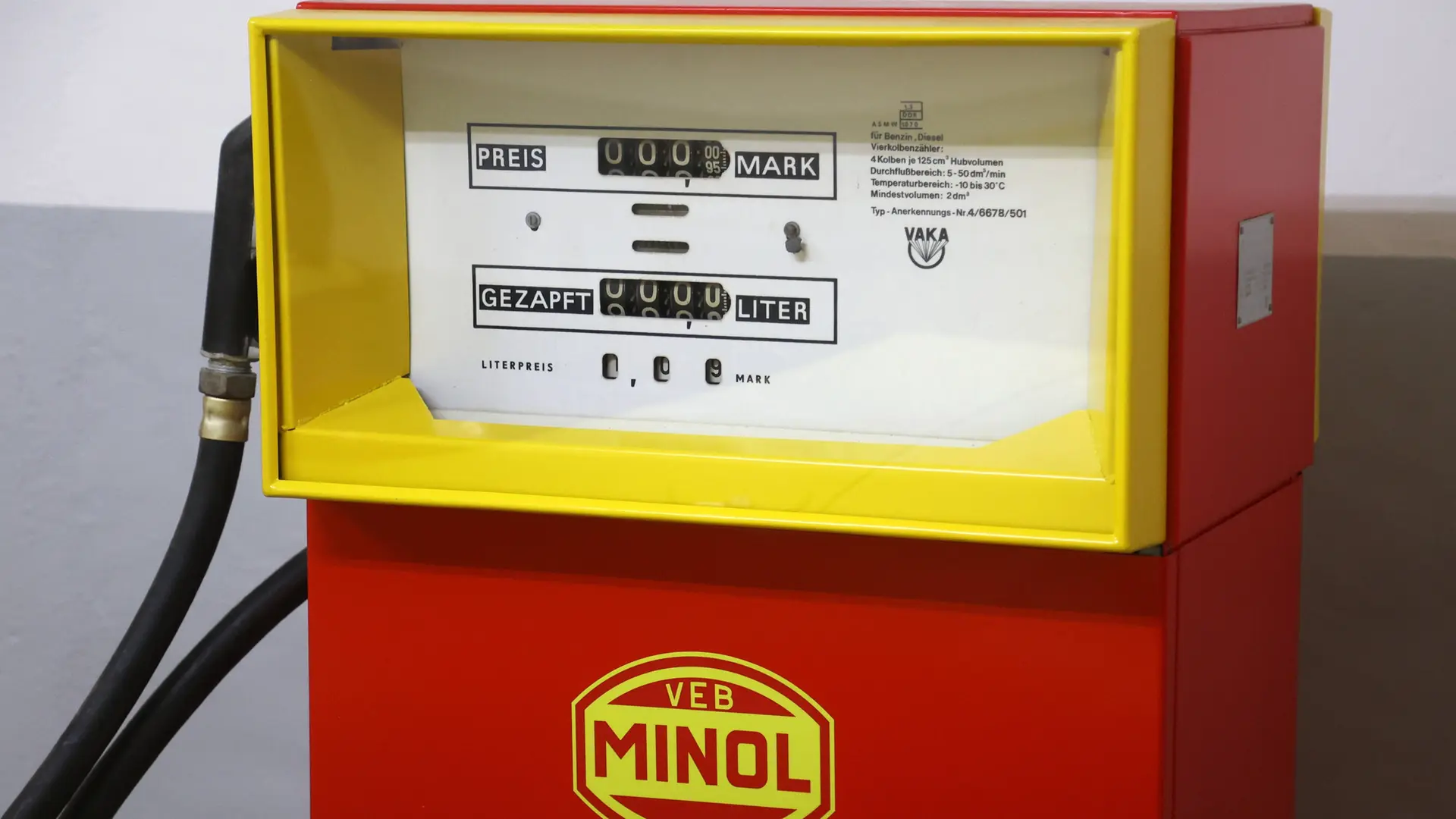
However, the "official" price bore no resemblance to the actual production and procurement costs. As noted by historian Hubertus Knabe, this was a massive, state-funded illusion. The government essentially created a massive, ongoing subsidy program. To keep fuel prices constant, the state had to cover the difference between the low consumer price and the significantly higher real market price using funds from the central budget.
This policy created a "shortage economy." Because the state could not afford to subsidize everything, it opted to keep basic necessities (bread, rent, fuel) artificially cheap while charging exorbitant prices for consumer luxuries like color televisions or washing machines to "soak up" excess liquidity. Despite this, the imbalance between available cash and available goods meant that desirable items were often found only "under the counter," through personal networks, or via the black market.
A Financial Burden: Putting Costs into Perspective
To understand the weight of these prices, one must look at the average income of the 1970s. According to the Statistical Yearbook of the GDR from 1976, an average worker earned between 750 and 800 Marks per month.

A standard tank capacity for a Trabant 601 was 26 liters. At 1.50 Marks per liter, a full tank cost 39 Marks. While this might seem inexpensive compared to modern standards, it represented roughly 5% of a monthly net salary—a significantly higher burden than what the average German driver pays today (around 3%).
The true scale of the financial impact becomes clear when compared to housing. In the 1970s, the monthly cold rent for a three-room apartment in an East German city often hovered between 30 and 50 Marks. This meant that a single trip to the gas station to fill a "Trabi" cost as much as an entire month of rent. For the average East German family, owning and operating a car was a significant, long-term financial commitment that required careful household budgeting.
The Philosophy of "Querfinanzierung" (Cross-Subsidization)
The GDR did not utilize a standard mineral oil tax to generate revenue. Instead, the State Planning Commission managed the economy through a system of "Price Equalization" and the "Increased Consumer Levy" (EVA).

The strategy was essentially one of aggressive cross-subsidization. By placing high margins on luxury goods and industrial technology, the state generated a surplus that was then diverted to lower the costs of public transport, basic food items, and utilities. This was a zero-sum game played on a national scale. The state was not creating wealth; it was merely redistributing the burden of its inefficient production systems.
However, this system had a clear divide: commercial entities did not enjoy the same luxuries. While the private citizen paid a fixed, subsidized rate, VEBs (Volkseigene Betriebe—state-owned enterprises) were often billed at different industrial rates, sometimes as low as 80 pfennigs per liter, to keep the wheels of socialist industry turning.
Chronology: Navigating Global Crises from behind the Iron Curtain
1973: The Oil Crisis and the "Autofrei" Divide
When the 1973 oil crisis hit, the world changed. In West Germany, the government imposed "car-free Sundays" to conserve fuel, leading to the iconic image of citizens roller-skating and cycling on deserted autobahns.
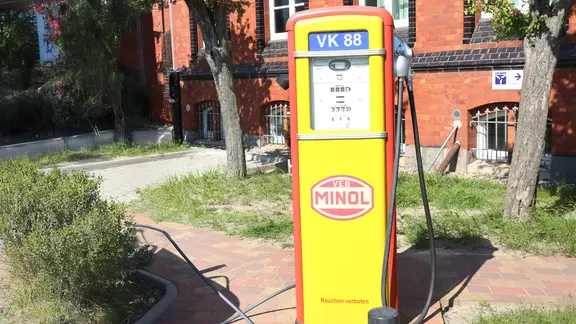
In the East, the reaction was markedly different. Fearing social unrest, the SED leadership refused to increase prices or restrict mobility. They chose to absorb the shocks, effectively shielding the East German public from the crisis. However, this was not done for free; the economic cost was shifted to the state budget, accelerating the long-term decay of the GDR’s financial solvency.
The 1980s: The Shift to Coal and Devisen
By the late 1970s and 1980s, the reality of the Cold War and the RGW (Council for Mutual Economic Assistance) trade agreements began to fray. The Soviet Union, the primary supplier of crude oil, began to demand payment in "hard currency" (Deutsche Marks) rather than the soft, non-convertible GDR-Mark.
To acquire these precious Devisen, the GDR leadership made a fateful decision: they would refine Soviet crude in facilities like the Schwedt refinery and then sell the finished gasoline to Western markets for hard currency. This created an ironic and desperate situation where the state was starving its own domestic market of fuel to satisfy its desperate need for Western capital.

The Attempt at Energy Autarky
Faced with rising costs and the desire to reduce dependence on Soviet imports, the GDR initiated a massive industrial pivot in the late 1970s. The plan was to return to the historical practice of liquefying brown coal (lignite) to create synthetic gasoline and diesel—a process heavily utilized during the Nazi era.
The shift required massive infrastructure changes. Factories and power plants were forced to convert from oil-fired boilers to coal-fired ones. Chemical plants were repurposed to synthesize fuel from coal. This "Coal-Chemistry" strategy was, however, an environmental and economic catastrophe.
The Human and Environmental Cost
The extraction of lignite required the destruction of entire landscapes and villages. The "open-cast" mining pits became symbols of the environmental degradation that defined the final decades of the GDR. Furthermore, the synthetic fuel production was incredibly energy-intensive and highly polluting. The air quality in industrial regions like Bitterfeld and Leuna suffered immensely, leading to significant long-term health issues for the local populations.

Official Responses and The "Inter-Tank" Strategy
As the economic crisis deepened, the regime sought creative ways to generate hard currency. They established a network of approximately 125 "Inter-Tank" stations, where fuel was sold exclusively for Western currency to transit drivers and visitors. These stations became symbols of the two-tier society that existed within the GDR—a stark reminder that while the state could fix the price of fuel for its citizens, it could not fix the economy itself.
Implications: A System Built on Borrowed Time
The "stability" of fuel prices in the GDR was, in retrospect, a masterclass in economic displacement. By refusing to let prices fluctuate, the state locked itself into a cycle of subsidies, foreign debt, and environmental plunder.
The policy succeeded in maintaining a superficial calm for decades, but it did so by eroding the foundations of the economy. When the Wall fell in 1989 and the currency union followed in 1990, the entire system of price fixing vanished overnight. The transition to a market-based economy was a shock, but it revealed the true cost of the "stable" prices that had defined life for generations.

The legacy of the Minol pump remains a potent reminder of the dangers of subordinating economic reality to political stability. While the price at the pump remained 1.50 Marks, the real price—paid in environmental destruction, industrial stagnation, and mounting state debt—was ultimately far too high for the nation to bear.