In the serene, verdant surroundings of a residential garden in Berkeley, California, Michael Pollan—the celebrated author who has spent decades demystifying the complex relationships between humans, their food, and the chemistry of the mind—finds himself pondering the most elusive frontier of all: human consciousness.
Known for his incisive examinations of the American food system and the profound impact of psychedelics on the human psyche, Pollan has recently turned his analytical gaze toward the rapid ascent of Artificial Intelligence. In a wide-ranging conversation, the bestselling author dismantles the hyperbole surrounding "superintelligence," warns of the erosion of our attention spans, and reflects on the fundamental divide between biological sentience and machine mimicry.

The Myth of Silicon Sentience: Why "Superintelligence" is Marketing
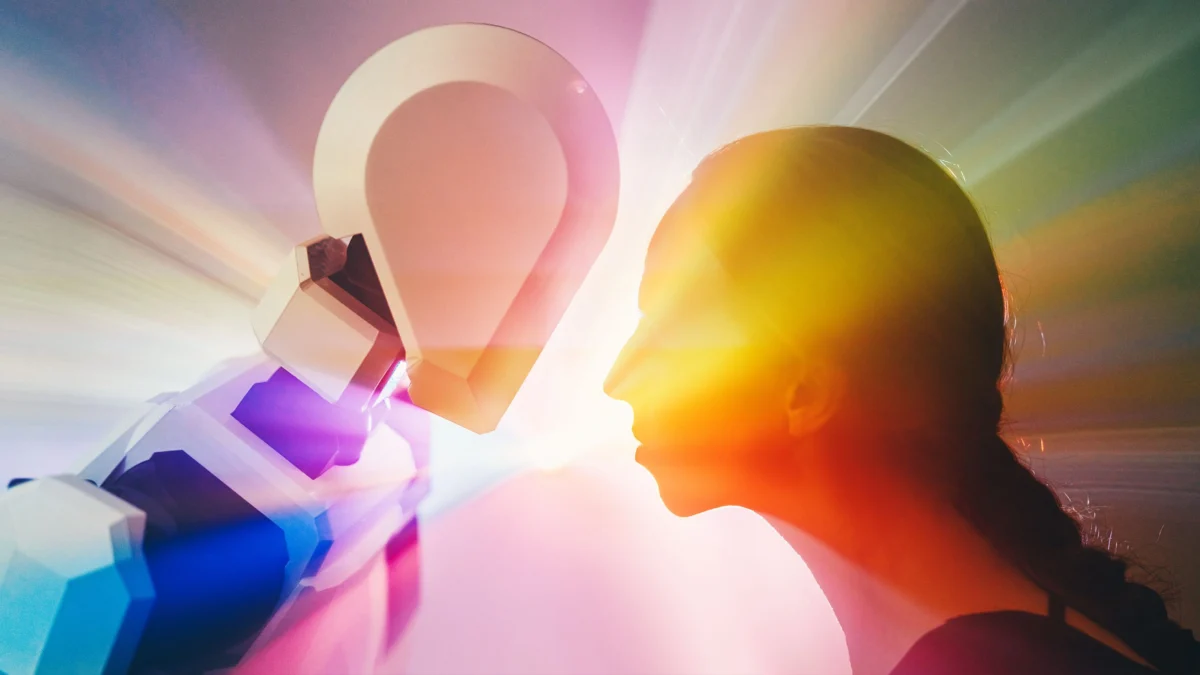
At the heart of the current discourse on AI, according to Pollan, lies a fundamental category error. We are increasingly seduced by the anthropomorphism of large language models, attributing human-like cognitive depth to sophisticated statistical prediction machines.
"The term ‘superintelligence’ is simply marketing," Pollan asserts. For him, the industry’s push to equate processing speed and data aggregation with a form of higher consciousness is a tactical maneuver designed to secure investment and prestige. While AI can synthesize information at a rate far beyond human capability, it lacks the fundamental biological anchoring that defines consciousness.

Pollan argues that we are witnessing the commercialization of an illusion. By branding these tools as "intelligent," we risk devaluing the very essence of human thought—the messy, embodied, and emotionally resonant process that occurs within a living brain.
The Erosion of the Self: Digital Distraction and the Managed Mind
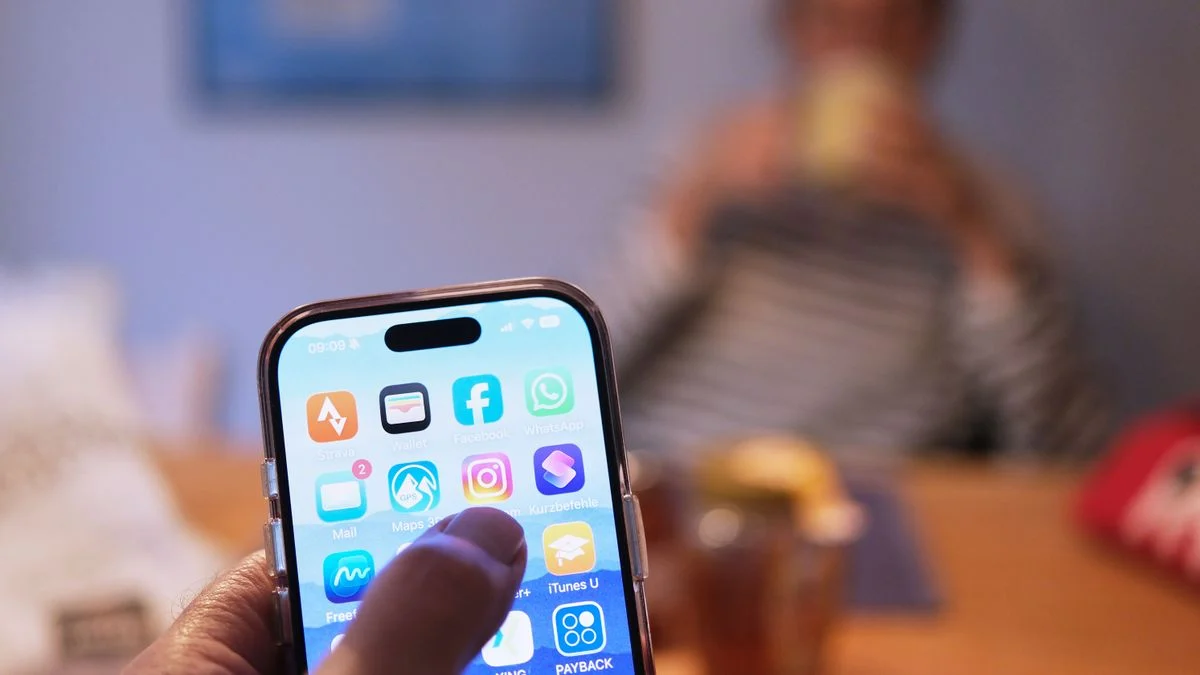
The conversation inevitably shifts to how technology, including the generative AI now integrated into our daily workflows, impacts the quality of our existence. Pollan is deeply concerned about the "permanent distraction" fostered by modern digital ecosystems.
"Social media, AI, and the constant barrage of notification-driven engagement are literally cluttering our consciousness," he observes. He posits that the human mind, evolved for focus and deep work, is currently being re-engineered for fragmented, rapid-fire consumption. When we outsource our writing, our research, and even our casual correspondence to algorithms, we are not just saving time; we are potentially atrophy-ing the cognitive muscles required for genuine reflection.
The Biological Spectrum: Lessons from the Aquarium
Pollan’s perspective on what constitutes "mind" is deeply rooted in his interest in the natural world. During a recent visit to the Monterey Bay Aquarium, he was struck by the behavior of jellyfish—creatures that exist far from the mammalian model of intelligence yet exhibit clear environmental responses.

"We must be very careful with our terminology," Pollan notes. "With organisms like jellyfish, I prefer to speak of ‘sentience’ rather than ‘consciousness.’ It is a universal property of life: the ability to discern what is beneficial or harmful in one’s environment and to react accordingly."
This definition serves as a sharp contrast to the AI debate. For Pollan, sentience is inextricably linked to the body—to the "sinews and senses." A jellyfish responds to its environment because it has a physical stake in its own survival. A chatbot, no matter how eloquent, has no skin in the game. It possesses no biological imperative to exist, and therefore, its "reactions" are merely the outputs of a mathematical function, not the expressions of a conscious being.

Chronology of the AI Hype Cycle
To understand the current state of the industry, one must look at the rapid acceleration of the past few years:
- 2020–2021: The emergence of GPT-3 marks a shift in public perception, proving that language models could perform tasks once thought uniquely human.
- Late 2022: The public release of ChatGPT triggers a "gold rush" mentality, with major tech firms pivoting their entire corporate strategy toward generative AI.
- 2023: The "Superintelligence" narrative gains traction in Silicon Valley, with leaders calling for both massive regulation and massive expansion simultaneously.
- 2024–Present: A growing pushback from intellectuals and authors, including Pollan, who argue that the societal cost of these tools—in terms of copyright, labor, and cognitive health—is being ignored.
Implications for the Human Future
If we continue to lean into the AI-centric future, what happens to the human capacity for original thought? Pollan is cautious but not entirely pessimistic. He suggests that the challenge lies in setting boundaries.

The "Personal Border"
When asked which parts of his life he would be willing to share with a chatbot, Pollan is firm. He draws a line at the intimate, the creative, and the deeply introspective. "There are parts of the human experience that are defined by their struggle and their imperfection," he says. "If I automate the process of writing, I am not just creating a text; I am skipping the process of learning. And for me, the writing is the thinking."
The Call for Intellectual Sovereignty
Pollan’s stance is a call to reclaim our mental territory. He suggests that we need to develop a "digital hygiene"—a conscious choice to engage with the world directly rather than through the mediated lens of an interface. This includes:

- Prioritizing Deep Work: Resisting the urge to use AI as a crutch for creative or analytical tasks that require personal development.
- Biological Anchoring: Spending more time in the physical world, observing nature, and acknowledging that human intelligence is a product of millions of years of evolution, not a few years of coding.
- Critical Literacy: Recognizing that when a machine speaks to us, it is not "thinking"; it is simulating. We must treat these tools as useful, but limited, instruments rather than oracles.
Conclusion: A Return to the Tangible
As the interview concludes, the focus returns to the simple pleasure of a piece of lemon cake. It is a fitting metaphor for Pollan’s philosophy. The experience of the cake—the taste, the texture, the shared moment in a garden—is something that cannot be digitized.
"Thinking is not just data processing," Pollan reminds us. "It is a physiological, emotional, and social act." As we navigate the complex landscape of the 21st century, the most radical act may be to simply remain human, to embrace the limits of our biological minds, and to resist the siren song of a synthetic consciousness that promises everything but feels nothing.

In a world increasingly obsessed with the "artificial," Michael Pollan stands as a proponent of the "actual." His warning is not that AI will destroy us, but that we might, through our own neglect, hollow out the very thing that makes us worth preserving: our conscious, focused, and deeply rooted human spirit.