New forensic analysis of 5,000-year-old remains from the royal necropolis of Abydos has reignited a long-standing debate in Egyptology. Modern scientific techniques suggest that the early pharaohs of Egypt did not journey to the afterlife alone—they were accompanied by the bodies of their loyal subjects, who were likely killed to ensure their master’s divine transition.
For decades, the existence of "retainer sacrifice"—a practice where servants, courtiers, and officials are killed upon the death of a monarch to serve them in the next world—has been a subject of intense speculation and controversy. While historical records from other ancient civilizations, such as the Sumerians at Ur, explicitly detail such practices, the evidence for ancient Egypt has remained tantalizingly ambiguous. Now, new research led by bioarchaeologist Dr. Roselyn A. Campbell of Purdue University provides compelling, data-driven support for the theory that the dawn of Egyptian civilization was marked by a brutal, ritualized finality.
The Necropolis of Abydos: A Window into the First Dynasty
Abydos, located in Upper Egypt, is one of the oldest and most significant archaeological sites in the country. It served as the burial ground for the kings of the First Dynasty (c. 3000 BCE), the era when the disparate lands of Egypt were first unified under a single crown.
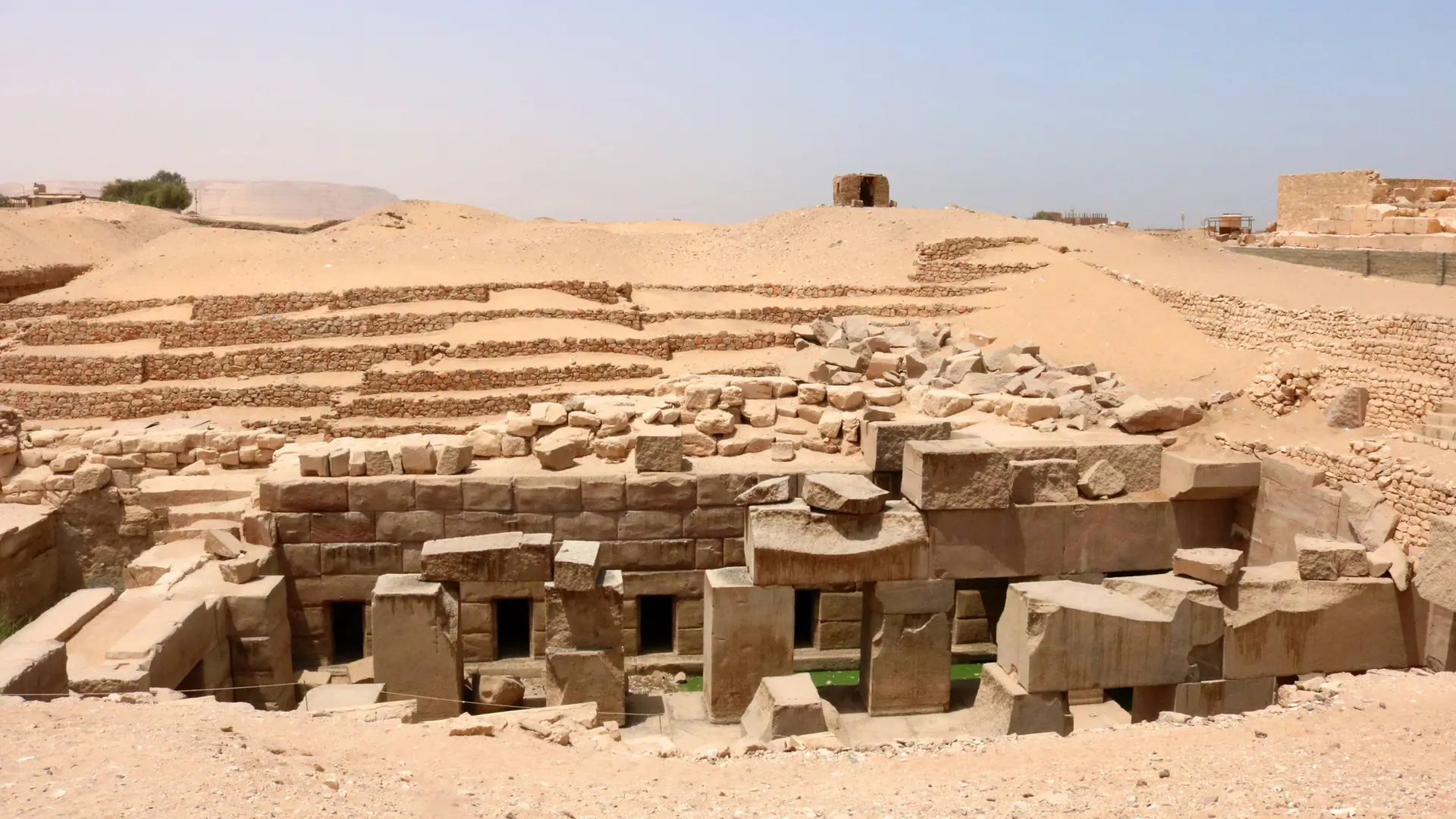
The site is dominated by massive mud-brick enclosures and royal tombs, but it is the surrounding "subsidiary burials"—hundreds of smaller, simpler graves encircling the main royal monuments—that have drawn the attention of modern researchers. These graves have long been suspected of housing the individuals who were forced to join their kings in the afterlife. However, due to the passage of five millennia and the limitations of 20th-century archaeology, confirming the cause of death for these individuals was nearly impossible.
Chronology: From Petrie’s Speculation to Modern Forensic Precision
The history of these findings dates back to the 1920s, when the legendary British Egyptologist Flinders Petrie conducted the first major excavations at the site. Petrie was struck by the sheer volume of these subsidiary burials, noting that the sheer number of people interred around the royal tombs seemed anomalous. He speculated that it was statistically improbable for so many individuals to have died from natural causes at the exact same moment as their sovereign.
Despite his intuition, Petrie lacked the technology to prove his theory. During his time, any damage observed on the skeletal remains—such as fractured skulls or broken limbs—was routinely dismissed as "taphonomic damage," or injuries caused by the pressure of burial, the weight of the desert sand, or the natural decay of the tomb structures over thousands of years.

For nearly a century, the academic consensus remained cautious. The idea that the ancient Egyptians, a culture famed for its sophistication and reverence for life and death, would engage in mass human sacrifice was uncomfortable for many scholars. The prevailing theory shifted toward the idea that these individuals were buried over a period of time, perhaps as an honorific privilege.
However, the tide has turned with the application of modern bioarchaeological and forensic methods. By utilizing high-resolution imaging and detailed microscopic analysis of bone structures, researchers can now distinguish between damage that occurs post-mortem (after death) and perimortem (at the time of death).
Supporting Data: Unveiling the "Perimortem" Truth
Dr. Roselyn A. Campbell’s recent study analyzed 46 well-preserved skulls from the Abydos subsidiary graves. The findings were stark. Of the 46 specimens, 18 showed clear evidence of "perimortem trauma"—injuries sustained at or immediately before the moment of death.

The patterns of injury are highly consistent. Many of the skulls displayed linear fractures, indicative of blunt-force trauma. While the specific implement used remains a matter of investigation, the nature of the fractures suggests a forceful strike to the head. Crucially, the researchers noted that the injuries were not consistent with the kind of combat trauma typically seen in ancient Egyptian iconography, where pharaohs are depicted smiting their enemies with heavy maces. These victims were not battlefield casualties; they were, by all accounts, domestic, court-bound individuals.
This data is significant because it provides the "smoking gun" that Petrie lacked. The forensic evidence allows researchers to map the timing of these deaths with a level of precision that makes the hypothesis of natural, coincidental death effectively obsolete. The sheer frequency of these specific, violent head traumas among a population buried in direct proximity to a pharaonic tomb points toward a systematic, state-sanctioned event.
The Social Implications: Who Were the Sacrificed?
One of the most enduring myths regarding these burials is that the victims were primarily concubines or young women. For years, the narrative was framed around the "harem" of the pharaoh, implying a gender-specific ritual.
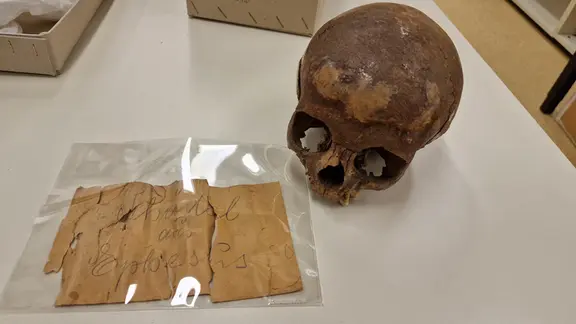
Dr. Campbell’s findings challenge this simplification. The individuals identified in the subsidiary graves were not a monolithic group. Their status and biological profiles suggest a diverse cross-section of the royal household. The analysis points toward a complex hierarchy that included high-ranking officials, skilled craftsmen, and various court functionaries.
This discovery changes our understanding of the Egyptian court in the 1st Dynasty. It suggests that the "Gefolgsopfer" (retainer sacrifice) was not merely a symbolic gesture of love or loyalty, but a profound demonstration of the king’s absolute power. By taking his staff with him into the afterlife, the pharaoh ensured that the machinery of his government—the administrators who managed the grain, the artisans who built the temples, and the advisors who shaped policy—would continue to function in the divine realm.
Whether these individuals were killed willingly—perhaps as a final act of supreme devotion—or were coerced, remains an open question. However, the scale of the operation indicates a massive state undertaking, requiring the coordination of priests, mortuary workers, and royal guards.
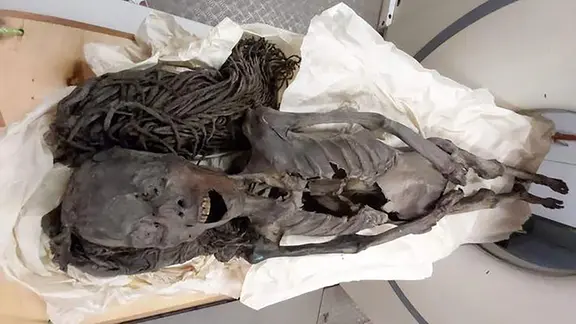
Official Responses and Scholarly Discourse
The academic community has reacted to these findings with a mix of fascination and caution. While the forensic evidence for violent death is robust, experts caution against viewing these acts through the lens of modern morality.
"To understand the First Dynasty, we must shed our contemporary biases," says one expert in early Dynastic studies. "For these people, the king was not just a political ruler; he was the literal embodiment of divine order. If the king died, the universe itself was at risk. The ritual sacrifice of his household may have been seen as a necessary, albeit horrific, act to maintain the cosmic balance."
Egyptian heritage authorities have welcomed the new research, noting that it highlights the importance of re-evaluating artifacts held in museum collections. As technology improves, items that were once "understood" based on the limited knowledge of the 1920s are now yielding secrets that were previously invisible.
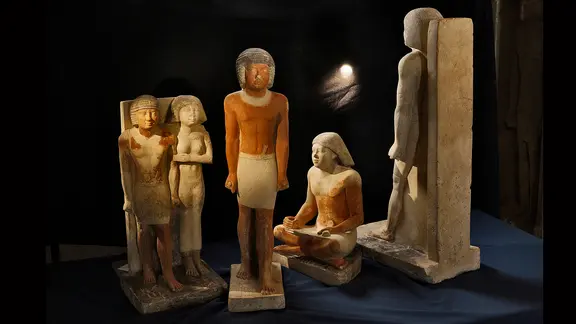
Implications for Future Research
The implications of this study reach far beyond Abydos. It invites a broader re-examination of other early royal burial sites throughout the Nile Valley. If the practice of retainer sacrifice was indeed a standard procedure during the formative years of the Egyptian state, we must ask why it eventually disappeared.
By the time of the Old Kingdom and the construction of the Great Pyramids, the practice of human sacrifice had largely vanished, replaced by the use of "ushabtis"—small, magical figurines meant to serve the deceased in the afterlife. This transition represents a major shift in Egyptian theology and the philosophy of power. It marks the moment when the state moved from a reliance on the literal, bloody sacrifice of the living to a reliance on symbolic, ritualized representation.
The work of Dr. Campbell and her colleagues serves as a poignant reminder that the history of the ancient world is rarely static. Every generation of scientists brings new tools to the table, and every new piece of data forces us to reconsider what we thought we knew about the people who built the first great civilization of the modern age.
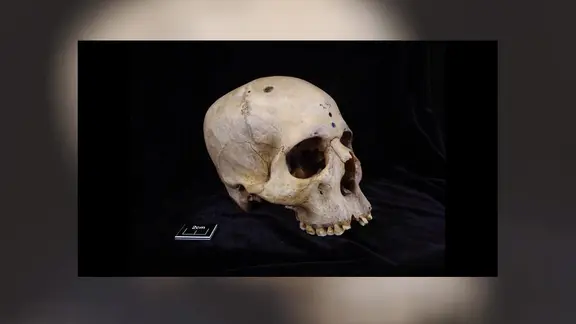
As we look at these 5,000-year-old skulls, we are not just looking at bones. We are looking at the remnants of a world where the line between the living and the dead was blurred by the absolute authority of the crown. The silence of the victims at Abydos has lasted five millennia, but through modern science, they are finally beginning to tell their story.
Conclusion
The evidence from Abydos offers a chilling but vital insight into the foundational period of ancient Egypt. It forces us to confront the harsh realities of power, religion, and mortality in a society that was rapidly coalescing into a superpower. As research continues, the focus will likely shift to DNA analysis and isotope studies, which may help determine the geographic origins and dietary status of these individuals, further clarifying their roles in the royal court.
For now, the story of the Abydos burials remains a testament to the fact that the price of eternity in the First Dynasty was often paid in blood. It is a sobering reflection on the cost of divinity and the absolute reach of a pharaoh’s hand—a reach that extended, quite literally, beyond the grave.