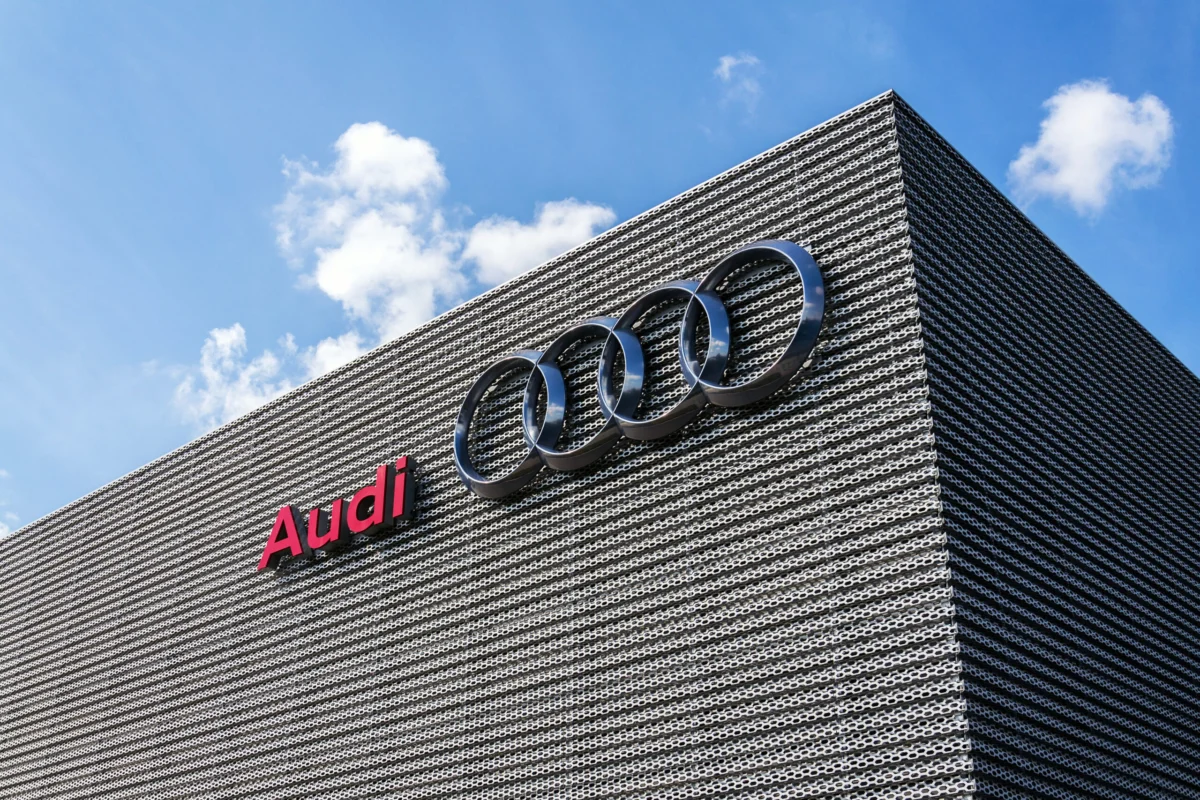
In a move that marks a watershed moment for the German automotive industry, Audi, the premium subsidiary of the Volkswagen Group, has announced plans to establish its first-ever manufacturing plant in the United States. The proposed facility, slated for the state of Georgia, represents a massive $4 billion investment and signals a fundamental shift in the company’s global production strategy. While the project promises to create 4,500 new jobs in the U.S., it has ignited a firestorm of controversy in Germany, where the parent company, Volkswagen, is currently navigating its most severe crisis in decades.
The announcement, delivered with theatrical flair at a campaign event in Perry, Georgia, featured Audi CEO Gernot Döllner sharing the stage with U.S. President Donald Trump. The symbolic gesture underscored the political gravity of the decision, which comes at a time when the automotive sector is increasingly caught in the crosshairs of geopolitical trade tensions and rising protectionism.
The Strategic Rationale: "Growth in America, for America"
At the heart of the decision lies a pragmatic, if painful, economic calculation. Audi has been struggling to maintain its margins in the North American market, largely due to the punitive tariff policies championed by the Trump administration. By shifting production to Georgia, Audi aims to bypass these import duties entirely, effectively insulating its bottom line from the volatility of international trade policy.
"Growth in America, for America," is the mantra currently driving Audi’s board. The company plans to produce approximately 200,000 SUVs annually at the Georgia site, specifically tailored to the preferences and requirements of the North American consumer. CEO Gernot Döllner has been quick to frame the investment not as a desertion of Germany, but as a strategic necessity. "For us, it is about strengthening the Audi business in the USA sustainably—having our own manufacturing footprint is the key to that," Döllner stated.
The project is scheduled to begin construction in 2027, with the first vehicles expected to roll off the assembly line in the early 2030s.
Chronology of a High-Stakes Decision
The path to this announcement has been marked by a blend of long-term strategic planning and short-term political maneuvering:
- 2018: During Donald Trump’s first term, executives from VW, Daimler, and BMW made high-profile visits to the White House to lobby against proposed tariffs on European automobiles. The current decision by Audi reflects the culmination of years of mounting pressure.
- January 2025: Following his return to the White House, President Trump intensified his "America First" rhetoric, explicitly linking the avoidance of tariffs to the relocation of production facilities to U.S. soil.
- October 2026: The formal agreement for the Georgia site was signed. The subsequent public announcement at a campaign rally in Perry highlighted the political alignment between the automaker and the administration’s protectionist agenda.
- Immediate Future: The plan now awaits formal approval from the Volkswagen Supervisory Board, a hurdle that remains the subject of intense internal deliberation.
The Domestic Backdrop: A Crisis in Germany
The timing of Audi’s American expansion could not be more sensitive. The Volkswagen Group is currently reeling from a profound crisis that has brought the threat of massive restructuring to the forefront of German public discourse. Reports of potential layoffs affecting up to 100,000 employees and the prospect of closing domestic plants in Germany have cast a long shadow over the corporate boardrooms in Wolfsburg and Ingolstadt.
Audi, a cornerstone of the German industrial identity, maintains significant production sites in Ingolstadt and Neckarsulm. The latter, in particular, has been identified as a candidate for potential closure or downsizing. For the German workforce, the sight of a CEO appearing on a campaign stage in the U.S. to announce a $4 billion investment while simultaneously discussing cost-cutting measures at home has been perceived as a profound betrayal of the social contract.
Official Responses and Internal Tensions
The announcement has triggered a wave of reactions across the political and corporate spectrum, highlighting the deep divisions within the company’s governance.
The View from the Supervisory Board
Manfred Döss, Chairman of the Audi Supervisory Board, has firmly backed the executive team. In a public statement, Döss argued that the company’s future cannot be secured solely through cost-cutting and efficiency drives. "We need the courage to invest, to seize new opportunities, and to make decisions that will define our company for the coming decades," he remarked, explicitly defending the U.S. investment as a vital component of that vision.
Political Skepticism from Niedersachsen
Olaf Lies, the Minister-President of Lower Saxony and a member of the Volkswagen Supervisory Board, offered a more guarded perspective. While acknowledging the importance of the U.S. market, he emphasized that growth abroad must not come at the expense of domestic stability. "Growth in America must secure work and value creation here; it must not displace them," Lies stated, reflecting the anxiety of a state government heavily invested in the success of the VW Group.
Labor’s Stance: The IG Metall Dilemma
Christiane Benner, First Chairwoman of the IG Metall trade union and deputy chair of the VW Supervisory Board, has been vocal about the need for accountability. "Accessing the U.S. market through a new plant is correct and necessary," she admitted, but quickly added that the board has a "debt of responsibility" to provide binding perspectives for workers at home. She emphasized that the final decision rests with the Supervisory Board, where the interests of the workforce will be the primary focus of the upcoming vote.
Implications for the Future of Global Manufacturing
The Audi-Georgia project is a bellwether for the future of the global automotive industry. As trade barriers become a permanent feature of the economic landscape, automakers are increasingly forced to abandon the model of centralized production and global export. Instead, they are moving toward a model of regionalized production, where the "made in" label must match the "sold in" market to remain competitive.
The "Trump Effect" on Corporate Strategy
The involvement of the Trump administration in the announcement serves as a masterclass in modern economic statecraft. By utilizing the threat of tariffs as a lever to force direct investment, the U.S. is effectively reshaping the manufacturing footprint of the world’s largest automotive companies. For Audi, the cost of the $4 billion investment is viewed as a necessary insurance premium against future trade volatility.
The Challenge of Dual-Track Management
The central challenge for Volkswagen Group CEO Oliver Blume will be managing the dissonance between his "local for local" strategy in the U.S. and the painful necessity of contraction in Europe. Blume has argued that the entire Group will benefit from success in North America, claiming that a localized Audi plant is the only way to sustain a presence in the world’s most competitive market. However, convincing a German workforce facing the threat of 100,000 job cuts that a $4 billion investment in Georgia is a "win" for Ingolstadt and Neckarsulm will be the most difficult task of his tenure.
Conclusion: A High-Stakes Gamble
The decision to build in Georgia is a clear acknowledgement by Audi that the era of unfettered global trade is over. Whether this move will be viewed in hindsight as a visionary step toward long-term survival or as the beginning of an era of industrial de-nationalization remains to be seen.
For now, the project remains under a cloud of uncertainty, pending the final approval of the Supervisory Board. The debates currently unfolding within the corridors of Volkswagen headquarters reflect a broader struggle: how to remain a global champion while the foundations of the home market are shifting beneath one’s feet. As the world watches, Audi’s pivot to America serves as a stark reminder that in the modern automotive landscape, industrial success is as much about political navigation as it is about engineering excellence. The path forward will require a delicate balancing act—one that satisfies the demands of American regulators and customers without dismantling the legacy of German manufacturing.