Introduction: A Cosmic Mystery on Our Doorstep
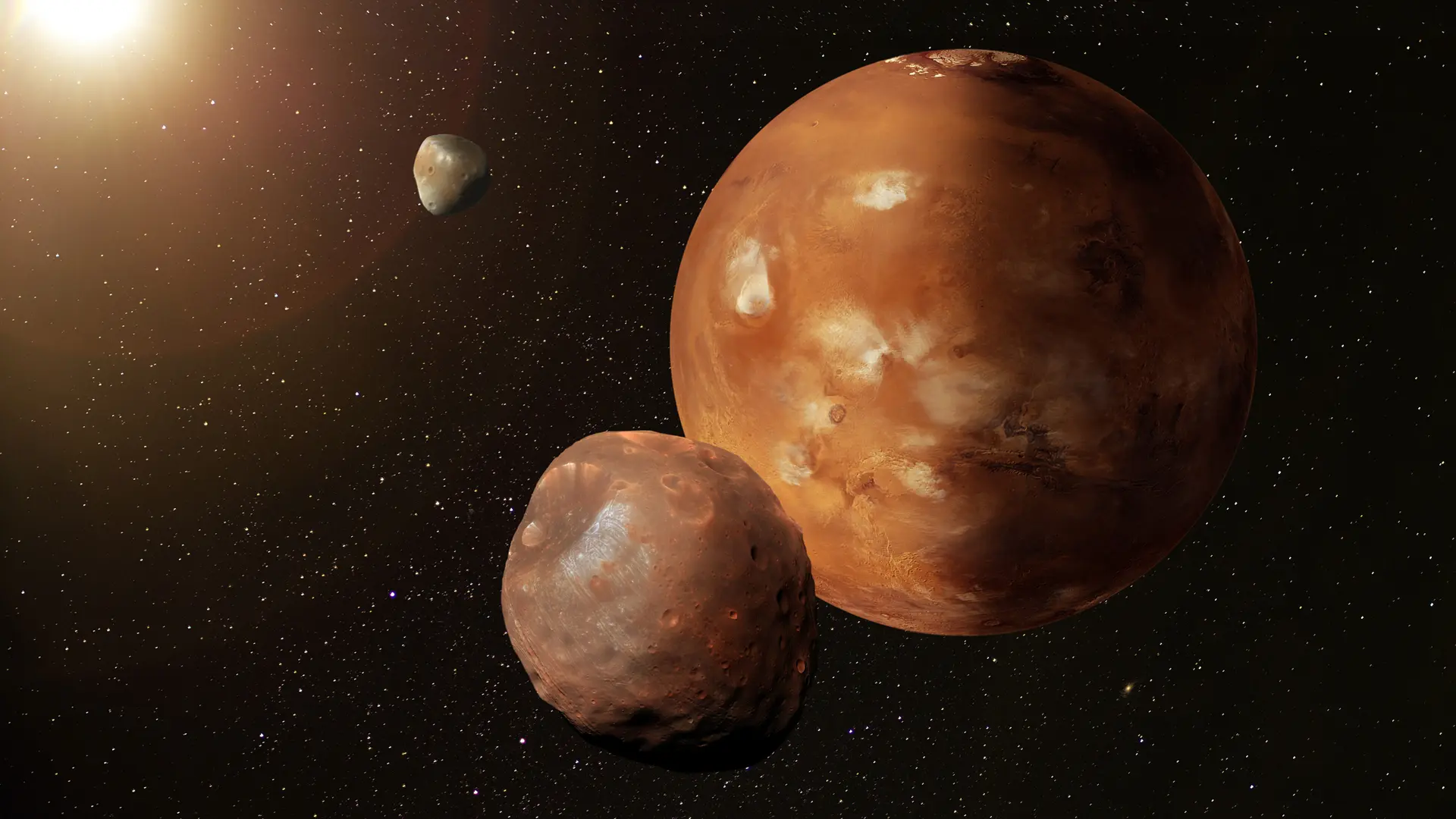
For centuries, the two small, potato-shaped moons of Mars—Phobos and Deimos—have been objects of scientific fascination and speculation. Are they captured asteroids from the outer reaches of our solar system, or are they the shattered remnants of a massive, ancient collision between a protoplanet and Mars? As of October 2026, humanity is taking a definitive step toward answering this question. The Martian Moons eXploration (MMX) mission, spearheaded by the Japan Aerospace Exploration Agency (JAXA), is set to launch, carrying with it not only international hope but also a piece of cutting-edge German engineering designed to peer into the very composition of these enigmatic celestial bodies.
The MMX mission is a milestone in space exploration, representing the first attempt to return samples from the Martian system to Earth. With an array of international partners, including the German Aerospace Center (DLR) and the French space agency (CNES), the mission seeks to resolve a debate that has divided planetary scientists for decades.
Main Facts: The MMX Mission Profile
The MMX mission is an ambitious endeavor characterized by its technical complexity and scientific scope. Unlike previous missions that focused solely on the Martian surface, MMX is specifically engineered to conduct a "round trip" to Phobos.
- Launch Date: October 20, 2026.
- Primary Objective: To determine the origin of the Martian moons and characterize the Martian environment.
- Key Capability: The spacecraft will perform in-situ observations of Phobos and, crucially, collect surface samples to be returned to Earth by 2031.
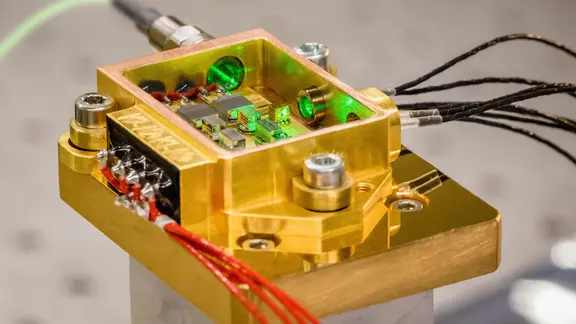
- Technological Marvel: Central to its analytical capabilities is a miniaturized, high-precision laser spectrometer developed at the Fraunhofer Institute for Applied Optics and Precision Engineering (IOF) in Jena, Thuringia.
The spacecraft, designed and built by JAXA, has been optimized to handle the harsh radiation and thermal extremes of deep space, ensuring that the delicate instrumentation remains calibrated over the multi-year journey.
Chronology of the Mission
The path to this launch has been fraught with geopolitical and logistical challenges. Originally envisioned as a collaborative effort under the "ExoMars" banner, the project faced a significant pivot following the Russian invasion of Ukraine in 2022. The subsequent dissolution of the European-Russian space partnership forced mission planners to re-evaluate their strategic approach.
- Pre-2022: Initial planning and development for the collaborative ExoMars framework.
- 2022: Realignment of mission priorities due to the geopolitical situation, leading to a stronger focus on the JAXA-led MMX architecture.
- 2023–2025: Final integration of the German-built laser modules and the "Idefix" rover. Rigorous testing for launch-load survival and extreme thermal cycling.
- October 20, 2026: Scheduled launch of the MMX mission.
- 2027–2029: Transit and orbital insertion at the Martian system.
- 2030: Surface operations, including sample collection and the deployment of the Idefix rover.
- 2031: Expected return of the capsule containing Martian moon material to the Australian outback.
The Jena Connection: Engineering for the Impossible
At the heart of the MMX mission’s remote sensing capabilities is a laser system that defies standard engineering expectations. Developed by the experts at Fraunhofer IOF in Jena, the instrument is a masterclass in miniaturization and durability.
The Science of the Beam
The laser functions as the engine for a sophisticated spectrometer. By firing the laser at the Martian moon’s surface, the instrument causes the rock to emit a characteristic radiation. By analyzing this light, scientists can determine the chemical makeup of the soil without ever needing to touch it. The laser produces green light at a wavelength of 532 nanometers with an output of over 100 milliwatts—making it approximately 100 times more powerful than a standard laser pointer—yet the entire unit weighs a mere 50 grams.
Overcoming Extremes
The environment on Phobos is brutal. Temperatures fluctuate between -130°C and +24°C. Furthermore, the launch itself exerts massive gravitational forces that could easily misalign delicate optical components.
"Statt die empfindlichen optischen Komponenten konventionell zu verkleben, haben wir Elemente des Laserresonators und der Sekundäroptik mit einer laserbasierten Löttechnik fixiert," explains Marta Gilaberte Basset of Fraunhofer IOF. This innovative soldering technique ensures that, even under the intense stresses of space travel and the extreme thermal expansion and contraction cycles on the moon’s surface, the laser remains perfectly calibrated. As Basset notes, there is no technician in space to readjust the optics after the mission begins; the hardware must work perfectly from the start.
Supporting Data: Idefix and the Search for Landings
While the MMX orbiter conducts its high-altitude analysis, a specialized rover named Idefix—developed by the DLR and CNES—will take a more direct approach. Idefix is a small, agile mobile laboratory tasked with a critical reconnaissance role.
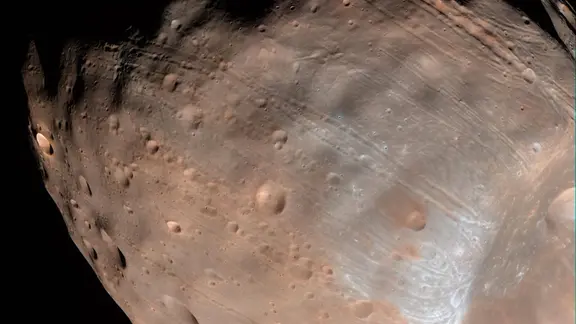
Idefix will be the first of its kind to traverse the surface of Phobos. Its primary mission is to analyze the physical properties of the lunar regolith. By mapping the surface, Idefix will identify the most stable and scientifically rich areas for the MMX mother ship to collect its primary samples. This collaboration between the orbiter’s remote sensing (the Jena laser) and the rover’s direct contact measurements provides a comprehensive "ground truth" that will be invaluable for future planetary science.
Official Responses and Strategic Implications
The international scientific community views the MMX mission as a turning point in astrobiology and planetary science. By bringing samples back from a moon that may have captured primordial solar system material, researchers hope to gain insight into the conditions of the early solar system.
The Question of Origins
The debate remains intense. If Phobos and Deimos were indeed captured asteroids, they could contain organic compounds and water ice that have remained unchanged for billions of years. If they are the result of a massive impact on Mars, they provide a fossilized record of the planet’s early geological history, potentially even carrying material that was ejected from Mars during a time when the planet was warm, wet, and potentially habitable.
Geopolitical Shift in Space
The transition of the mission from the Russian-European framework to the current JAXA-led consortium highlights the agility required in modern space exploration. The reliance on German, Japanese, and French expertise underscores that, while space missions are often nationalistic, the fundamental pursuit of scientific knowledge requires deep, cross-border integration. The success of MMX will likely serve as a blueprint for how international space agencies can navigate volatile geopolitical landscapes to maintain long-term scientific objectives.
Implications: Why This Matters for the Future
The implications of the MMX mission extend far beyond the study of two small moons.
- Preparation for Human Mars Exploration: Understanding the Martian environment, including the radiation levels and the nature of the moons, is vital for future human missions. Phobos is often discussed as a potential "staging ground" for humans traveling to the Martian surface.
- Technological Heritage: The laser technology developed in Jena will pave the way for a new generation of lightweight, robust sensors that can be deployed on smaller, more cost-effective satellites.
- A New Era of Sample Return: If successful, the 2031 return of samples will be a landmark event. It will be the first time humanity has retrieved material from the vicinity of Mars, providing a "time capsule" that can be analyzed in state-of-the-art laboratories on Earth, far exceeding the analytical capabilities of any instrument that can be launched into space.
As the countdown to the October 2026 launch continues, the scientific world waits with bated breath. The MMX mission is more than just a flight to a moon; it is an investigation into our own origins, a test of our most advanced engineering, and a testament to the enduring human desire to look up at the red dot in the night sky and ask: "What are you, and where did you come from?"
In the years to come, the data beamed back by the Jena-built laser and the physical samples returned by the MMX module will undoubtedly rewrite textbooks, potentially bridging the gap between the chaotic formation of our solar system and the stable, life-supporting planet we call home today.